Youth Unemployment and Its Social Consequences: Causes, Impacts and Solutions
Rakshika Rathnayake7/24/20265 min read
Share:Facebook
Introduction
Youth unemployment is one of the most serious social and economic challenges faced by many countries around the world. Young people represent the future workforce, innovation, and social development of a nation. However, when a large number of young individuals are unable to find suitable employment opportunities, it creates significant challenges not only for individuals but also for families, communities, and national development.
Youth unemployment refers to the situation where young people who are willing and able to work cannot find appropriate jobs. This issue is not limited to a lack of employment opportunities; it also includes underemployment, where educated and skilled youth are forced to accept jobs below their qualifications or work in unstable conditions.
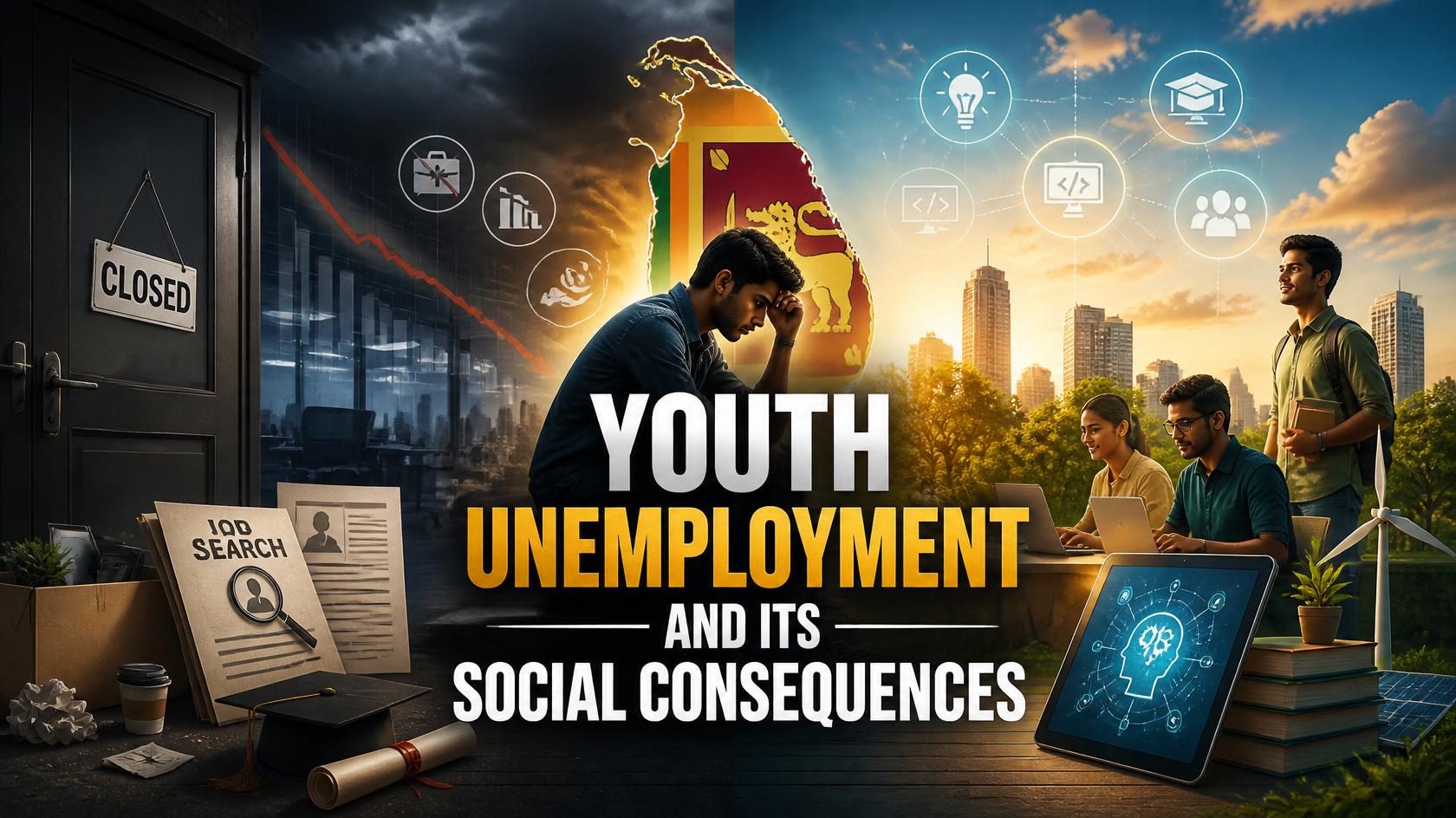
In Sri Lanka, youth unemployment has remained an important social issue for many years. Despite improvements in education and a growing number of graduates, many young people continue to experience difficulties in entering the labor market. Factors such as limited job creation, economic challenges, skills mismatches, and regional inequalities contribute to this problem.
The consequences of youth unemployment extend beyond economic hardship. It can influence mental health, family relationships, social stability, migration patterns, and future development. Therefore, understanding the causes and social consequences of youth unemployment is essential for creating effective solutions.
Understanding Youth Unemployment
Youth unemployment generally refers to unemployment among individuals between the ages of 15 and 35, depending on national definitions. It occurs when young people actively seek employment but cannot find suitable opportunities.
There are several forms of youth unemployment:
1. Open Unemployment
This occurs when young people have no employment despite actively searching for jobs.
2. Graduate Unemployment
Many university graduates struggle to find jobs related to their fields of study. This is a major concern in countries where education systems do not fully match labor market demands.
3. Underemployment
Some youth may have jobs but work in positions that do not match their qualifications, skills, or earning expectations.
4. Temporary and Informal Employment
Many young workers depend on temporary, part-time, or informal jobs without stable income, job security, or social protection.
Causes of Youth Unemployment
Youth unemployment is caused by multiple economic, educational, and social factors.
1. Limited Job Creation
One of the main causes of youth unemployment is the inability of economies to create enough quality jobs for the growing young population.
In Sri Lanka, many young people enter the labor market every year, but the number of new employment opportunities created is often insufficient. This creates competition among job seekers and increases unemployment levels.
Industries that can provide large-scale employment opportunities, such as manufacturing, technology, tourism, and entrepreneurship sectors, need further development.
2. Skills Mismatch Between Education and Employment
A major challenge is the gap between educational qualifications and workplace requirements.
Many young people complete academic programs but lack practical skills demanded by employers. Modern workplaces increasingly require digital skills, communication abilities, problem-solving skills, and professional experience.
When education systems focus mainly on theoretical knowledge without sufficient practical training, graduates may face difficulties finding employment.
3. Economic Challenges
Economic instability directly affects employment opportunities. During periods of economic crisis, businesses may reduce hiring, delay expansion, or even close operations.
Sri Lanka's recent economic crisis created additional pressure on employment opportunities. Rising costs, reduced investments, and business difficulties affected job creation, making it harder for young people to secure stable employment.
4. Lack of Experience
Many employers prefer candidates with previous work experience. However, young graduates often face a difficult situation because they need experience to get a job, but they need a job to gain experience.
Limited internship opportunities, vocational training programs, and entry-level positions can increase this challenge.
5. Regional Inequality
Employment opportunities are not equally distributed across all areas. Young people living in rural regions often have fewer opportunities compared to those in urban areas.
Limited access to technology, career guidance, professional networks, and quality education can increase unemployment among rural youth.
Social Consequences of Youth Unemployment
Youth unemployment creates serious social consequences that affect individuals, families, and communities.
1. Economic Difficulties and Poverty
The most direct consequence of unemployment is financial insecurity. Without stable income, young people may struggle to support themselves and their families.
Long-term unemployment can increase dependency on parents and create financial pressure within households. In some cases, families may experience increased poverty due to the inability of young members to contribute economically.
2. Mental Health Problems
Unemployment can negatively affect young people's mental health.
Continuous job searching, rejection from employers, financial difficulties, and uncertainty about the future can lead to stress, anxiety, frustration, and depression.
Young people who experience unemployment for long periods may lose confidence in their abilities and feel disconnected from society.
Therefore, employment is not only an economic necessity but also an important factor in maintaining psychological well-being.
3. Increased Migration
Youth unemployment is one of the major reasons why many young people seek opportunities abroad.
When local employment opportunities are limited, young individuals may migrate to countries where they believe they can achieve better salaries and career development.
Although migration can provide economic benefits through foreign income and skills development, excessive migration of educated youth can create a "brain drain" problem for the country.
4. Delayed Family Formation
Employment stability plays an important role in personal life decisions.
Many unemployed youth delay marriage, starting families, and achieving independent living due to financial uncertainty.
This can influence social structures and demographic patterns within a country.
5. Increase in Social Problems
High youth unemployment can contribute to various social issues, including:
Increased substance abuse.
Crime and antisocial behavior.
Social frustration.
Reduced community participation.
Political dissatisfaction.
However, unemployment alone does not directly cause these problems. Instead, prolonged economic insecurity and lack of opportunities can increase vulnerability among some individuals.
6. Loss of Human Potential
Young people represent creativity, innovation, and future leadership. When they remain unemployed, their skills and talents are not fully utilized.
A country loses valuable human resources when educated and capable youth cannot contribute to economic and social development.
Youth Unemployment in Sri Lanka
Sri Lanka has achieved significant progress in education, with high literacy rates and widespread access to schooling. However, education expansion has not always been matched with sufficient employment creation.
Many Sri Lankan youth face challenges such as:
Limited private-sector employment.
Dependence on government jobs.
Competition for limited positions.
Lack of technical and vocational skills.
Regional differences in opportunities.
The expectation that government employment is the most secure career option has also influenced youth employment patterns. Encouraging entrepreneurship, innovation, and private-sector development is important for creating diverse career opportunities.
Solutions to Address Youth Unemployment
Reducing youth unemployment requires cooperation between governments, educational institutions, businesses, and communities.
1. Improving Education and Skills Development
Education systems should focus on developing skills required by modern industries.
Important areas include:
Digital literacy.
English language skills.
Technical education.
Entrepreneurship training.
Professional communication skills.
Vocational education and practical training programs can help young people gain employment-ready skills.
2. Creating More Job Opportunities
Governments should encourage investment and support industries that generate employment.
Important sectors include:
Information technology.
Tourism.
Agriculture modernization.
Manufacturing.
Renewable energy.
Creative industries.
Supporting small and medium enterprises can also create more opportunities for young entrepreneurs.
3. Promoting Entrepreneurship
Not every young person needs to become an employee. Entrepreneurship can create new economic opportunities.
Young entrepreneurs should receive:
Financial support.
Business training.
Market access.
Mentorship programs.
A strong startup environment can encourage innovation and job creation.
4. Strengthening Career Guidance
Many young people lack information about career options and labor market trends.
Schools and universities should provide career counseling, internship opportunities, and guidance about different professional pathways.
5. Encouraging Public-Private Partnerships
Government institutions and private companies should work together to develop training programs, internships, and employment opportunities.
Such partnerships can help reduce the gap between education and industry requirements.
The Role of Youth in Addressing Unemployment
Young people themselves also have an important role in improving their employment opportunities.
They should focus on:
Developing new skills.
Learning technology.
Gaining practical experience.
Exploring entrepreneurship.
Adapting to changing job markets.
A flexible and continuous learning mindset is essential in a rapidly changing global economy.
Conclusion
Youth unemployment is not only an economic problem but also a major social challenge. It affects individual confidence, family stability, community development, and national progress.
In Sri Lanka, addressing youth unemployment requires more than simply creating jobs. It requires improving education quality, developing relevant skills, encouraging innovation, and creating a supportive environment where young people can achieve their goals.
Young people are a valuable resource for any country. When their talents, creativity, and energy are properly utilized, they can become powerful contributors to economic growth and social development.
Therefore, reducing youth unemployment should be a national priority. By creating equal opportunities and investing in young people, Sri Lanka can build a stronger, more inclusive, and sustainable future.
Additional Media