Sponsored
Yapahuwa Kingdom: Sri Lanka’s Forgotten Royal Capital
Rakshika Rathnayake8/1/20265 min read
Share:Facebook
Introduction
Sri Lanka is home to one of the richest historical and cultural heritages in South Asia. Throughout its long history, the island has been ruled from several royal capitals, each contributing to the country's political, religious, and architectural development. While cities such as Anuradhapura, Polonnaruwa, and Kandy are well known worldwide, the ancient Kingdom of Yapahuwa often remains overlooked despite its remarkable historical significance.
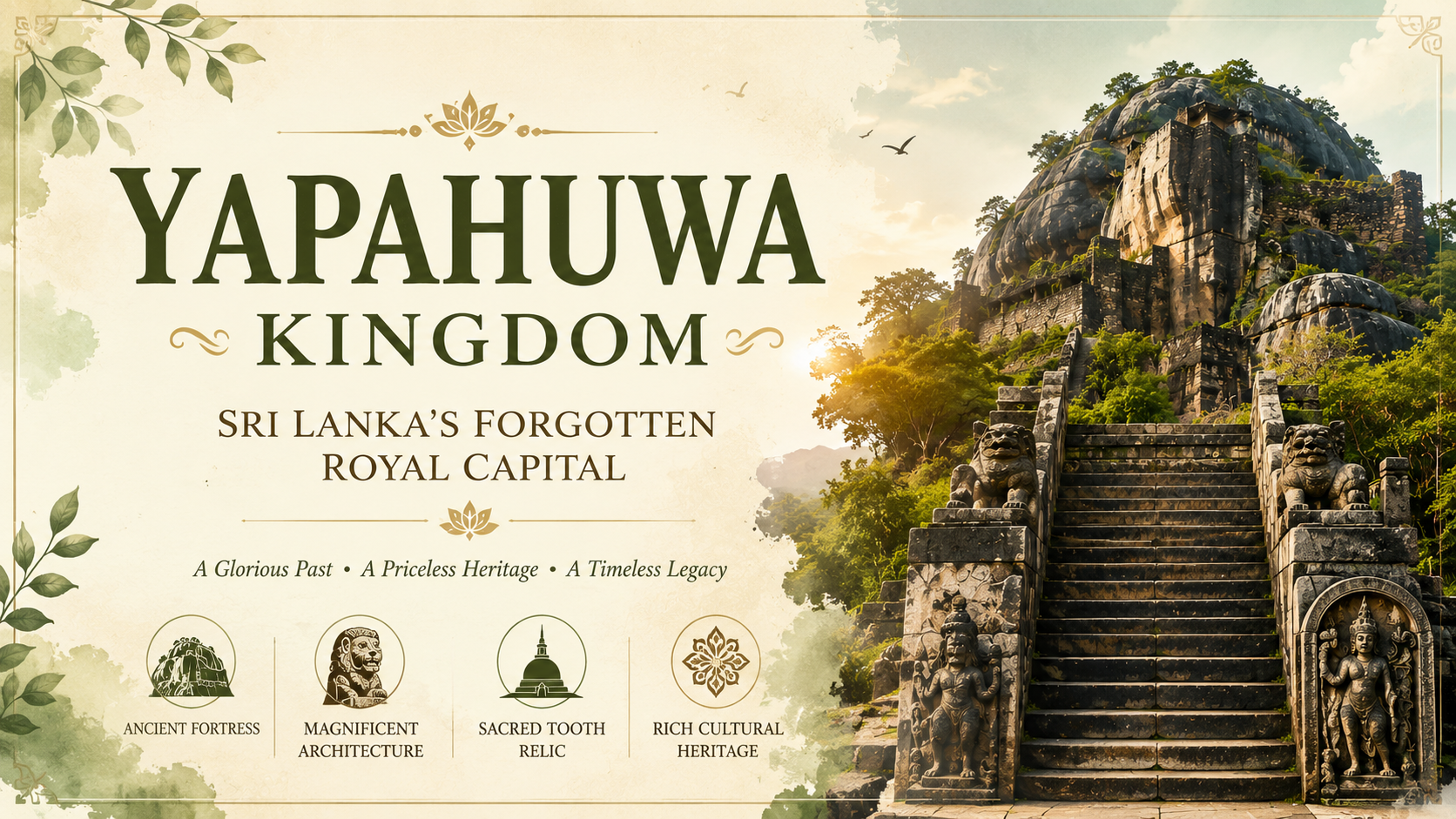
Yapahuwa served as the capital of Sri Lanka during the late 13th century under the reign of King Bhuvanekabahu I. Built around a massive granite rock rising nearly 90 meters above the surrounding plains, the city was designed as both a royal palace and a heavily fortified military stronghold. Its impressive defenses, magnificent stone architecture, and close association with the Sacred Tooth Relic of the Buddha made it one of the most important medieval capitals in Sri Lankan history.
Today, Yapahuwa stands as one of the country's most fascinating archaeological sites. Although much of the ancient city has disappeared over time, its surviving monuments continue to tell the story of a kingdom that played a crucial role during one of the most turbulent periods in Sri Lanka's history.
Historical Background
The establishment of Yapahuwa as the royal capital occurred during a time of political instability. After the decline of Polonnaruwa, Sri Lanka experienced repeated invasions from South Indian kingdoms, particularly the Pandyan Empire. These invasions weakened the central administration and forced Sri Lankan kings to relocate the capital several times in search of better security.
King Bhuvanekabahu I (1272–1284 CE) recognized the strategic importance of Yapahuwa because of its naturally fortified rock formation. He moved the capital from Dambadeniya to Yapahuwa and transformed the site into a secure royal fortress capable of defending the kingdom against external threats.
Unlike earlier capitals that developed around large urban settlements, Yapahuwa was primarily designed as a military fortress with administrative, residential, and religious functions. The towering rock, surrounded by defensive walls and moats, provided excellent protection while allowing soldiers to monitor the surrounding countryside.
Why Yapahuwa Was Chosen as the Capital
King Bhuvanekabahu I selected Yapahuwa for several important reasons.
The enormous granite rock offered exceptional natural defense against invading armies. Enemies would have found it extremely difficult to climb the steep slopes while facing attacks from defenders stationed above.
The location also allowed the king to control important trade routes connecting different parts of the island. This strategic advantage strengthened both military security and economic administration.
In addition, Yapahuwa provided a safe location for protecting the Sacred Tooth Relic of the Buddha, which symbolized the legitimate authority of the Sri Lankan monarchy.
The combination of geography, defense, religion, and administration made Yapahuwa an ideal royal capital during a period of constant political uncertainty.
King Bhuvanekabahu I and His Legacy
King Bhuvanekabahu I is remembered as one of the rulers who successfully protected the sovereignty of Sri Lanka during a difficult period.
His greatest achievement was the construction of the Yapahuwa fortress city. Under his leadership, engineers, architects, sculptors, and craftsmen built remarkable defensive structures while maintaining the artistic traditions of Sri Lankan civilization.
The king also strengthened Buddhism by safeguarding the Sacred Tooth Relic within the fortress. His reign demonstrated the close relationship between political leadership and Buddhist religious traditions in medieval Sri Lanka.
Although his reign lasted only twelve years, the legacy of King Bhuvanekabahu I remains closely associated with Yapahuwa's historical importance.
The Sacred Tooth Relic at Yapahuwa
One of the defining features of Yapahuwa's history is its connection with the Sacred Tooth Relic of the Buddha.
Throughout Sri Lankan history, possession of the Tooth Relic symbolized the right to govern the country. Every king who protected the relic strengthened his legitimacy as ruler.
King Bhuvanekabahu I transferred the Sacred Tooth Relic to Yapahuwa for protection. A specially constructed shrine within the fortress served as its sacred residence.
The presence of the relic transformed Yapahuwa into an important pilgrimage center. Buddhist monks, pilgrims, and scholars visited the capital, making it not only a political headquarters but also a major religious center.
Unfortunately, after the king's death, invading Pandyan forces captured the fortress and carried the Sacred Tooth Relic to South India, marking one of the darkest moments in the kingdom's history.
The Architectural Wonders of Yapahuwa
Yapahuwa is admired for its extraordinary medieval architecture, which combines beauty, engineering, and military planning.
The Grand Stone Staircase
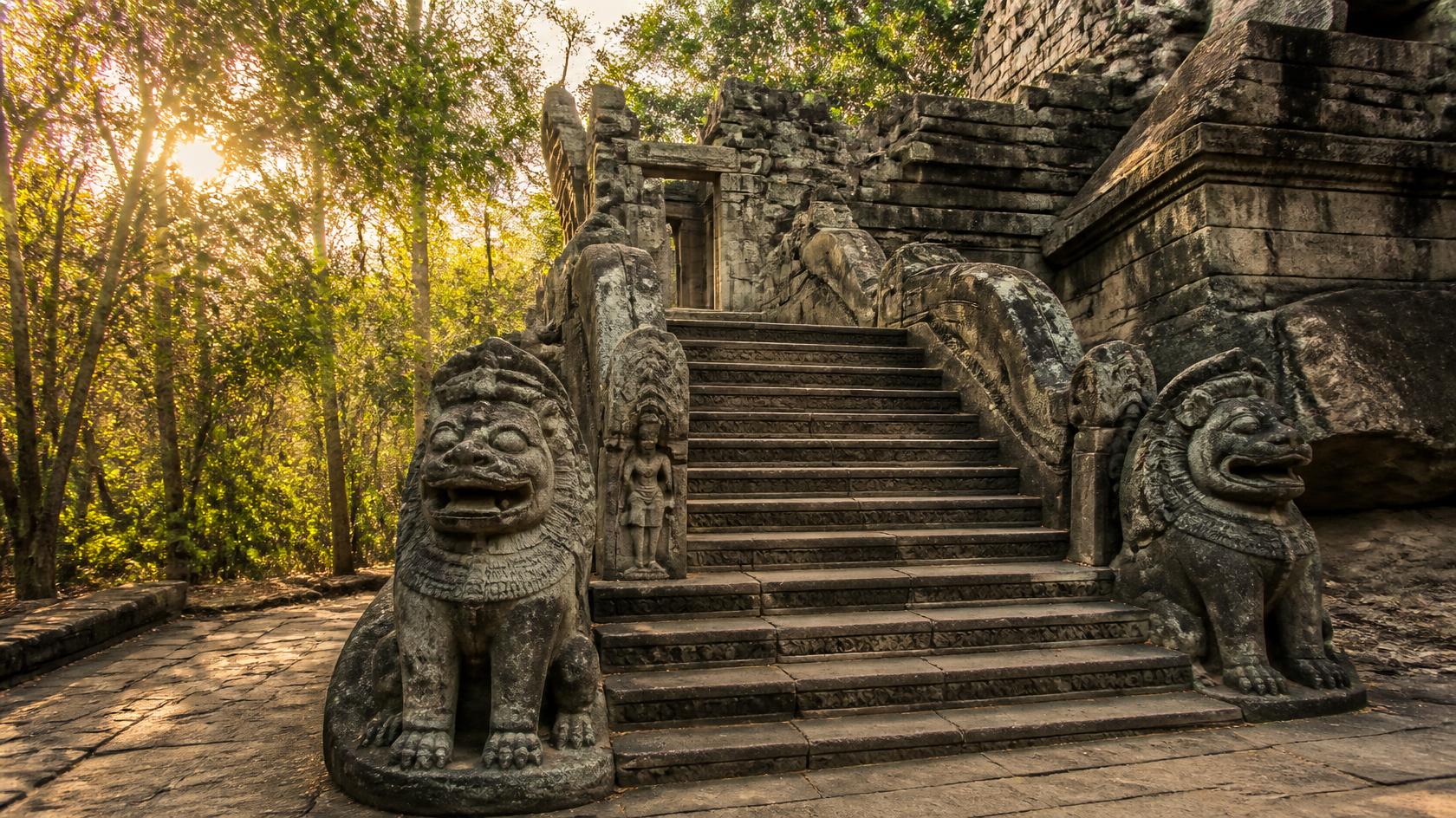
The magnificent stone staircase remains Yapahuwa's most recognizable landmark.
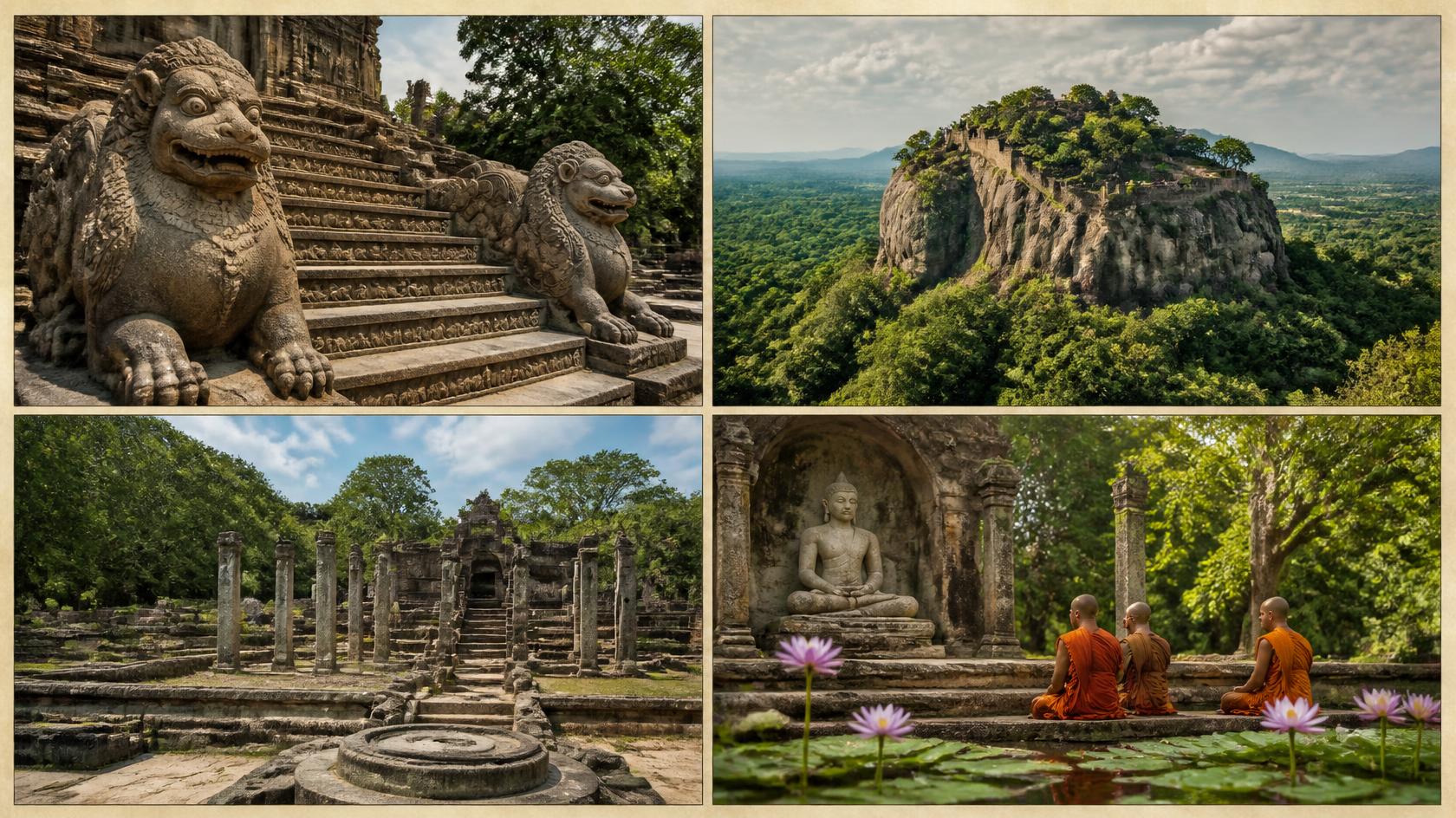
Leading toward the palace complex on the summit, the staircase features beautifully carved stone lions, mythical creatures, decorative floral patterns, dancers, musicians, and guardian figures.
The craftsmanship displayed in these carvings demonstrates the advanced artistic skills of medieval Sri Lankan sculptors.
Even today, the staircase is considered one of the finest examples of ancient stone architecture in Sri Lanka.
The Rock Fortress
The enormous granite rock served as the kingdom's natural fortress.
Massive defensive walls surrounded the lower city, while additional fortifications protected the upper palace complex.
From the summit, soldiers enjoyed a clear view of the surrounding landscape, allowing them to detect approaching enemies long before they reached the city.
The fortress design reflected sophisticated military engineering that took full advantage of natural geography.
Royal Palace Complex
Although much of the royal palace has disappeared, archaeological excavations have uncovered the foundations of important buildings.
The palace complex likely included royal residences, audience halls, administrative offices, and ceremonial spaces where official state functions were conducted.
The careful planning of these buildings reflects the advanced urban design principles practiced during medieval Sri Lanka.
Religious Buildings
Several Buddhist monuments were constructed within the Yapahuwa complex.
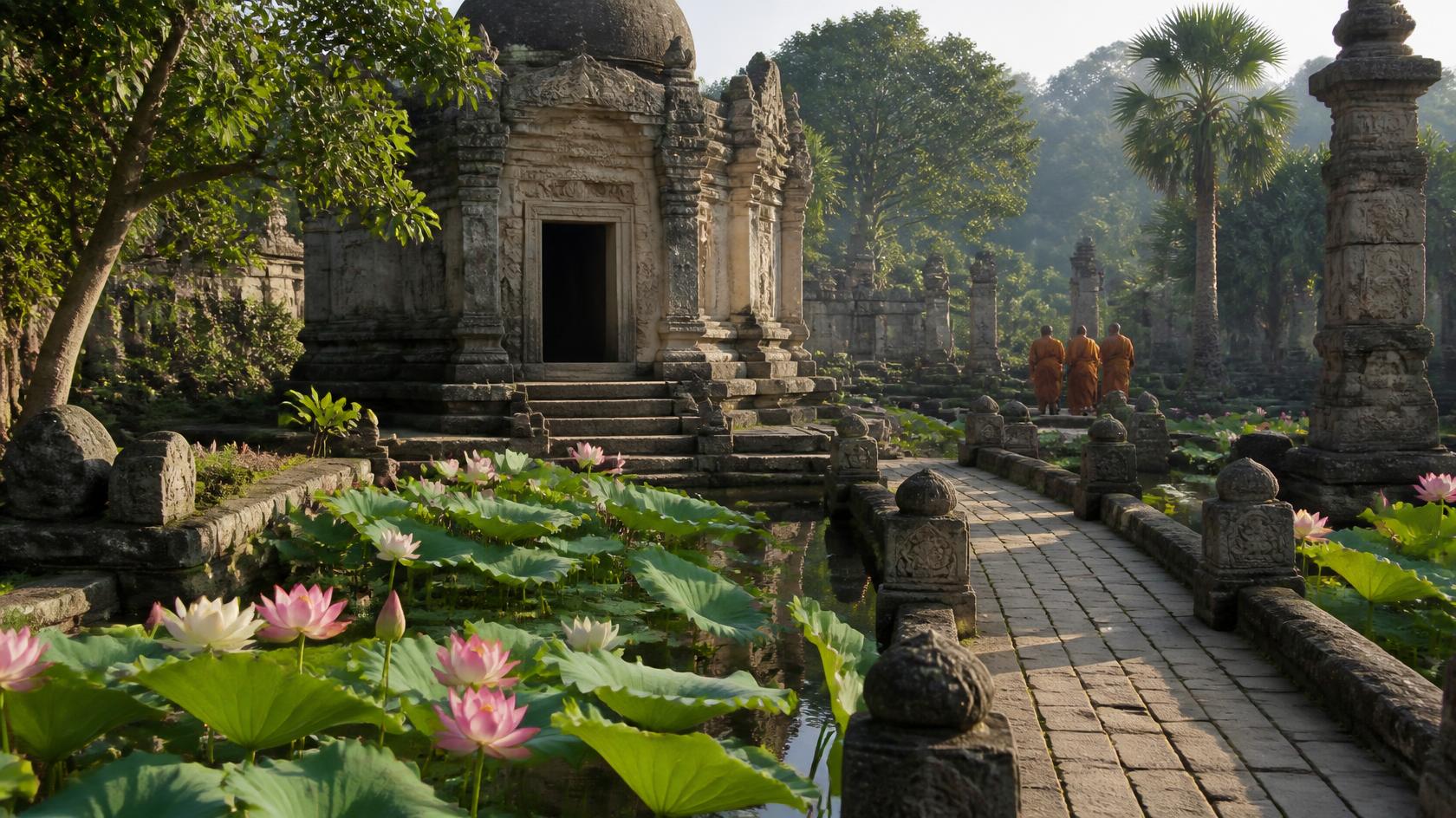
These included shrines, image houses, meditation areas, and places for religious ceremonies.
The coexistence of royal and religious buildings illustrates the strong relationship between Buddhism and kingship throughout Sri Lankan history.
The Fall of Yapahuwa
Despite its impressive defenses, Yapahuwa remained the capital for only a relatively short period.
Following the death of King Bhuvanekabahu I, political instability weakened the kingdom.
The Pandyan Empire launched another invasion during the late 13th century. The invading forces successfully captured Yapahuwa, looted its treasures, and seized the Sacred Tooth Relic.
The loss of the relic dealt a severe blow to the authority of the Sri Lankan monarchy.
After these events, the royal capital was relocated, and Yapahuwa gradually lost its political importance. Over the centuries, nature reclaimed much of the abandoned city.
Archaeological Importance
Modern archaeological research has revealed valuable information about medieval Sri Lankan civilization through excavations at Yapahuwa.
Researchers have discovered:
Ancient stone inscriptions
Defensive walls
Palace foundations
Religious monuments
Water management systems
Pottery and ceramics
Stone sculptures
Coins and artifacts
These discoveries provide important evidence about administration, architecture, trade, religion, and daily life during the 13th century.
Cultural Significance
Yapahuwa occupies a special place in Sri Lanka's cultural heritage.
Its importance extends beyond politics because it represents:
The resilience of the Sri Lankan monarchy
The protection of Buddhist traditions
Exceptional medieval architecture
Advanced military engineering
Artistic excellence in sculpture
The unity of religion and governance
These achievements continue to inspire historians, archaeologists, artists, and students studying Sri Lanka's past.
Yapahuwa as a Tourist Destination
Today, Yapahuwa has become an increasingly popular destination for both local and international visitors.
Tourists visit the site to experience:
The famous stone staircase
The ancient fortress
Palace ruins
Buddhist monuments
Archaeological museum
Scenic panoramic views
Peaceful natural surroundings
Unlike some of Sri Lanka's more crowded heritage sites, Yapahuwa offers visitors a quieter and more immersive historical experience.
Photography enthusiasts particularly appreciate the dramatic rock landscape, intricate stone carvings, and breathtaking sunset views.
Conservation and Preservation
Protecting Yapahuwa is essential for preserving Sri Lanka's cultural identity.
The Department of Archaeology continues restoration and conservation work to protect the remaining structures from weathering, vegetation growth, and human damage.
Visitors are encouraged to respect the archaeological site by avoiding vandalism, maintaining cleanliness, and following preservation guidelines.
Responsible tourism plays an important role in ensuring that future generations can continue learning from this remarkable historical treasure.
Conclusion
The Kingdom of Yapahuwa may have served as Sri Lanka's capital for only a brief period, but its influence on the nation's history remains profound. Built during a time of political uncertainty, it became a symbol of resilience, military strength, religious devotion, and architectural brilliance.
Its magnificent stone staircase, formidable rock fortress, royal palace, and connection to the Sacred Tooth Relic make Yapahuwa one of the most remarkable historical sites in Sri Lanka.
Although often overshadowed by more famous ancient capitals, Yapahuwa deserves greater recognition for its contribution to the island's medieval civilization. Today, it stands as a timeless reminder of Sri Lanka's glorious past and continues to inspire visitors with its rich history, cultural significance, and breathtaking beauty.
Additional Media