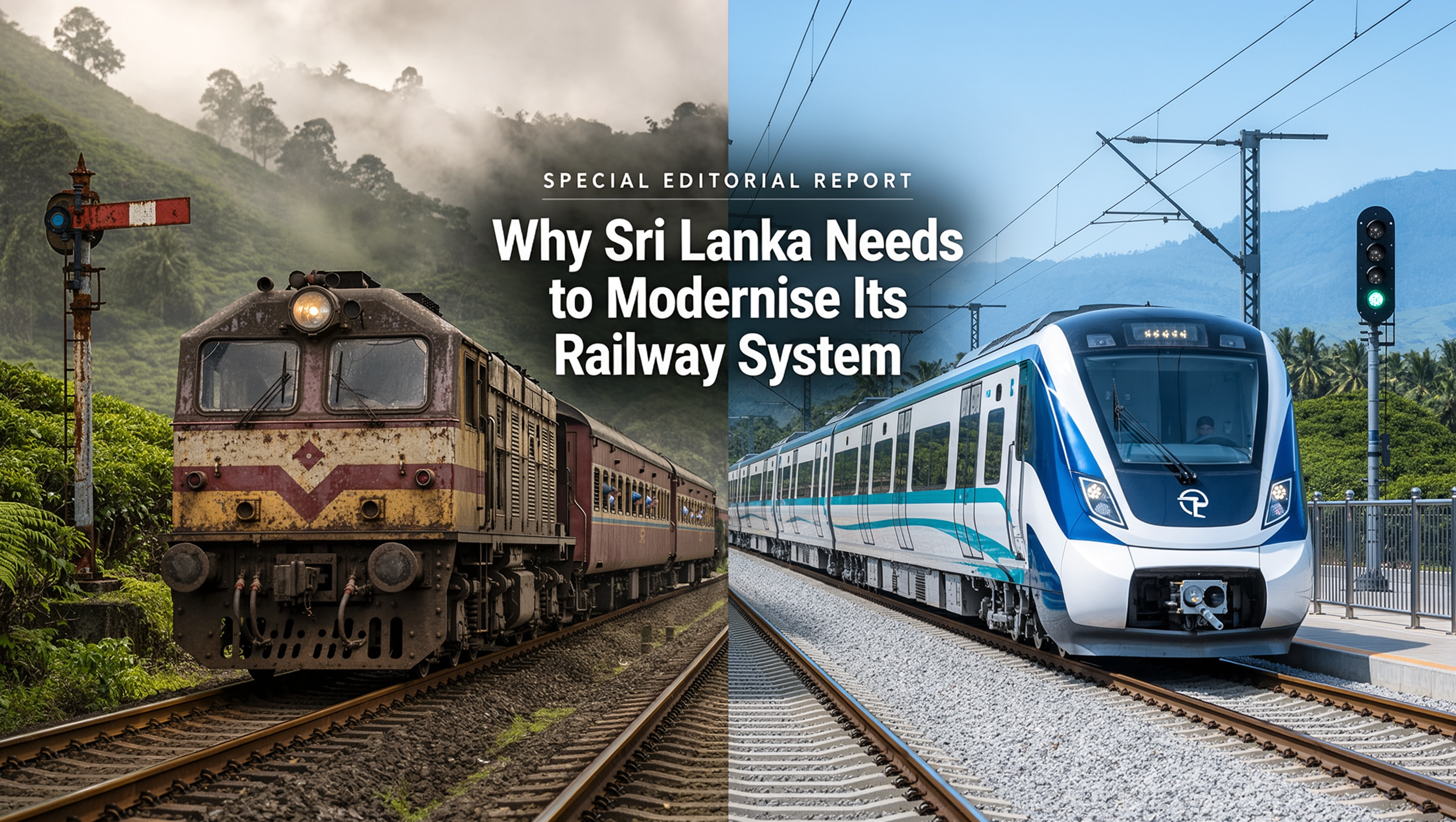
Why Sri Lanka Needs to Modernise Its Railway System
Rakshika Rathnayake11/23/20265 min read
Share:Facebook
Sri Lanka has a long history of railway transportation, dating back to the British colonial period. Even today, trains remain an important part of daily life for thousands of people across the country. Students, office workers, businesspeople, tourists and other passengers depend on the railway network to travel between cities, towns and villages. For many people, trains are an affordable way to reach their destinations without spending too much money on transportation.
Sri Lanka's railway system also plays an important role in the country's economy. It connects major commercial centres, supports tourism, transports goods and reduces the number of vehicles on busy roads. However, despite its importance, the railway system faces several challenges. Ageing infrastructure, outdated technology, delays, overcrowding, limited facilities and maintenance difficulties have affected the quality of railway services.
As the country develops and people's transportation needs change, an efficient and reliable railway system becomes increasingly important. Modernising the railway network is not simply about purchasing new trains. It involves improving railway tracks, stations, signalling systems, safety measures, passenger facilities and management methods.
Sri Lanka needs to invest in railway modernisation to provide a better travel experience, support economic development, reduce road congestion and build a more sustainable transportation system for future generations.
1. The Current Challenges Facing Sri Lanka's Railway System
One of the biggest problems facing Sri Lanka's railway system is its ageing infrastructure. Many railway tracks, bridges, locomotives and passenger carriages have been in service for decades. Although regular maintenance is carried out, older equipment can become less reliable and more expensive to repair over time.
According to the Sri Lanka Railways 2024 Annual Report, the railway service transported approximately 101.6 million passengers during 2024. This demonstrates the importance of the railway network to the public. However, maintaining reliable services for such a large number of passengers requires continuous investment in equipment, infrastructure and technology.
railway.gov.lk+1
Train delays and cancellations are another major concern. Passengers who depend on trains to reach workplaces, schools and universities can face difficulties when services do not operate according to schedule. A delayed train can affect an entire day's activities, particularly for people who have limited alternative transportation options.
A report published in November 2025, based on the railway department's 2024 audit, revealed that approximately 49% of planned train journeys were delayed during that year. It also reported that 5,305 scheduled journeys were cancelled. These figures highlight the need to improve maintenance, scheduling and railway operations.
Daily Mirror
Overcrowding is another common problem, especially during morning and evening rush hours. Some trains carry large numbers of passengers, making journeys uncomfortable. Older carriages may also lack sufficient seating, ventilation and other facilities expected by modern passengers.
These challenges show that railway modernisation is no longer something that can be postponed indefinitely. It is an important requirement for improving public transportation in Sri Lanka.
2. Improving the Quality of Passenger Transportation
The main purpose of railway modernisation should be to provide passengers with a comfortable, convenient and reliable travel experience.
Modern trains can offer better seating arrangements, improved ventilation, air conditioning where appropriate, cleaner interiors and more accessible facilities. These improvements would make long-distance journeys more comfortable and encourage people to choose trains instead of private vehicles.
Sri Lanka has several important railway routes connecting Colombo with Kandy, Galle, Jaffna, Badulla and other destinations. These routes are used by both daily commuters and long-distance travellers. Improving the quality of trains operating on these routes would benefit thousands of passengers.
The railway department should also consider introducing more frequent services on routes with high passenger demand. During busy hours, additional trains could help reduce overcrowding and shorten waiting times.
Another important improvement is accessibility for people with disabilities, elderly passengers and parents travelling with young children. Railway stations should have suitable ramps, accessible toilets, clear signs and safe platforms. Modern carriages should also provide appropriate facilities for passengers who use wheelchairs.
A modern railway system should not only focus on speed. It should make travelling easier and more comfortable for everyone.
3. Introducing Modern Technology and Digital Services
Technology has changed the way people access transportation services around the world. Passengers increasingly expect to purchase tickets online, receive accurate travel information and make payments without carrying cash.
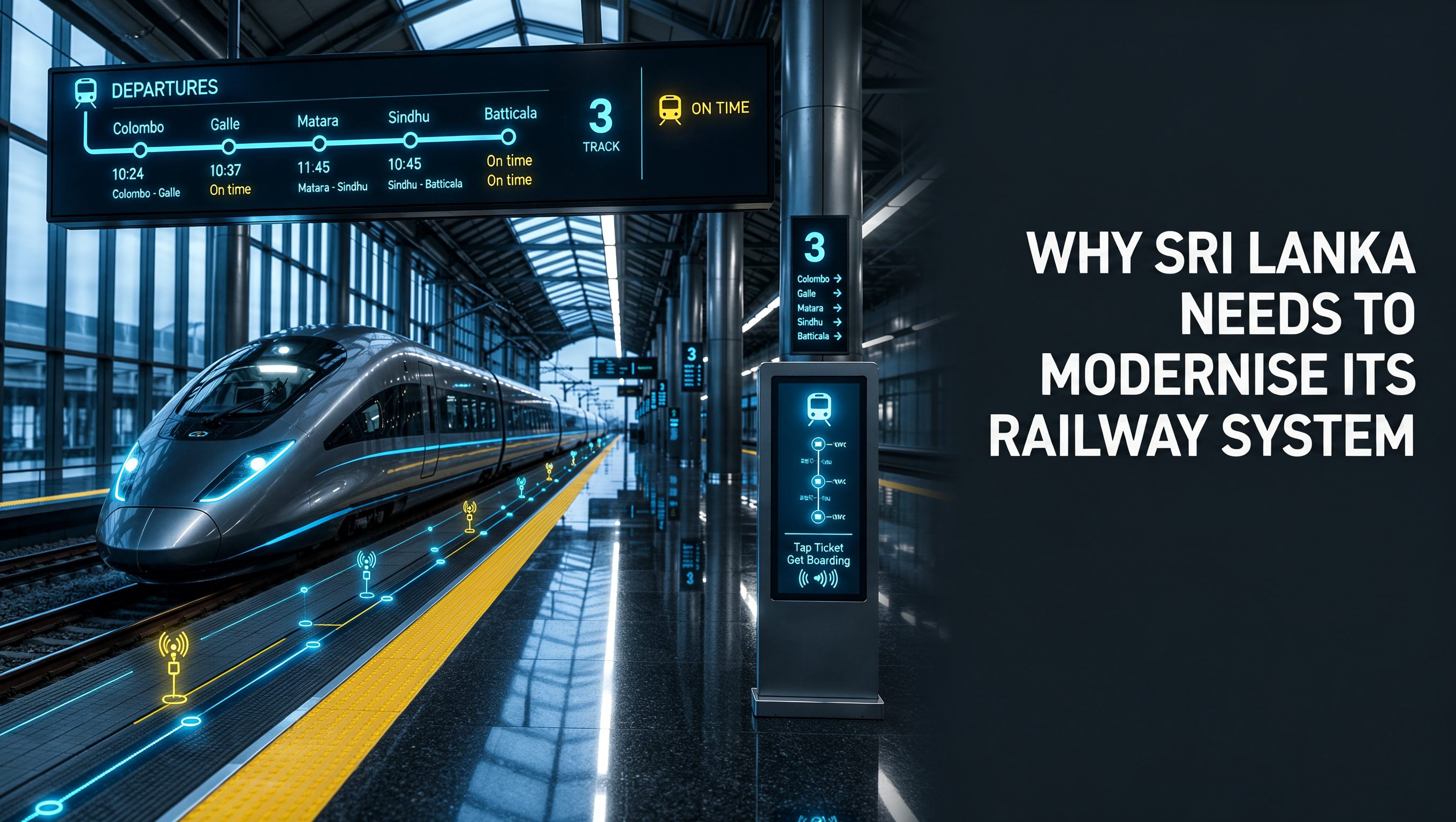
Sri Lanka needs to expand digital services throughout its railway network. An improved online ticket booking system would allow passengers to reserve seats more conveniently. Mobile applications could provide train schedules, ticket prices, platform information, delays and cancellation notices.
For example, a passenger travelling from Colombo Fort to Kandy should be able to check available trains, reserve a seat and receive updates through a mobile phone. This would reduce unnecessary visits to railway stations and make travel planning easier.
Digital ticketing could also improve the management of railway revenue and reduce opportunities for ticket-related irregularities. However, the system must be reliable, secure and easy to use.
Modern signalling technology is equally important. Railway signals help control train movements and prevent accidents. Outdated signalling equipment can limit operational efficiency and create safety concerns. Upgrading these systems would help railway authorities manage train movements more effectively.
The Central Bank of Sri Lanka's 2025 economic and social infrastructure digest also highlighted the importance of improving railway signalling, telecommunications and ticketing systems.
Annual Economic and Social Infrastructure Digest
4. Strengthening Railway Safety
Safety must be one of the highest priorities when modernising Sri Lanka's railway system. Trains transport large numbers of passengers every day, and even a single serious accident can have devastating consequences.
Several factors can affect railway safety, including damaged tracks, poorly maintained bridges, outdated signalling systems and unsafe railway crossings.
Railway crossings are particularly important because trains and road vehicles share the same transportation environment. Some crossings have barriers and warning systems, while others require additional safety improvements.
Installing automatic barriers, warning lights, alarms and surveillance systems at high-risk crossings could reduce accidents. Public awareness programmes should also educate drivers, motorcyclists and pedestrians about railway crossing safety.
Regular inspections of railway tracks and bridges are equally necessary. Modern monitoring equipment can help engineers identify cracks, structural weaknesses and other problems before they become serious.
In addition, railway employees should receive regular training in modern safety procedures, emergency response and equipment operation.
The aim should be to develop a railway network where passengers can travel with confidence and railway employees can perform their duties in a safe working environment.
5. Reducing Traffic Congestion in Major Cities
Traffic congestion is a serious problem in several parts of Sri Lanka, particularly in and around Colombo. Thousands of people travel to the city every day for employment, education, shopping and business activities.
A stronger railway network could reduce the number of private vehicles travelling on busy roads. When trains are reliable, comfortable and affordable, more people may choose them instead of cars, motorcycles and three-wheelers.
This would be particularly useful for people travelling from suburban areas such as Gampaha, Ragama, Negombo, Panadura and Kalutara.
However, improving train services alone is not enough. Railway stations should be properly connected with buses, three-wheelers, taxis and other local transportation services. Passengers should be able to move from one transport method to another without unnecessary delays.
For example, someone travelling from a residential area to Colombo could use a local bus to reach the nearest railway station, take a train to Colombo Fort and continue to the workplace using another transport service.
This type of integrated transportation system would make public transport more practical and attractive.
6. Supporting Economic Growth and Business Activities
A modern railway system can make a valuable contribution to Sri Lanka's economic development. Reliable transportation helps employees reach workplaces, businesses move products and customers access commercial centres.
Railways can also support the transportation of agricultural products, construction materials, industrial goods and other essential items. At present, Sri Lanka's railway freight service has considerable potential to become a stronger part of the national logistics network.
Transporting suitable goods by train could reduce the pressure on highways and lower the number of heavy vehicles travelling long distances. It could also provide businesses with another transportation option.
For example, agricultural producers could benefit from better railway connections to major markets. Faster and more organised transportation would help reduce unnecessary delays when delivering products.
To achieve this, Sri Lanka needs modern freight terminals, suitable goods wagons, improved loading facilities and better connections between railway stations, warehouses and industrial areas.
Railway stations could also generate additional income through commercial facilities such as shops, cafeterias, restaurants and passenger service centres.
Modernising railway operations would therefore benefit not only passengers but also businesses and the wider economy.
7. Developing Railway Tourism
Sri Lanka is internationally recognised for its natural beauty, cultural attractions and scenic landscapes. Railway journeys are already an important part of the country's tourism experience.
The railway journey through the central highlands, particularly between Kandy, Nanu Oya, Ella and Badulla, attracts both local and foreign visitors. Coastal railway routes also provide attractive views of the Indian Ocean.
9
However, tourism-related railway services need further improvements. Foreign visitors often look for comfortable seats, reliable schedules, convenient reservations and clear travel information.
Sri Lanka could introduce more organised tourist train services with modern carriages, panoramic viewing areas, improved passenger facilities and better information about destinations along the railway routes.
Railway stations near popular tourist destinations should also provide useful facilities, including clean toilets, information counters, luggage services and clear multilingual signs.
These improvements could encourage more tourists to explore the country by train. They could also create business opportunities for hotels, restaurants, tour operators and small businesses located near railway stations.
Tourism development through railways should preserve the natural beauty and cultural value of the destinations while providing visitors with a safe and enjoyable experience.
8. Introducing Environmentally Friendly Railway Transportation
Environmental protection is another important reason why Sri Lanka should modernise its railway network.
Road transportation contributes to air pollution, greenhouse gas emissions and fuel consumption. A well-managed railway system can transport large numbers of passengers using less energy per passenger compared with individual private vehicles, depending on the type of train and energy source.
Sri Lanka currently depends heavily on diesel-powered locomotives. Although replacing the entire railway fleet immediately would be expensive, the country could gradually introduce more energy-efficient trains and explore railway electrification where it is technically and economically practical.
routejunction.com
Electric trains could reduce dependence on imported petroleum products, particularly if electricity is generated from renewable sources such as solar, wind and hydropower.
Modern locomotives can also reduce fuel consumption and maintenance costs. Better scheduling and improved railway operations would help prevent unnecessary energy waste.
However, electrification requires significant investment in power infrastructure, substations, signalling and maintenance facilities. Therefore, Sri Lanka should carefully study which routes would benefit most before making major investments.
A sustainable railway system would support the country's environmental goals while creating a more efficient transportation network.
9. Protecting Railway Infrastructure Against Natural Disasters
Sri Lanka's railway network passes through different geographical environments, including coastal areas, mountains, forests and flood-prone regions. As a result, railway infrastructure can be affected by heavy rainfall, floods, landslides and other natural disasters.
The damage caused by severe weather events has demonstrated the importance of building a stronger and more resilient railway network.
In December 2025, Sri Lanka Railways reported extensive weather-related damage to railway infrastructure, including landslides, washouts, track subsidence and damage to bridges and culverts. The railway department's recovery programme highlighted the need for rehabilitation and disaster-resilient reconstruction.
railway.gov.lk
Modernisation should therefore include stronger bridges, improved drainage systems, better slope protection and regular inspections of vulnerable railway sections.
Technology can also help monitor environmental risks. Weather monitoring equipment and early warning systems could provide railway authorities with information about dangerous conditions before they affect train operations.
Railway authorities should establish effective emergency response plans to deal with unexpected disruptions. Passengers should receive timely information about cancellations, alternative transportation and expected service restoration.
Investing in disaster-resistant infrastructure can reduce future repair expenses and help maintain essential transportation services during difficult periods.
10. Learning from Railway Systems in Other Countries
Sri Lanka can learn valuable lessons from countries that have successfully developed modern railway transportation.
7
Japan is well known for its advanced railway technology, punctual services and strong safety standards. Its high-speed railway network demonstrates how modern engineering and effective management can improve transportation.
Singapore has developed an organised urban rail system that connects residential areas, business districts and other important locations. Its emphasis on accessibility, passenger information and connections with other transport services offers useful lessons.
India has also invested in railway modernisation, introducing newer passenger trains, digital ticketing facilities and improvements to railway stations.
Sri Lanka does not necessarily need to copy the expensive railway systems of larger countries. Instead, it should identify practical solutions that match its population, economy, geographical conditions and financial resources.
For example, improving commuter services around Colombo may provide more immediate benefits than investing in high-speed railway infrastructure across the entire country.
The most important lesson is that successful railway development requires long-term planning, proper funding, skilled employees and consistent maintenance.
11. Government Investment and Effective Railway Management
Modernising the railway system requires considerable financial investment. Purchasing locomotives, repairing tracks, upgrading stations and introducing new technology can involve significant costs.
Therefore, the government should develop a realistic long-term railway development plan with clear priorities and measurable targets.
Sri Lanka has already identified several railway development projects for the 2027–2029 period. According to information presented in Parliament in August 2026, these include the Colombo Suburban Railway Project, the Kurunegala–Polgahawela double-track project, railway station modernisation and the procurement of new locomotives and passenger train sets.
Parliament News
These projects demonstrate the importance of moving towards a more modern railway network. However, successful implementation will depend on proper planning, transparent procurement and continuous monitoring.
The government should also improve railway management practices. Maintenance schedules must be followed, spare parts should be available when required, and outdated equipment should be replaced according to a clear plan.
Partnerships with the private sector and international development organisations could help provide technical knowledge, investment and modern management practices.
At the same time, railway services must remain affordable and accessible to ordinary people. Modernisation should improve the quality of public transportation without making it financially difficult for low-income passengers to travel.
12. Creating Better Employment Opportunities and Skills
Railway modernisation will also change the types of skills required within the transportation sector.
Modern railway systems need trained engineers, technicians, IT specialists, signalling experts, electrical professionals and maintenance workers.
Sri Lanka should invest in training programmes that prepare employees to operate and maintain modern railway equipment. Technical colleges and universities could work with railway authorities to develop courses related to railway engineering, transportation management and modern signalling technology.
Existing railway employees should also receive opportunities to improve their professional skills rather than being left behind as new technologies are introduced.
In addition, railway modernisation projects could create employment opportunities in construction, engineering, manufacturing, information technology and related industries.
Developing local technical knowledge would help Sri Lanka maintain its railway infrastructure more independently and reduce unnecessary dependence on foreign expertise.
13. The Future of Sri Lanka's Railway System
The future of Sri Lanka's railway system depends on the decisions and investments made today. Modernisation should not be treated as a collection of separate projects. It should be approached as a national transportation development strategy.
The country should first prioritise urgent repairs, railway safety, reliable train services and the replacement of outdated equipment. Once these essential improvements are underway, attention can gradually move towards electrification, expanded double tracks, advanced digital services and improved passenger facilities.
Public feedback should also be considered when planning railway improvements. Daily commuters understand many of the practical problems associated with train travel. Their experiences can help authorities identify which services need immediate attention.
Furthermore, railway development should be coordinated with road transportation, urban planning, tourism and national economic policies.
A modern railway network would help Sri Lanka create better-connected cities, improve regional accessibility and provide more opportunities for people living outside major commercial centres.
The goal should be to build a railway system that can meet the country's transportation needs not only today but also over the next several decades.
Conclusion
Sri Lanka's railway system is an important national asset that deserves greater attention and investment. For generations, trains have connected communities, supported economic activities and provided affordable transportation to millions of people. However, ageing infrastructure, frequent delays, overcrowding, outdated technology and safety concerns show that significant improvements are necessary.
Modernising the railway network would bring benefits beyond improving train services. It could reduce road congestion, support tourism, strengthen business activities, create employment opportunities and reduce environmental pollution. It would also improve transportation accessibility for people living in rural areas and regional towns.
The government should focus on practical improvements, including modern locomotives, stronger railway tracks, advanced signalling, digital ticketing and better passenger facilities. At the same time, proper financial management, employee training and long-term planning are essential to ensure that these improvements are sustainable.
Sri Lanka does not need to transform its entire railway system overnight. Instead, it should follow a carefully planned approach that addresses the most urgent problems while gradually introducing modern technology.
A reliable, safe, comfortable and environmentally friendly railway system can become one of the strongest foundations of Sri Lanka's future transportation network. Investing in railway modernisation today is an investment in the country's economic development, public convenience and future generations.
Additional Media