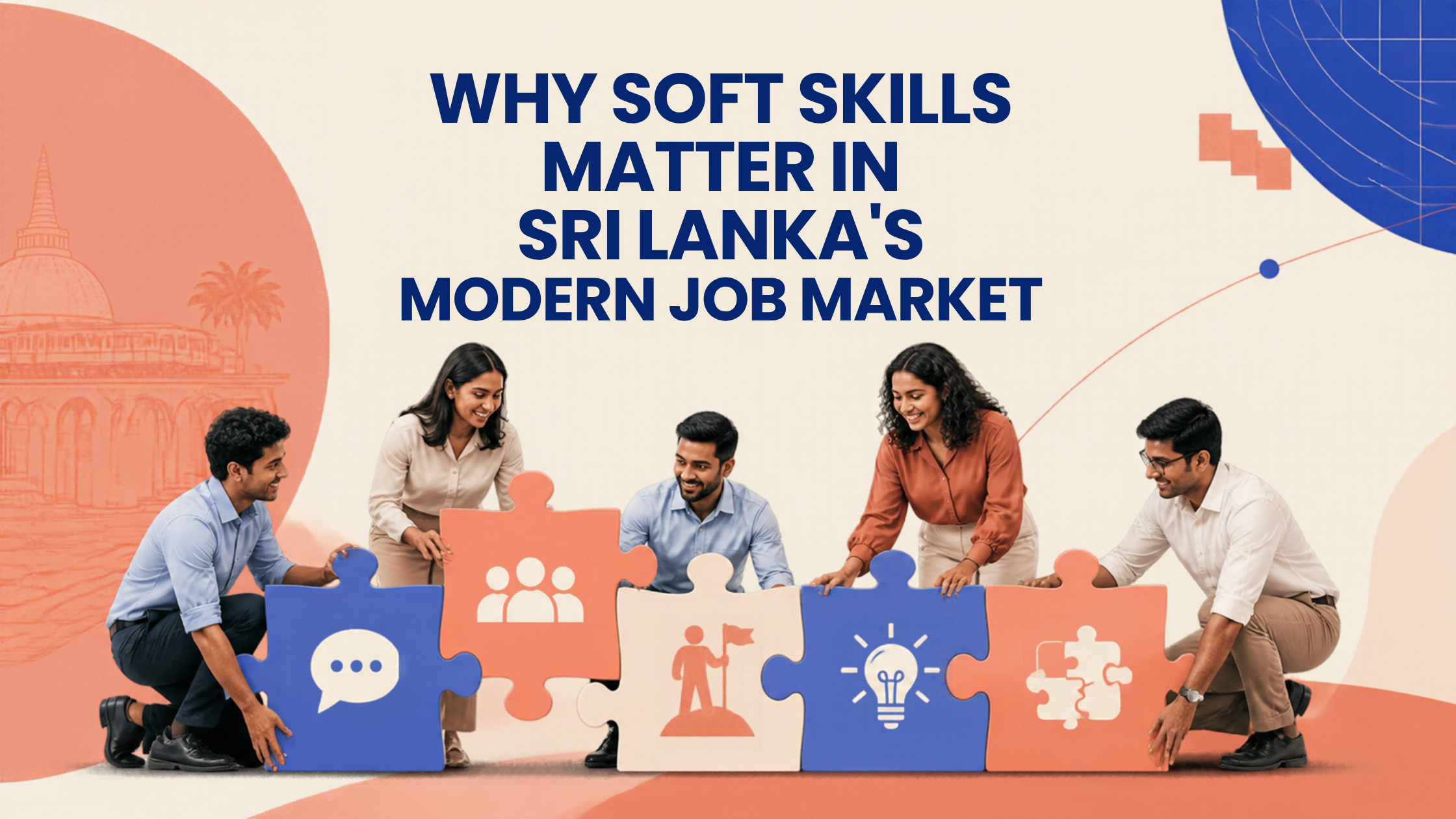
Why Soft Skills Matter in Sri Lanka’s Modern Job Market
Rakshika Rathnayake10/31/20265 min read
Share:Facebook

For many years, getting a good job was often seen as a simple formula: earn the right educational qualifications, gain technical knowledge, and apply for suitable positions. While education and professional skills remain important, the modern job market in Sri Lanka is changing. Employers are increasingly looking beyond certificates, degrees, and technical abilities. They also want people who can communicate clearly, work well with others, solve problems, adapt to change, and behave professionally.
These abilities are commonly known as **soft skills**. They may not always appear on a university certificate, but they can strongly influence a person's success at work. In a competitive job market, two candidates may have similar academic qualifications, yet the person with stronger communication, teamwork, and problem-solving skills may have a greater chance of being selected.
As Sri Lanka moves further into a digital and globally connected economy, soft skills are becoming more valuable across almost every industry. From information technology and tourism to banking, education, healthcare, manufacturing, and small businesses, employers need people who can do more than simply complete technical tasks. They need employees who can work with people, respond to challenges, and contribute positively to the workplace.
## Understanding Soft Skills
Soft skills are personal and interpersonal abilities that influence how people work and interact with others. Unlike technical skills, which are usually connected to a specific job or profession, soft skills can be useful in almost any career.
Some of the most important soft skills include:
- Communication
- Teamwork
- Problem-solving
- Critical thinking
- Time management
- Adaptability
- Leadership
- Emotional intelligence
- Creativity
- Professionalism
- Confidence and self-management
For example, an accountant may have excellent knowledge of financial systems, but the ability to explain information clearly to clients is also important. A software developer may be highly skilled at coding, but projects often require collaboration with designers, managers, and customers. A hotel employee may understand the technical aspects of the job, but communication and customer service can make a major difference to a guest's experience.
This is why technical knowledge and soft skills should not be seen as separate competitors. The strongest professionals usually develop both.
## A Changing Job Market in Sri Lanka
Sri Lanka's job market has changed significantly due to technology, economic pressures, changing business needs, and increasing connections with international markets. Many young people entering the workforce today are competing not only with other local job seekers but, in some industries, with professionals from around the world.
Remote work, freelancing, digital services, and international outsourcing have created new opportunities. At the same time, they have increased the importance of communication and professionalism. A Sri Lankan professional working remotely for an overseas company may need to participate in online meetings, understand different working cultures, manage deadlines independently, and communicate through email and digital platforms.
In such situations, technical ability alone may not be enough. An employee who can communicate professionally, ask the right questions, manage time effectively, and work independently is likely to be more valuable.
Sri Lankan businesses are also changing the way they operate. Companies are adopting digital tools, using social media to reach customers, and responding to rapidly changing consumer expectations. Employees must therefore be willing to learn and adapt.
## Communication Is More Than Speaking English
Communication is one of the most important soft skills in the workplace. However, good communication does not simply mean speaking fluent English. It means being able to express ideas clearly, listen carefully, understand others, and choose the right way to communicate in different situations.
Sri Lanka is a multilingual and culturally diverse country. Many workplaces include people who speak Sinhala, Tamil, and English. Employees who can communicate respectfully and effectively with different groups can help create a more positive working environment.
Written communication is also increasingly important. Emails, reports, messages, proposals, and online meetings have become part of everyday professional life. A poorly written message can create confusion, while a clear and professional message can save time and improve relationships.
Young job seekers should therefore focus on developing practical communication skills. This includes learning how to introduce themselves confidently at an interview, explain their ideas during meetings, write professional emails, and listen carefully to instructions.
## The Importance of Teamwork
Modern workplaces rarely depend on one person working alone. Most organisations require employees to cooperate with colleagues from different departments and backgrounds.
A successful marketing campaign, for example, may involve writers, graphic designers, social media managers, sales teams, and business leaders. In a hospital, doctors, nurses, administrators, and other staff members must work together to provide effective care. In a technology company, programmers may need to cooperate with project managers and clients.
The ability to work as part of a team is therefore extremely valuable.
Good teamwork requires more than simply being friendly with colleagues. It involves respecting different opinions, sharing responsibilities, helping others when necessary, and working towards a common goal. It also requires the ability to handle disagreements professionally.
For Sri Lankan graduates and young employees, developing teamwork skills can be especially important when moving from an academic environment into a professional workplace. University assignments may provide some opportunities for group work, but the workplace often requires greater responsibility, patience, and cooperation.
## Problem-Solving and Critical Thinking
Employers do not only want workers who can follow instructions. They also value people who can identify problems and think about possible solutions.
Every workplace faces unexpected challenges. A customer may make a complaint, a project may fall behind schedule, a technical system may fail, or a business may need to respond to changing market conditions. Employees who can remain calm and think logically during these situations can make a valuable contribution.
Critical thinking helps people examine information instead of accepting everything immediately. In today's digital environment, this is particularly important. Professionals regularly receive large amounts of information through social media, websites, emails, and other sources. The ability to identify reliable information and make sensible decisions is becoming an essential workplace skill.
Sri Lankan young people can develop these abilities by asking questions, participating in discussions, analysing real-life situations, and learning from mistakes.
## Adaptability in a Fast-Changing World
One of the biggest changes affecting modern careers is the speed at which technology and business practices evolve. Skills that are highly valuable today may need to be updated in the future.
Artificial intelligence, automation, digital platforms, and new software tools are changing many industries. While these developments may create concerns about employment, they also create opportunities for people who are willing to learn.
Adaptability means being open to change and adjusting when circumstances change. An adaptable employee does not simply refuse a new system because it is unfamiliar. Instead, they try to understand it and learn how it can be used effectively.
This quality is particularly important in Sri Lanka, where businesses and workers have had to respond to changing economic conditions in recent years. Employees who can learn new skills, take on new responsibilities, and adjust to different working environments may be better prepared for future career challenges.
## Emotional Intelligence and Professional Relationships
Workplaces are made up of people with different personalities, experiences, and opinions. Emotional intelligence is the ability to understand and manage one's own emotions while also recognising the feelings and perspectives of others.
This skill can be useful in many situations. For example, an employee who receives criticism from a manager may feel disappointed or frustrated. Emotional intelligence helps that person respond calmly, understand the feedback, and use it to improve.
Similarly, managers with strong emotional intelligence may be better able to understand the concerns of their employees and build a positive workplace culture.
In customer-facing industries such as tourism, retail, banking, and healthcare, emotional intelligence can also improve the quality of service. Customers often remember how they were treated, not just the product or service they received.
Respect, patience, empathy, and self-control are therefore valuable qualities in the modern workplace.
## Time Management and Personal Responsibility
Employers expect workers to complete their responsibilities on time and manage their workload effectively. This makes time management an important soft skill.
Poor time management can lead to missed deadlines, stress, and lower productivity. On the other hand, employees who can plan their work and prioritise important tasks are often more reliable.
The growth of remote and flexible work has made personal responsibility even more important. When an employee is working away from a traditional office, a manager may not be able to supervise every task. The employee must therefore manage time independently and remain focused.
Students and young professionals can improve this skill by setting realistic goals, creating schedules, breaking large tasks into smaller steps, and avoiding unnecessary distractions.
## Leadership Is Not Only for Managers
Many people believe leadership is only necessary for people with management positions. In reality, leadership skills can be useful at every stage of a career.
Leadership can mean taking responsibility, helping a team move forward, making decisions, and encouraging others. A young employee may demonstrate leadership by taking the initiative to solve a problem or helping colleagues complete a difficult project.
For Sri Lanka's future workforce, leadership will be important not only in large companies but also in entrepreneurship and community development. Many young people are exploring small businesses, digital services, and freelance careers. These paths often require confidence, decision-making, communication, and the ability to manage others.
Developing leadership skills early can help young professionals prepare for greater responsibilities in the future.
## The Role of Soft Skills in Entrepreneurship
Soft skills are also essential for people who want to start their own businesses. A successful entrepreneur needs more than a good business idea.
Business owners must communicate with customers, negotiate with suppliers, manage employees, solve unexpected problems, and respond to changing market conditions. They must also remain motivated when facing difficulties.
Sri Lanka has many small and medium-sized businesses, and entrepreneurship continues to provide opportunities for people seeking to create their own careers. Young entrepreneurs who combine business knowledge with strong soft skills may be better prepared to build customer relationships and manage the challenges of running a business.
For example, a talented graphic designer may have excellent creative skills. However, if they work as a freelancer, they also need to communicate with clients, understand customer requirements, manage deadlines, and handle feedback professionally.
## How Education Can Help Develop Soft Skills
Schools, universities, and training institutions have an important role in preparing young people for the workplace. Academic knowledge is essential, but students also benefit from opportunities to practise communication, teamwork, creativity, and problem-solving.
Group projects, presentations, debates, sports, volunteering, internships, and student organisations can all help develop soft skills.
Employers can also contribute by providing mentoring and training opportunities for young employees. A workplace that encourages learning and constructive feedback can help people improve both their professional and personal abilities.
However, individuals should not wait for a school or employer to teach them everything. Soft skills can be developed through daily experience. Speaking with new people, participating in community activities, reading, listening to feedback, and taking responsibility for mistakes can all contribute to personal growth.
## Preparing for the Future of Work
The future job market will continue to change. New technologies will create new types of work while changing the way existing jobs are performed. Technical skills will remain important, especially in areas such as information technology, engineering, healthcare, and digital services.
However, the qualities that make us effective at working with other people will remain valuable. Machines can process information quickly, but human workplaces still depend on communication, trust, creativity, empathy, and judgment.
For young Sri Lankans, the best approach may be to build a balanced set of skills. A degree or technical qualification can provide a foundation, while soft skills can help a person apply that knowledge effectively in real situations.
Job seekers should also think about how they demonstrate these abilities. Instead of simply writing “good communication skills” on a CV, they can provide examples from internships, university projects, volunteering, or previous work experiences.
## Conclusion
Soft skills are no longer optional extras in Sri Lanka's modern job market. They are becoming an important part of career success.
Communication, teamwork, adaptability, problem-solving, emotional intelligence, and time management can influence how well a person performs in almost any profession. These skills help employees work with colleagues, respond to challenges, build relationships, and adapt to a changing world.
For Sri Lankan students and job seekers, investing time in developing soft skills can create long-term benefits. Academic qualifications may help someone get an interview, but the ability to communicate confidently, work effectively with others, and handle professional responsibilities can make a lasting difference.
The modern workplace needs people who can combine knowledge with human understanding. As Sri Lanka continues to adapt to technological and economic change, the country's future workforce will need more than technical expertise. It will need confident communicators, creative thinkers, responsible team members, and adaptable leaders.
By developing both technical abilities and soft skills, Sri Lankan professionals can become better prepared not only to find employment but also to build meaningful and successful careers in an increasingly competitive world.
Additional Media