Why Public Sector Strikes Affect Everyday Citizens
Rakshika Rathnayake11/26/20265 min read
Share:Facebook
Introduction
Public sector services play an important role in the daily lives of people. From hospitals and schools to railway stations, government offices and public transportation, millions of citizens depend on these services to manage their everyday activities. In Sri Lanka, the public sector is closely connected to essential areas of society, including healthcare, education, administration, transportation and public safety. When these services operate normally, people can carry out their responsibilities with fewer difficulties.
However, when public sector employees go on strike, normal activities can quickly become disrupted. A strike may begin because workers are demanding higher salaries, better working conditions, improved benefits or solutions to long-standing workplace problems. Although these demands may be reasonable, the effects of a strike often extend far beyond the employees involved. Ordinary citizens, including students, patients, business owners, parents and daily wage earners, may experience unexpected difficulties.
Public sector strikes have become an important social and economic issue in Sri Lanka. They raise questions about workers' rights, government responsibilities and the public's right to receive essential services. Understanding how these strikes affect everyday citizens is important for finding solutions that balance the interests of employees with the needs of society.
1. Disruption to Essential Public Services
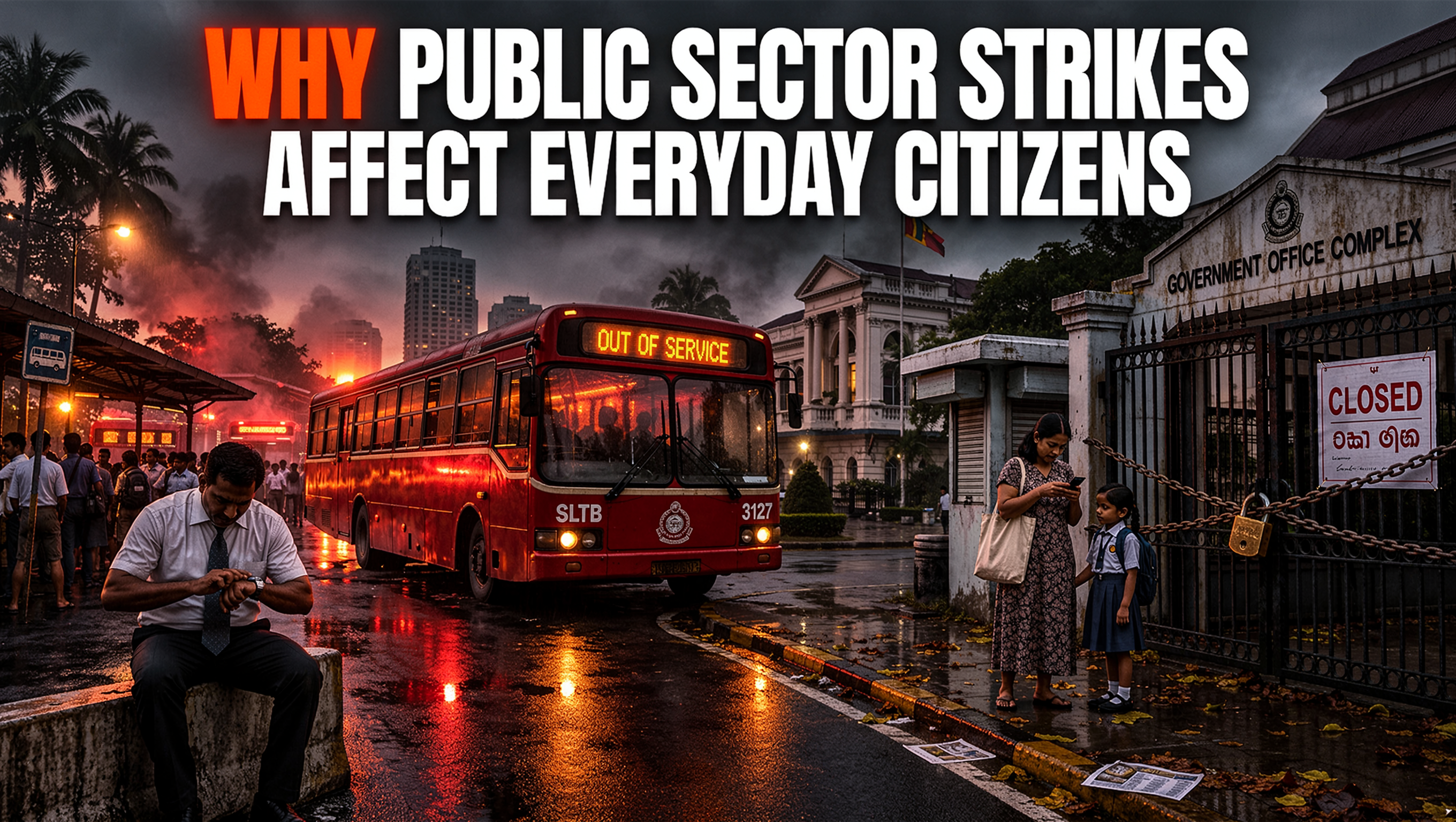
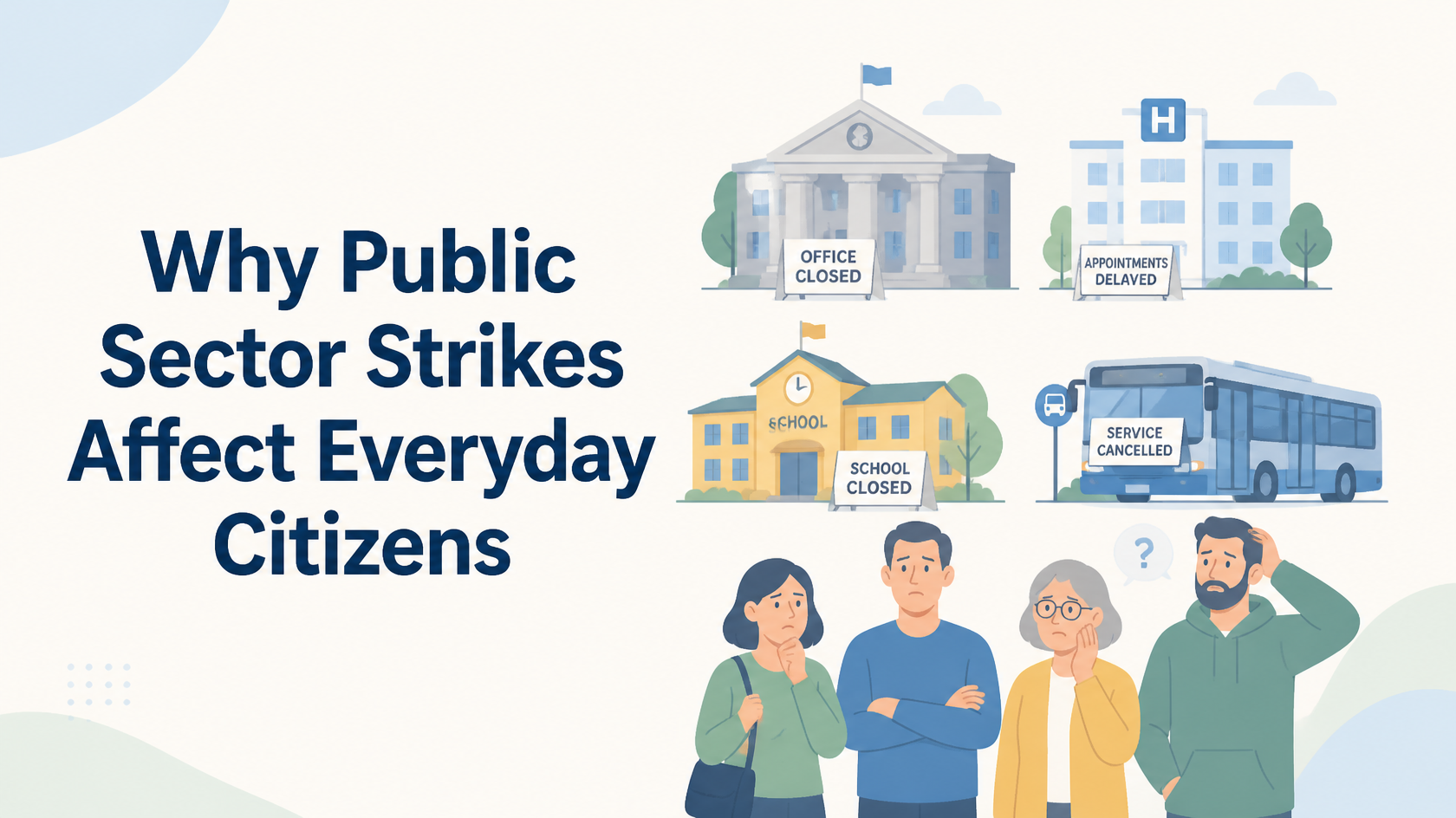
One of the most immediate effects of public sector strikes is the interruption of essential services. Government institutions provide services that people depend on throughout the year. When employees stop working, even for a short period, thousands of people may be unable to complete important tasks.
For example, a strike involving government administrative officers can delay the issuing of official documents, certificates, licences and other essential records. People who need these documents for employment, education, banking or legal purposes may have to wait until normal services resume.
Similarly, strikes involving public transportation employees can affect railway services and government-operated bus services. Commuters may struggle to reach workplaces, schools, universities and hospitals on time.
The situation becomes more difficult when several public sector institutions participate in a strike simultaneously. Citizens may find that multiple services are unavailable on the same day, making it challenging to manage even simple daily responsibilities.
2. Difficulties for Patients and the Healthcare System
Healthcare is one of the most sensitive areas affected by public sector strikes. Many Sri Lankans depend on government hospitals because they cannot afford expensive private medical treatment.
When healthcare workers participate in industrial action, outpatient services, routine consultations, medical tests and scheduled procedures may experience delays or cancellations. Patients who have travelled long distances to attend appointments may return home without receiving the treatment they expected.
For elderly people, pregnant women, children and individuals with long-term illnesses, these disruptions can create additional difficulties. Some patients may have to postpone important medical examinations or spend extra money seeking treatment from private healthcare providers.
Emergency healthcare is particularly important during strike periods. Although arrangements may be made to maintain essential emergency services, the availability of staff and other resources can still become a concern depending on the nature and scale of the industrial action.
A delayed appointment may appear to be a small inconvenience to some people, but for a patient waiting for medical attention, it can create serious anxiety and uncertainty.
3. The Impact on Students and Education
Public sector strikes can also interrupt the education of thousands of students. Government schools and public universities play a major role in Sri Lanka's education system. Many families depend on these institutions because they provide education at a relatively affordable cost.
When teachers, university employees or other education-related workers participate in strikes, classroom activities, examinations, administrative work and academic programmes may be disrupted.
Students preparing for important examinations such as the G.C.E. Ordinary Level and Advanced Level may experience additional pressure when lessons are interrupted. They may need to adjust their study schedules or seek private tuition to cover missed lessons.
University students can face similar difficulties. Strikes may delay lectures, examinations, registration processes and graduation-related activities. These delays can affect students who are planning to enter the job market or continue their education overseas.
The impact is not equal for every student. Families with financial resources may be able to arrange additional educational support. However, students from low-income households may have fewer alternatives.
Education is a long-term investment in a country's future. Therefore, repeated disruptions can affect not only individual students but also the development of the country's skilled workforce.
4. Problems for Daily Wage Earners
Daily wage earners are among the most vulnerable groups during public sector strikes. Unlike employees who receive a fixed monthly salary, many workers depend on their daily earnings to cover food, transportation, rent, electricity and other household expenses.
When public transportation services are interrupted, construction workers, shop assistants, factory employees, cleaners and other daily wage earners may struggle to reach their workplaces.
Some workers may have to spend additional money on private transport. Others may be unable to travel at all, resulting in lost income.
For example, a person who earns money by working in a shop may lose an entire day's wages because buses or trains are unavailable. Although the strike may last only one or two days, the financial consequences can be significant for a household already struggling with rising living costs.
Small disruptions can therefore create serious economic pressure for people who have limited savings and no alternative source of income.
5. Financial Challenges for Small Businesses
Small businesses are another group that can experience considerable difficulties during public sector strikes.
Many businesses depend on government services, transportation networks and administrative approvals to continue their operations. When these services are interrupted, business activities can slow down.
For example, a small business owner who needs a government approval, licence or registration document may be unable to complete the process during a strike. Delays in customs-related processes and other administrative activities can also create problems for businesses involved in importing and exporting goods.
Restaurants, grocery shops, clothing stores, private tuition centres and other small businesses may experience fewer customers when transportation services are affected.
Employees may also struggle to attend work, reducing productivity. Businesses that depend on daily sales can lose income even when the strike is not directly connected to their industry.
For small entrepreneurs operating with limited financial resources, unexpected losses can affect their ability to pay salaries, purchase supplies and meet other expenses.
6. Increased Transportation Costs and Travel Difficulties
Public transportation is essential for a large part of Sri Lanka's population. Many people use buses and trains because they are more affordable than private transportation.
When railway or government bus services are disrupted by strikes, passengers often have to depend on alternative transportation.
Private buses, taxis, three-wheelers and ride-hailing services may become more important during these periods. However, alternative transport may not be affordable or available to everyone.
Passengers may experience longer waiting times, crowded vehicles and increased travel expenses. People who normally spend a relatively small amount on daily transportation may have to spend considerably more during a strike.
The situation can be particularly difficult for people living outside major cities. In some rural areas, public transportation is the main connection between villages and essential services.
As a result, a transportation strike can affect access to education, healthcare, employment and other important activities.
7. Delays in Government Administration
Government administration is another important area that can be affected by industrial action.
Citizens regularly visit government institutions to obtain documents, submit applications, make payments and receive approvals. These services are necessary for many personal and business activities.
For example, delays in obtaining birth certificates, land-related documents, business registrations and other official records can affect people's plans.
Individuals applying for jobs, scholarships, passports or other opportunities may also experience difficulties if the required administrative services are unavailable.
In some cases, people have to take time off work and travel long distances to visit government offices. If the service is interrupted after they arrive, they may have to return another day.
This creates additional transportation costs and wastes valuable time.
When administrative delays continue for several days, the number of pending applications can increase. Even after employees return to work, government offices may need additional time to clear the accumulated workload.
8. The Economic Impact on the Country
Public sector strikes can have wider economic consequences beyond individual households and businesses.
Sri Lanka depends on several important economic activities, including tourism, manufacturing, agriculture, trade and services. These sectors require reliable transportation, efficient administration and functioning public institutions.
When important public services are disrupted, economic activities can slow down.
For example, transportation interruptions can affect workers travelling to factories and offices. Administrative delays can create difficulties for businesses waiting for permits or approvals. Disruptions at important public institutions can also affect investor confidence.
Tourism may experience indirect effects when visitors face transportation difficulties or delays in accessing certain services. Although the impact depends on the type and duration of the strike, repeated disruptions can create an impression that essential services are unreliable.
Public sector strikes can also result in additional costs for businesses and the government. These may include lost working hours, delayed projects, administrative backlogs and expenses related to restoring normal operations.
For a country working to strengthen its economy, maintaining reliable public services is particularly important.
9. Stress and Mental Pressure on Ordinary Families
The effects of public sector strikes are not limited to financial losses or service interruptions. They can also create stress and uncertainty within families.
Parents may worry about their children's education when schools or transportation services are disrupted. Patients and their relatives may become anxious when medical appointments are postponed. Employees may feel pressure when they cannot reach their workplaces on time.
Families with limited financial resources can experience additional stress because unexpected transportation costs and lost working days affect their monthly budgets.
People may also become frustrated when they are unable to obtain clear information about when services will return to normal.
Repeated strikes can create uncertainty in everyday life. Citizens may find it difficult to plan appointments, travel, business activities and other important responsibilities.
This uncertainty can gradually reduce public confidence in institutions that are expected to provide reliable services.
10. Understanding the Reasons Behind Public Sector Strikes
Although public sector strikes can create difficulties for citizens, it is also important to understand why employees choose to participate in industrial action.
Public sector workers may raise concerns about salaries, inflation, working conditions, staff shortages, pension-related issues, promotions and workplace safety.
In Sri Lanka, economic challenges and the rising cost of living have increased financial pressure on many households, including those of government employees.
Some workers may believe that negotiations with their employers have not produced satisfactory results. In such situations, trade unions may organise strikes to bring attention to their demands.
The right to engage in trade union activities and take industrial action is an important part of labour relations. Employees should have the opportunity to raise legitimate concerns and seek fair treatment.
However, industrial action also involves social responsibility. When a strike affects essential services, the consequences can be particularly serious for people who have little control over the dispute.
Therefore, protecting workers' rights and protecting the public interest should not be treated as completely opposing goals.
11. The Responsibility of the Government and Trade Unions
Reducing the negative effects of public sector strikes requires cooperation between the government, trade unions and other relevant institutions.
The government has a responsibility to listen to employee concerns and respond to legitimate demands through meaningful discussions. Ignoring workplace problems for long periods can increase dissatisfaction and make industrial disputes more difficult to resolve.
Trade unions also have an important responsibility. They should communicate their demands clearly, consider the wider impact of industrial action and give priority to protecting essential services.
Both sides should make a genuine effort to resolve disagreements before they develop into major disruptions.
Establishing effective negotiation systems, independent mediation processes and clear communication channels can help prevent unnecessary conflicts.
For essential services such as emergency healthcare, public safety and other critical operations, suitable arrangements should be maintained to protect the public during industrial disputes.
A fair solution should recognise the needs of employees while ensuring that ordinary citizens are not left without access to basic services.
12. How Technology Can Reduce the Impact of Strikes
Technology can play an important role in reducing the difficulties caused by public sector strikes.
Many government services can be made available through online platforms. Citizens could submit applications, request documents, make payments and check application progress without visiting government offices.
For example, digital systems can help people access selected administrative services even when physical offices are experiencing operational difficulties.
Online appointment systems and digital medical records can also improve communication between healthcare institutions and patients.
Government institutions should provide accurate and timely updates through official websites, social media platforms and SMS notifications when services are disrupted.
However, digital services cannot completely replace physical public services. Not everyone has reliable internet access, suitable devices or the digital skills needed to use online platforms.
Therefore, technology should support traditional services rather than exclude people who depend on them.
Investing in reliable digital infrastructure can make government institutions more efficient and better prepared to manage unexpected disruptions.
13. What Ordinary Citizens Can Do During Public Sector Strikes
Although citizens cannot directly control industrial disputes, they can take practical steps to reduce some of the difficulties.
Before travelling to a government office, hospital or public institution, people should check official announcements to confirm whether the relevant service is operating.
Students can organise their study schedules and use reliable educational resources when classroom activities are interrupted.
Patients should contact healthcare institutions to confirm appointment arrangements and seek appropriate medical advice if treatment is postponed. Emergency medical needs should never be ignored because of a strike.
Small business owners can prepare alternative arrangements for transportation, deliveries and administrative work where possible.
Citizens should also avoid spreading unverified information about strikes through social media. False announcements can create unnecessary panic and confusion.
Most importantly, public discussions should remain respectful. Employees have legitimate workplace concerns, while ordinary citizens also have legitimate expectations about essential public services.
Conclusion
Public sector strikes are more than workplace disputes between employees and the government. They can influence almost every part of everyday life, including education, healthcare, transportation, employment, business activities and household finances.
In Sri Lanka, where many people depend heavily on government institutions, even a short disruption can create significant difficulties. Daily wage earners may lose income, students may miss educational opportunities, patients may face treatment delays and small businesses may experience financial losses.
At the same time, public sector employees have the right to raise concerns about unfair working conditions, salaries and other employment-related issues. Their demands should be taken seriously and addressed through meaningful discussions.
The real challenge is finding a balance between protecting workers' rights and ensuring that essential public services remain available to citizens.
A stronger negotiation system, better communication, responsible trade union action and improved digital government services can help reduce the impact of future strikes.
Ultimately, a country cannot develop successfully without reliable public institutions. Government employees, trade unions and political leaders all have a responsibility to protect the interests of society. When disagreements are resolved through cooperation rather than prolonged disruption, both workers and ordinary citizens benefit.
Sri Lanka needs a public sector that protects the rights of its employees while continuing to serve the people who depend on it every day.
Additional Media