Introduction
Sri Lanka is an island nation surrounded by the Indian Ocean, with a coastline that supports a wide range of natural ecosystems. Among these, mangrove forests are some of the most valuable but often overlooked environments. Found mainly along lagoons, estuaries, river mouths and sheltered coastal areas, mangroves provide essential benefits to wildlife, coastal communities and the wider environment.
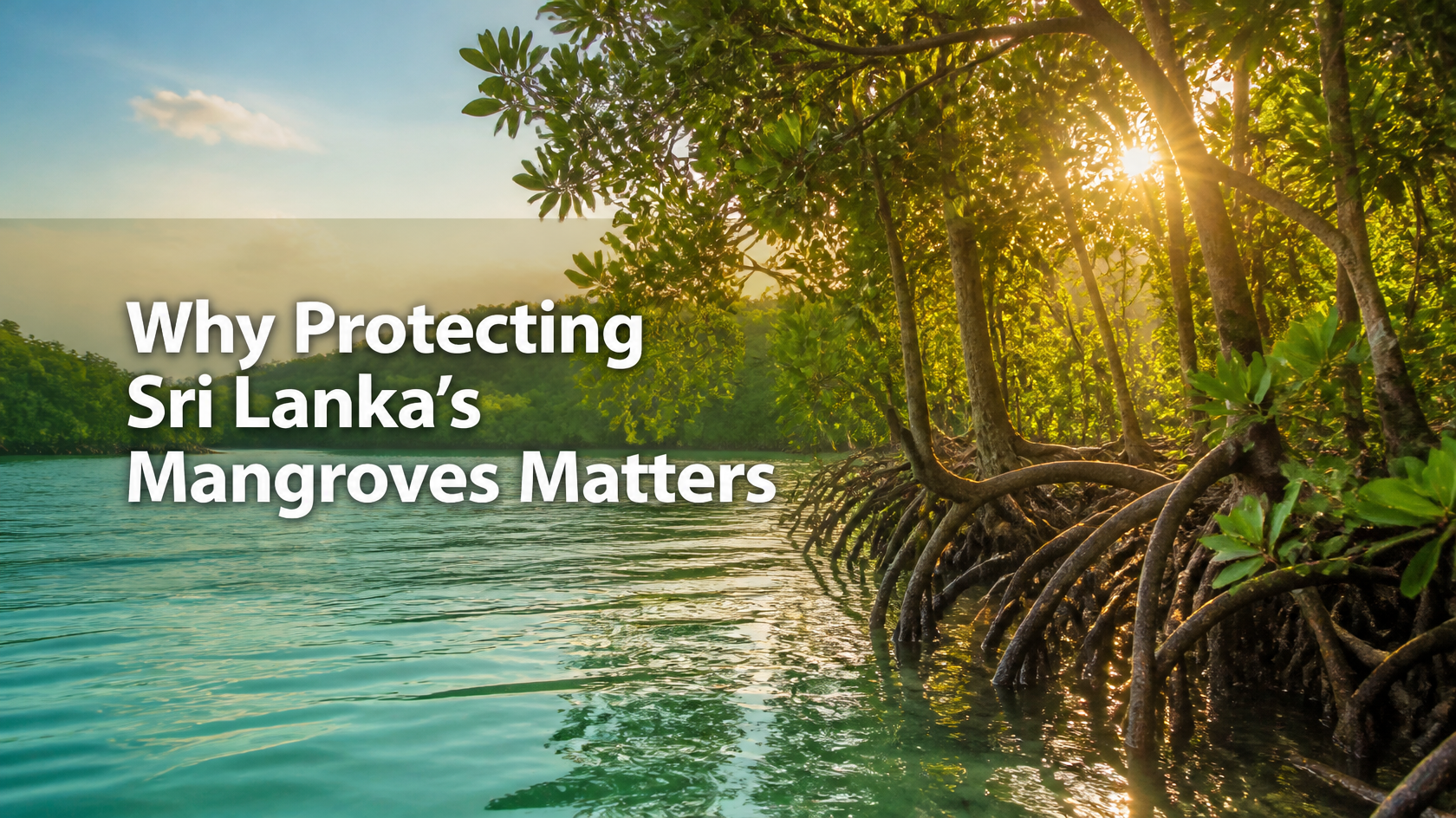
Mangroves are unique trees and shrubs that can survive in salty or brackish water and in muddy soils where many other plants cannot grow. Their complex root systems create habitats for fish, crabs, prawns, molluscs and numerous other organisms. They also help protect coastlines from erosion, store carbon, support fisheries and provide livelihoods for people living near coastal waters.
In Sri Lanka, mangroves are particularly important because many communities depend on fishing, coastal agriculture and tourism. These forests also contribute to the country's natural resilience against storms, flooding and the effects of climate change. However, mangrove ecosystems face several threats, including land reclamation, pollution, poorly planned development, changes in water flow and unsustainable resource use.
Protecting Sri Lanka’s mangroves is therefore not simply a matter of saving trees. It is about conserving biodiversity, protecting communities, supporting the economy and maintaining a healthy environment for future generations.
1. Understanding Mangroves and Their Importance in Sri Lanka
Mangroves are salt-tolerant plants adapted to the difficult conditions of tropical and subtropical coastal environments. Unlike ordinary forests, they grow in places influenced by tides, changing salinity and waterlogged soils. Some mangrove species develop specialised roots that help them obtain oxygen in muddy ground, while others have roots that support the tree in unstable sediments.
Sri Lanka has mangrove habitats around many lagoons, estuaries and sheltered coastal areas. Important locations include the Puttalam Lagoon, the Negombo Lagoon, the Madu Ganga estuary, the Trincomalee coastal region and areas around Batticaloa. The distribution and condition of mangroves differ from one location to another, depending on local geography, water conditions and human activities.
Mangrove ecosystems are not made up of trees alone. They include interconnected communities of plants, animals, microorganisms and aquatic organisms. Fallen leaves and other organic matter decompose in the water and mud, providing nutrients that support food webs.
These forests also connect land and sea ecosystems. Nutrients and organic material move between mangroves, lagoons, seagrass beds and nearby coastal waters. Because of these relationships, damaging a mangrove forest can affect a much wider area than the forest itself.
Understanding this ecological connection is the first step towards recognising why mangroves deserve stronger protection.
2. Protecting Coastal Communities from Erosion and Flooding
One of the most important benefits of mangroves is their ability to reduce certain coastal hazards. Their dense roots and trunks slow water movement, trap sediments and help stabilise shorelines. This can reduce soil erosion and prevent some of the sediment from being washed away by waves and currents.
Mangroves can also reduce wave energy and provide a degree of protection against storm surges. The level of protection depends on factors such as forest width, tree density, species composition, water depth and the strength of the approaching waves. Therefore, mangroves should be considered part of a broader coastal protection strategy rather than a complete substitute for other necessary safety measures.
For Sri Lanka, this protection is especially relevant to communities living near lagoons, estuaries and low-lying coastal areas. When mangroves are cleared, shorelines may become more vulnerable to erosion, and some locations may experience greater exposure to waves and flooding.
Mangroves can also help stabilise the landscape by trapping sediments carried by rivers and tides. This natural process supports the formation and maintenance of suitable coastal habitats.
Protecting existing mangrove forests and restoring damaged areas where appropriate can therefore contribute to coastal resilience. It is a practical way to work with natural processes instead of relying entirely on expensive artificial structures.
However, restoration must be carefully planned. Planting mangroves in unsuitable locations, such as naturally open mudflats or seagrass habitats, can damage other valuable ecosystems. Successful conservation begins with understanding the natural environment of each site.
3. Providing Safe Habitats for Wildlife
Mangrove forests support a remarkable variety of wildlife. Their tangled roots, branches, muddy surfaces and shallow waters create habitats for fish, crabs, prawns, molluscs, insects and many bird species. Some reptiles and other animals also depend on mangrove environments for food, shelter or breeding areas.
Young fish often use the sheltered spaces between mangrove roots to hide from predators. As they grow, some move into lagoons, seagrass beds and coastal waters. Mangroves therefore function as natural nurseries for numerous aquatic species.
In Sri Lanka, this ecological role is particularly important around lagoons and estuaries where fishing activities support local communities. Healthy mangrove habitats help maintain the natural relationships between different species and contribute to the overall health of coastal ecosystems.
Mangroves also provide feeding and resting areas for resident and migratory birds. The loss of these forests can reduce the availability of food and shelter, affecting wildlife populations and the wider food chain.
Protecting mangroves does not mean conserving trees alone. It also means safeguarding the countless organisms that depend on these environments for survival. If mangrove forests disappear, some species may lose important breeding grounds, while others may be forced to move to less suitable habitats.
Conserving these ecosystems is therefore essential for maintaining Sri Lanka's coastal biodiversity. The United Nations Environment Programme identifies mangroves as important habitats for wildlife and commercially valuable fish species.
UNEP - UN Environment Programme+1
4. Supporting Fishing Communities and Food Security
Fishing is an important source of income and food for many Sri Lankan families. In coastal communities, people depend on fish, prawns, crabs and other aquatic resources for their daily needs. Mangroves contribute to these resources by providing shelter, feeding grounds and nursery habitats for numerous aquatic species.
When mangrove ecosystems remain healthy, they can help sustain fish populations that support small-scale and commercial fisheries. Fishermen may benefit from more productive fishing grounds, while families gain access to an important source of protein.
Mangroves also support people involved in related activities, including seafood processing, transportation, local markets and small businesses. Consequently, damage to mangrove forests can affect more than fishermen alone. It may influence the incomes of entire communities.
Sri Lanka's mangrove restoration programme has demonstrated the connection between ecosystem recovery and local livelihoods. In areas where restoration has taken place, community members have reported improvements in fishing opportunities and have participated in activities such as guiding visitors, transporting people by boat and working on restoration projects.
UNEP+1
Nevertheless, healthy mangroves cannot guarantee higher catches in every location. Fishing pressure, pollution, water quality, weather conditions and other habitat changes also influence fish populations.
Protecting mangroves alongside sustainable fishing practices can help maintain these resources over the long term. This is particularly important for families that have limited alternative sources of income.
5. Helping to Reduce Climate Change
Mangroves play an important role in addressing climate change because they absorb carbon dioxide through photosynthesis and store carbon in their trunks, branches, roots and surrounding soils.
A particularly important feature is their ability to accumulate substantial quantities of carbon in waterlogged sediments. Because these soils often contain limited oxygen, the decomposition of organic material can be slow, allowing carbon to remain stored for long periods.
This stored carbon is commonly called blue carbon when it refers to carbon captured and held by coastal and marine ecosystems, including mangroves, seagrasses and salt marshes.
Protecting existing mangrove forests helps prevent the release of some of this stored carbon. When mangroves are cleared or their soils are disturbed, previously stored carbon may be released into the atmosphere, contributing to greenhouse gas emissions.
For Sri Lanka, mangrove conservation can therefore support national efforts to address climate change while protecting valuable coastal habitats.
However, mangroves are not a replacement for reducing emissions from fossil fuels, transport, industry and other sources. Their climate benefits are strongest when they form part of a wider strategy that includes protecting forests, improving energy efficiency and reducing greenhouse gas emissions.
By conserving mangroves today, Sri Lanka can protect an important natural carbon store while strengthening the resilience of coastal ecosystems.
UNEP - UN Environment Programme+1
6. Improving Water Quality and Protecting Other Ecosystems
Mangroves also help maintain water quality by trapping some sediments and retaining certain nutrients and pollutants carried from surrounding land. Their roots slow water movement, allowing suspended particles to settle. Microorganisms living in mangrove soils help break down some organic matter and contribute to nutrient cycling.
These natural processes can reduce the amount of sediment reaching nearby seagrass beds and coral reefs. This is important because excessive sediment can reduce the light available to seagrasses and corals, affecting their growth and survival.
Mangroves are also connected to other coastal habitats through the movement of water, nutrients and animals. Fish may move between mangroves and seagrass beds, while organic matter from mangrove forests supports food webs in adjacent waters.
However, mangroves cannot remove every pollutant. Industrial chemicals, untreated sewage, plastics and excessive nutrient runoff can still damage these ecosystems. Their ability to improve water quality depends on the type and quantity of pollution, local conditions and the health of the forest.
Protecting mangroves must therefore go hand in hand with better waste management, responsible farming, proper sewage treatment and pollution control.
A healthy coastal environment requires all these habitats to function together rather than treating mangroves as isolated patches of trees.
UNEP - UN Environment Programme+1
7. Creating Economic Opportunities Through Sustainable Tourism
Mangrove forests can also contribute to tourism and local economic development. Their unusual root systems, rich wildlife and peaceful waterways attract visitors interested in nature, photography, birdwatching and educational experiences.
Places such as the Madu Ganga estuary and the Negombo Lagoon are associated with coastal and wetland tourism, including boat excursions through mangrove environments.
When properly managed, nature-based tourism can provide income for boat operators, local guides, accommodation providers, food sellers and small businesses. It can also create opportunities for young people who want to work in tourism or environmental education.
Mangrove tourism must, however, be organised responsibly. Excessive boat traffic, noise, littering and careless behaviour can disturb wildlife and damage sensitive habitats.
Tour operators should follow appropriate environmental guidelines, while visitors should avoid cutting vegetation, feeding wild animals or leaving rubbish behind.
A successful tourism model should ensure that local communities benefit financially while the natural environment remains protected. Revenue from suitable tourism activities can also help support conservation programmes and raise awareness of the importance of mangroves.
8. Understanding the Threats Facing Sri Lanka's Mangroves
Despite their importance, mangrove forests face several serious threats.
Coastal development and land reclamation: Mangrove areas may be cleared to make room for buildings, roads, tourism facilities and other infrastructure. Poorly planned development can destroy habitats and alter natural water flow.
Shrimp farming and other land uses: The expansion of aquaculture, particularly shrimp farming, has contributed to mangrove loss in parts of Sri Lanka. Salt production and the conversion of coastal wetlands for other uses have also affected some areas.
Pollution and waste disposal: Plastic waste, sewage, agricultural runoff and industrial pollution can harm mangrove plants and the animals that live among their roots.
Unsustainable harvesting: Excessive cutting of mangrove wood and the removal of natural resources can gradually weaken the forest and reduce its ability to support wildlife.
Changes in water flow: Dams, barrages, drainage works and other changes to waterways can alter the balance between freshwater and seawater. Mangroves depend on suitable hydrological conditions, so changes in salinity, sediment movement and tidal exchange may damage them.
Climate change: Rising sea levels, changing rainfall patterns and extreme weather events can place additional pressure on mangrove habitats. Whether forests can survive rising seas depends partly on their ability to migrate inland or accumulate sediment, which may be restricted by roads, buildings and other barriers.
Sri Lanka's national mangrove restoration guidelines identify aquaculture, encroachment, coastal development and changes in freshwater flows among the factors contributing to mangrove degradation.
env.gov.lk+1
Addressing these threats requires effective law enforcement, careful development planning and cooperation between government authorities, businesses and local communities.
9. What Sri Lanka Is Doing to Protect Mangroves
Sri Lanka has taken important steps towards mangrove conservation. In 2015, the country introduced a national initiative to protect and restore its mangrove forests. A national policy on the conservation and sustainable use of mangrove ecosystems was adopted in 2020, followed by a strategic action plan and national restoration guidelines published in 2022.
The restoration programme has combined scientific guidance with community participation. In 2024, the United Nations recognised Sri Lanka's mangrove regeneration initiative as one of its World Restoration Flagships. According to the United Nations, the initiative had helped restore approximately 500 hectares of mangroves since 2015 at the time of that recognition.
United Nations in Sri Lanka+1
These efforts demonstrate that mangrove recovery is possible when conservation receives sustained attention. However, planting trees alone is not enough. Restoration projects must select suitable locations, use appropriate native species and address the environmental conditions that caused the original damage.
Protecting existing forests is also essential because mature mangrove ecosystems provide established habitats and ecological functions that newly planted seedlings cannot immediately replace.
Long-term monitoring, community involvement, scientific research and consistent enforcement of environmental laws will be necessary to maintain progress.
10. How Individuals and Communities Can Help
Mangrove conservation is not solely the responsibility of the government. Individuals, schools, businesses and community organisations can all contribute.
- Avoid dumping waste: Dispose of household rubbish properly and help prevent plastic from entering rivers, lagoons and coastal waters.
- Join responsible conservation programmes: Participate in organised clean-ups and restoration projects led by knowledgeable environmental organisations.
- Learn before planting: Support scientifically guided projects that select suitable locations and native mangrove species instead of planting seedlings randomly.
- Support local conservation groups: Volunteer, contribute resources or help raise awareness about threats to coastal ecosystems.
- Choose responsible tourism: Visit natural areas respectfully and support operators who follow environmental guidelines.
- Educate young people: Schools and community groups can organise lessons, field visits and awareness programmes about mangrove wildlife and coastal protection.
- Report environmental damage: Where appropriate, inform relevant environmental or local authorities about suspected illegal clearing, dumping or destructive activities.
Small actions can make a meaningful contribution when they become part of a wider community effort. Businesses and developers also have an important responsibility to assess environmental impacts and avoid unnecessary destruction of mangrove habitats.
Conclusion
Protecting Sri Lanka's mangroves matters because these coastal forests provide benefits that extend far beyond their boundaries. They help stabilise shorelines, reduce certain coastal hazards, support fisheries, provide habitats for wildlife, store carbon and contribute to the livelihoods of coastal communities.
Their protection is also connected to Sri Lanka's food security, tourism industry, biodiversity conservation and ability to respond to climate change. Losing mangroves can create environmental and economic problems that are difficult and expensive to reverse.
Sri Lanka has already made important progress through national conservation policies and restoration programmes. Maintaining this progress will require continuous action, scientific planning and cooperation among authorities, communities, researchers and businesses.
Most importantly, mangroves should not be viewed as unused coastal land waiting for development. They are living ecosystems that provide essential services to people and nature.
By protecting existing forests, restoring degraded habitats appropriately and using coastal resources responsibly, Sri Lanka can safeguard these valuable ecosystems for future generations. The future of the country's coastal environment depends partly on the decisions made today, and protecting mangroves is an important step towards a healthier, safer and more sustainable island.
Additional Media