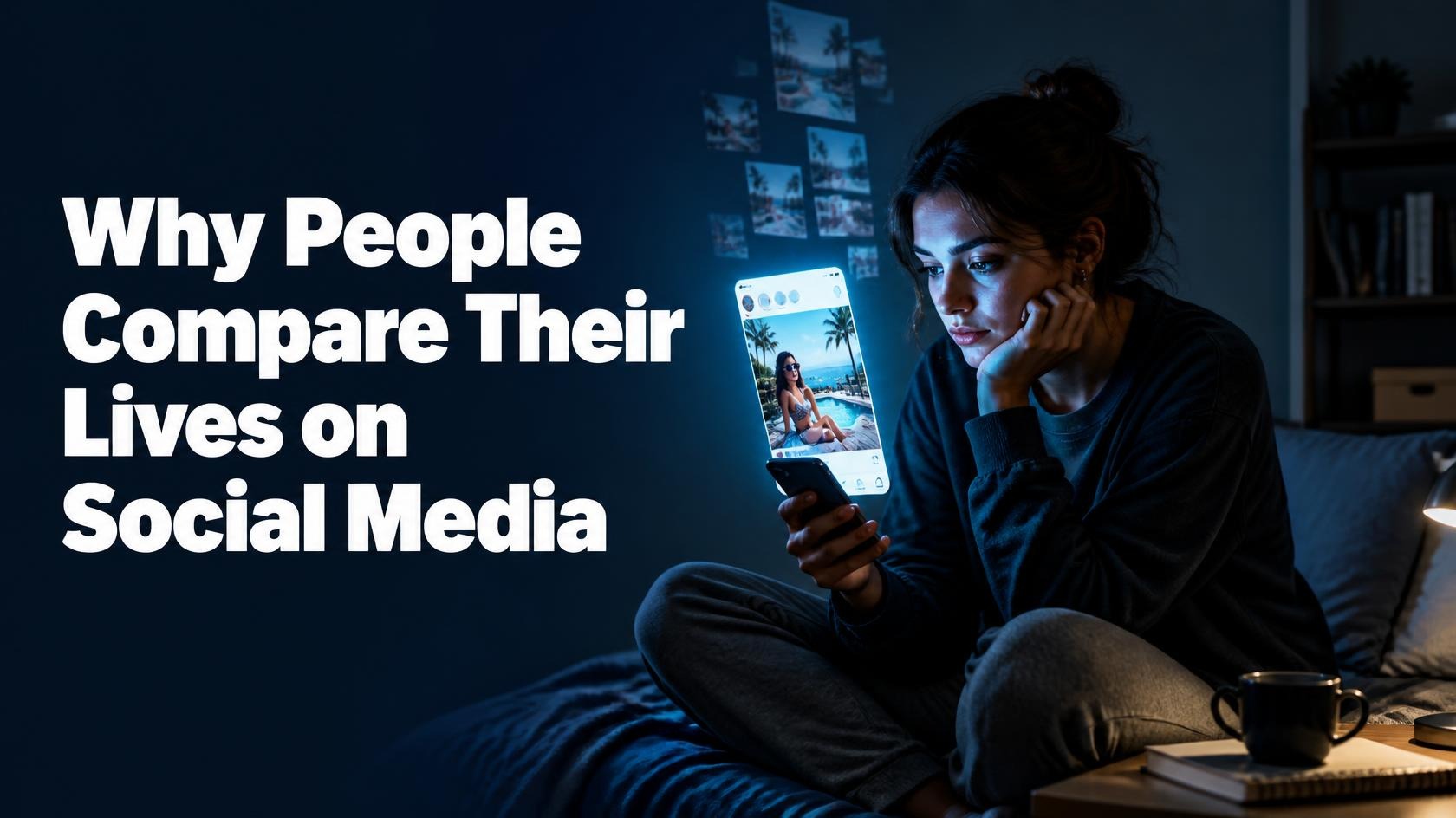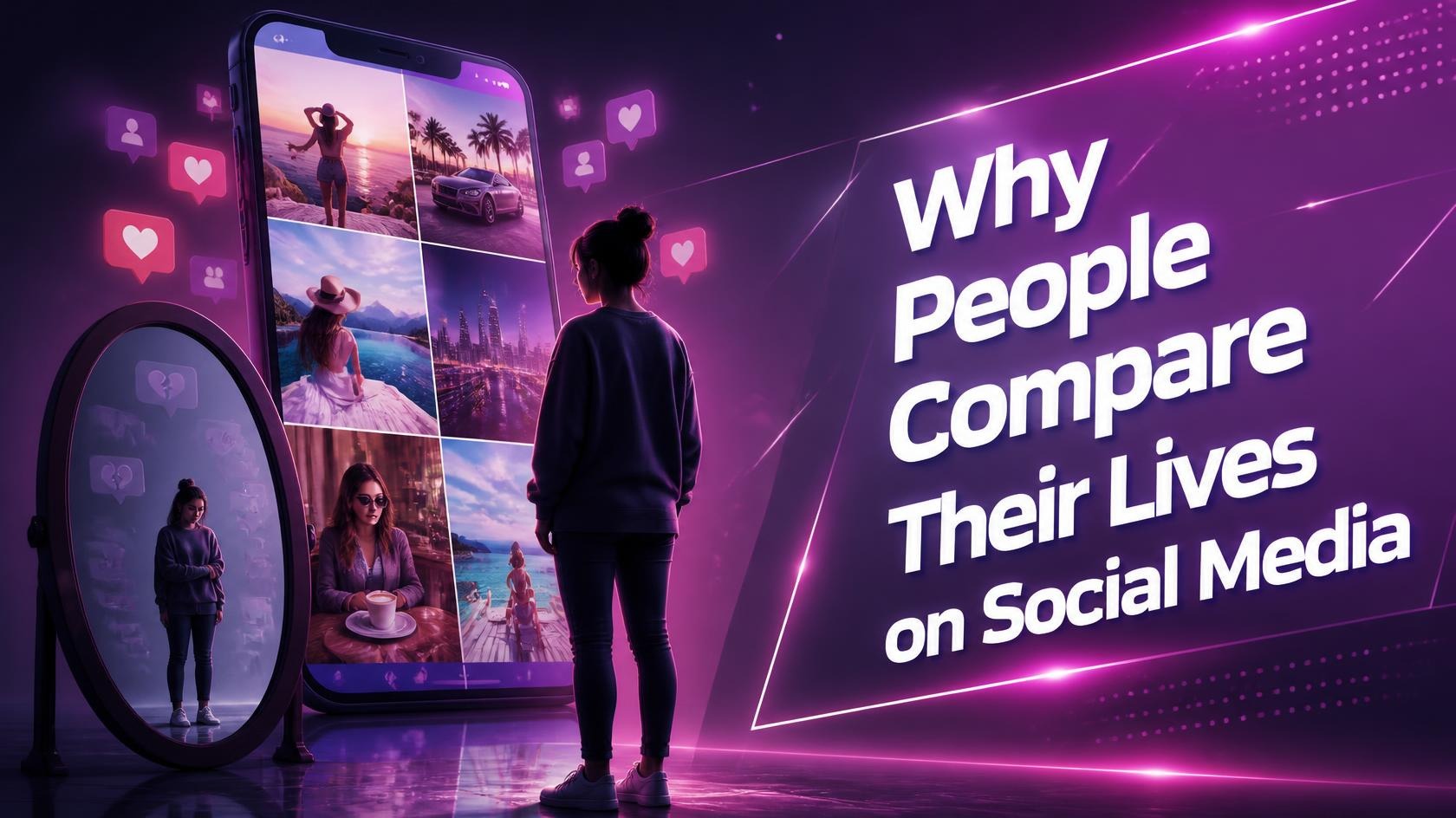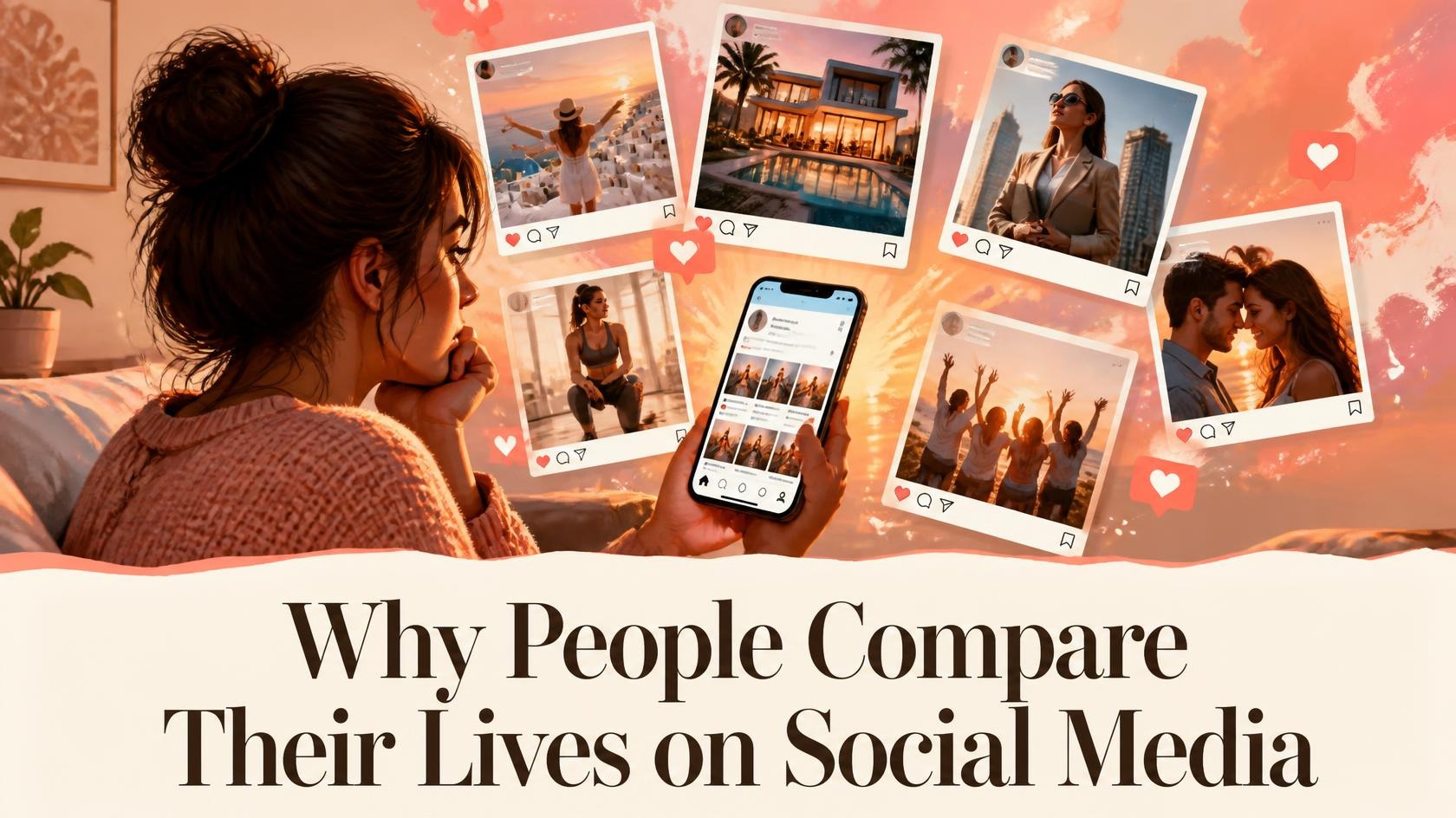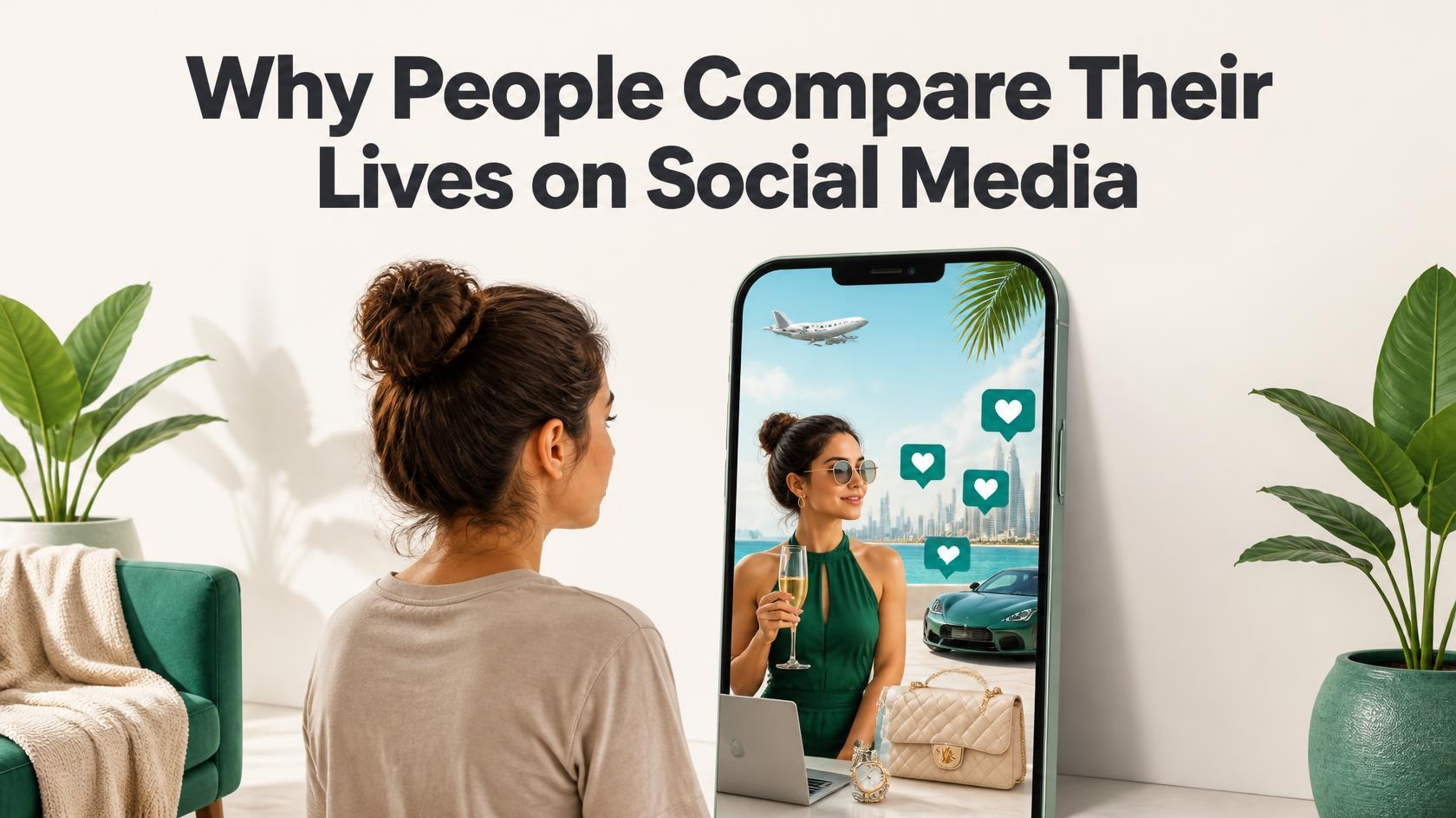
Social media has become a normal part of everyday life. People use platforms such as Facebook, Instagram, TikTok, YouTube, and other online networks to communicate, share experiences, follow trends, and keep in touch with friends and family. At the same time, social media has created a new environment where people constantly see how others appear to be living. Someone may post photographs from a holiday, a new house, a graduation, a wedding, a successful business, an expensive meal, or a new job. Seeing these posts can naturally lead people to compare their own lives with what they see online.
Life comparison is not a new human behavior. People have always compared themselves with relatives, neighbors, classmates, colleagues, and friends. However, social media has made comparison much easier and more frequent. Instead of comparing ourselves with a small group of people around us, we can now see the lives of hundreds or thousands of people every day.
The important point is that social media usually shows only selected parts of a person's life. People tend to share moments they are proud of, enjoy, or want others to notice. Difficult days, financial problems, family disagreements, failures, loneliness, and personal worries are much less likely to appear on a public profile. This difference between what is shown and what is actually experienced can make social comparison particularly powerful.
The Human Need to Compare
People naturally use others as a source of information about themselves. We often want to know whether we are doing well, whether our choices are normal, and how we are progressing in life. This is sometimes described as social comparison.
For example, a university student may look at another student's achievements and wonder whether they are falling behind. A young employee may see a former classmate receiving a promotion and start questioning their own career. Someone who is not married may repeatedly see wedding photographs and begin wondering why their own life is different.
Comparison can sometimes be useful. Seeing another person's achievements may encourage someone to study harder, develop a skill, exercise, save money, or work toward a personal goal. The problem begins when comparison becomes constant or when people judge their own worth based mainly on what others appear to have.
Social media increases opportunities for this comparison because information about other people's lives is available almost continuously.
Social Media Shows a Carefully Selected Life
One of the biggest reasons social media comparison can become misleading is that online content is usually selective.
People decide what to photograph, what to post, what caption to write, and sometimes which moments to remove or hide. A person might take dozens of photographs before selecting one for publication. Someone may spend an ordinary week dealing with stress but post one attractive photograph from a short outing.
This does not necessarily mean that people are deliberately lying. Most people simply share the moments they want to remember or present publicly. However, viewers can forget this when they repeatedly see attractive images.
A photograph of a smiling family does not tell us whether that family had problems before or after the photograph. A picture of a successful business does not show every unsuccessful idea that came before it. A graduation photograph does not show the years of stress, financial difficulties, or academic struggles behind the achievement.
When people compare their complete, complicated lives with the carefully selected highlights of someone else's life, the comparison is naturally unequal.
The Influence of the Highlight Reel
Social media is sometimes described as a highlight reel because users often see the best moments of other people's lives.
Imagine someone opens Instagram after having a difficult day. The first post shows a friend enjoying a holiday. The next shows another person buying a new vehicle. Another post shows a successful entrepreneur celebrating a business achievement. A fourth shows someone's engagement or wedding.
The person looking at these posts may think, "Everyone is moving forward except me."
But this conclusion is based on incomplete information. The viewer knows their own problems in detail but sees only small pieces of other people's lives.
This is an important psychological difference. We experience our own failures, worries, uncertainty, and boring routines directly. We usually experience other people's lives through selected photographs and short videos. As a result, other people's lives can appear much better and more exciting than they really are.
Fear of Missing Out
Another reason people compare themselves on social media is fear of missing out, often called FOMO.
FOMO is the uncomfortable feeling that other people are enjoying experiences, opportunities, or relationships without us. Social media can make this feeling stronger because users receive continuous updates about what others are doing.
A person may see friends attending an event while they are at home. They may see colleagues travelling while they are working. They may see classmates meeting together without them. Even when there is nothing wrong with staying home or following a different lifestyle, repeated exposure can create a feeling of being left behind.
Young people can be particularly sensitive to this because social relationships, identity, education, careers, and future plans are important during this stage of life. Social media can make normal differences between people feel much more significant.
The Role of Likes, Followers, and Comments
Social media also gives people visible measurements of attention. Likes, comments, shares, views, and follower numbers can become associated with popularity and social acceptance.
When someone receives many likes, they may feel appreciated or socially successful. When another person's post receives significantly more attention, users may begin comparing their own online popularity with that person's.
This can create a cycle. A person posts something, waits for reactions, compares the response with previous posts or other people's posts, and then decides whether they are receiving enough attention.
Over time, some people may begin creating content mainly for approval rather than personal enjoyment. Their mood can become connected to online reactions.
It is important to remember that these numbers do not provide a complete measure of someone's value, relationships, intelligence, success, or happiness. They primarily measure activity and engagement on a particular platform.
Consumerism and the Pressure to Have More
Social media comparison is also closely connected to consumer culture. People frequently see advertisements, influencers, celebrities, and ordinary users displaying clothing, phones, vehicles, restaurants, houses, holidays, and other products.
Repeated exposure can create the impression that a successful life requires constant improvement in material possessions.
Someone who already has a good phone may suddenly feel that it is outdated after seeing a newer model repeatedly. A person may feel dissatisfied with their home after seeing carefully designed interiors online. Someone may feel pressure to travel because travel photographs appear constantly on their feed.
This can turn normal wants into feelings of inadequacy.
The problem is not buying something enjoyable or appreciating another person's success. The problem occurs when people begin measuring their personal worth by what they can afford compared with what others display.
Career and Educational Comparison
Social media can also affect how people think about education and careers.
Graduates may see announcements about other people's promotions, scholarships, overseas opportunities, professional qualifications, or new businesses. Students may encounter posts from people who appear to be achieving remarkable results at a young age.
These stories can be inspiring, but they can also create unrealistic expectations.
A person might think, "I am already 25, but I have not achieved what they achieved." Another might believe that they should already own a business, earn a high salary, or have an impressive professional title.
However, career development rarely follows the same timetable for everyone. People start with different financial situations, educational opportunities, family responsibilities, abilities, interests, and social circumstances.
Comparing timelines can therefore create unnecessary pressure.
Relationship and Family Comparisons
Relationships are another common area of comparison.
Social media is filled with engagement photographs, wedding celebrations, anniversary posts, romantic messages, family outings, and photographs of children. While these posts can be meaningful and positive, they can also affect people who are at different stages of life.
A single person may feel that they are falling behind because friends are getting married. A married couple may compare their relationship with romantic content online. Parents may compare their children with other children based on achievements, appearance, activities, or educational progress.
These comparisons can create unrealistic expectations because social media rarely shows the complete reality of a relationship or family.
Every family has different circumstances. A person's life does not become unsuccessful simply because it does not follow the same timeline as someone else's.
Why Younger People May Feel the Pressure More Strongly
Young people spend significant amounts of time in digital environments and may use social media as an important part of their social lives. For them, online feedback can sometimes feel closely connected to real-world acceptance.
At a stage when people are still developing their identity and deciding what they want from education, work, relationships, and life, constant exposure to other people's achievements can make uncertainty more difficult.
However, social media comparison is not limited to young people. Adults can also compare their careers, finances, homes, parenting, relationships, health-related lifestyles, and personal achievements with others.
The issue is therefore not simply about age. It is about how frequently a person uses social media and how they interpret what they see.
The Emotional Effects of Constant Comparison
Frequent negative comparison can contribute to dissatisfaction, envy, frustration, loneliness, and reduced self-confidence. For some people, it may also be associated with anxiety or depressive feelings.
This does not mean that social media automatically causes mental health problems. People's experiences are different, and many factors influence emotional well-being. However, research has repeatedly examined the relationship between social media use, social comparison, and psychological well-being.
One important factor is how people use social media. Passive scrolling through other people's content may create a different experience from actively communicating with friends or participating in meaningful communities.
Therefore, the amount of time spent online is not the only issue. The quality and purpose of social media use also matter.
Social Media Can Also Have Positive Effects
It would be unfair to describe social media comparison as completely negative.
Seeing other people's achievements can provide motivation. A student may become interested in a new subject after seeing someone else's educational journey. Someone may discover a career opportunity through another person's post. A small business owner may learn useful marketing techniques by observing successful businesses. Travelers can discover places they would otherwise never know about.
Social media can also help people find communities where they feel understood. Someone with a particular interest may connect with people who share the same passion.
The key difference is whether comparison becomes inspiration or self-judgment.
If another person's success encourages someone to set a realistic goal, comparison can be useful. If it makes someone believe they have no value because their life looks different, it becomes harmful.
Learning to Compare More Realistically
One of the most useful ways to reduce unhealthy comparison is to remember that social media does not provide the complete picture.
Before feeling discouraged by someone's post, it can help to ask: "What am I actually seeing?" The answer may be one photograph, a short video, or a carefully written caption—not an entire life.
People can also focus more on their own progress. Instead of asking whether they are ahead or behind someone else, they can ask whether they have learned something, overcome a difficulty, improved a skill, or moved closer to a personal goal.
Another useful approach is to review the accounts one follows. If certain accounts repeatedly create feelings of inadequacy or unnecessary pressure, reducing exposure to that content can be helpful. Social media platforms also provide tools such as unfollowing, muting, and limiting notifications.
Taking regular breaks can help people reconnect with offline experiences as well.
Building a Healthier Relationship with Social Media
A healthier approach does not necessarily require completely leaving social media. For many people, these platforms are important for communication, education, entertainment, and work.
Instead, users can become more conscious of how social media affects them.
They can spend more time communicating with people rather than endlessly scrolling. They can follow educational and constructive accounts instead of focusing only on status and material success. They can avoid checking social media whenever they feel bored or uncomfortable.
Most importantly, people can remember that a different life is not automatically a worse life.
Everyone has a different combination of opportunities, responsibilities, struggles, goals, and timing. Social media may show where someone went on holiday, what they bought, or what achievement they celebrated, but it cannot show the complete story behind that person's life.
Conclusion
People compare their lives on social media because comparison is a natural part of human behavior, while social media provides an enormous amount of information for making those comparisons. Likes, followers, achievements, relationships, travel, possessions, careers, and lifestyles are displayed every day, making it easy to believe that everyone else is doing better.
Yet social media is only a partial window into reality. Most users share selected moments rather than every ordinary or difficult part of their lives. Comparing our complete lives with the highlights of other people's lives can therefore create an unfair picture.
Social media itself is neither entirely good nor entirely bad. Its effect depends greatly on how people use it and how they interpret what they see. Comparison can sometimes provide motivation and inspiration, but constant comparison can also create unnecessary pressure and dissatisfaction.
A healthier approach is to use social media consciously, recognize that online images do not tell the whole story, and measure personal progress against meaningful individual goals rather than someone else's carefully selected highlights. In a world where everyone's life can appear perfect through a screen, remembering the difference between what is posted and what is actually lived has become increasingly important.
Additional Media