Why Is Sri Lanka Facing Both Floods and Water Shortages?
Rakshika Rathnayake11/6/20265 min read
Share:Facebook
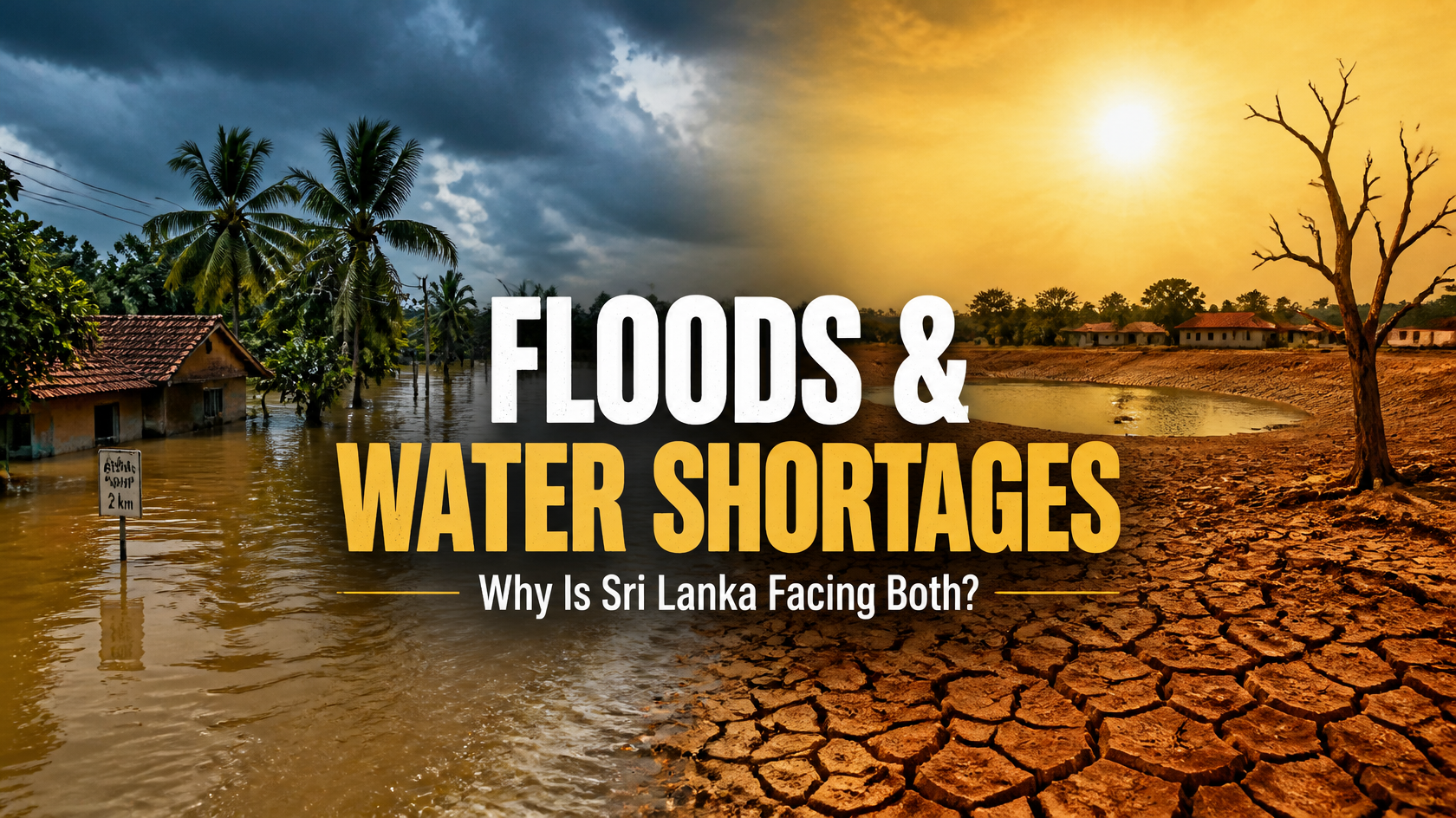
Sri Lanka is often described as a country blessed with water. It receives rainfall during two monsoon seasons, has hundreds of rivers and streams, and is home to many reservoirs, tanks, wetlands, and groundwater resources. Yet, despite this natural wealth, the country regularly experiences two seemingly opposite problems: destructive floods and serious water shortages.
In one part of the country, heavy rainfall can flood homes, roads, and farmland. At the same time, another area may be struggling with dry wells, limited drinking water, and difficulties in farming. Sometimes, the same district can experience flooding during one season and water shortages only a few months later.
This situation may appear contradictory. If Sri Lanka receives so much rain, why does it still face water shortages? The answer lies in the way rainfall is distributed, how water is stored and managed, changes in the environment, rapid urban development, and the growing effects of climate change. The challenge is not simply the amount of water Sri Lanka receives. It is increasingly about **when the water arrives, where it falls, and how effectively the country can capture, store, protect, and distribute it**.
## A Country of Uneven Rainfall
Sri Lanka's rainfall is not evenly distributed throughout the year or across the island. Different regions receive very different amounts of rain. The Wet Zone, particularly the south-western and central parts of the country, receives relatively high rainfall. In contrast, large areas of the Dry Zone experience long periods with much less rain.
Sri Lanka is also influenced by several rainfall systems, including the South-West Monsoon, North-East Monsoon, inter-monsoon rains, and occasional weather disturbances. These systems can bring intense rainfall within a short period.
The problem is that receiving a large amount of rain does not automatically guarantee a reliable water supply throughout the year. A region may receive extremely heavy rainfall over several days, followed by weeks or months of dry weather. If the rainwater quickly flows into the sea instead of being absorbed into the ground or stored in reservoirs, communities may still face shortages later.
This is one of the main reasons Sri Lanka can experience floods and drought-like conditions within the same year.
## Heavy Rainfall Arriving in Short Periods
One of the biggest challenges is the increasing intensity of rainfall events. Instead of moderate rain falling steadily over many days, Sri Lanka can experience very heavy downpours within only a few hours.
When the ground and drainage systems cannot absorb or carry such large volumes of water, flooding occurs quickly. Rivers overflow, roads become submerged, and low-lying communities are affected.
Heavy rainfall can also cause landslides in mountainous and hilly areas. In places where forests have been cleared or hillsides have been disturbed by construction, the soil may become unstable during intense rainfall.
However, floodwater does not always become useful water for the future. Much of it can flow rapidly through rivers and drainage channels and eventually reach the ocean. A sudden flood may therefore cause serious damage without significantly improving water availability during the following dry season.
This is an important part of Sri Lanka's water challenge: **too much water can arrive too quickly to be properly captured and stored**.
## Climate Change Is Making Weather More Unpredictable
Climate change is making water management even more difficult. Rising global temperatures affect weather patterns and can contribute to more unpredictable rainfall.
Sri Lanka has historically experienced seasonal variations in rainfall, but changing climate conditions can make these patterns less reliable. Some periods may experience unusually intense rainfall, while others may face extended dry spells.
A warmer atmosphere can hold more moisture, which may contribute to intense rainfall events under suitable weather conditions. At the same time, higher temperatures can increase evaporation from reservoirs, lakes, soil, and other water bodies.
For farmers, these changes create major difficulties. Traditional farming calendars often depend on expected rainfall seasons. When rain arrives late, stops unexpectedly, or falls too heavily within a short period, crops can be damaged.
A farmer may face flooding during the planting season and water shortages later when crops need water to grow. This demonstrates how floods and droughts are not completely separate problems. Both can be connected to increasingly unpredictable weather patterns.
## Losing Forests and Natural Water Catchments
Forests play a major role in protecting Sri Lanka's water resources. Trees and vegetation help rainwater enter the soil, reduce rapid surface runoff, and support the natural recharge of groundwater.
When forests are removed, rainwater can move more quickly across the land. This increases the risk of flooding and soil erosion. Instead of slowly entering the ground, water may rush into streams and rivers.
The consequences continue long after the rainfall has ended. If less water enters underground aquifers, wells and groundwater sources may become weaker during dry periods.
Deforestation can therefore contribute to both sides of the problem. It can increase flooding during heavy rain and reduce water availability during dry seasons.
Protecting forests, especially in river catchment areas and mountainous regions, is not only important for wildlife. It is also an essential part of protecting Sri Lanka's water security.
## Urban Development and Poor Drainage
Rapid urban development has created another major challenge. Cities and towns increasingly contain concrete roads, buildings, parking areas, and other hard surfaces.
Natural soil absorbs rainwater, but concrete does not. When rain falls on large built-up areas, much of the water immediately becomes surface runoff.
If drainage systems are blocked, poorly designed, or unable to handle extreme rainfall, urban flooding can occur quickly. Colombo and other rapidly developing urban areas have experienced this problem repeatedly.
Wetlands are also important in managing floodwater. They act like natural storage areas by holding excess water and allowing some of it to slowly move into the ground. When wetlands are filled for construction or damaged by pollution and development, cities lose part of their natural flood protection.
The same urban areas may later experience water shortages because rainwater that could have helped recharge groundwater is quickly removed through drains and canals.
Better urban planning must therefore consider both flood prevention and water conservation. Rainwater harvesting, protected wetlands, permeable surfaces, improved drainage, and carefully planned development can help reduce these problems.
## Sri Lanka's Traditional Water Management System
Sri Lanka has a long history of advanced water management. Ancient kingdoms developed an impressive network of tanks, reservoirs, canals, and irrigation systems.
The famous tank-based civilisation of the Dry Zone was built around the understanding that rainfall is seasonal and must be stored for future use. Large reservoirs and smaller village tanks helped communities collect water during rainy periods and use it during dry months.
This traditional knowledge remains highly relevant today.
Many ancient irrigation systems were designed not simply to transport water quickly but to manage it carefully. Water was stored, shared, and used for agriculture and daily life.
However, modern population growth, changing land use, poor maintenance, sedimentation, and increasing demand have placed pressure on water infrastructure.
Restoring and modernising reservoirs and traditional tank systems could play an important role in improving water security. At the same time, these systems must be managed in ways that consider environmental protection and the needs of communities.
## Groundwater Is Under Increasing Pressure
Groundwater is another important source of water, particularly for households and rural communities that depend on wells.
During dry periods, many people rely heavily on groundwater. However, groundwater is not unlimited. It must be naturally replenished by rainwater entering the soil.
When land is covered with concrete or when forests and vegetation are removed, less water may reach underground sources. Excessive extraction can further reduce groundwater levels.
In coastal areas, another concern is saltwater intrusion. If too much freshwater groundwater is extracted, seawater may move into underground water sources, affecting water quality.
Pollution from waste, agriculture, industries, and poorly managed sanitation can also contaminate groundwater.
This means Sri Lanka must not only focus on finding more water. It must also protect the quality and long-term sustainability of the water already available.
## Water Demand Is Increasing
Sri Lanka's population, towns, industries, tourism sector, and agricultural activities all require water.
Agriculture remains one of the largest users of freshwater. Rice cultivation and other farming activities often depend heavily on irrigation, especially in dry regions.
At the same time, households require safe drinking water, sanitation, and water for daily activities. Hotels, factories, businesses, hospitals, and schools also increase demand.
As demand grows, competition for water can become more serious during dry periods.
Water shortages are therefore not caused only by a lack of rainfall. They can also result from increasing demand, inefficient use, leaking infrastructure, and unequal distribution.
In some areas, water may physically exist but may not be available to everyone because of limitations in pipes, storage facilities, treatment systems, or distribution networks.
## Floodwater Is Not Always Usable Water
One of the biggest misunderstandings about flooding is the belief that floodwater automatically solves water shortages.
Floodwater can be contaminated with sewage, chemicals, waste, and other pollutants. It may also damage drinking-water infrastructure.
Even when floodwater is relatively clean, it needs to be captured and stored before it can become a reliable water source.
This is why water management is so important. The goal should not simply be to remove excess water as quickly as possible. Sri Lanka also needs systems that can safely slow, store, and use water.
For example, properly managed reservoirs, restored wetlands, rainwater harvesting systems, recharge areas, and small community tanks can help retain water that would otherwise be lost.
The country needs to think of heavy rainfall not only as a disaster risk but also as an opportunity for better water storage.
## What Can Sri Lanka Do?
Solving the problem requires a long-term and coordinated approach.
First, natural ecosystems must be protected. Forests, wetlands, riverbanks, and catchment areas all play an important role in controlling floods and maintaining water resources.
Second, cities need better drainage and land-use planning. Construction should not unnecessarily block natural waterways or destroy wetlands. Drainage systems must be maintained and designed for changing rainfall conditions.
Third, Sri Lanka should invest more in rainwater harvesting. Homes, schools, businesses, and public buildings can collect rainwater for appropriate uses, reducing pressure on treated water supplies.
Fourth, traditional tanks and reservoirs should be restored and maintained. Reducing sedimentation and improving irrigation efficiency can help communities make better use of available water.
Fifth, groundwater must be protected. This includes controlling pollution, preventing excessive extraction, and protecting areas where rainwater naturally recharges underground sources.
Farmers can also benefit from more efficient irrigation methods and better access to climate information. Using water carefully will become increasingly important as weather patterns become less predictable.
Finally, disaster planning must consider floods and water shortages together. These should not be treated as completely separate issues. A country that prepares only for floods may miss opportunities to store water. A country that focuses only on drought may ignore the environmental systems needed to control heavy rainfall.
## Conclusion
Sri Lanka's experience of both floods and water shortages may seem like a contradiction, but it reflects a deeper problem of water management and environmental change.
The country does not simply suffer because it has too little water. In many situations, the real challenge is that water arrives at the wrong time, in the wrong place, or in amounts that existing systems cannot manage effectively.
Heavy rainfall can cause devastating floods, while long dry periods can leave communities struggling for safe water. Deforestation, urban development, damaged wetlands, pressure on groundwater, growing demand, and climate change can make both problems worse.
Sri Lanka's future water security will depend on its ability to manage the entire water cycle more wisely. Protecting forests and wetlands, improving urban drainage, restoring traditional tanks, harvesting rainwater, protecting groundwater, and preparing for changing weather patterns are all part of the solution.
The goal should be simple but challenging: **when rain falls, Sri Lanka must find better ways to slow it down, store it safely, protect its quality, and make it available when people need it most**.
By combining modern science with the country's long tradition of water management, Sri Lanka can become more resilient to both floods and water shortages. The water that causes problems today could become part of tomorrow's solution if it is managed wisely.
Additional Media