Why Financial Literacy Matters for Young Sri Lankans
Rakshika Rathnayake10/29/20265 min read
Share:Facebook
Financial literacy has become an essential life skill for young people in Sri Lanka. As the cost of living, education expenses, transport costs and digital financial services continue to influence everyday life, understanding how to manage money is more important than ever. Young people are expected to make financial decisions from an early age, whether they are saving their first salary, paying for university expenses, starting a small business or helping their families.
However, earning money and knowing how to manage it are two different things. A person may have a good salary but still struggle financially because of unnecessary spending, poor planning or excessive borrowing. Similarly, someone with a modest income may gradually build financial stability by making careful decisions, saving regularly and understanding the risks associated with financial products.
Financial literacy helps young Sri Lankans understand these differences. It provides the knowledge and practical skills needed to earn, spend, save, borrow and invest money responsibly. It also helps them recognise financial scams, avoid unnecessary debt and prepare for unexpected expenses.
In a country where many young people are working towards higher education, employment, homeownership and financial independence, financial literacy is not simply about becoming wealthy. It is about making informed choices, reducing financial stress and building a more secure future.
1. Understanding What Financial Literacy Means
Financial literacy is the ability to understand and use financial information when making decisions about money. It includes basic skills such as preparing a budget, managing expenses, saving for future needs, understanding interest rates and choosing suitable financial products.
For example, a young person who receives a monthly salary should understand how much money is available after essential expenses. They should also know how to set aside money for emergencies, compare prices before making purchases and recognise the long-term cost of borrowing.
Financial literacy does not require someone to become an accountant or an investment expert. Instead, it gives people the confidence to handle everyday financial responsibilities.
Some important areas of financial literacy include:
- Budgeting: Planning how income will be used each month.
- Saving: Setting aside money for future goals and emergencies.
- Borrowing: Understanding interest, repayment schedules and debt obligations.
- Banking: Knowing how to use savings accounts, debit cards and digital banking services safely.
- Investing: Understanding the relationship between potential returns, risk and time.
- Financial security: Protecting personal information and recognising scams.
These skills can be useful whether a young person is still studying, working in a private company, employed in the public sector, working overseas or running a small business.
2. Helping Young People Manage the Cost of Living
Managing everyday expenses is one of the biggest reasons financial literacy matters in Sri Lanka. Young people may need to pay for transport, food, mobile data, accommodation, educational materials and other personal expenses. Those living away from their families may also have to cover rent, electricity and water bills.
When expenses are not planned properly, money can disappear quickly. Small purchases made every day may seem unimportant, but they can add up to a considerable amount over a month.
For example, a young employee who frequently purchases snacks, orders food online and spends money on unplanned shopping may find it difficult to save, even if their income is sufficient to cover essential expenses.
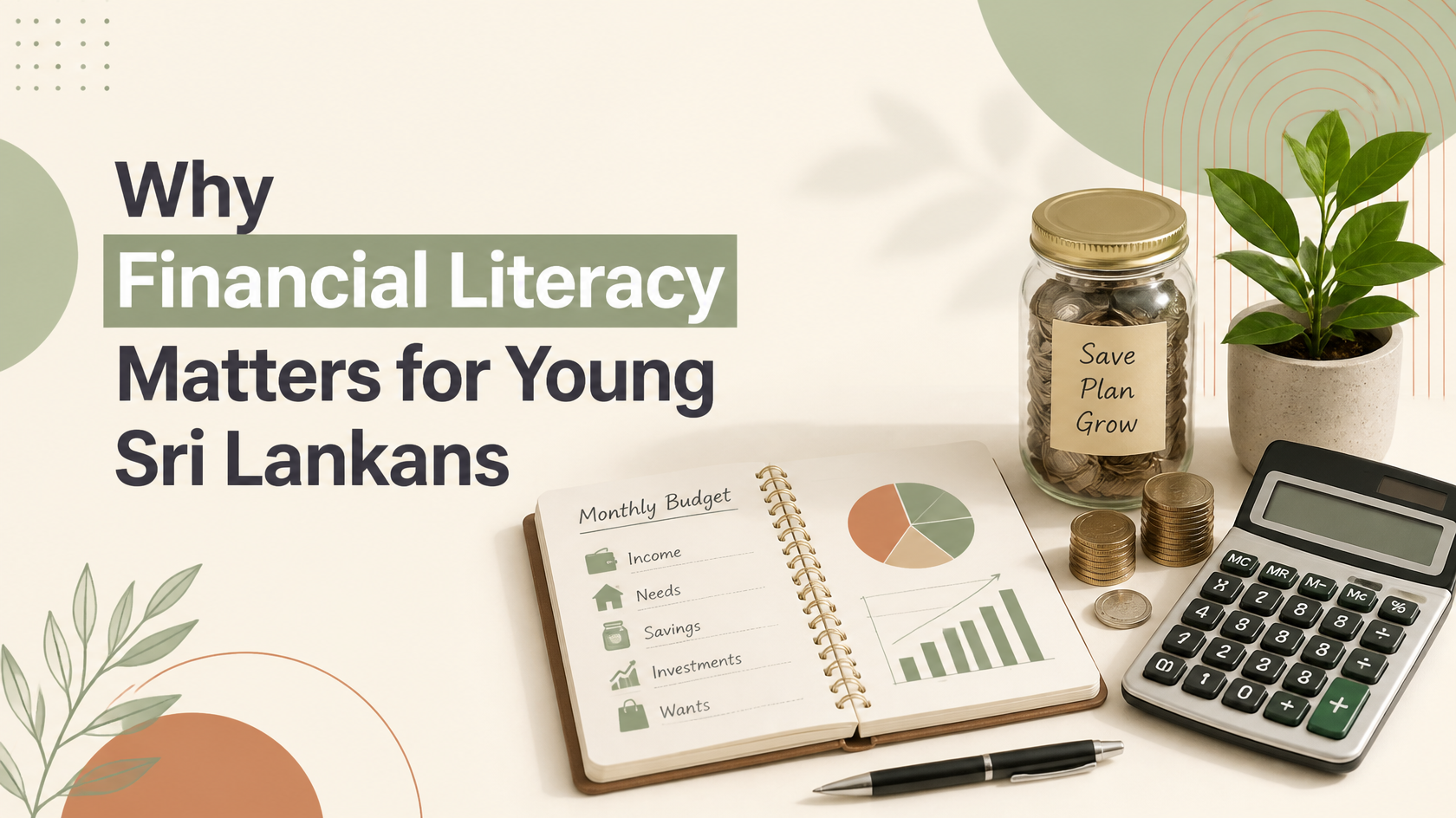
A simple budget can help identify where money goes. By separating necessary expenses from optional spending, young people can make better decisions about their priorities.
A practical monthly budget might include:
- Essential expenses such as food, transport and accommodation.
- Family contributions and educational costs.
- Savings for emergencies and future goals.
- Personal spending on entertainment, clothing and social activities.
The amounts should reflect the person's actual income and circumstances. There is no single budget that works for everyone.
Financial literacy also teaches young people to review their spending when prices rise or their income changes. Instead of relying on guesswork, they can identify expenses to reduce and make adjustments before financial difficulties become serious.
3. Building a Strong Saving Habit at an Early Age
Saving is one of the most valuable financial habits young people can develop. Many people believe they can start saving only when they earn a high salary. In reality, saving can begin with a small amount, provided it is done consistently and according to one's financial circumstances.
For Sri Lankan students, saving might mean keeping part of an allowance for books, transport or future education. For a young employee, it could mean setting aside a portion of each salary for an emergency fund or a long-term goal.
An emergency fund is particularly important because unexpected situations can arise at any time. A medical expense, a sudden job loss, a damaged laptop or an urgent family responsibility may require money that was not included in the monthly budget.
Without savings, a person may have to borrow money or depend entirely on family members. Even a small emergency fund can provide some financial flexibility, although building it takes time.
Young people should also learn the difference between saving for short-term needs and planning for long-term goals. Money needed soon should generally be kept somewhere accessible and relatively low-risk. Long-term goals may allow different approaches, depending on the person's circumstances and risk tolerance.
The Central Bank of Sri Lanka has identified savings, budgeting and personal financial management as important parts of financial literacy. Its national financial literacy initiatives aim to encourage better financial behaviour and more informed decisions.
Central Bank of Sri Lanka+1
The main lesson is simple: young people do not need to wait until they become wealthy to develop good saving habits. They can begin with what they have and gradually improve their financial position.
4. Avoiding Unnecessary Debt and Financial Pressure
Borrowing money can sometimes be useful. Education loans, housing finance and business loans may help people achieve goals that would otherwise take many years. However, borrowing without understanding the repayment conditions can create serious financial problems.
Young Sri Lankans may encounter personal loans, credit cards, leasing facilities, instalment payment schemes and informal lending arrangements. Each option has different conditions, costs and risks.
A common mistake is to focus only on the amount of a monthly instalment. A payment may appear affordable while the total repayment, interest and additional fees make the purchase much more expensive than expected.
Before accepting a loan, borrowers should understand:
- The interest rate and whether it can change.
- The total amount to be repaid over the full period.
- Any processing fees, penalties or other charges.
- The repayment schedule and consequences of missing payments.
- Whether the monthly instalment remains manageable if income falls.
For example, a young employee might consider purchasing a vehicle through leasing because the monthly payment seems manageable. However, fuel, insurance, maintenance and other household expenses must also be considered. The real cost of owning the vehicle is greater than the instalment alone.
Borrowing to purchase something is not automatically a bad decision. The important point is to understand the commitment before agreeing to it.
Financial literacy can also help young people recognise dangerous lending practices. If a lender pressures someone to sign immediately, refuses to explain the terms or makes unrealistic promises, the person should take time to verify the arrangement.
Learning about debt early can prevent avoidable financial stress and help young people make decisions based on their actual ability to repay.
5. Making Better Decisions About Digital Payments and Online Shopping
Digital technology has changed how young people manage money. Mobile banking, bank transfers, QR payments, online shopping and digital financial services make transactions faster and more convenient.
However, convenience can also encourage impulsive spending. When payments take only a few seconds, people may spend money without thinking carefully about the total cost.
Social media advertisements, limited-time discounts, influencer promotions and buy-now-pay-later offers can create pressure to purchase products that are not necessary. A person might buy clothing, electronic accessories or other items simply because they appear popular online.
Financial literacy encourages young consumers to pause before spending. They can ask themselves whether the purchase is necessary, whether the price is reasonable and whether the money would be better used for savings or another priority.
It is equally important to understand digital financial security. Young people should never share their banking PINs, passwords or one-time passwords (OTPs) with strangers. They should verify payment requests, use official banking applications and avoid entering financial information on suspicious websites.
If an unfamiliar person claims that money has been deposited into an account and requests an OTP to release it, this should be treated as a warning sign. Legitimate financial institutions do not need customers to disclose confidential authentication codes to strangers.
The Central Bank's financial literacy programme includes digital financial literacy and financial consumer protection among its key subject areas.
Central Bank of Sri Lanka+1
Understanding both the benefits and the risks of digital payments allows young people to use modern financial services more safely.
6. Recognising Financial Scams and Unrealistic Investment Promises
Online financial scams are another reason young Sri Lankans need financial knowledge. Scammers may approach people through social media, messaging applications, fake investment websites or unsolicited phone calls.
Some schemes promise unusually high returns within a short period. Others claim that users can earn easy money by recruiting new members, completing simple online tasks or investing in an opportunity with supposedly guaranteed profits.
Not every online investment or income opportunity is fraudulent. However, promises of guaranteed high returns with little or no risk should be treated with serious caution.
Young people should understand that legitimate investments involve risk, and returns are not normally guaranteed. Before transferring money, they should verify the identity of the organisation, understand how the investment generates income and check whether the relevant financial activities are properly authorised.
They should also be careful when someone asks them to borrow money to invest, pay a fee to unlock supposed earnings or recruit friends before receiving a return.
Financial literacy does not make anyone completely immune to fraud, but it encourages people to ask questions rather than trust attractive promises immediately.
Sri Lanka's Central Bank has highlighted financial fraud prevention and consumer protection in its financial literacy initiatives, including awareness of pyramid schemes and unauthorised deposit-taking activities.
Central Bank of Sri Lanka+1
A few minutes spent checking an opportunity can help prevent the loss of money that may have taken months or years to earn.
7. Preparing for Higher Education and Career Goals
Education is a major investment for many young Sri Lankans. Students may need to pay for transport, accommodation, internet access, books, examination fees and professional training. Some also attend private classes or pursue qualifications that require additional expenses.
Financial literacy helps students plan these costs before they become overwhelming. They can estimate the expenses associated with a course, compare available learning options and identify realistic ways to fund their education.
It is also useful when choosing a career. A course with expensive fees should be evaluated in relation to its quality, recognition, employment opportunities and the student's personal interests. Paying more does not automatically guarantee a better job or a higher salary.
Young people entering employment can benefit from learning how to read salary information, understand deductions and compare job offers beyond the advertised monthly payment. Transport costs, working hours, benefits and opportunities for career development can all influence the real value of a job.
For students hoping to study abroad, financial planning is even more important. Tuition fees, accommodation, insurance, travel and exchange-rate changes can affect the overall cost. They should verify official requirements and avoid agents who make unrealistic promises about visas, employment or scholarships.
By connecting financial decisions with educational and career goals, young people can make plans that are both ambitious and realistic.
8. Understanding Investing and Building Long-Term Wealth
Saving money is important, but financial literacy also helps young people understand how investing differs from saving. Savings are generally intended to preserve money and provide access when needed, while investing involves putting money into assets with the aim of earning returns over time.
Investment options may include government securities, fixed-income products, shares, unit trusts and other regulated financial products. Each has different features, costs, risks and conditions. Young people should understand these differences before committing their money.
For example, a fixed deposit may offer a stated interest rate for an agreed period, subject to its terms. Investing in shares can offer opportunities for growth, but prices can fall and investors may lose money. The suitability of any investment depends on the individual's financial goals, time horizon and ability to tolerate losses.
Young people should avoid investing money needed for immediate expenses or emergency situations in assets that could lose value or be difficult to sell quickly.
They should also be cautious about copying investment decisions made by social media personalities or friends. An investment that suits one person may not be appropriate for another.
Understanding inflation is another important part of financial planning. When prices rise, the amount of goods and services that a fixed sum of money can purchase may decrease. This means people need to consider how their savings and investments may perform over time.
Financial literacy does not guarantee investment success. Instead, it helps young people evaluate risks, compare options and avoid decisions based solely on excitement or fear of missing out.
9. Encouraging Young Entrepreneurs and Small Business Owners
Entrepreneurship offers opportunities for young Sri Lankans who want to develop their own businesses. Some may start online shops, provide graphic design services, work as freelancers, create digital content, offer tuition or sell locally produced goods.
Having a good business idea is only one part of building a successful enterprise. Entrepreneurs must also understand pricing, operating expenses, cash flow, customer payments and profit.
For example, a young person selling clothing online might calculate profit by subtracting the purchase cost from the selling price. However, the real calculation should also consider delivery, packaging, advertising, payment charges, returns and other operating expenses.
If these costs are ignored, a business may generate sales without producing enough profit to remain sustainable.
Business owners should also separate personal money from business funds wherever practical. Using all business income for personal expenses can make it difficult to purchase stock, pay suppliers or manage periods of low demand.
Keeping accurate records helps entrepreneurs understand which products or services perform well and where money is being lost.
The Central Bank's Financial Literacy Roadmap for 2024–2028 recognises financial capability as important for entrepreneurship, innovation and economic development.
Central Bank of Sri Lanka+1
With suitable financial knowledge, young entrepreneurs can evaluate opportunities more realistically, manage limited resources and make better decisions as their businesses grow.
10. Reducing Financial Stress and Improving Family Well-Being
Money problems can affect more than a person's bank balance. Financial pressure may contribute to anxiety, disagreements within families and difficulties concentrating on education or work.
Young people who do not understand their financial position may worry about expenses without knowing which steps to take. Others may borrow money to maintain a lifestyle they cannot comfortably afford.
Financial literacy encourages a more organised approach. A realistic budget, a clear repayment plan and achievable savings goals can help people understand their options and identify problems earlier.
It can also improve family financial discussions. In many Sri Lankan households, young adults contribute towards groceries, utility bills, medical expenses or the education of younger family members. Planning these contributions can help balance family responsibilities with personal goals.
Financial independence does not mean refusing to support parents or relatives. It means understanding what can be contributed without creating unsustainable financial pressure.
Young people should also recognise that their circumstances differ. Someone supporting an entire household may have fewer opportunities to save than someone whose essential expenses are covered by their family. Financial literacy should help people make the best decisions possible within their circumstances, rather than make them feel guilty about having limited income.
A sound financial plan cannot eliminate every difficulty, but it can provide greater clarity and help families prepare for unexpected challenges.
11. Why Financial Education Should Begin in Schools and Universities
Financial education is often treated as something people learn after getting a job. However, introducing money management at an earlier age can help young people develop responsible habits before making major financial commitments.
Schools can introduce basic concepts such as budgeting, saving, comparing prices, understanding needs and wants, and recognising misleading advertisements. These topics can be taught through practical examples rather than complicated financial terminology.
Universities and vocational training institutions can provide more advanced lessons on bank accounts, interest rates, loans, taxes, employment income, investment risks and digital financial security.
For instance, students could be asked to prepare a monthly budget using a realistic income and a set of living expenses. They could compare two loan offers, calculate the total repayment and explain which option is more affordable under different circumstances.
Such activities help students apply financial knowledge to real-life decisions.
Parents also play an important role. Allowing children to make age-appropriate spending choices, save towards a goal and discuss household budgeting can help them develop confidence with money.
Financial education should be practical, accessible and available in languages that people understand. It should also reflect the different needs of schoolchildren, university students, young workers and aspiring entrepreneurs.
Sri Lanka has taken steps in this direction. The Central Bank introduced the Financial Literacy Roadmap for 2024–2028 and launched a national financial literacy curriculum in 2025. The curriculum covers areas including personal financial management, digital financial literacy, financial consumer protection and tax literacy.
Central Bank of Sri Lanka+2
These initiatives provide a foundation for improving financial knowledge, although their long-term value will depend on how effectively the lessons reach people and influence everyday behaviour.
12. Practical Ways Young Sri Lankans Can Improve Their Financial Literacy
Financial literacy does not have to begin with expensive courses or complicated financial books. Young people can start by learning a few basic skills and applying them consistently.
Here are some practical steps they can follow.
Track income and expenses. Write down money received and spent for at least one month. This helps identify unnecessary expenses and spending habits that may need to change.
Prepare a realistic budget. Plan essential expenses first, followed by savings and personal spending. Adjust the budget to suit actual income instead of copying another person's financial plan.
Build an emergency fund gradually. Start with an affordable amount and increase it when possible. Even small, regular contributions can help create a financial cushion over time.
Understand loans before borrowing. Compare interest rates, fees, repayment periods and total costs. Never sign an agreement without understanding its conditions.
Learn about financial products from reliable sources. The Central Bank of Sri Lanka provides financial literacy resources that can help young people understand personal finance, banking and consumer protection. Visit the official Central Bank financial inclusion resources.
Central Bank of Sri Lanka
Protect personal financial information. Use strong passwords, keep banking credentials private and verify suspicious messages or payment requests.
Set clear financial goals. Decide what you want to achieve, whether it is buying a laptop, completing a qualification, starting a business or saving for future accommodation. Estimate the cost and create a realistic plan.
Review progress regularly. Check the budget, savings and outstanding debts every month. Financial plans should change when income, expenses or personal responsibilities change.
The most important point is to turn financial knowledge into daily habits. Reading about money is useful, but consistently applying what has been learned is what makes a difference.
Conclusion
Financial literacy matters for young Sri Lankans because the financial decisions they make today can influence their opportunities and security for many years. Understanding how to budget, save, borrow, invest and protect money can help them navigate the challenges of education, employment, family responsibilities and the changing digital economy.
It is not necessary to earn a high salary to begin managing money responsibly. What matters is developing sound habits, understanding financial risks and making decisions based on realistic goals rather than social pressure or unrealistic promises.
Financial literacy also benefits society. Young people who manage money effectively may be better prepared to start businesses, support their families, participate in the formal financial system and contribute to economic development.
Sri Lanka's national financial literacy initiatives recognise the importance of improving financial knowledge and encouraging responsible financial behaviour. However, financial education must reach young people in practical ways and help them apply what they learn in everyday life.
Central Bank of Sri Lanka+1
Ultimately, financial literacy is not about becoming rich overnight. It is about understanding money, using it wisely and building a future with greater confidence and financial security. For young Sri Lankans, learning these skills early can be one of the most valuable investments they make in themselves.
Additional Media