
Sponsored
Why Climate Change Is Becoming a Major Issue for Sri Lanka
Rakshika Rathnayake8/22/20265 min read
Share:Facebook
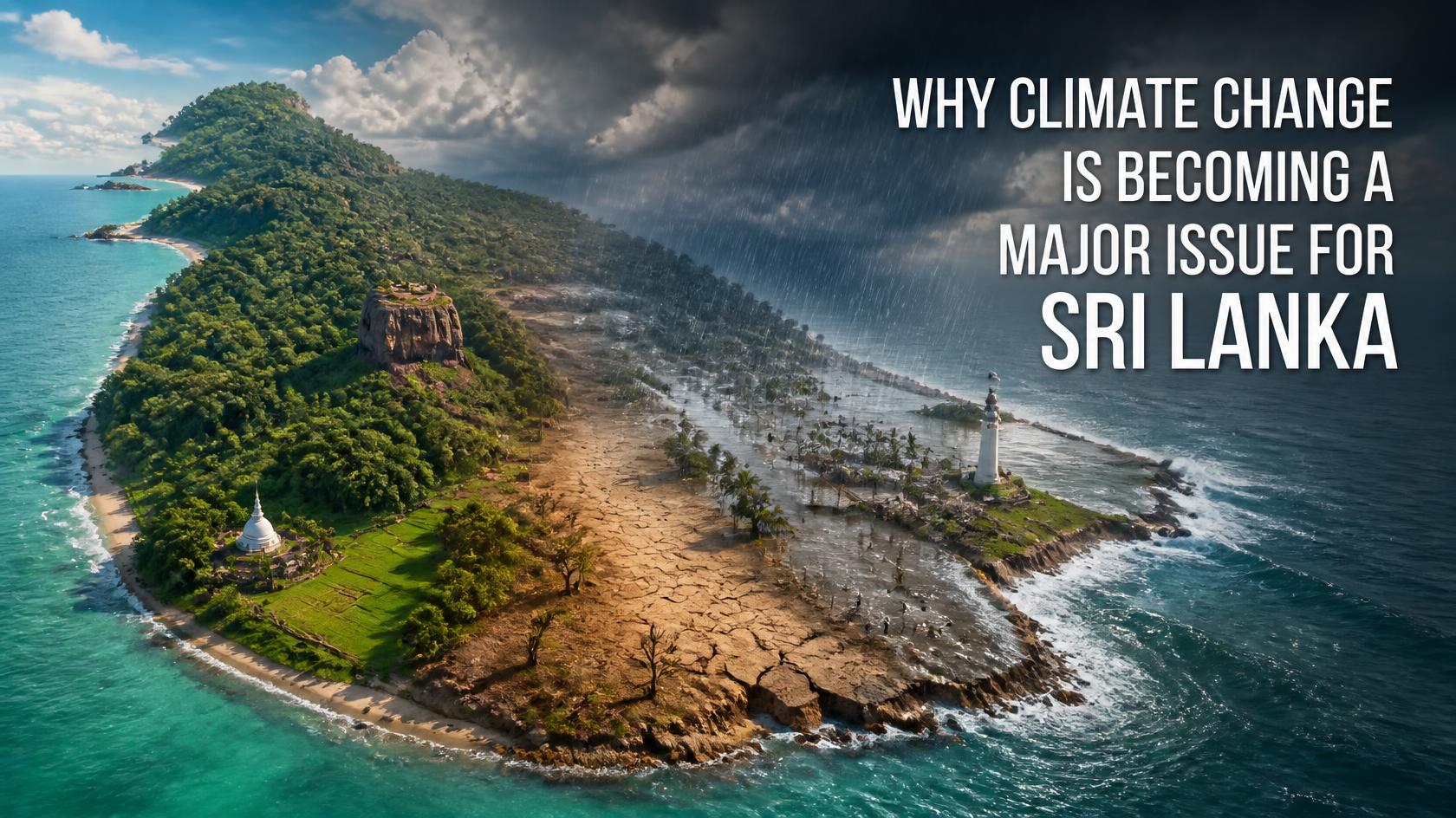
Climate change is becoming one of the most important environmental and development challenges facing Sri Lanka. As an island nation in the Indian Ocean, Sri Lanka is particularly exposed to changes in temperature, rainfall, extreme weather, coastal conditions, and ocean-related risks. Climate change is no longer only a future environmental concern; its effects are increasingly connected with agriculture, water resources, public health, biodiversity, infrastructure, tourism, fisheries, and the livelihoods of communities across the country. The United Nations Development Programme identifies Sri Lanka as highly vulnerable to climate change and notes that shifts in seasonal rainfall have been accompanied by increased flood and drought risks.
The importance of climate change for Sri Lanka also comes from the country's geography and economy. Sri Lanka has a relatively small land area, a long coastline, diverse ecosystems, and large numbers of people whose livelihoods depend directly or indirectly on natural resources. Agriculture, fisheries, tourism, and other sectors are strongly influenced by weather and environmental conditions. When climate conditions become less predictable, the consequences can spread from rural communities to cities, businesses, food markets, and the national economy.
Understanding Climate Change in the Sri Lankan Context
Climate change refers to long-term changes in temperature, rainfall patterns, sea levels, and other characteristics of the climate system. Natural climate variability has always influenced Sri Lanka, including the country's monsoon systems and seasonal rainfall. However, human-caused global warming is increasing the risks associated with rising temperatures and some forms of extreme weather.
Sri Lanka's climate varies considerably from one region to another. The country includes wet and dry regions, mountains, forests, agricultural plains, wetlands, and extensive coastal areas. This diversity means that climate change does not affect every community in exactly the same way.
Some areas may face more severe drought and water shortages, while others may experience flooding and landslides. Coastal communities can face erosion and rising sea levels, while urban areas may experience greater heat stress. The World Bank's climate risk assessment identifies extreme heat, agricultural losses, flooding, landslides, and risks to vulnerable communities among the important climate-related concerns for Sri Lanka.
Rising Temperatures and Extreme Heat
One of the clearest consequences of global climate change is rising temperature. Sri Lanka is expected to experience continued warming, with increases in minimum temperatures particularly important for human health, agriculture, ecosystems, and daily life. The World Bank's climate risk profile indicates that under a high-emissions scenario, Sri Lanka could experience substantially more days with temperatures above 35°C later this century.
Increasing heat can affect people in several ways. Outdoor workers such as farmers, construction workers, fishermen, and others who spend long periods outside may face greater heat stress. Higher temperatures can also affect sleep, productivity, physical health, and the demand for cooling.
Urban areas can experience additional heat because buildings, roads, and other surfaces absorb and retain heat. If temperatures continue to rise, cities will need more effective approaches to urban planning, tree cover, drainage, water management, and heat protection.
Extreme heat can also affect agriculture. Crops have specific temperature ranges in which they grow efficiently. When temperatures become too high, crop development, flowering, water use, and productivity can be affected. The World Bank has warned that rising temperatures could place downward pressure on agricultural yields, including important crops such as rice.
Changing Rainfall Patterns
Rainfall is another major reason climate change matters to Sri Lanka. The country depends heavily on seasonal rainfall and monsoon systems for drinking water, agriculture, hydropower, ecosystems, and many economic activities.
Climate change can make rainfall more unpredictable. A period of unusually heavy rainfall can result in flooding, while an extended dry period can lead to drought and water shortages. UNDP notes that Sri Lanka has experienced significant shifts in seasonal rainfall patterns and increased flood and drought incidence, with serious effects on rural food security and incomes.
Heavy rainfall can overwhelm drainage systems, rivers, canals, and reservoirs. In vulnerable areas, it can contribute to flash floods and landslides. On the other hand, insufficient rainfall can reduce water availability for agriculture and households.
The challenge is not simply whether Sri Lanka receives more or less rainfall overall. The timing, intensity, and distribution of rainfall are also crucial. Farmers need predictable seasonal conditions, while infrastructure must be able to withstand short periods of intense rain.
Agriculture and Food Security
Climate change has a particularly strong connection with agriculture because farming depends directly on temperature, rainfall, water availability, and soil conditions.
Sri Lanka's Dry Zone is especially important in this regard. It covers a large proportion of the country's land area and is a major agricultural region, including important rice-growing areas. Many smallholder farmers depend on agriculture for their income and food security. UNDP reports that low water availability and unseasonal rainfall can reduce crop productivity and yields, placing additional financial pressure on farming households.
Drought can reduce harvests by limiting irrigation water, while intense rainfall can damage crops, wash away soil, or delay planting and harvesting. Changing temperatures can also influence pests and plant diseases.
When agricultural production declines, the impact can extend beyond farmers. Lower production may affect food availability and prices, while households with reduced agricultural income may struggle to meet other basic expenses.
Improving climate resilience in agriculture therefore requires better water management, climate-resilient farming practices, improved crop planning, efficient irrigation, weather information, and stronger support for smallholder farmers.
Floods and Landslides
Floods are among the most visible climate-related hazards in Sri Lanka. Heavy rainfall can cause rivers and drainage systems to overflow, affecting homes, roads, businesses, farms, schools, and other infrastructure.
Landslides are an additional concern, particularly in mountainous and elevated areas. Heavy rainfall combined with vulnerable terrain can increase the likelihood of slope failures.
The World Bank identifies increasing risks from extreme precipitation, riverine flooding, flash floods, and landslides as important climate-related threats to lives, livelihoods, and infrastructure in Sri Lanka.
Recent events have demonstrated how costly extreme weather can become. UNDP reported that Cyclone Ditwah in November 2025 affected more than two million people and caused widespread flooding and landslides across Sri Lanka.
Such events show why disaster preparedness, early-warning systems, resilient infrastructure, effective drainage, and community-level emergency planning are essential.
Coastal Areas and Sea-Level Rise
Sri Lanka's long coastline makes climate change a major coastal issue. Sea-level rise can increase the vulnerability of low-lying coastal areas, while coastal erosion can gradually reduce beaches and affect settlements and infrastructure.
The World Bank's climate risk assessment identifies sea-level rise as a risk that can contribute to inundation of low-lying areas, shoreline retreat, saltwater intrusion, and damage to coastal habitats.
Coastal communities may therefore face pressure from several directions at once. Fishing communities depend on marine and coastal resources, tourism depends heavily on beaches and coastal landscapes, and many settlements and roads are located close to the sea.
Climate change can also interact with other coastal pressures such as poorly planned development, destruction of natural vegetation, pollution, and ecosystem degradation.
Protecting mangroves, wetlands, dunes, coral reefs, and other natural coastal systems can strengthen resilience while also supporting biodiversity and local livelihoods.
Water Resources
Water is another area where climate change can have serious consequences.
Sri Lanka depends on rainfall, reservoirs, rivers, groundwater, and irrigation systems for agriculture and household needs. Changes in rainfall timing or prolonged dry periods can reduce water availability.
At the same time, intense rainfall can create large amounts of water over a short period, making it difficult to store and manage effectively.
This creates a complex water-management challenge: communities may face drought conditions during one period and flooding during another.
Traditional water-management systems can play an important role in adaptation. UNDP has highlighted efforts to improve the resilience of Dry Zone communities through the restoration and improvement of traditional tank systems and cascade irrigation systems known locally as “ellangawa.”
Climate Change and Public Health
Climate change is also a public health issue.
Higher temperatures can increase heat stress, particularly among older people, outdoor workers, children, and people living or working in poorly ventilated environments. Flooding can also create conditions that increase certain health risks.
Changes in temperature, rainfall, and water conditions can influence the distribution and breeding conditions of disease-carrying organisms. The World Bank has identified potential increases in disease transmission associated with flooding and changing environmental conditions as an area of concern.
Public health systems therefore need to prepare not only for ordinary health needs but also for climate-related emergencies. Early-warning systems, disease surveillance, access to clean water, sanitation, public information, and emergency medical services all form part of climate resilience.
Threats to Biodiversity
Sri Lanka is recognized for its exceptional biological diversity, but climate change adds further pressure to ecosystems already affected by habitat loss, pollution, overexploitation, and other environmental problems.
Forests, wetlands, coral reefs, mangroves, grasslands, and coastal ecosystems can all be affected by changes in temperature and rainfall. Species that depend on specific climatic conditions may struggle when their habitats change.
UNDP notes that Sri Lanka's biodiversity is threatened by climate change alongside habitat fragmentation and overexploitation.
The loss of biodiversity is not simply an environmental problem. Ecosystems provide services that support human communities. Forests help regulate water, wetlands reduce flood impacts, mangroves protect coastlines, and healthy marine ecosystems support fisheries.
Protecting ecosystems can therefore be considered an important form of climate adaptation.
Effects on Fisheries and Marine Resources
Sri Lanka's coastal population and economy are closely connected to the sea. Fishing communities depend on marine ecosystems for food and income, while tourism depends heavily on beaches, coral reefs, and coastal environments.
Changes in ocean temperature, coastal conditions, storms, and marine ecosystems can affect fish populations and fishing activities. Coastal degradation can also reduce the natural protection provided by ecosystems such as mangroves and coral reefs.
The impact on fishing communities can be particularly significant because many depend directly on environmental resources and may have limited financial capacity to recover from repeated losses.
Strengthening sustainable fisheries, protecting marine ecosystems, improving weather information, and supporting coastal communities can help reduce climate-related vulnerability.
Tourism and Climate Change
Tourism is another sector exposed to climate risks. Sri Lanka's beaches, mountains, forests, wildlife, cultural heritage, and climate are major attractions for visitors.
Extreme heat, flooding, landslides, coastal erosion, storms, and ecosystem damage can affect tourism infrastructure and visitor experiences. The World Bank specifically notes that increasing extreme heat could have negative implications for Sri Lanka's tourism sector.
Tourism development therefore needs to become more climate resilient. This can include energy efficiency, sustainable water use, better waste management, protection of natural ecosystems, resilient buildings, and responsible coastal development.
Economic and Social Impacts
Climate change is not only an environmental problem; it is also an economic and social issue.
When floods damage roads, bridges, farms, houses, and businesses, financial resources are needed for emergency response and reconstruction. When drought reduces agricultural production, household incomes can fall. When coastal ecosystems deteriorate, fisheries and tourism may suffer.
The burden is often not shared equally. Poorer and more vulnerable communities tend to have fewer resources to prepare for disasters or recover afterward. The World Bank notes that climate impacts are expected to affect poorer and marginalized communities particularly strongly, potentially worsening poverty and inequality.
This means climate policy should consider social justice as well as environmental protection.
What Can Sri Lanka Do?
Sri Lanka cannot stop global climate change on its own, but it can reduce its own emissions while strengthening its ability to adapt to unavoidable impacts.
One important area is renewable energy. Increasing the use of renewable sources such as solar, wind, and other sustainable energy options can reduce dependence on fossil fuels and help lower emissions.
Agriculture can become more climate-resilient through efficient irrigation, improved water management, climate-informed planting decisions, soil conservation, diversified crops, and better access to weather information.
Cities need improved drainage, green spaces, tree cover, flood management, and climate-resilient infrastructure. Coastal regions need stronger ecosystem protection and careful land-use planning.
Disaster preparedness is equally important. Early-warning systems can help communities act before extreme weather becomes disastrous. Recent experience has emphasized the importance of preparedness, early action, resilient infrastructure, and coordination among institutions and communities.
The Role of Communities and Individuals
Climate action should not be considered the responsibility of the government alone. Local communities, businesses, schools, universities, farmers, tourism operators, and individuals all have roles to play.
People can reduce unnecessary energy consumption, minimize waste, protect local ecosystems, use resources responsibly, and support environmentally responsible businesses.
Communities can participate in mangrove restoration, wetland protection, local disaster planning, water conservation, and awareness programs.
Education is particularly important. Young people need opportunities to understand climate science, environmental protection, disaster preparedness, and sustainable development. Better public awareness can turn climate change from a distant concept into a practical community priority.
The Importance of Long-Term Planning
Climate change requires long-term thinking. Roads, bridges, irrigation systems, houses, schools, hospitals, cities, and tourist facilities built today may remain in use for decades.
If climate risks are ignored during planning, future generations could face higher repair costs and greater disaster risks. Climate considerations therefore need to become part of infrastructure design, agricultural planning, urban development, water management, and economic policy.
Sri Lanka already has national climate-related policy frameworks and commitments under the Paris Agreement, including its Nationally Determined Contributions. The World Bank's Climate Change Knowledge Portal lists Sri Lanka's updated 2021 NDC, National Adaptation Plan, Climate Change Policy, and other national climate resources.
The challenge is to ensure that policies are translated into effective action at national, provincial, local, and community levels.
Conclusion
Climate change is becoming a major issue for Sri Lanka because its effects reach almost every part of society. Rising temperatures, changing rainfall patterns, floods, droughts, landslides, coastal risks, health impacts, biodiversity loss, agricultural challenges, and economic disruption are interconnected problems.
For a small island nation whose communities depend heavily on natural resources, climate resilience is not an optional environmental goal. It is an important part of protecting livelihoods, food security, infrastructure, public health, and future economic development.
Sri Lanka also has opportunities. Its rich ecosystems, traditional knowledge, renewable-energy potential, community networks, and experience with local adaptation can contribute to a stronger climate response. Protecting forests and wetlands, improving water management, making agriculture more resilient, strengthening disaster preparedness, expanding clean energy, and investing in climate-smart infrastructure can reduce future risks.
Ultimately, addressing climate change requires both adaptation and mitigation. Sri Lanka must prepare for impacts that are already occurring while contributing to global efforts to reduce greenhouse-gas emissions.
Climate change is therefore not simply a problem for scientists or environmental organizations. It is an issue that concerns farmers, fishermen, workers, businesses, students, families, policymakers, and communities across the country. The decisions made today will influence how safely and sustainably Sri Lanka develops in the decades ahead. Acting early, protecting vulnerable communities, and treating environmental resilience as part of national development can help Sri Lanka face a changing climate with greater confidence and preparedness.
Additional Media