Why Are Traditional Sri Lankan Occupations Becoming Less Popular Among Young People?
Rakshika Rathnayake10/24/20265 min read
Share:Facebook
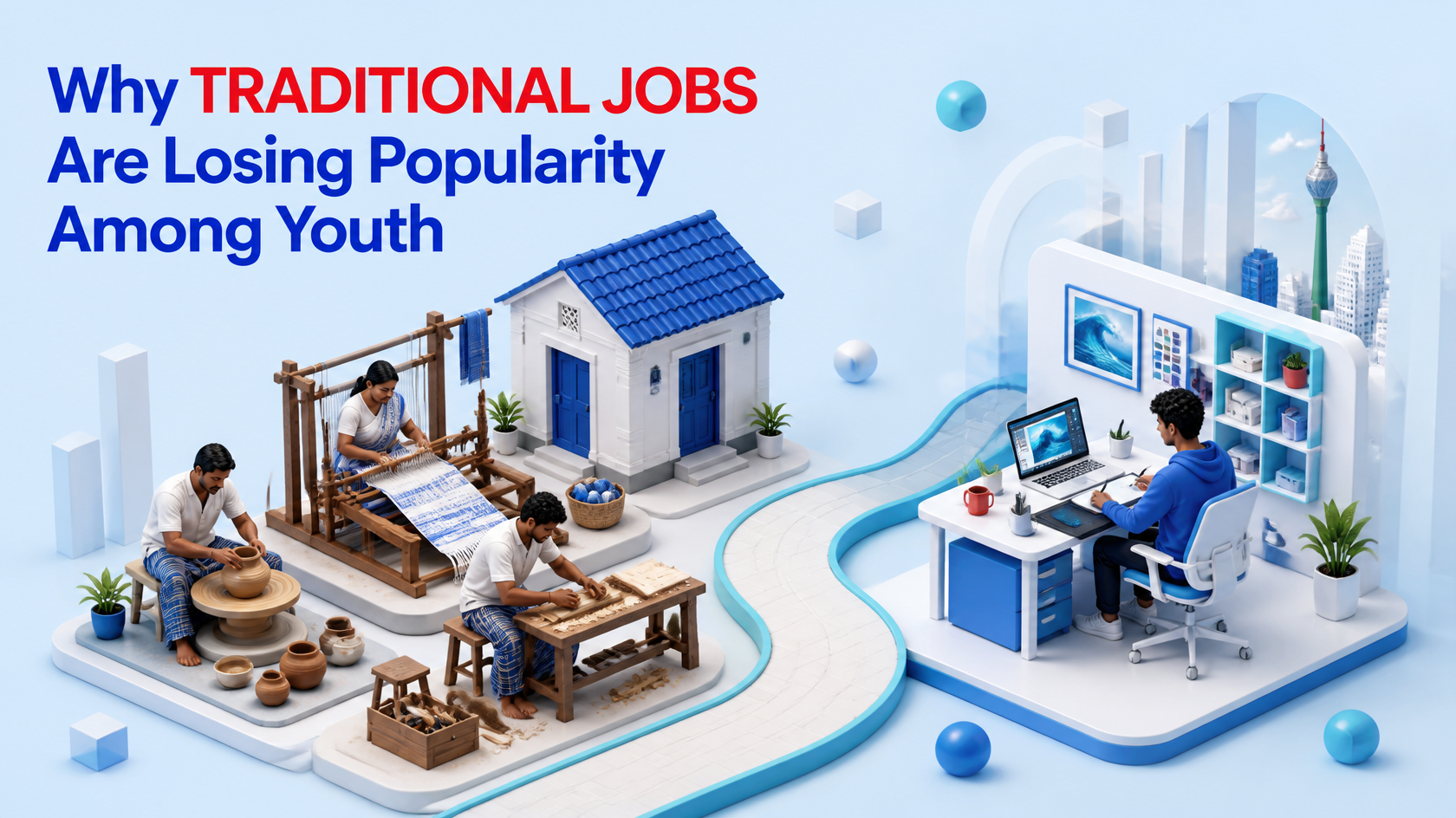
Sri Lanka is a country with a rich cultural heritage, shaped by generations of farming, fishing, handloom weaving, pottery, traditional jewellery making, carpentry, blacksmithing, and many other skilled occupations. For centuries, these professions have supported families, strengthened local communities, and preserved knowledge passed from parents to children. They have also played an important role in shaping the island’s identity, traditions, and way of life.
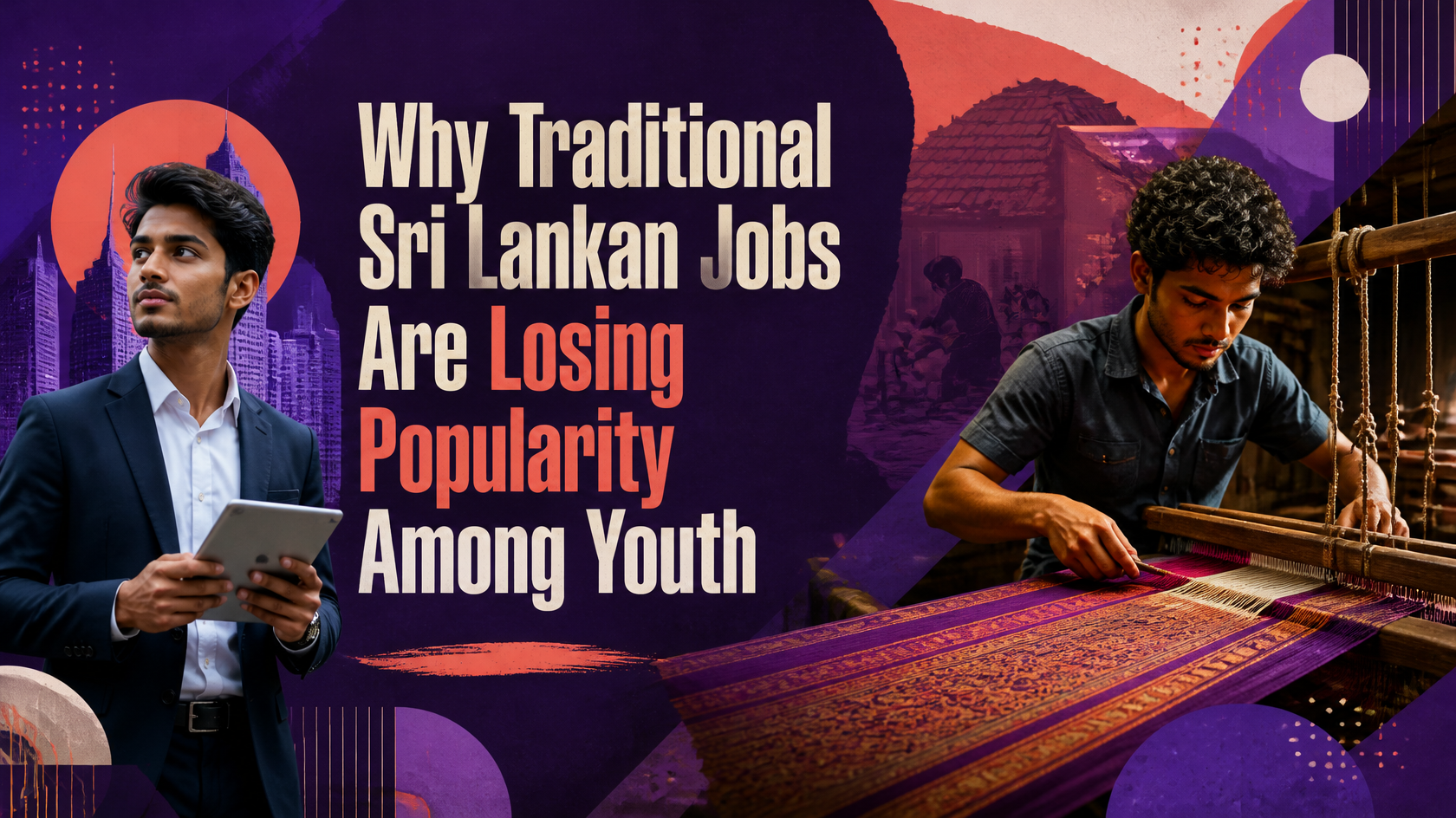
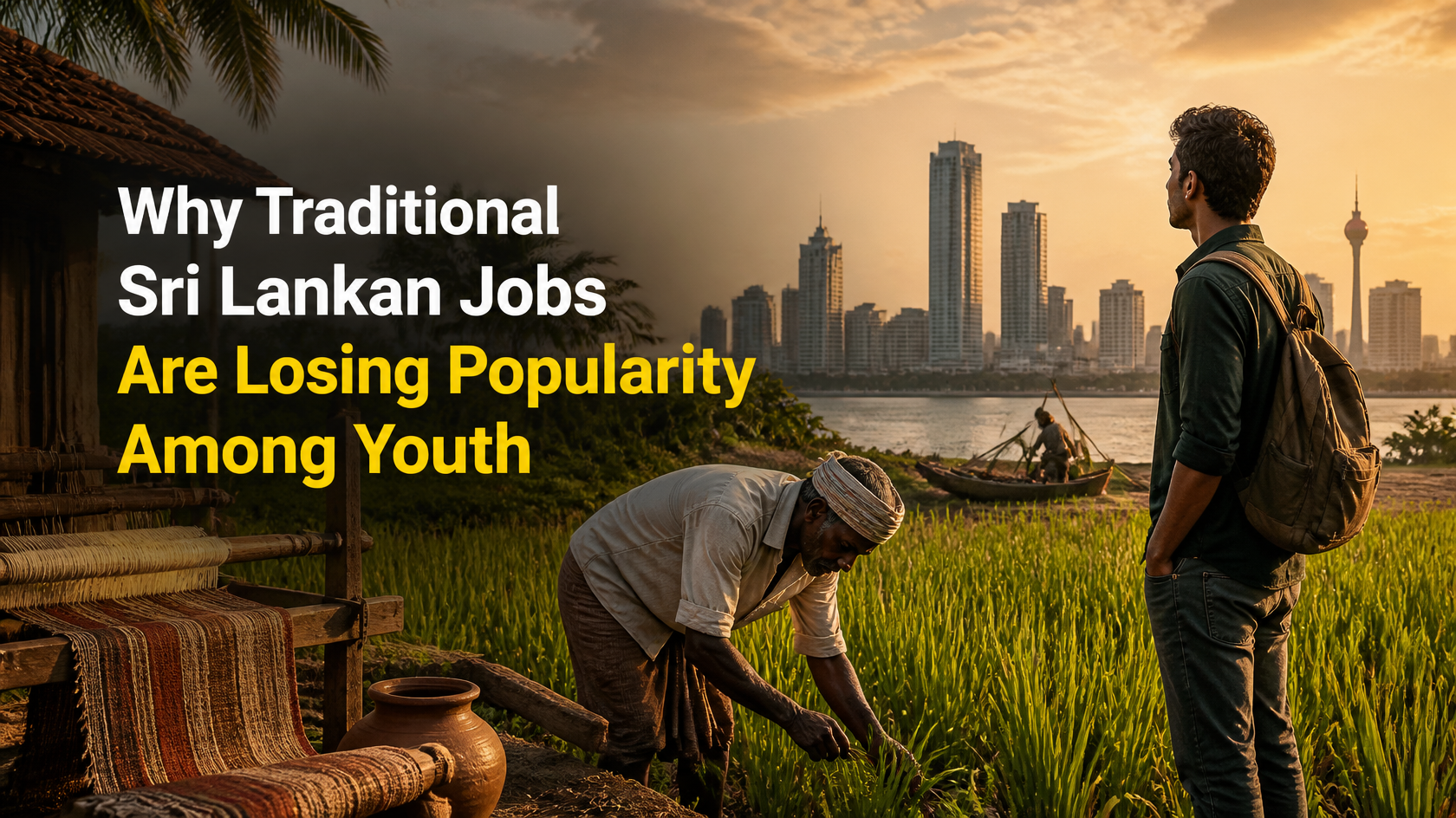
However, the situation is gradually changing. Many young Sri Lankans are now looking towards office jobs, information technology, business, foreign employment, and other modern career opportunities rather than following the traditional occupations practised by their families. While some young people continue to protect these skills, others see little reason to enter industries that appear physically demanding, financially uncertain, or less respected by society.
This change raises an important question: why are traditional Sri Lankan occupations becoming less attractive to the younger generation? The answer is not simply that young people have forgotten their culture. Their decisions are influenced by education, economic pressure, technology, changing social attitudes, and their desire for a better standard of living.
1. The Search for Better Income and Financial Security
One of the main reasons traditional occupations are losing popularity is the desire for a stable and sufficient income. Many traditional professions depend on weather conditions, seasonal demand, access to raw materials, market prices, and the availability of customers.
For example, a farming family may spend months preparing land, purchasing seeds and fertiliser, maintaining crops, and managing water supplies before earning money from a harvest. Even after completing all this work, the final income may be affected by droughts, floods, crop diseases, or sudden changes in market prices.
Fishing families face similar challenges. Rough seas, unpredictable weather, fuel costs, and changes in fish availability can make their earnings uncertain. Traditional craftspeople may spend several hours or days producing an item without knowing whether they will receive a price that fairly reflects their labour.
By comparison, many young people believe that salaried employment offers a more predictable monthly income. Jobs in banking, education, healthcare, technology, and the private sector may also provide opportunities for career development and additional benefits.
Of course, modern employment does not guarantee financial security, and traditional businesses can be profitable when managed effectively. Nevertheless, when young people compare the risks and rewards, many feel that other career paths offer a more reliable future.
2. Education Has Changed Career Expectations
Education has opened new opportunities for Sri Lankan youth. Schools, universities, vocational training centres, and professional courses expose students to careers that previous generations may not have considered.
A student who performs well in school may dream of becoming a doctor, engineer, teacher, accountant, software developer, or business owner. Others may pursue qualifications in hospitality, tourism, digital marketing, design, or technical fields.
These ambitions are not negative. Education allows young people to develop their abilities and choose careers according to their interests. However, traditional occupations are sometimes overlooked because they are not presented as equally valuable professional options.
In some families, children are encouraged to obtain qualifications and secure jobs that appear more prestigious than farming, weaving, pottery, or fishing. As a result, traditional knowledge may not be passed on to the next generation.
Another issue is the gap between formal education and practical traditional skills. A student may complete years of schooling without receiving meaningful exposure to local crafts, agricultural entrepreneurship, traditional construction techniques, or the commercial potential of indigenous products.
If schools and training institutions introduce these occupations as modern business opportunities rather than merely historical practices, young people may begin to view them differently.
3. Social Status and the Influence of Society
Social attitudes can strongly influence career choices. In some communities, working in an office or holding a professional qualification is associated with success, while manual and traditional occupations may receive less recognition.
A young person who wants to become a farmer or craftsperson may worry about how friends, relatives, or neighbours will react. They may feel pressured to pursue a career that appears more prestigious, even if they have a genuine interest in working with their hands or continuing a family tradition.
This attitude is particularly damaging because traditional occupations often require considerable knowledge, patience, creativity, and technical ability. A skilled carpenter must understand materials, measurements, tools, and construction methods. A traditional potter needs knowledge of clay, shaping, drying, and firing. An experienced farmer must understand soil conditions, crop cycles, water management, and changing environmental conditions.
These are valuable professional skills, not signs of a lack of education.
Society needs to recognise that success should not be measured only by job titles or educational certificates. A person who builds a successful agricultural business, develops a respected handicraft brand, or produces high-quality traditional goods can contribute just as meaningfully to the economy as someone working in a corporate office.
4. The Attraction of Urban Life and Modern Careers
Urbanisation and changing lifestyles have also influenced the future of traditional occupations. Many young people move from villages to towns and cities for education, employment, and better access to services.
Cities may offer more opportunities in retail, construction, transport, hospitality, finance, technology, and professional services. Young people living away from their villages may gradually lose daily contact with the farms, workshops, fishing communities, and family businesses that once shaped their lives.
Urban living can also change their expectations. Access to public transport, entertainment, modern housing, digital services, and a wider range of career opportunities may make returning to a traditional occupation less appealing.
This does not mean that rural life lacks value or opportunity. In fact, rural communities can support profitable businesses in agriculture, food processing, eco-tourism, handicrafts, and local services. However, such opportunities require investment, market access, infrastructure, and reliable income.
When young people believe they must leave their hometowns to build a successful future, traditional occupations often struggle to attract new workers.
5. Technology Has Changed the Way People Work
Technology has transformed almost every industry, including traditional occupations. Modern agricultural machinery, improved fishing equipment, digital payment systems, online marketplaces, and new production techniques have created opportunities to improve productivity.
However, the benefits of technology are not equally accessible to everyone. Small-scale farmers, craftspeople, and traditional business owners may lack the money, training, or infrastructure needed to adopt new methods.
Some traditional industries still depend heavily on manual labour. When work is physically demanding and productivity remains low, young people may consider it less attractive than occupations that use modern equipment and digital tools.
Traditional crafts can face another challenge: competition from mass-produced goods. Factory-made household items, clothing, furniture, and decorative products can often be manufactured in large quantities at lower prices. Customers who prioritise affordability may choose these alternatives over handmade products.
This puts pressure on craftspeople who need to cover the cost of materials and the time required to produce each item.
Nevertheless, technology does not have to destroy traditional occupations. It can help modernise them. A potter can promote products through social media, a handloom business can accept online orders, and a farmer can use digital tools to communicate with buyers.
The real challenge is ensuring that traditional workers have the skills and resources to benefit from technological change.
6. Limited Access to Markets and Business Support
Producing a quality product is only one part of running a successful business. Traditional workers also need access to customers, fair prices, transportation, reliable suppliers, and effective marketing.
For example, a craftsperson may produce beautiful handmade items but struggle to find buyers outside the local community. A farmer may grow high-quality vegetables but receive a low price because several intermediaries stand between the farm and the consumer.
Traditional industries can also be affected by packaging limitations, inconsistent product standards, a lack of storage facilities, and difficulties reaching larger markets.
Young people who consider entering these industries may recognise these problems before they begin. They may hesitate to invest time and money in a business if they cannot identify a reliable way to sell their products.
Access to affordable finance is another important factor. Starting a modernised farm, a weaving workshop, a pottery business, or a small food-processing operation may require equipment, premises, raw materials, and working capital.
If financial institutions, training programmes, and business-support organisations do not adequately address these needs, young entrepreneurs may choose sectors that appear easier to enter.
Improving market access and providing practical business guidance could make traditional occupations more attractive to the next generation.
7. Migration and the Desire to Work Abroad
Foreign employment has become an important consideration for many Sri Lankan families. Young people may look towards countries in the Middle East, Europe, East Asia, Australia, and other destinations for employment, education, and opportunities to improve their financial circumstances.
Some pursue professional careers overseas, while others seek work in hospitality, construction, manufacturing, healthcare, and other industries. Their decisions may be influenced by expected earnings, family responsibilities, career development, or the desire to experience a different lifestyle.
When a young person believes that working abroad offers a better chance of supporting their family, continuing a traditional occupation at home may seem less attractive.
This can affect rural communities in particular. If younger family members leave, older farmers, craftspeople, and small business owners may find it difficult to identify successors. In occupations that depend on years of practical experience, losing potential apprentices can weaken the transfer of knowledge.
However, migration and cultural preservation do not have to be opposites. Sri Lankans living abroad can help promote local products, connect producers with international customers, invest in family businesses, and introduce new ideas.
The challenge is creating opportunities that allow young people to see a future in traditional industries, whether they choose to remain in Sri Lanka or build international connections.
8. Physically Demanding Work and Difficult Working Conditions
Many traditional occupations require long hours of physical labour. Farming may involve working under strong sunlight, preparing land, carrying equipment, and managing crops in difficult weather. Fishing can require very early starts, long periods at sea, and exposure to unpredictable conditions.
Other occupations, such as carpentry, blacksmithing, pottery, and construction-related crafts, may involve repetitive tasks, heat, heavy materials, dust, or workplace hazards.
Young people increasingly consider working conditions when choosing careers. They may prefer jobs with predictable schedules, safer environments, access to healthcare, and opportunities for professional development.
Traditional occupations can also be difficult for workers who lack modern equipment or protective gear. Where occupational safety is poor, the work may appear even less appealing.
Improving these conditions is essential. Mechanisation where appropriate, better tools, safety training, suitable protective equipment, and improved workplace facilities can reduce physical strain and make traditional industries more sustainable.
The goal should not be to eliminate the traditional skills themselves, but to make the work safer, more efficient, and more rewarding.
9. Changing Consumer Preferences
Consumer behaviour also affects the survival of traditional occupations. As lifestyles change, people may purchase fewer handmade products or choose modern alternatives that are cheaper, easier to find, or more convenient to use.
Traditional clothing, handmade household items, pottery, woven products, and locally crafted decorations may compete with factory-produced goods and imported products. In some cases, consumers may appreciate traditional products during festivals or special occasions but purchase them less frequently throughout the year.
However, it would be inaccurate to assume that traditional products are no longer wanted. Interest in handmade goods, sustainable products, locally produced food, cultural experiences, and authentic designs can create new opportunities.
The important issue is whether producers can connect their skills with the needs of modern customers. A traditional product may attract a wider audience if it offers attractive design, consistent quality, practical use, and suitable pricing.
For example, handloom fabrics can be used in contemporary clothing, pottery can be developed for modern homes, and traditional food products can reach customers through organised packaging and distribution.
By adapting to changing demand while maintaining the essential skills and cultural meaning behind their work, traditional producers can remain relevant.
10. The Risk of Losing Valuable Cultural Knowledge
When fewer young people enter traditional occupations, the consequences extend beyond employment. Many professions preserve knowledge about the environment, local materials, cultural practices, and community history.
Traditional farming methods may contain useful knowledge about local crop varieties, seasonal patterns, soil management, and water use. Traditional crafts preserve techniques, designs, and ways of working with locally available materials.
Sri Lanka's handloom traditions, pottery, traditional woodwork, metalwork, and regional food-processing practices also contribute to the country's cultural diversity.
If experienced workers retire without passing on their knowledge, some techniques may become difficult to recover. Written records and videos can help document these practices, but they cannot always replace years of hands-on learning.
The loss of traditional occupations can also affect tourism and local identity. Visitors often value opportunities to experience authentic crafts, traditional food, and community-based cultural activities.
Preserving these occupations therefore requires more than encouraging young people to respect their heritage. It requires practical opportunities to learn, earn, innovate, and build sustainable careers.
11. How Can Sri Lanka Make Traditional Occupations Attractive Again?
Traditional occupations do not need to remain unchanged to survive. Their future may depend on combining inherited skills with modern knowledge, technology, and business practices.
First, vocational education and apprenticeship programmes can connect experienced craftspeople with young learners. Training should include both practical skills and modern business knowledge, such as costing, customer service, digital marketing, and product development.
Second, young entrepreneurs need better access to finance, equipment, business advice, and suitable production facilities. Small grants, affordable loans, cooperative businesses, and mentorship programmes could help them develop viable enterprises.
Third, digital platforms can connect local producers with customers across Sri Lanka and overseas. Websites, social media pages, online marketplaces, and digital payment systems can help traditional businesses promote their products beyond their immediate communities.
Fourth, traditional products should be developed to meet modern needs without losing their distinctive character. Designers can collaborate with handloom producers, potters, woodworkers, and other craftspeople to create products that appeal to contemporary customers.
Fifth, public and private organisations can help improve access to markets through exhibitions, craft fairs, tourism partnerships, and connections with retailers. Transparent pricing and fair purchasing arrangements can help producers receive a more reasonable return for their work.
Finally, society must give traditional occupations the recognition they deserve. Media coverage, school programmes, local events, and success stories about young traditional entrepreneurs can help change outdated perceptions.
Most importantly, young people should have the freedom to choose their careers. Preserving tradition should not mean forcing children to follow their parents' occupations. It should mean creating conditions in which they can choose these professions because they see real opportunities in them.
Conclusion
Traditional Sri Lankan occupations are becoming less popular among young people for several connected reasons. Financial uncertainty, changing educational ambitions, social attitudes, urbanisation, technological change, limited market access, migration, difficult working conditions, and changing consumer preferences all influence career decisions.
These changes do not mean that young Sri Lankans have stopped caring about their culture. Many simply want careers that provide financial security, personal satisfaction, and opportunities for advancement.
Sri Lanka can respond by treating traditional occupations as valuable economic activities rather than practices that belong only to the past. With better training, modern equipment, fairer markets, digital promotion, and opportunities for entrepreneurship, these industries can develop while preserving their cultural importance.
The future of traditional occupations depends on finding a balance between heritage and progress. When young people can earn a respectable living while developing traditional skills, they are more likely to consider these professions a meaningful career choice.
Ultimately, preserving Sri Lanka's traditional occupations is not just about protecting old ways of working. It is about ensuring that valuable knowledge, local industries, and cultural traditions remain alive in a changing society.
Additional Media