Why Are Elephants So Important to Sri Lankan Culture?
Rakshika Rathnayake10/1/20265 min read
Share:Facebook
Elephants hold a special place in Sri Lanka’s cultural identity, religious traditions, history, and natural environment. For centuries, these magnificent animals have been associated with wisdom, strength, dignity, prosperity, and spiritual devotion. They appear in Buddhist ceremonies, ancient stories, traditional artwork, royal history, and some of the island’s most important cultural celebrations. Even today, elephants remain powerful symbols of Sri Lankan heritage.
Sri Lanka is internationally recognised for its rich biodiversity and its long cultural relationship with Asian elephants. The animals are admired for their intelligence, social behaviour, and impressive physical strength. However, their importance goes far beyond their size and appearance. They have played significant roles in religious traditions, traditional transportation and warfare, royal ceremonies, and the cultural imagination of generations of Sri Lankans.
Understanding why elephants are so important to Sri Lankan culture requires looking at the country's Buddhist heritage, historical kingdoms, traditional festivals, folklore, artistic traditions, and efforts to protect wildlife. It also means recognising the challenges elephants face today and the responsibility people share in ensuring their survival.
1. Elephants and Sri Lanka’s Buddhist Heritage
One of the most important reasons elephants are deeply respected in Sri Lanka is their connection with Buddhism. Since Buddhism became established on the island during the reign of King Devanampiya Tissa in the third century BCE, Buddhist teachings and traditions have influenced many aspects of Sri Lankan culture. Elephants subsequently became prominent in religious symbolism, temple ceremonies, and Buddhist artistic traditions.
In Buddhist literature, elephants are sometimes associated with mental strength, patience, self-control, and dignity. These qualities make them meaningful symbols in religious storytelling. The white elephant, in particular, is associated with the birth story of Prince Siddhartha Gautama, the future Buddha. According to traditional accounts of the Buddha’s conception, Queen Maya dreamed of a white elephant entering her side. This dream is understood in Buddhist tradition as an auspicious sign.
Elephants also appear in Buddhist art, temple paintings, sculptures, and decorative carvings. In some representations, they symbolise protection, abundance, or royal dignity. Their images can be found in historic religious settings and contemporary artistic designs.
Nevertheless, the cultural significance of elephants should not be understood as meaning that Buddhism requires elephants to participate in every religious ceremony. Their importance has developed through a combination of Buddhist symbolism, local history, royal patronage, and regional customs.
For many Sri Lankan Buddhists, elephants remain familiar and meaningful symbols of the country's religious heritage.
2. The Role of Elephants in Sri Lanka’s Ancient History
Elephants have been part of Sri Lanka’s historical landscape for many centuries. Ancient kingdoms developed in a country where elephants lived in forests, grasslands, and other natural habitats. Their strength made them valuable animals in several historical contexts.
In ancient and medieval South Asia, elephants were used by rulers for royal processions, ceremonial occasions, and warfare. Sri Lankan rulers were familiar with these practices, and elephants became associated with royal power and authority. Their size, strength, and impressive appearance made them symbols of a kingdom's status.
Elephants were also important in traditional systems of transport and heavy work. In suitable circumstances, their strength helped people move large objects and carry out demanding tasks. However, the precise extent of their use varied across historical periods and locations.
Sri Lanka’s ancient irrigation systems, reservoirs, monasteries, palaces, and cities demonstrate the engineering skills and organisational abilities of earlier civilisations. Although elephants are often associated with these historical achievements, it would be inaccurate to suggest that they alone built the country's great irrigation works or monuments. Human planning, labour, technical knowledge, and political organisation were essential.
Historical connections between elephants and royalty helped establish the animal as a lasting emblem of power, prestige, and national heritage. Even after the island's ancient kingdoms disappeared, these associations continued through traditional stories, ceremonies, and visual representations.
3. Elephants and the Esala Perahera of Kandy
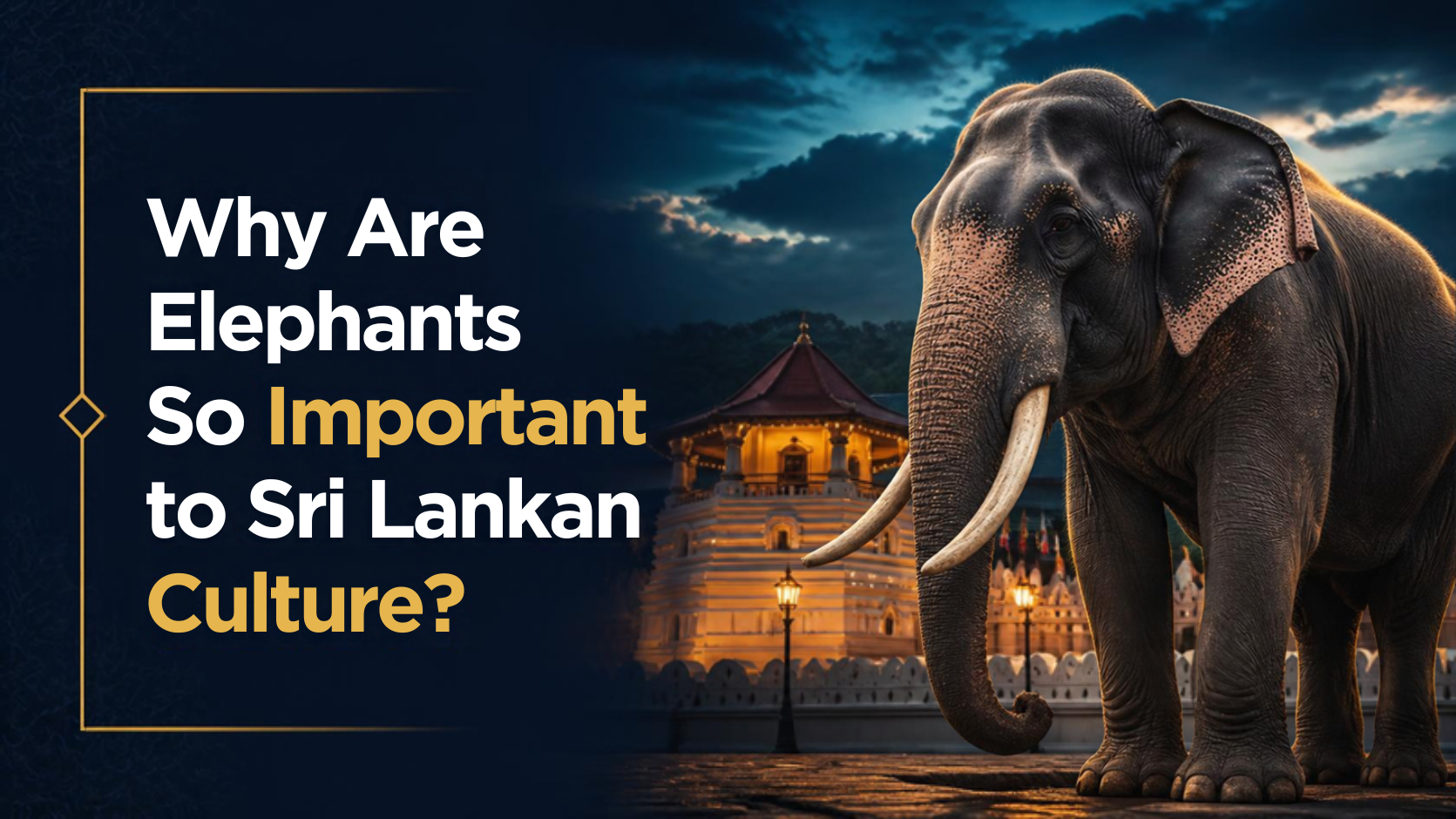
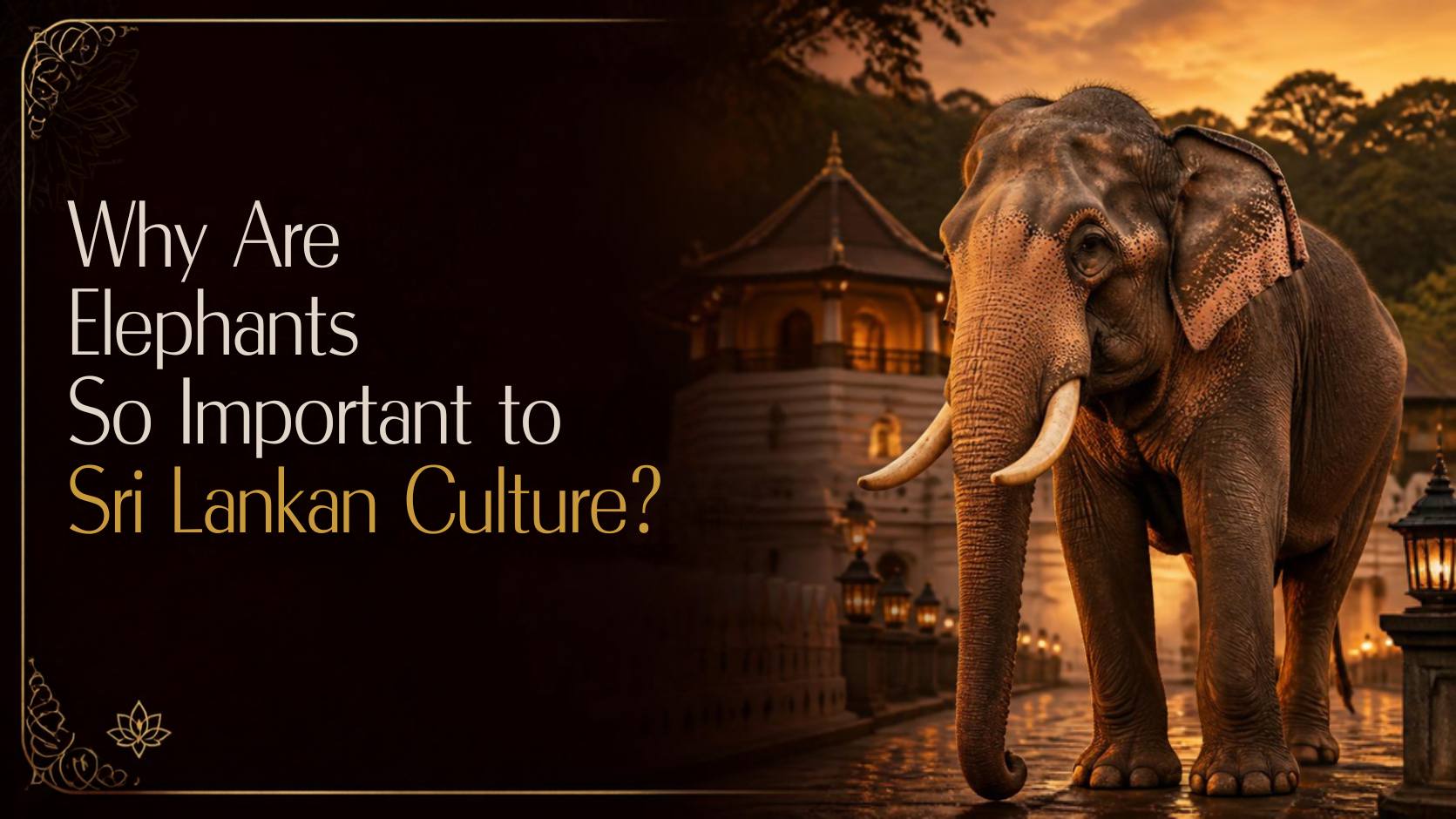
One of the most widely recognised examples of the cultural importance of elephants is the Esala Perahera in Kandy. This annual procession is among Sri Lanka’s most famous religious and cultural events, attracting local spectators and international visitors.
The procession is closely associated with the Sri Dalada Maligawa, or Temple of the Sacred Tooth Relic, which houses the revered tooth relic of the Buddha. The festival includes traditional dancers, drummers, whip crackers, flag bearers, and decorated elephants, alongside other ceremonial elements.
The Kandy Esala Perahera developed over centuries through the combination of Buddhist relic veneration and older traditions associated with the city's royal and religious history. Its present form reflects many layers of Sri Lankan cultural heritage.
Historically, a specially selected tusker has carried a ceremonial casket representing the Sacred Tooth Relic during the procession. The actual relic remains protected within the temple; it is not taken out and carried on the elephant. Ceremonial arrangements may vary, and the procession's traditions should not be confused with the movement of the relic itself.
The elephants participating in the Perahera wear elaborate decorative garments, and their presence contributes to the visual grandeur of the event. For many spectators, the procession represents devotion, continuity, artistic achievement, and the preservation of traditional customs.
At the same time, the use of elephants in public festivals has prompted discussion about animal welfare, including the effects of noise, crowds, bright lights, long hours, and restrictive equipment. Respect for cultural traditions can coexist with efforts to improve the safety and welfare of the animals involved.
The Esala Perahera demonstrates how elephants remain connected to Sri Lanka's religious identity and public celebrations while also highlighting the importance of responsible cultural practices.
4. The Sacred Tooth Relic and the Elephant’s Ceremonial Role
The Sacred Tooth Relic of the Buddha is one of the most important religious treasures in Sri Lanka. It is preserved at the Temple of the Sacred Tooth Relic in Kandy and has long been associated with the country's religious and political history.
In earlier centuries, possession of the relic was closely connected with the legitimacy and authority of Sri Lankan rulers. As a result, ceremonies associated with the relic developed considerable religious and cultural importance.
Elephants became part of this ceremonial heritage because they were traditionally associated with royalty, dignity, and auspicious occasions. Their participation in processions helped communicate the significance of important religious events to the public.
The cultural relationship between elephants and the Sacred Tooth Relic illustrates how animals can become part of a nation's collective identity. For many people, the image of a decorated tusker in a traditional procession immediately brings to mind Kandy, Buddhist heritage, and the island's historic traditions.
However, the importance of the relic is fundamentally religious, while elephants form part of the ceremonial expression surrounding certain celebrations. Understanding this distinction helps explain their role without confusing the animal with the object of worship.
5. Elephants in Sri Lankan Folklore and Traditional Art
Elephants have influenced Sri Lankan artistic traditions for generations. They appear in traditional paintings, wood carvings, stone sculptures, decorative textiles, jewellery, and handicrafts. Their recognisable shape makes them suitable subjects for both religious art and everyday decorative objects.
In traditional storytelling, elephants are often portrayed as strong, loyal, intelligent, or noble animals. Stories involving elephants can communicate lessons about compassion, generosity, patience, and the relationship between humans and nature. Buddhist Jataka tales, which recount previous lives of the Buddha, include several stories featuring elephants.
One well-known example is the Chaddanta Jataka, a story involving a magnificent six-tusked elephant. Like other Jataka narratives, it has been represented in Buddhist artistic traditions and interpreted through themes of virtue, suffering, and moral responsibility.
Elephants also feature in Sri Lankan folklore and local stories that reflect people's historical experiences of living near forests and agricultural land. Some stories describe encounters between humans and elephants, while others emphasise the animal's strength or extraordinary memory.
These artistic and literary traditions help pass cultural knowledge from one generation to another. Even people who have never encountered a wild elephant may recognise its importance through temple decorations, paintings, festival imagery, and stories heard during childhood.
6. Sri Lankan Elephants and the Natural Environment
Elephants are important not only because of their cultural associations but also because of their ecological role. Sri Lanka is home to the Asian elephant, scientifically known as Elephas maximus. The Sri Lankan elephant, Elephas maximus maximus, is a recognised subspecies of the Asian elephant.
These animals inhabit various landscapes, including dry-zone forests, grasslands, scrublands, and areas around water sources. National parks such as Udawalawe, Minneriya, Kaudulla, and Yala are well known for their elephant populations.
As large herbivores, elephants help shape their habitats. They consume a wide variety of plants, disperse seeds through their dung, and influence vegetation by feeding on trees, shrubs, and grasses. Their movement through landscapes can also create pathways used by other animals.
Sri Lankan elephants are an important part of the island's biodiversity and contribute to its appeal as a wildlife tourism destination. Visitors travel to Sri Lanka hoping to observe elephants in their natural environments, supporting businesses involved in responsible wildlife tourism.
However, the survival of elephants depends on healthy habitats, access to food and water, and the ability to move between areas. Habitat fragmentation, expanding human settlements, agricultural development, and other pressures can make survival more difficult.
Protecting elephants therefore supports not only an important cultural symbol but also the wider ecosystems of which they are a part.
7. Human-Elephant Conflict: A Major Challenge
Despite the respect elephants receive in Sri Lankan culture, their relationship with people is not always peaceful. Human-elephant conflict remains a serious conservation and social challenge in the country.
As forests and other habitats become fragmented, elephants may enter agricultural areas in search of food. They can damage crops, destroy property, and threaten the livelihoods of farming families. Encounters can also result in injuries and deaths among both people and elephants.
These incidents should not simply be described as elephants deliberately attacking human communities. Elephants require extensive areas in which to find food, water, and suitable habitat. When their movement routes overlap with farms and settlements, conflict can arise.
Measures used to reduce conflict include properly planned electric fencing, habitat conservation, maintaining elephant movement corridors, community awareness programmes, and improved land-use planning. No single measure works equally well in every location, so solutions need to reflect local conditions.
The issue also reveals an important contradiction in the country's relationship with elephants. People may admire elephants during religious festivals and wildlife excursions while experiencing fear and financial hardship when elephants enter their villages.
A lasting solution requires consideration for both human safety and elephant conservation. Cultural admiration becomes more meaningful when it is accompanied by practical efforts to protect the lives and livelihoods of people and animals.
8. Elephant Conservation and Animal Welfare
Sri Lanka's cultural connection with elephants creates an opportunity to strengthen public awareness about conservation. Protecting wild elephants requires the preservation of suitable habitats, effective wildlife management, public education, and cooperation among government institutions and local communities.
Elephants kept in captivity also require appropriate food, veterinary care, sufficient space, social opportunities, and protection from unnecessary suffering. Animals used in ceremonies or other activities need particular attention because crowds, loud sounds, prolonged standing, and transportation may create welfare concerns.
Traditional practices can evolve while retaining their cultural meaning. Temple authorities, festival organisers, wildlife professionals, conservation groups, and communities can work together to establish practices that place greater emphasis on animal welfare.
Wildlife tourism also has a responsibility to avoid activities that harm elephants. Observing elephants in their natural habitats from a safe and respectful distance can help visitors appreciate their behaviour without encouraging unnecessary disturbance.
The goal is not to separate Sri Lankan culture from its elephants. Rather, it is to ensure that future generations can continue to appreciate these animals without compromising their welfare or survival.
9. Why Elephants Continue to Matter to Sri Lankans
Elephants remain powerful symbols of Sri Lanka because they connect several aspects of the country's identity. They represent religious traditions, historical kingdoms, traditional craftsmanship, public festivals, wildlife conservation, and the natural beauty of the island.
For older generations, elephants may recall childhood memories of processions, village stories, temple celebrations, or visits to national parks. For younger generations, they can represent both cultural heritage and the importance of protecting endangered wildlife.
Elephants also help communicate Sri Lanka's identity to international audiences. Images of elephants at the Kandy Esala Perahera or in the country's national parks are widely associated with the island's cultural and natural attractions.
Nevertheless, preserving this heritage requires more than celebrating elephants in photographs, paintings, or festivals. It requires protecting their habitats, addressing human-elephant conflict, and ensuring that cultural activities respect their physical and behavioural needs.
The relationship between Sri Lankans and elephants has developed over many centuries. Maintaining that relationship responsibly will depend on how successfully the country balances cultural traditions, environmental protection, and the needs of rural communities.
Conclusion
Elephants are important to Sri Lankan culture because they represent a remarkable meeting point between religion, history, art, tradition, and nature. Their connections with Buddhist heritage, the Kandy Esala Perahera, ancient kingdoms, folklore, and traditional craftsmanship have helped establish them as enduring symbols of the island.
Their significance, however, extends beyond cultural symbolism. As an important part of Sri Lanka's biodiversity, elephants contribute to healthy ecosystems and support wildlife tourism. At the same time, human-elephant conflict and concerns about animal welfare demonstrate that protecting these animals requires careful, practical action.
Sri Lanka's relationship with elephants is therefore both a source of cultural pride and a responsibility. By preserving traditional knowledge, protecting natural habitats, supporting affected communities, and improving animal welfare, the country can help ensure that elephants remain an important part of its heritage.
Ultimately, the true value of elephants lies not only in their historical or religious significance but also in the opportunity they offer Sri Lankans to preserve a living connection between people, culture, and the natural world.
Additional Media