What Sri Lanka Needs for a Modern Public Transport System
Rakshika Rathnayake11/10/20265 min read
Share:Facebook
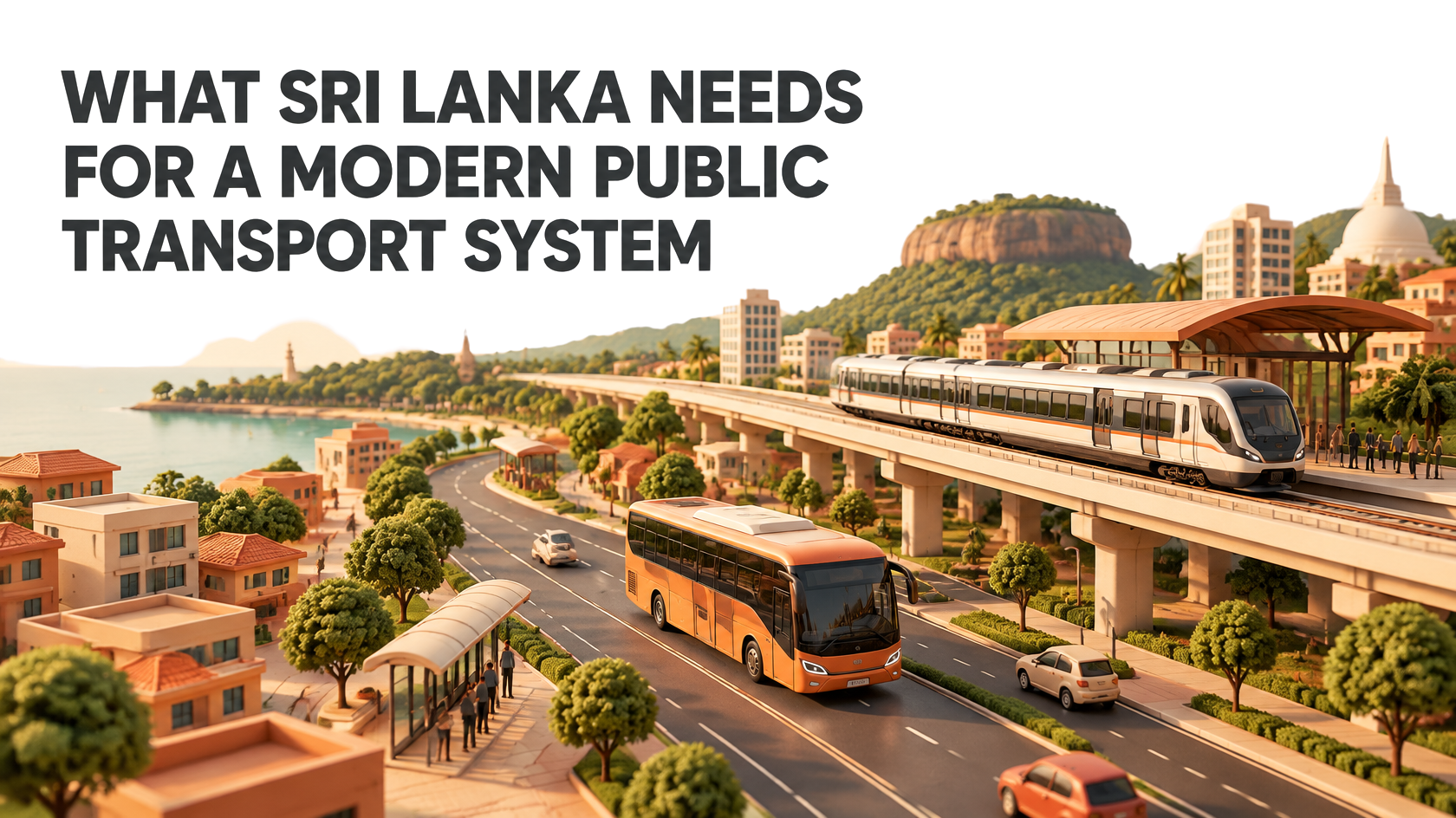
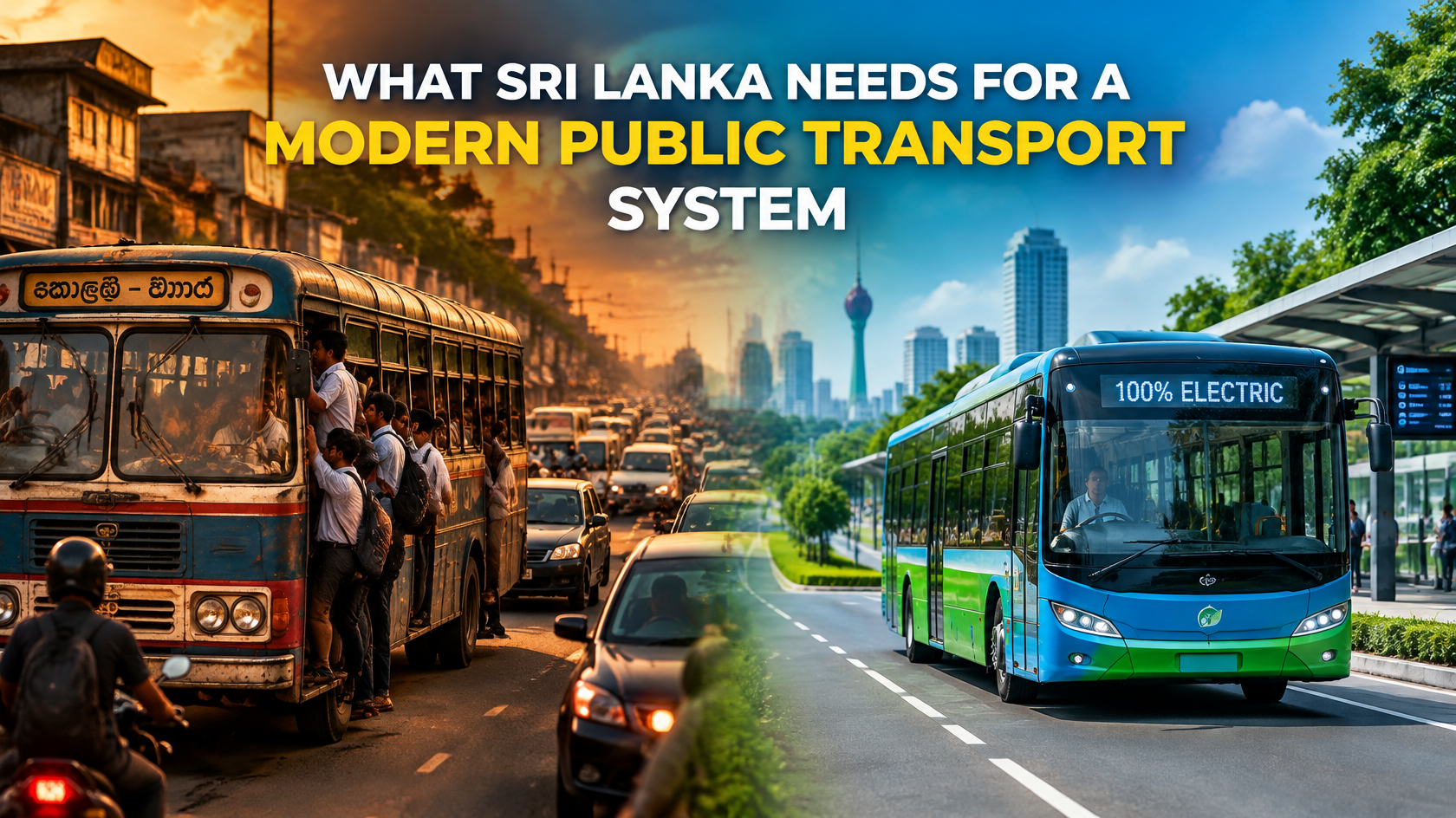
Public transportation is one of the most important foundations of a modern country. It affects how people travel to work, attend school and university, access hospitals, run businesses and participate in daily life. In Sri Lanka, millions of people depend on buses and trains every day. However, many passengers continue to face overcrowding, long waiting times, traffic congestion, unreliable schedules and uncomfortable travel conditions.
Sri Lanka has a long history of public transportation, particularly through its extensive railway network and public and private bus services. Yet the transport needs of the country have changed significantly. Cities are growing, the number of vehicles on the roads has increased, and people expect faster, safer and more reliable services. A modern public transport system is therefore no longer simply a development goal—it is an important national necessity.
So, what does Sri Lanka need to build a truly modern public transport system?
1. A Clear National Transport Plan
One of the most important requirements is a long-term and consistent national transport strategy. Transport development should not be handled through isolated projects that change direction whenever governments or policies change.
Sri Lanka needs a plan that connects buses, trains, roads, park-and-ride facilities, walking routes and other transport services. Decisions should be based on population growth, travel patterns, economic development and environmental needs.
For example, Colombo and its surrounding areas have very different transport challenges compared with rural districts. A modern system should therefore consider the specific needs of different regions while still connecting the country through an overall national network.
Long-term planning is essential because major transport infrastructure takes years to design and build. Governments must focus not only on solving today's traffic problems but also on preparing for the needs of future generations.
2. Better and More Reliable Bus Services
Buses remain the most important form of public transportation for many Sri Lankans. They serve cities, towns and villages across the country. However, the quality and reliability of bus services need significant improvement.
A modern bus system should provide passengers with clear and dependable schedules. People should have a better idea of when a bus will arrive rather than waiting for long periods without information.
Bus services can also become more efficient through better route planning. In some areas, several buses may compete on the same busy routes while other communities have limited services. A more organised system could improve coverage and reduce unnecessary competition.
Modern buses should also provide better comfort and safety. Clean vehicles, proper maintenance, improved ventilation and safer driving practices would significantly improve the passenger experience.
Sri Lanka could also expand the use of priority systems for buses in heavily congested areas. Dedicated bus lanes or other traffic-priority measures can help buses move faster, making public transport more attractive than travelling by private vehicle.
3. Modernising the Railway System
Sri Lanka's railway system has enormous potential. Trains can carry large numbers of passengers efficiently and are particularly valuable for busy commuter routes.
However, many passengers experience delays, overcrowding and ageing facilities. Railway modernisation should therefore be a major part of the country's future transport strategy.
Improving signalling systems, track maintenance and station facilities can help increase reliability and efficiency. Modern technology can also improve train scheduling and communication with passengers.
Commuter rail services are particularly important around Colombo, where large numbers of people travel into the city every day for work and education. Faster and more frequent train services could help reduce pressure on roads and decrease traffic congestion.
Stations also need improvement. A railway station should not simply be a place where passengers board a train. It should be safely connected to buses, taxis, three-wheelers, walking paths and other forms of transport.
A modern railway system can become one of the strongest parts of Sri Lanka's public transport future.
4. Better Integration Between Different Transport Services
One of the biggest problems in many transport systems is poor coordination. A passenger may travel by bus, train and another vehicle during a single journey, but these services often operate separately.
Sri Lanka needs an integrated transport system.
For example, a passenger arriving at a railway station should be able to easily find a connecting bus service. Transport schedules should be designed, where possible, to reduce unnecessary waiting times.
Major transport centres should provide clear signs, safe waiting areas and convenient connections. This would make travel easier, particularly for elderly people, children, tourists and passengers unfamiliar with an area.
Integration can also make public transportation more attractive for people who currently depend on private cars or motorcycles.
The goal should be to make the entire journey easier—not simply improve one bus route or one railway line.
5. Digital Technology for Smarter Travel
Technology can play a major role in modernising public transport.
Passengers increasingly expect access to real-time information. Mobile applications, digital displays and online platforms could provide information about bus and train arrival times, delays and route changes.
A modern digital system could help passengers plan their journeys before leaving home.
Electronic ticketing is another important area. Instead of depending entirely on separate cash payments for different services, Sri Lanka could move towards more convenient digital payment systems.
An integrated payment system could eventually allow passengers to use one card or digital method across different public transport services. This would save time and make the system more convenient.
Technology can also help transport authorities collect useful information. Understanding passenger numbers, busy travel times and popular routes can support better planning and resource allocation.
However, digital development should remain accessible. Not every passenger owns a smartphone or has constant access to mobile internet. Therefore, modernisation should include both digital services and practical alternatives for all members of society.
6. Reducing Traffic Congestion
Traffic congestion is one of the biggest challenges facing Sri Lanka, especially in and around Colombo.
When roads are filled with private cars, motorcycles and other vehicles, buses also become trapped in traffic. This makes public transportation slower and less attractive.
Improving public transport is therefore directly connected to reducing congestion.
If buses and trains become faster, more reliable and more comfortable, more people may choose them instead of driving private vehicles. This can reduce the number of vehicles on busy roads.
Sri Lanka also needs to encourage better urban transport planning. Homes, workplaces, schools and commercial areas should be considered when designing future transport networks.
Simply building more roads may not permanently solve congestion. A successful strategy must focus on moving more people efficiently, rather than simply increasing the number of vehicles that can enter a road.
7. Safer Transport for Everyone
Safety must be a central part of any modern public transport system.
Passengers should feel safe while waiting at bus stops, travelling on buses and trains, and walking to transport facilities. Drivers and transport operators must also follow stronger safety standards.
Road accidents remain a serious concern in Sri Lanka. Better driver training, stronger enforcement of traffic laws and regular vehicle inspections can help improve public safety.
Bus stops and railway stations should have adequate lighting and safe pedestrian access. Women, children, elderly passengers and people travelling late at night should be able to use public transport with confidence.
Accessibility is also essential. People with disabilities should not be excluded from public transportation because of poorly designed vehicles or stations. Modern buses and transport facilities should gradually become more accessible to everyone.
8. Comfortable and Passenger-Friendly Facilities
Public transportation is not only about reaching a destination. The quality of the journey matters.
Passengers often spend significant amounts of time waiting and travelling. Modern facilities should therefore include clean waiting areas, proper seating where possible, clear information and protection from rain and extreme weather.
Railway stations and major bus terminals should have well-maintained basic facilities.
Cleanliness should also receive greater attention. A transport system represents the public environment of a country. Clean buses, trains and stations create a better experience for passengers and visitors.
Small improvements can make a major difference. Clear signs, organised queues and helpful information can make public transportation easier to use, even without expensive infrastructure projects.
## 9. Environmentally Sustainable Transport
Sri Lanka must also consider the environmental impact of transportation.
The growing number of vehicles contributes to air pollution and fuel consumption. Efficient public transportation can help reduce the number of private vehicles needed for daily travel.
Investment in cleaner technologies should gradually become part of the country's transport strategy. Depending on technology, infrastructure and financial feasibility, electric and other lower-emission vehicles may play a growing role in future public transportation.
Rail transport can also support more sustainable mobility, especially when large numbers of passengers travel along busy corridors.
Encouraging walking and cycling for short journeys is another important part of modern transport planning. Safe pavements and cycling infrastructure can reduce dependence on vehicles for every journey.
A sustainable transport system should therefore combine efficient public transport with cleaner technology and better facilities for pedestrians and cyclists.
## 10. Improving the Experience for Rural Communities
Modern public transportation should not focus only on Colombo.
People living in rural communities also need reliable access to schools, hospitals, markets and employment opportunities. In some areas, limited or unreliable transport services can make daily life difficult.
A national transport strategy should identify communities with poor connections and improve services where they are most needed.
Smaller buses, coordinated regional services and better connections to major transport hubs could improve mobility in less populated areas.
Improved rural transportation can also support local economies by making it easier for people to reach markets, workplaces and services.
A modern transport system should connect the entire country—not only the largest cities.
11. Better Management and Strong Institutions
Infrastructure alone cannot solve every transport problem.
Sri Lanka also needs effective management, coordination and accountability. Different agencies and organisations involved in roads, buses, railways and urban development need stronger coordination.
Transport policies should be based on reliable information and professional planning. Authorities should regularly study passenger needs and respond to changing travel patterns.
Public feedback should also be considered. Passengers experience the strengths and weaknesses of the system every day. Their opinions can provide valuable information about delays, safety concerns and service quality.
Transparent management and consistent standards can help build public confidence in transport services.
12. Affordable Transport for the Public
Public transportation must remain affordable.
For many Sri Lankan families, daily transport costs are an important part of household expenses. Fare increases can create financial pressure, particularly for students, workers and low-income families.
At the same time, transport operators need enough resources to maintain vehicles and provide quality services.
This creates a difficult balance. A successful public transport policy must consider both affordability and financial sustainability.
Governments may need to carefully design subsidies and support systems to protect vulnerable passengers while ensuring that essential services can continue to operate effectively.
Conclusion
A modern public transport system could transform everyday life in Sri Lanka.
The country does not necessarily need one single solution. Instead, it needs a combination of better buses, modern railways, improved technology, integrated services, safer facilities and long-term planning.
Public transportation should be viewed as an essential national service rather than simply a way of moving people from one location to another. It influences the economy, environment, education, employment and quality of life.
A student travelling to university, an employee travelling to work, a patient visiting a hospital and a tourist exploring Sri Lanka all depend on efficient mobility.
If Sri Lanka invests wisely in reliable buses, improved railways, digital technology and better connections between transport services, it can reduce congestion and make daily travel easier for millions of people.
The most important goal should be simple: public transport must become convenient enough that people choose to use it because it is efficient, safe, affordable and comfortable.
Building such a system will require investment, planning and political commitment. It will also require consistent policies that continue beyond short-term projects.
Sri Lanka has the opportunity to create a transport system that meets the needs of a modern society. With the right decisions, public transportation can become faster, smarter, greener and more accessible—helping the country move towards a more connected and sustainable future.
Additional Media