
Sponsored
Understanding Sustainable Agriculture: A Comprehensive Definition
Rakshika Rathnayake7/2/20265 min read
Share:Facebook
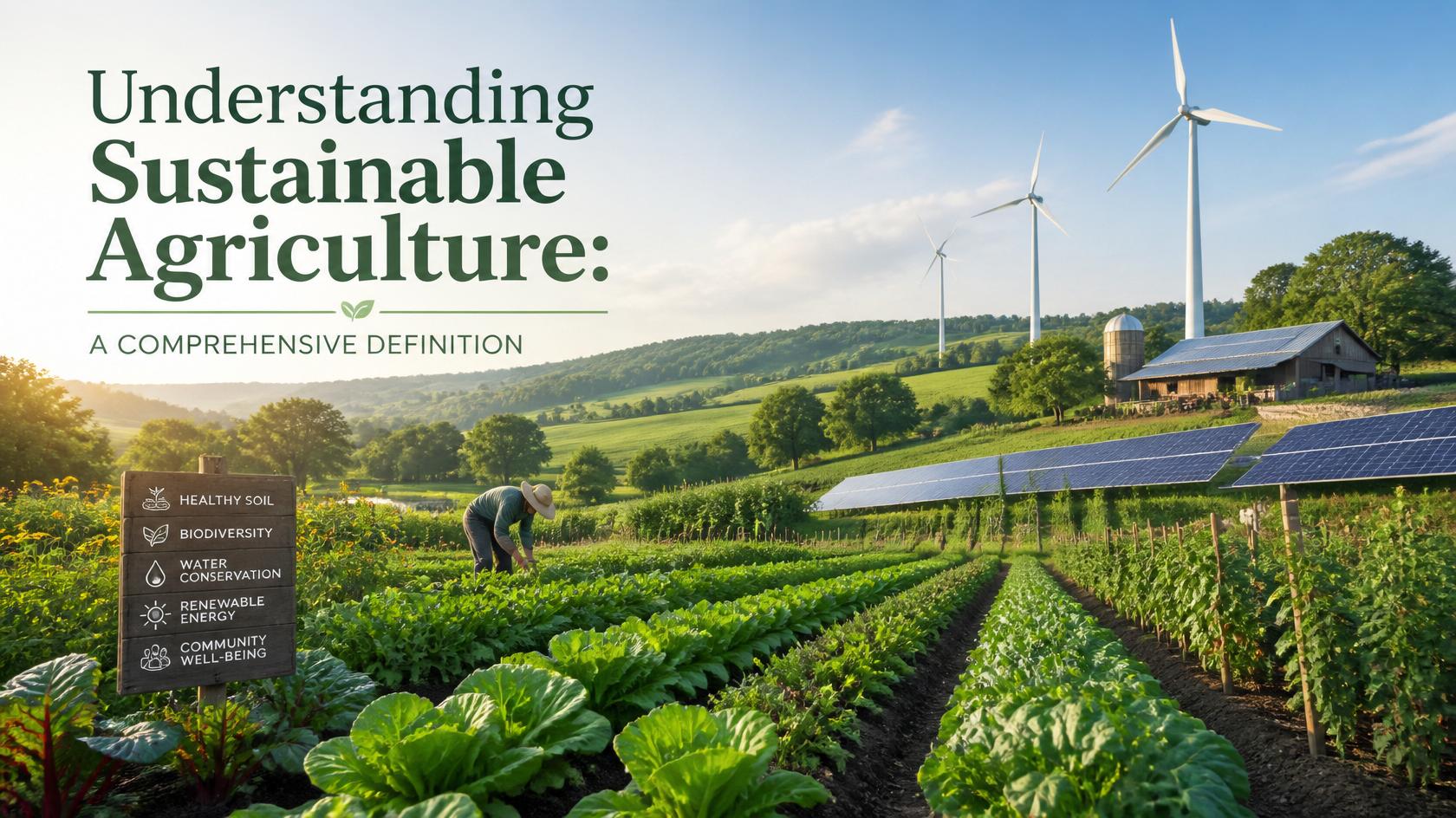
In a world facing growing populations and increasing environmental pressures, the way we produce food is more critical than ever. Sustainable agriculture is emerging as a vital solution, offering a path to feed humanity while protecting our planet for future generations. This approach moves beyond short-term productivity gains to create a resilient, fair, and healthy food system. This article will define sustainable agriculture, explore its foundational principles, and discuss its profound impact on food production and global well-being.
Key Takeaways
Sustainable agriculture is an integrated system of farming that aims to meet current food needs without compromising the ability of future generations to meet theirs.
It is built on three interconnected pillars: environmental health, economic viability, and social equity.
Core practices focus on enhancing soil health, conserving water, promoting biodiversity, and reducing reliance on non-renewable resources.
Economically, it aims to ensure long-term profitability and stability for farmers, reducing costs associated with chemical inputs.
Socially, it advocates for fair labor conditions, strong rural communities, and equitable access to healthy food.
This approach is crucial for building a resilient food system, mitigating climate change, and ensuring global food security.
What is Sustainable Agriculture? Defining Its Core Principles
Sustainable agriculture is a method of farming that balances food production with the preservation of our natural world. The U.S. Code legally defines it as an integrated system of plant and animal production that, over the long term, satisfies human food needs, enhances environmental quality, makes efficient use of resources, and sustains the economic viability of farm operations. At its heart, this approach is guided by a simple but powerful principle: meeting the needs of the present without compromising the ability of future generations to meet their own. To achieve this, sustainable agriculture stands on three interconnected pillars: environmental health, economic viability, and social equity.
Environmental stewardship is the cornerstone of agricultural sustainability. It involves using practices that protect and regenerate natural resources. This includes methods like no-till farming, cover cropping, and composting to build healthy, fertile soil that is resilient to erosion. It also means conserving water through efficient irrigation, protecting biodiversity by creating habitats for pollinators and beneficial insects, and minimizing pollution by reducing the use of synthetic pesticides and fertilizers. This focus on eco-friendly farming ensures the land remains productive for decades to come.
The other two pillars, economic viability and social equity, ensure that the system supports the people who depend on it. For a farm to be truly sustainable, it must be profitable. By reducing reliance on costly external inputs and improving resource efficiency, farmers can lower their operating costs and improve long-term financial stability. Social equity in farming focuses on the well-being of people and communities. This includes ensuring fair wages and safe working conditions for farmworkers, strengthening rural economies, and promoting equitable access to nutritious food for all members of society. When these three principles work in harmony, they create a balanced and resilient foundation for the future of farming.
Sustainable Agriculture and Food Production: Impact and Benefits
The connection between sustainable agriculture and food production is direct and impactful, influencing everything from the nutrient density of our food to the stability of our global food supply. By prioritizing soil health, sustainable practices like crop rotation and cover cropping lead to more fertile ground. Healthier soils produce more nutritious and resilient crops, often with a reduced need for chemical interventions. This results in safer, healthier food for consumers and protects the health of farmers and farmworkers who have less exposure to agricultural chemicals.
The benefits of this approach create a positive ripple effect across the entire food system. For consumers, it means access to healthier food and a more transparent connection to its source. For farmers, regenerative farming practices can lead to greater economic stability by reducing input costs and opening doors to new markets where consumers demand sustainably grown products. The environment benefits immensely from reduced chemical runoff into waterways, the preservation of biodiversity through the creation of diverse habitats, and improved water conservation. These practices help create a more resilient and ethical food sourcing system from the ground up.
On a global scale, sustainable agriculture is essential for ensuring long-term food security and mitigating the impacts of climate change. Conventional agriculture is a significant contributor to greenhouse gas emissions, but sustainable practices can reverse this trend. Healthy soils act as a carbon sink, sequestering carbon from the atmosphere and helping to combat global warming. By building a food system that is less reliant on fossil fuels and more resilient to climate-related shocks like droughts and floods, sustainable agriculture provides a practical pathway to feeding a growing world population on a healthier planet.
Conclusion
Moving beyond a simple definition, sustainable agriculture represents a fundamental shift in our relationship with food and the land. It's a holistic framework that recognizes the intricate connections between environmental health, economic stability, and social well-being. By championing practices that regenerate soil, conserve water, and support biodiversity, this approach doesn't just produce food; it builds a foundation for a healthier planet. The principles of environmental stewardship, economic viability, and social equity are not separate goals but three legs of a stool—if one is weak, the entire system falters. Practitioners in this field consistently find that long-term success depends on balancing these three elements. Adopting these methods is not just an ecological choice but an economic and social necessity, creating resilient farms and vibrant rural communities. The data points to a clear conclusion: a transition toward sustainable practices is critical for ensuring that we can feed future generations while protecting the natural resources upon which all life depends. The next step for all of us, from consumers to policymakers, is to support and invest in the farmers and systems that are paving the way for a truly sustainable food future. Your choices at the grocery store, the farmers' market, and in your community can contribute to this vital global movement.
Additional Media