


Sponsored
Trincomalee: The Natural Harbor City of Sri Lanka
Rakshika Rathnayake8/21/20265 min read
Share:Facebook
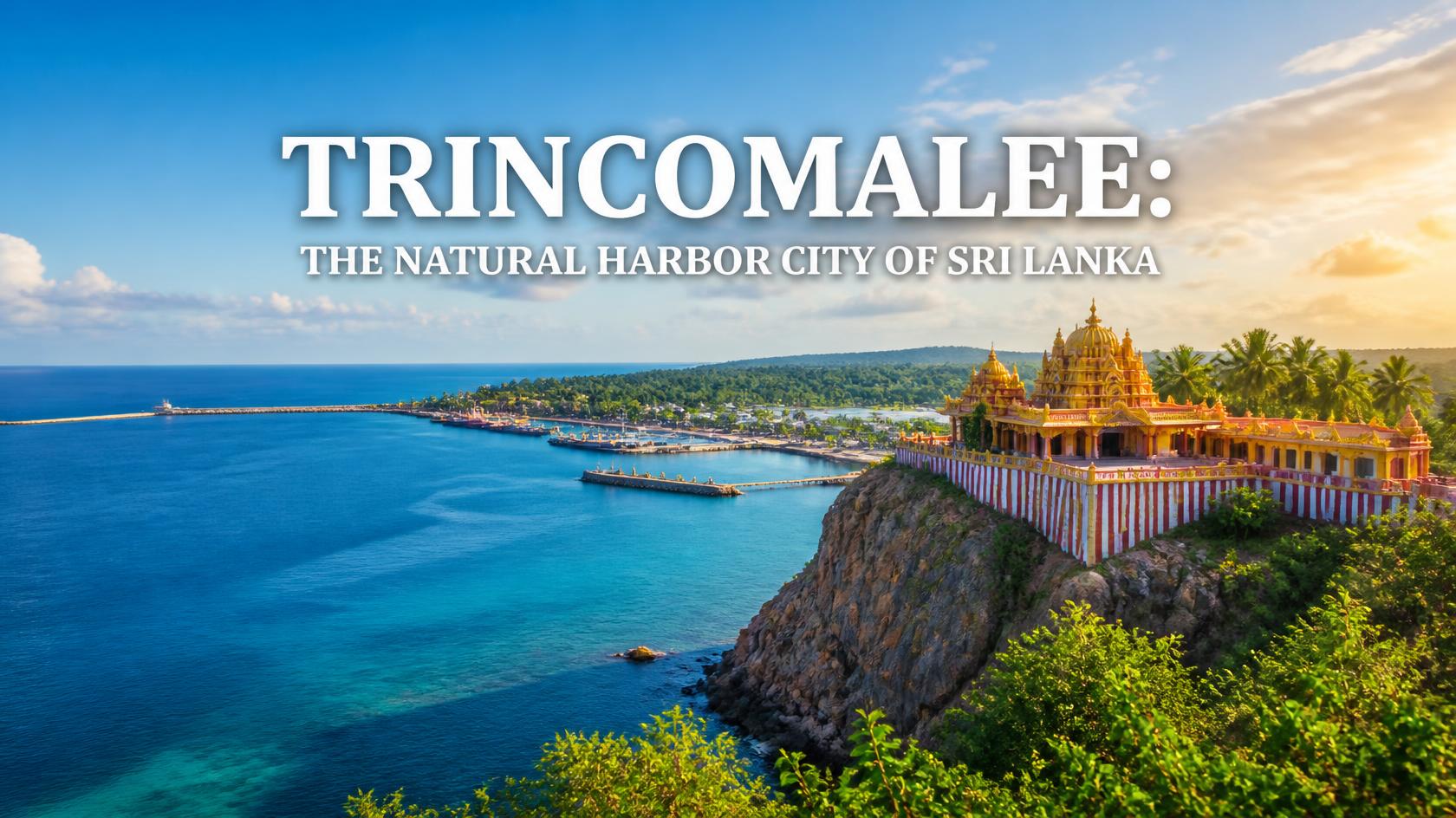
Trincomalee, located on the northeastern coast of Sri Lanka, is one of the island’s most remarkable coastal cities. Famous for its magnificent natural harbor, golden beaches, ancient religious heritage, and colonial history, Trincomalee offers a unique combination of nature, culture, and maritime importance. The city has played a significant role in Sri Lanka’s history for centuries, particularly because of its strategic position along important Indian Ocean maritime routes.
Known historically as Gokanna or Gokarna, Trincomalee developed around a deep natural bay that provides a safe anchorage for ships. Sri Lanka Tourism describes Trincomalee as a world-renowned natural deep-water harbor, while the Central Cultural Fund highlights the harbor’s exceptional strategic importance throughout the island’s maritime history.
Today, Trincomalee is not only an important port city but also one of Sri Lanka’s most attractive tourism destinations. From the spectacular cliffs of Swami Rock and the sacred Koneswaram Temple to the peaceful beaches of Nilaveli and Uppuveli, the city offers experiences for history lovers, religious pilgrims, nature enthusiasts, and beach travelers alike.
The Natural Harbor of Trincomalee
The most important geographical feature of Trincomalee is undoubtedly its natural harbor. The city is situated on a peninsula that separates the inner and outer harbor areas. Its deep and sheltered waters have made it an ideal location for ships and naval vessels for centuries.
Unlike an artificial port that requires extensive construction and continuous maintenance, a natural harbor is formed by geographical features that provide protection from rough seas and strong weather conditions. Trincomalee’s harbor is particularly valuable because of its depth, size, and sheltered location.
The harbor’s strategic position in the Indian Ocean has also contributed greatly to the city’s historical importance. European colonial powers recognized this advantage and competed to control Trincomalee. Portuguese, Dutch, French, and British forces all became involved in the struggle for control of the city and its harbor.
The harbor remains an important part of Trincomalee’s identity today. Its waters, surrounding coastline, and marine environment also contribute to tourism, fishing, transportation, and other economic activities.
A City Shaped by Maritime History
Trincomalee’s history is closely connected to the sea. Its ancient name, Gokanna, appears in historical and geographical traditions associated with Sri Lanka’s maritime past. The city developed as a port and became connected with trade across the Indian Ocean.
Its location made it valuable not only for merchants but also for naval powers. Whoever controlled Trincomalee could gain an important position from which to monitor and influence maritime movement across the eastern Indian Ocean.
During the colonial period, this importance became even more obvious. The Portuguese established a fortification in the area in the seventeenth century. The Dutch later strengthened the defenses, while the British eventually transformed Trincomalee into an important naval base. Fort Frederick, which stands prominently on the peninsula, remains one of the strongest reminders of this colonial history.
The harbor also played a major role during the Second World War. Trincomalee became an important Allied naval base, and Japanese forces attacked the area in 1942. The attack demonstrated the continuing military significance of the harbor during a major global conflict.
Fort Frederick: A Symbol of Colonial Trincomalee
One of the most recognizable historical landmarks in Trincomalee is Fort Frederick. The fort stands on the narrow peninsula overlooking the harbor and surrounding ocean. Its commanding position demonstrates why the location was so valuable to colonial powers.
The original Portuguese fortification was constructed in the seventeenth century. The Dutch later rebuilt and strengthened the fort, and the British subsequently took control of it and made further developments. As a result, the fort represents several layers of Sri Lanka’s colonial history.
Walking through the fort area provides visitors with an opportunity to experience the connection between military history and natural scenery. Old walls, trees, historic buildings, and views of the deep blue ocean create an atmosphere unlike many other historical sites in Sri Lanka.
Fort Frederick also leads toward one of Trincomalee’s most important religious landmarks—the Koneswaram Temple.
Koneswaram Temple and Swami Rock
At the end of the peninsula stands Koneswaram Temple, one of the most important Hindu religious sites in Sri Lanka. The temple is located dramatically on Swami Rock, a rocky cliff overlooking the Indian Ocean.
The site has deep religious and historical significance. Koneswaram is traditionally regarded as one of the Pancha Ishwarams, the five important Shiva shrines associated with Sri Lanka. The ancient temple complex was famous long before European colonial rule.
The history of the temple is also connected with the colonial history of Trincomalee. The Portuguese destroyed much of the ancient temple complex in the seventeenth century, and parts of the fortification were constructed using stones from the earlier structures. The temple was later restored, allowing the sacred site to continue its religious traditions.
The location of Koneswaram is one of its greatest attractions. From the temple area, visitors can see the harbor on one side and the open Indian Ocean on the other. The dramatic cliffs and surrounding sea make Swami Rock one of the most memorable viewpoints in eastern Sri Lanka.
The Beautiful Beaches of Trincomalee
Although Trincomalee is famous for its harbor and history, its beaches are equally important to the city’s tourism industry.
Uppuveli Beach, located close to Trincomalee town, is popular for its calm atmosphere, soft sand, swimming opportunities, and accommodation facilities. Its convenient location makes it a popular choice for visitors who want to stay close to the city while enjoying the coast.
Further north, Nilaveli Beach is known for its wide sandy coastline and clear waters. Sri Lanka Tourism describes Nilaveli as a peaceful beach destination with soft waves and white sand.
The eastern coast’s relatively calm seas during the appropriate seasonal period make these beaches attractive for swimming, snorkeling, diving, and other marine activities.
For travelers interested in marine life, the coastal waters around Trincomalee provide opportunities to observe a variety of marine species. Whale watching, diving, snorkeling, and fishing are among the activities associated with the region.
Pigeon Island and Marine Biodiversity
One of the most popular natural attractions near Trincomalee is Pigeon Island National Park, located off the coast near Nilaveli.
The island and its surrounding waters are known for coral reefs and marine biodiversity. Snorkeling allows visitors to experience the underwater environment and observe tropical fish and other marine organisms.
The marine environment is an important part of Trincomalee’s tourism potential. Protecting coral reefs, beaches, marine animals, and coastal habitats is therefore essential for maintaining the long-term value of the area.
Responsible tourism is particularly important in marine environments. Visitors can contribute to conservation by avoiding damage to coral reefs, not leaving waste on beaches, and following local rules when participating in snorkeling, diving, and boat tours.
A Multicultural City
Trincomalee is also notable for its cultural diversity. Different religious and ethnic communities have lived in the region for generations, contributing to the city’s distinctive cultural character.
Hindu temples, Buddhist places of worship, churches, and mosques can be found within the broader Trincomalee area. Sri Lanka Tourism identifies the city as an important center of Tamil-speaking culture while also recognizing its wider historical and cultural significance.
This multicultural character can be seen in the city’s architecture, festivals, religious traditions, food, languages, and everyday life. Trincomalee therefore offers visitors more than scenic attractions; it provides an opportunity to experience the cultural diversity of Sri Lanka’s eastern region.
Trincomalee During the Second World War
The strategic value of Trincomalee became particularly important during the Second World War. The British used the harbor as a major naval base, and the city became part of the Allied defense system in the Indian Ocean.
In April 1942, Japanese aircraft attacked Trincomalee. The attack targeted naval facilities and ships in and around the harbor. The event became an important part of the city’s modern history and demonstrated how the geographical importance of Trincomalee extended far beyond Sri Lanka.
The legacy of this period can still be seen in historical sites associated with the war, including military cemeteries and remains connected with the former naval presence.
The Economy and Tourism of Trincomalee
Trincomalee’s economy has historically been connected with the sea. Fishing, port-related activities, tourism, services, and local commerce all contribute to the region’s economic life.
In recent decades, tourism has become particularly important. The combination of beaches, marine activities, historical landmarks, religious sites, and natural scenery makes Trincomalee a destination with considerable tourism potential.
The city also has an advantage because it can attract different types of visitors. Some come for religious pilgrimage, others for beaches and marine activities, while history enthusiasts are interested in Fort Frederick and the city’s colonial past.
Sustainable tourism development can provide employment opportunities for local communities while encouraging the protection of the natural and cultural resources that make Trincomalee special.
The Best Time to Experience Trincomalee
Trincomalee’s eastern coastal location means that weather patterns differ from those of Sri Lanka’s southwestern coast. The period from approximately April to October is generally favorable for enjoying many coastal activities, with calmer conditions often making this period attractive for beach visits and marine activities.
However, weather conditions can change, and visitors should always check current local conditions before planning activities such as boating, diving, or swimming.
A visit to Trincomalee can easily combine several experiences in a single trip. Travelers can explore Fort Frederick and Koneswaram Temple in the morning, relax at Uppuveli or Nilaveli Beach during the day, and enjoy the coastal scenery in the evening.
Why Trincomalee Is Important to Sri Lanka
Trincomalee is important not because of one attraction alone, but because several forms of heritage come together in one place.
Its natural harbor represents the geographical importance of Sri Lanka in the Indian Ocean. Its ancient religious heritage represents centuries of cultural development. Fort Frederick represents the colonial struggles that shaped the island’s modern history. Its beaches and marine ecosystems represent the natural wealth of the eastern coast.
The city therefore connects nature, religion, history, maritime trade, military strategy, culture, and tourism.
Its harbor continues to define the character of the city. Even today, when visitors look across the calm waters of Trincomalee Bay, it is easy to understand why ancient sailors, merchants, colonial powers, and naval commanders considered this location so valuable.
Conclusion
Trincomalee is much more than a beautiful coastal destination. It is a city shaped by geography and history, where one of the world’s notable natural harbors meets ancient religious traditions, colonial architecture, spectacular beaches, and rich marine ecosystems.
From the sacred heights of Swami Rock to the historic walls of Fort Frederick, and from the peaceful shores of Nilaveli and Uppuveli to the deep waters of the natural harbor, Trincomalee presents a remarkable picture of Sri Lanka’s eastern coast.
Its future value will depend on maintaining a balance between development, tourism, environmental protection, and cultural preservation. If its natural and historical resources are carefully protected, Trincomalee can continue to serve as both a major maritime city and one of Sri Lanka’s most memorable travel destinations.
For anyone seeking to understand the geographical, historical, cultural, and natural diversity of Sri Lanka, Trincomalee deserves a prominent place on the map. It is a city where the ocean has shaped history—and where the natural harbor continues to define its identity.
Additional Media

Sponsored