Sponsored
The Temple of the Sacred Tooth Relic in Kandy: A Spiritual Journey
Rakshika Rathnayake7/1/20265 min read
Share:Facebook
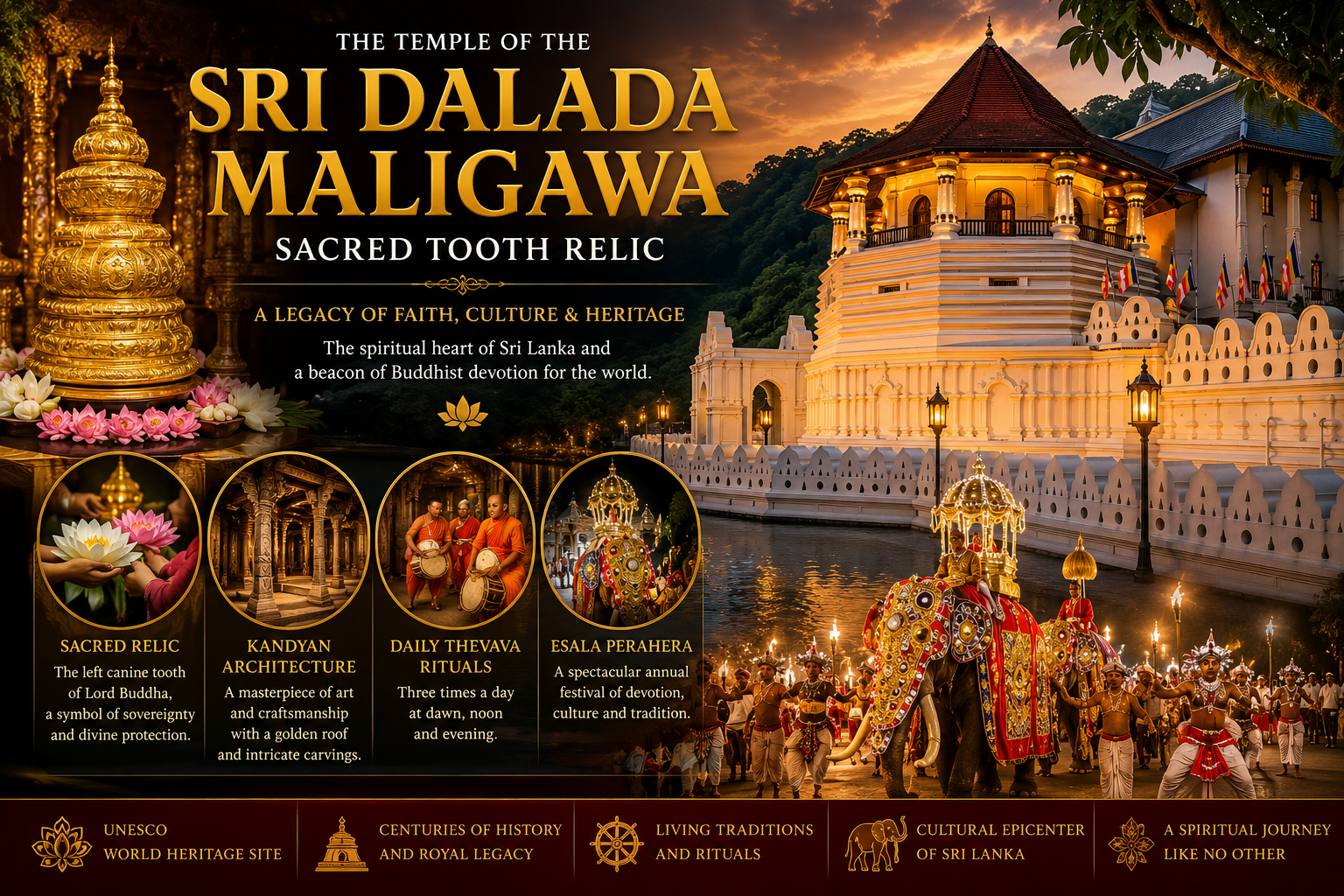
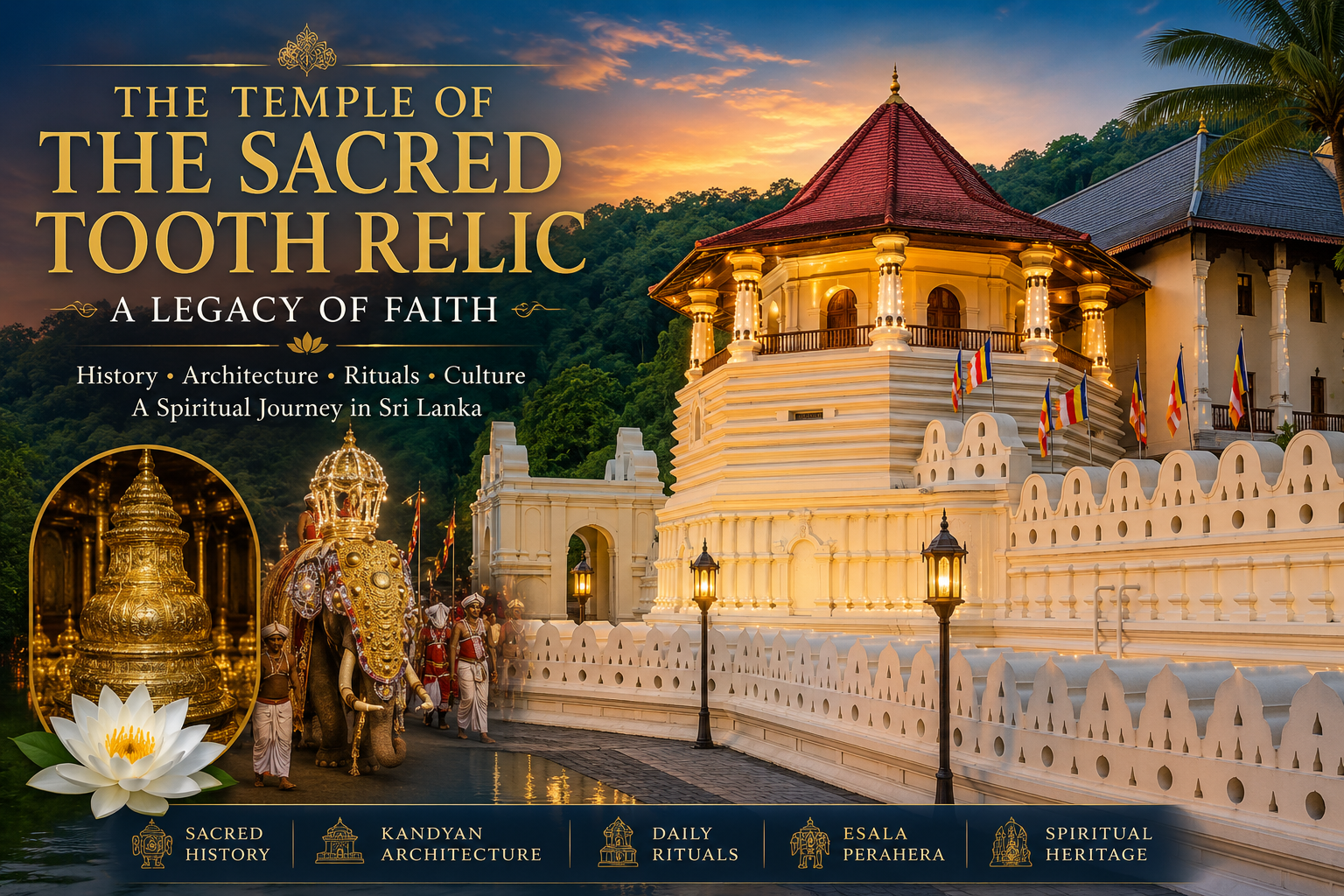
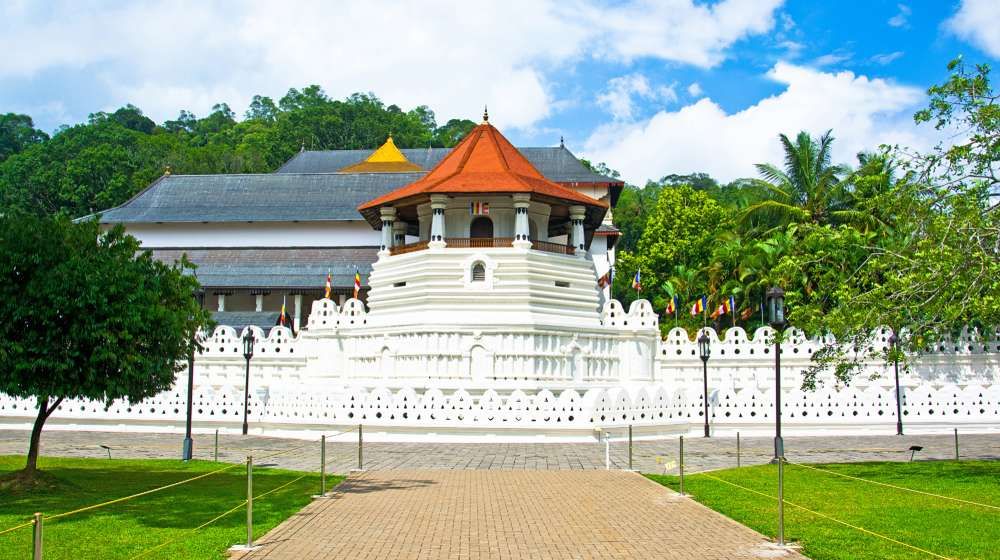
Nestled in the heart of Kandy, Sri Lanka's last royal capital, the Temple of the Sacred Tooth Relic, or Sri Dalada Maligawa, stands as a beacon of the Buddhist faith. This magnificent complex is more than just a temple; it is a pivotal pilgrimage destination and a UNESCO World Heritage site that holds the very essence of Sri Lanka's spiritual and political history. Its profound significance comes from being the repository of a sacred tooth relic of the Buddha, an object of veneration for Buddhists across the globe. This article will guide you through the temple's legendary history, its stunning architecture, and its vibrant, living cultural importance.
A Symbol of Sovereignty: Discover how the Sacred Tooth Relic has been historically linked to the right to rule Sri Lanka, making the temple a site of immense political and spiritual power.
Architectural Grandeur: Explore the unique blend of Kandyan and South Indian architectural styles that define the temple complex, from its iconic golden roof to its intricately carved interiors.
Living Traditions: Learn about the daily rituals (Thevava) that bring the temple to life and the spectacular annual Esala Perahera festival, a cultural pageant of global renown.
Visitor Essentials: Get practical tips on dress code, the best times to visit, and how to respectfully experience this sacred space.
Cultural Epicenter: Understand the temple's role in preserving and promoting traditional Sri Lankan arts, crafts, and customs for future generations.
The Sacred Tooth Relic: A Legacy of Faith
The story of the Sacred Tooth Relic is a remarkable saga of faith, devotion, and royal power. According to legend, the left canine tooth of Siddhartha Gautama was retrieved from his funeral pyre in ancient India in 543 BCE. For centuries, the relic was protected in India, but in the 4th century CE, it was brought to Sri Lanka by Princess Hemamali and her husband, Prince Dantha, who hid it in the princess's hair to ensure its safety during a period of unrest.
For Buddhists worldwide, the sacred tooth relic is a tangible connection to the Buddha, symbolizing his enduring presence and teachings. Its arrival in Sri Lanka marked a pivotal moment in the nation's history. From ancient times, a powerful belief took hold: whoever possessed the relic held the legitimate right to govern the country. This belief inextricably linked the relic with the sovereignty of Sri Lankan kings, who built magnificent temples to house it in their respective capitals. After being moved between ancient capitals like Anuradhapura and Polonnaruwa to protect it from invaders, the Buddha tooth relic finally found its permanent home in Kandy.
Exploring the Temple's Grandeur and Rituals
The architecture of the Sri Dalada Maligawa is a breathtaking example of the Kandyan style, featuring a distinctive golden roof that gleams above Kandy Lake. The complex, constructed with brick, wood, and stone and adorned with ivory and gold, showcases centuries of artistic evolution. Visitors can explore key areas like the Audience Hall (Magul Maduwa), with its intricately carved wooden pillars, and the iconic octagonal pavilion known as the Pattirippuwa, originally used by the king to address his people. The main shrine consists of lower and upper floors, where the tooth relic is kept in the inner chamber, protected within seven nested golden caskets shaped like a stupa.
The temple is a place of constant devotion, with daily rituals known as Thevava performed three times a day—at dawn, noon, and in the evening. During these ceremonies, the air fills with the sounds of traditional Hewisi drums, creating a deeply spiritual and serene atmosphere as monks make offerings of food, drink, and flowers. While visitors cannot see the actual tooth, the chamber doors are opened during these times, offering a glimpse of the heavily adorned golden caskets.
For a respectful and fulfilling visit, practical planning is key. A modest dress code is strictly enforced, requiring both men and women to cover their shoulders and knees. It is also customary to remove shoes and hats before entering the sacred grounds. The temple is open daily from 5:30 a.m. to 8:00 p.m., but the best times to experience its spiritual heart are during the puja (offering) ceremonies. While photography is generally permitted, it's considered disrespectful to take photos with your back to Buddha statues or during the sacred rituals.
The Temple's Enduring Cultural Impact
The Temple of the Tooth Relic extends its influence far beyond its religious function, serving as a vibrant, living cultural center for all of Sri Lanka. It is the epicenter of one of Asia's most spectacular pageants, the annual Esala Perahera. Held over ten days in July or August, this grand festival honors the sacred relic and seeks blessings for the nation. The Perahera is a dazzling procession of lavishly decorated elephants, fire-eaters, whip dancers, musicians, and thousands of performers in traditional Kandyan attire.
This festival, with roots dating back to the 3rd century BCE, is a profound expression of national identity and a testament to the island's deep-seated traditions. The temple's role as the custodian of the Buddha tooth relic in Sri Lanka makes it a vital institution for cultural preservation. It actively promotes and sustains traditional Sri Lankan arts, from the intricate craftsmanship seen in its architecture to the unique rhythms of the ceremonial drummers. The Dalada Maligawa in Kandy is not just a historical monument; it is the beating heart of Sri Lankan heritage, ensuring that ancient customs and spiritual devotion continue to thrive.
Conclusion
The Temple of the Sacred Tooth Relic is far more than an architectural masterpiece; it is the spiritual soul of a nation. As a UNESCO World Heritage site, Sri Dalada Maligawa offers a profound journey into the heart of Buddhist devotion and the rich history of Sri Lanka. From the ancient legend of the tooth relic's arrival to its enduring role as a symbol of sovereignty, the temple encapsulates centuries of faith and cultural identity. The daily rituals provide a glimpse into a living tradition, while the annual Esala Perahera showcases a vibrant cultural legacy on a global stage. A visit to the tooth temple in Kandy is an opportunity to connect with a heritage that has been carefully preserved and continues to inspire millions. It stands as a powerful reminder of the deep connection between faith, culture, and national identity that defines the island of Sri Lanka. Whether you are a devout pilgrim or a curious traveler, the serene and sacred atmosphere of the Temple of the Tooth in Kandy offers a truly unforgettable spiritual experience.
Additional Media