The Rich History of Ceylon Tea: From Colonial Roots to Global Icon
Rakshika Rathnayake7/16/20265 min read
Share:Facebook
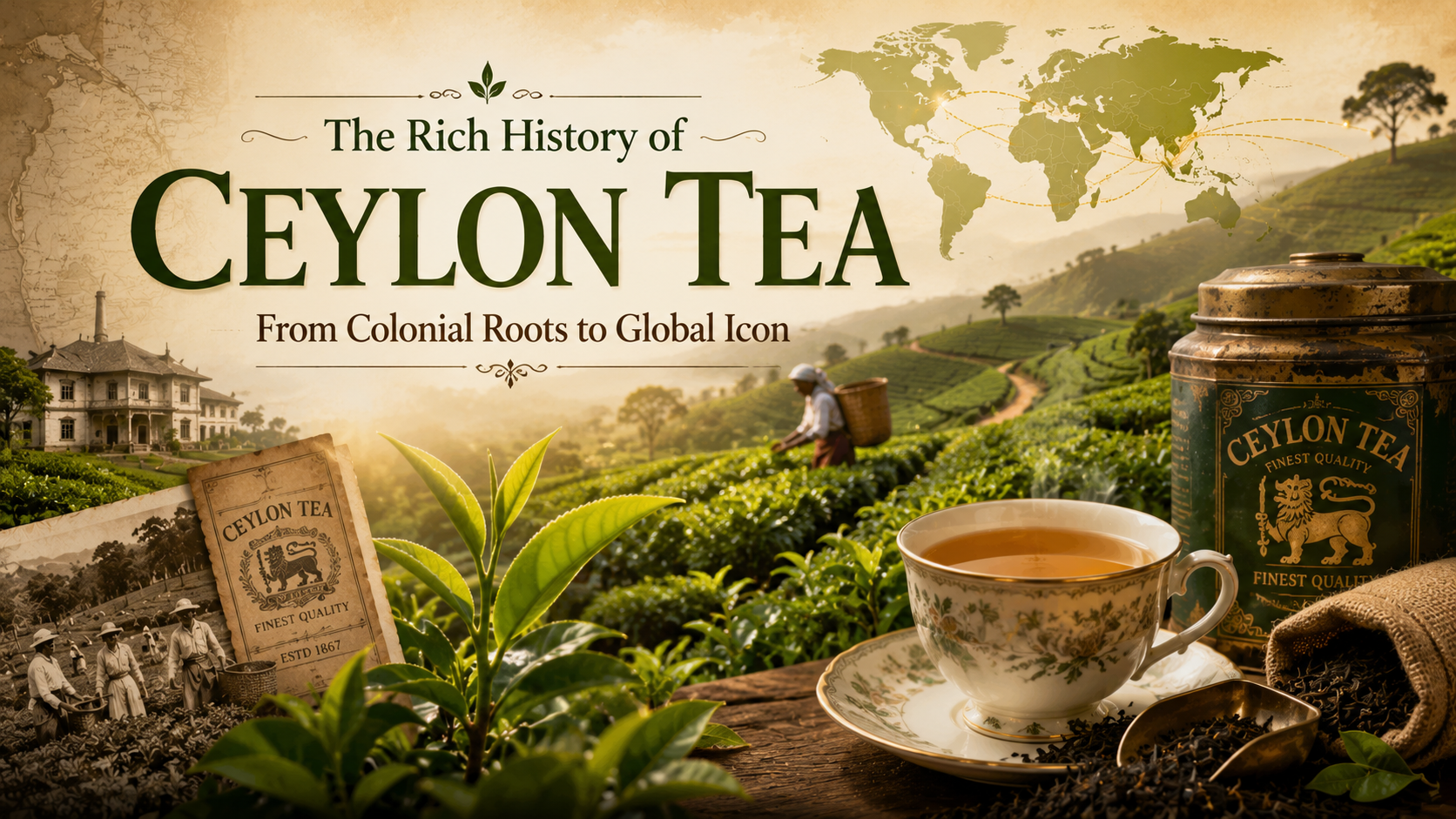
Ceylon tea is a world-renowned beverage, celebrated for its unique flavor, rich aroma, and bright, golden hue. Originating from the lush, rolling hills of Sri Lanka (formerly known as Ceylon), this tea is more than just a drink; it's a cornerstone of the nation's culture and economy. Its story is a fascinating journey of agricultural transformation, colonial influence, and entrepreneurial spirit that turned a small island into a global tea powerhouse. Exploring the history of Ceylon tea reveals a legacy steeped in resilience and a commitment to quality that continues to define it today.
Key Takeaways
The history of Ceylon tea began in 1867 with a single 19-acre plot planted by Scotsman James Taylor.
A devastating coffee rust blight in the 1860s wiped out Sri Lanka's primary export, forcing planters to switch to tea cultivation.
Entrepreneurs like Thomas Lipton were pivotal in popularizing Ceylon tea globally by making it affordable and accessible.
Sri Lanka's diverse geography creates distinct flavor profiles, with high-grown teas being light and delicate and low-grown teas being robust and malty.
Today, the industry focuses on sustainability and ethical production while maintaining its reputation for high-quality black, green, and white teas.
The Birth of an Industry: How Ceylon Tea Began
While tea plants first arrived in Ceylon from China in 1824 for non-commercial purposes, the industry's true beginning was a response to a crisis. For much of the 19th century, the island's economy was dominated by coffee. However, under British colonial rule, early experiments with tea cultivation began. The pivotal figure in this story is James Taylor, a Scottish planter who is widely regarded as the "Father of Ceylon Tea." Arriving in Ceylon in 1852, Taylor was tasked with experimenting with tea cultivation on the Loolecondera Estate near Kandy.
In 1867, after studying tea growing in India, Taylor planted the first commercial plot of tea, spanning just 19 acres. He meticulously perfected cultivation and processing techniques, initially rolling the leaves by hand in his bungalow. Taylor's pioneering efforts in early tea cultivation were not just about planting; he also invented a machine for rolling tea leaves, a significant innovation at the time. His initial shipments to London in the 1870s marked the humble beginnings of an industry that would soon reshape the island's destiny.
From Coffee Crisis to Tea Boom: A Pivotal Transformation
The widespread adoption of tea in Ceylon was born from agricultural catastrophe. In the late 1860s, a fungal disease known as coffee rust, or *Hemileia vastatrix*, swept across the island's plantations. This coffee blight was devastating, wiping out the crop that formed the backbone of Ceylon's economy and ruining many planters. The crisis forced estate owners to seek a viable alternative, and James Taylor's successful tea experiments provided the perfect solution.
This agricultural disaster triggered a rapid and strategic shift from coffee to tea cultivation. Planters across the central highlands began converting their dying coffee fields into thriving tea estates, fundamentally reshaping the island's landscape. This transformation was fueled by entrepreneurial visionaries, most notably Sir Thomas Lipton. The Glasgow grocer arrived in Ceylon in the 1890s, purchasing several plantations at low prices post-blight. Lipton's genius was in cutting out the middlemen, controlling the process from garden to teapot, and marketing Ceylon tea directly to consumers with the slogan, "Direct from the tea gardens to the teapot." His efforts made the once-luxury beverage affordable for the masses and cemented Ceylon tea's place on the world stage.
The Golden Age and Global Recognition of Ceylon Tea
The period following the coffee crisis marked a golden age for Ceylon tea. The industry expanded at an incredible rate, and its reputation for quality quickly grew. The island's unique geography, with its diverse elevations and microclimates, proved ideal for producing teas with a wide range of flavor profiles. This diversity is a hallmark of Ceylon tea, with different regions producing distinct characteristics.
The main tea-growing regions are categorized by elevation: High Grown, Mid Grown, and Low Grown.
Nuwara Eliya: At the highest elevation, this region produces light, delicate, and fragrant teas often called the "champagne of Ceylon teas."
Dimbula: These high-grown teas are refreshing and mellow.
Uva: Teas from this eastern region are known for their smooth, mellow taste.
Kandy: As the original tea region, Kandy produces strong, full-bodied mid-grown teas.
Ruhuna: The low-grown teas from this southern region are bold, rich, and popular in Middle Eastern markets.
To ensure consistency and quality, a stringent grading system based on leaf size was developed. This commitment to quality, combined with its unique and varied flavors, earned Ceylon tea global recognition. The establishment of the Colombo Tea Auction in 1883 created a formal marketplace that further solidified its international standing.
Ceylon Tea Today: A Legacy of Excellence and Innovation
Today, Ceylon tea remains a vital part of Sri Lanka's economy and national identity, making it the world's fourth-largest tea producer. The industry continues to uphold its legacy of excellence, with the iconic Lion Logo guaranteeing that the tea is 100% pure Ceylon tea, packed in Sri Lanka. The modern Ceylon tea industry is also embracing innovation and addressing contemporary consumer demands. There is a growing focus on sustainable farming practices and ethical production to ensure the long-term health of the environment and the well-being of its workers.
Beyond its rich taste, Ceylon tea is celebrated for its health benefits. It is packed with antioxidants, particularly polyphenols like flavonoids and catechins, which help protect the body against cell damage. Regular consumption has been linked to improved heart health, reduced cholesterol levels, and increased fat burning. As the global beverage market becomes more competitive, the industry continues to innovate, offering a diverse range of products from traditional black teas to green, white, and oolong varieties, ensuring that the legacy of Ceylon tea will endure for generations to come.
Frequently Asked Questions About Ceylon Tea
What makes Ceylon tea unique compared to other teas?
Ceylon tea's uniqueness comes from its terroir—the specific combination of Sri Lanka's climate, soil, and altitude. This results in a classic bright, brisk, and full-bodied flavor with crisp, citrusy notes that set it apart. The flavor can range from light and floral in high-grown teas to rich and malty in low-grown varieties, offering a diversity rarely found in other tea-producing countries.
What are the main types of Ceylon tea available?
While best known for its black tea, Sri Lanka produces several other types. The main varieties include Ceylon Black Tea, the most famous style, which is bold and full-bodied. Ceylon Green Tea has a fuller body and a nutty, malty flavor compared to other green teas. Ceylon White Tea, also known as "silver tips," is a rare and expensive variety prized for its delicate, sweet notes. Oolong varieties are also produced, offering a balance between black and green tea characteristics.
How should Ceylon tea be brewed for the best taste?
For the best flavor, use fresh, filtered water. For Ceylon black tea, the water temperature should be near boiling, around 95-100°C (203-212°F), with a steeping time of 3 to 5 minutes. For the more delicate Ceylon green tea, use cooler water at about 80°C (175°F) and steep for only 2 to 3 minutes to avoid bitterness. A general guideline is to use about 2.5 grams of loose-leaf tea per 220ml of water.
Are there any specific health benefits associated with drinking Ceylon tea?
Yes, Ceylon tea is rich in antioxidants, such as polyphenols, which can help protect your body from free radicals and reduce the risk of chronic diseases. Studies suggest that its flavonoids may support cardiovascular health by helping to reduce LDL ("bad") cholesterol. The combination of caffeine and the amino acid L-theanine can also boost alertness and focus without the jitters sometimes associated with coffee.
Additional Media