
Sponsored
The Kandyan Kingdom: History and Culture of Sri Lanka’s Last Royal Kingdom
Rakshika Rathnayake6/18/20265 min read
Share:Facebook
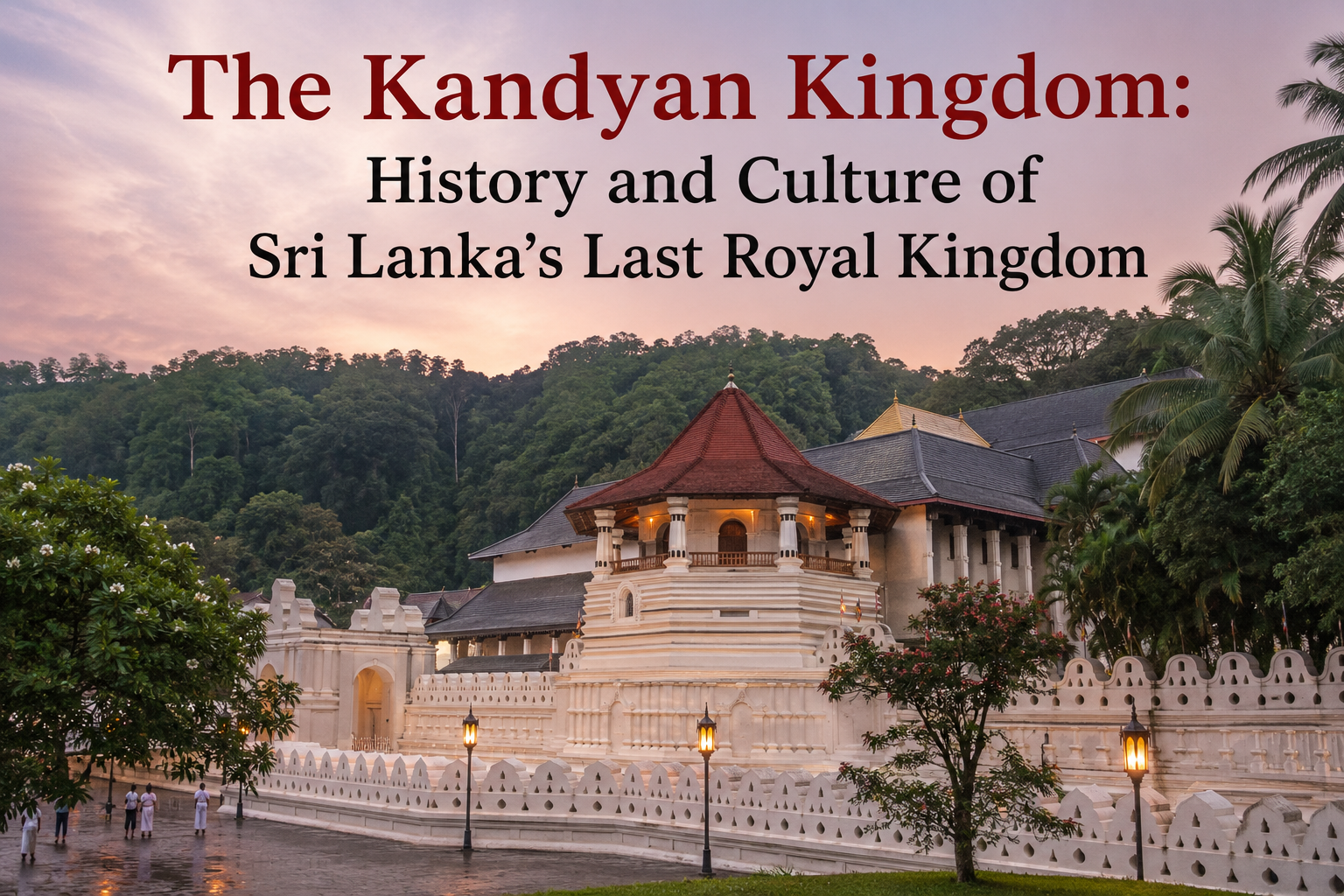
The Kandyan Kingdom was the last independent monarchy in Sri Lanka, lasting until 1815 when it was finally brought under British colonial rule. Located in the central highlands of the island, with Kandy as its capital, the kingdom played a vital role in preserving Sri Lankan identity, culture, and Buddhism during centuries of foreign influence along the coastal regions.
Historically, the Kandyan Kingdom emerged in the late 15th century after the decline of earlier Sinhalese kingdoms such as Kotte. Its strategic location in the mountainous interior made it difficult for European powers—Portuguese, Dutch, and later British—to fully conquer. This natural defense helped the kingdom maintain its independence for over three centuries, even while much of the island’s coastline was under colonial control.
One of the most significant aspects of the Kandyan Kingdom was its strong connection to Buddhism. The king was seen as the protector of the religion, and the Temple of the Sacred Tooth Relic (Sri Dalada Maligawa) in Kandy became the most sacred religious site in the country. The possession of the sacred tooth relic was believed to legitimize the king’s right to rule, making religion and governance deeply interconnected.
The political system of the Kandyan Kingdom was highly structured. The king ruled with the support of a council of nobles known as “Adigars” and regional chiefs called “Dissavas.” These officials managed different provinces and ensured loyalty to the central authority. Although the king held supreme power, governance was influenced by customs, traditions, and religious principles.
Culturally, the Kandyan period contributed significantly to Sri Lankan heritage. Kandyan dance, one of the most famous traditional dance forms in Sri Lanka, originated during this era. It is still performed today during cultural festivals and religious ceremonies. The distinctive drum rhythms, elaborate costumes, and energetic movements reflect both religious devotion and royal ceremony.
Architecture from the Kandyan period also reflects its unique identity. The royal palace complex, temple structures, and audience halls were built using traditional Sri Lankan styles, often incorporating wood carvings and intricate designs. Unlike the coastal regions influenced by European architecture, Kandyan buildings maintained indigenous artistic traditions.
The kingdom also played a crucial role in maintaining Sinhalese language, customs, and traditions at a time when colonial forces were spreading European culture in other parts of the island. Festivals such as the Esala Perahera, one of the grandest Buddhist processions in the world, continue to reflect Kandyan traditions even today.
Economically, the Kandyan Kingdom relied heavily on agriculture, especially rice cultivation. The kingdom’s irrigation systems, though less extensive than ancient lowland kingdoms, supported local farming communities. Trade was more limited due to its inland location, but it still maintained connections with coastal regions and foreign merchants through intermediaries.
The fall of the Kandyan Kingdom in 1815 marked the end of monarchy in Sri Lanka and the beginning of full British colonial rule. However, its legacy continues to shape Sri Lankan identity. From dance and music to religious traditions and national festivals, the influence of the Kandyan era remains deeply embedded in modern Sri Lankan society.
the Kandyan Kingdom was not only a political state but also a guardian of culture, religion, and tradition. Its resilience against colonial powers and its contributions to Sri Lankan heritage make it one of the most important chapters in the country’s history.