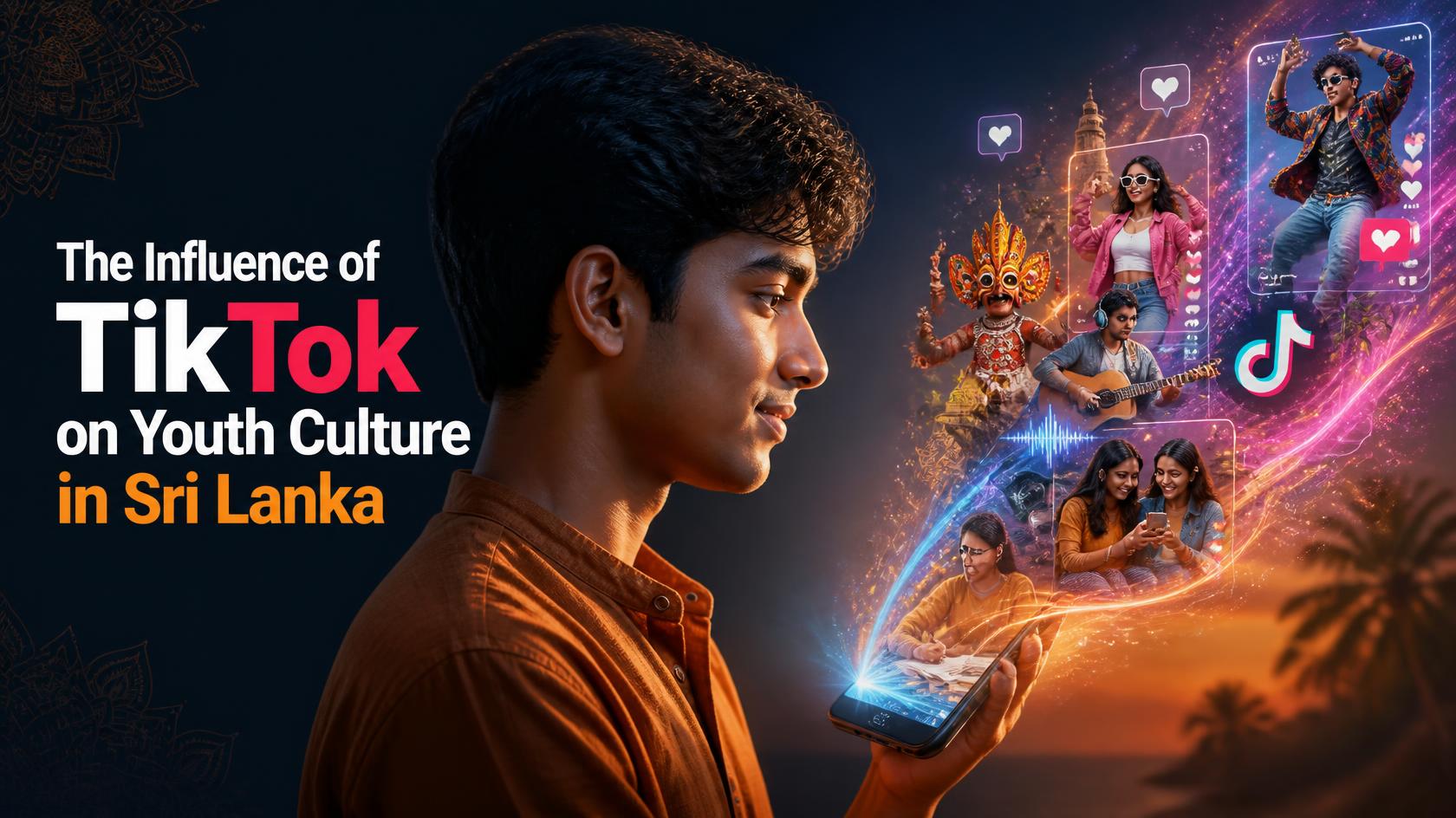
The Influence of TikTok on Youth Culture in Sri Lanka
Rakshika Rathnayake9/3/20265 min read
Share:Facebook
Introduction
Social media has become an important part of everyday life for young people in Sri Lanka. Among the many platforms available today, TikTok has gained particular attention because of its short-form videos, entertaining content, music, trends, challenges, and highly personalised recommendation system. What began primarily as a platform for entertainment has gradually developed into a space where young people communicate, express themselves, discover information, promote businesses, develop careers, and participate in cultural trends.
The influence of TikTok on Sri Lankan youth culture can be seen in many areas of daily life. Young people use the platform to follow local creators, learn new skills, discover fashion and beauty trends, listen to music, watch comedy, discuss social issues, and promote their own talents. At the same time, concerns have emerged about excessive screen time, unrealistic lifestyles, misinformation, cyberbullying, privacy, and the pressure to gain likes and followers.
The growing popularity of TikTok is also connected to Sri Lanka's expanding digital environment. According to the Telecommunications Regulatory Commission of Sri Lanka (TRCSL), there were 12,474,448 TikTok users recorded as of March 2025. DataReportal's Digital 2026 report, using TikTok's advertising data, estimated 6.79 million TikTok users aged 18 and above in Sri Lanka in late 2025. These figures demonstrate that TikTok has become an important part of Sri Lanka's social media landscape, although the different measurement methods mean the figures cannot be directly compared.
TikTok and the Changing Nature of Youth Culture
Youth culture is constantly changing as young people respond to new technologies, social conditions, entertainment, and communication methods. In the past, television, radio, newspapers, cinema, and music were major influences on young people's cultural experiences. Today, social media platforms have become equally important.
TikTok has accelerated this change because it allows users to consume and create content within seconds. A young person does not need professional equipment, a television programme, or a large audience to share an idea. A smartphone and an internet connection can be enough to create a video and potentially reach thousands of people.
This has changed the way young Sri Lankans participate in popular culture. Trends can spread rapidly from one person to another, crossing geographical and social boundaries. A dance, song, joke, fashion style, phrase, or food trend that becomes popular in Colombo can quickly reach young people in Kandy, Galle, Jaffna, Trincomalee, Batticaloa, or other parts of the country.
TikTok therefore creates a shared digital environment where young people from different backgrounds can participate in common trends while also maintaining their local identities.
Language, Music and Cultural Expression
One of TikTok's most visible influences on Sri Lankan youth culture is its effect on language and entertainment. Sri Lankan young people create and consume content in Sinhala, Tamil, and English. Many creators also combine languages in a single video, reflecting the multilingual nature of Sri Lankan society.
Music has become particularly important. Traditional songs, contemporary Sinhala and Tamil songs, international music, remixes, and original sounds can become popular through TikTok. A song that receives widespread attention on TikTok may subsequently become more popular among young listeners.
The platform has also created new opportunities for cultural expression. Young people can present traditional dancing, food, clothing, festivals, crafts, and local places through short videos. For example, a creator may introduce a traditional Sri Lankan food, demonstrate a cultural practice, or showcase a lesser-known tourist destination.
In this way, TikTok does not simply introduce foreign trends to Sri Lanka. It also provides young people with a platform to reinterpret local culture in a modern and creative format.
The Rise of Digital Creators
TikTok has changed the meaning of being a public figure. In the past, becoming well known generally required access to television, cinema, radio, newspapers, or the entertainment industry. Today, ordinary individuals can build large audiences through social media.
This has contributed to the growth of Sri Lankan TikTok creators. Young people create content about comedy, education, beauty, fashion, travel, cooking, technology, fitness, lifestyle, and many other subjects. Some creators have transformed their online popularity into income through brand promotions, advertising, product sales, and other digital opportunities.
For many young people, TikTok has therefore become more than an entertainment platform. It can represent a possible career path.
However, this development also creates pressure. Young creators may feel that they need to produce content constantly to maintain their audience. The desire to become popular can encourage people to copy successful creators or participate in increasingly extreme trends simply to attract attention.
Influence on Fashion and Lifestyle
TikTok has also contributed to changes in the way young Sri Lankans understand fashion and lifestyle. Clothing styles, hairstyles, makeup techniques, fitness routines, food preferences, travel destinations, and room designs can become popular within a short period.
Young people can easily discover international trends that previously might have taken much longer to reach Sri Lanka. At the same time, local creators adapt these trends to Sri Lankan society.
This influence can have positive effects. Young people may discover new forms of creativity, learn about personal presentation, and gain inspiration for developing their own style.
However, the constant exposure to carefully edited lifestyles can also create unrealistic expectations. Users may compare their appearance, financial situation, relationships, or achievements with what they see online. It is important to remember that social media content usually represents only a selected part of someone's life.
Educational Opportunities
Although TikTok is strongly associated with entertainment, it can also support informal learning. Educational creators produce short videos explaining subjects such as language learning, science, history, technology, finance, career development, health awareness, and general knowledge.
The short-video format can make complicated ideas easier to approach. A student who finds a long lecture difficult may understand a basic concept through a short, well-designed video.
TikTok can also help students discover educational opportunities. Information about scholarships, courses, examinations, universities, vocational training, and career opportunities can reach young people through social media.
Nevertheless, users should not automatically accept everything presented in educational videos as accurate. Short videos often simplify complex subjects, and some creators may share information without reliable evidence. Young people should therefore verify important information through trustworthy sources.
Social Awareness and Community Participation
Another important influence of TikTok is its ability to spread awareness about social issues. Young people can discuss topics such as environmental protection, mental well-being, education, unemployment, gender equality, poverty, road safety, and community problems.
The platform can give young people a public voice. Someone who previously had little opportunity to participate in public discussion can create a video and potentially reach a large audience.
TikTok can also encourage community participation. Campaigns, fundraising activities, environmental projects, charity events, and public awareness initiatives can gain attention through social media.
However, viral popularity does not necessarily mean that information is correct. Emotional or controversial content may spread faster than carefully researched information. This makes digital literacy particularly important for young users.
The Influence on Social Relationships
TikTok has changed the way young people interact with friends and wider social networks. Sharing videos, sounds, jokes, and trends can become part of everyday communication. Friends may participate in challenges together or create videos as a form of social interaction.
The platform can also help young people find communities based on shared interests. A person interested in photography, gaming, cooking, education, music, or travel can find other people with similar interests.
At the same time, online interaction cannot completely replace face-to-face relationships. Excessive use of social media may reduce time spent with family and friends in the physical world. Young people may also become overly concerned about online approval, likes, comments, and follower numbers.
Negative Effects and Social Concerns
Despite its benefits, TikTok has several potential negative effects on young people. One major concern is excessive use. Because TikTok continuously recommends new videos, users can spend much longer on the platform than they originally intended.
Another concern is misinformation. False information can spread rapidly when users share videos without checking their accuracy. Young people may also encounter harmful or inappropriate content.
Cyberbullying is another important issue. Negative comments, insults, public criticism, and harassment can affect a young person's confidence and emotional well-being. The desire to receive likes and followers may also create psychological pressure.
Privacy is another concern. Young people may share personal information, locations, photographs, or details about their daily lives without fully understanding the potential consequences.
There is also the issue of unrealistic beauty and lifestyle standards. Filters, editing tools, and carefully selected content can create an artificial image of what people are supposed to look like or how they are supposed to live. Continuous exposure to such content may encourage unhealthy comparisons.
TikTok and the Future of Sri Lankan Youth Culture
The influence of TikTok on Sri Lankan youth culture is likely to continue as internet access and smartphone use expand. DataReportal reported 12.4 million internet users in Sri Lanka at the beginning of 2025, with internet penetration at 53.6 percent. The same report showed that TikTok's potential advertising reach among adults in Sri Lanka grew substantially between early 2024 and early 2025.
As digital participation grows, TikTok and similar platforms may increasingly influence entertainment, education, business, communication, politics, fashion, and cultural identity.
The challenge is not to prevent young people from using TikTok but to encourage responsible use. Parents, teachers, universities, and policymakers can help young people develop digital literacy skills. Young users should learn how algorithms influence what they see, how to identify misinformation, how to protect their privacy, and how to manage their screen time.
Young people should also understand that social media popularity does not necessarily represent real-life success. Followers, views, and likes can provide temporary recognition, but education, relationships, skills, character, and meaningful achievements remain important.
Conclusion
TikTok has become an influential part of contemporary youth culture in Sri Lanka. It has changed how young people communicate, entertain themselves, express their identities, discover trends, learn information, and participate in society. It has provided opportunities for creativity and entrepreneurship while also creating new challenges related to misinformation, excessive use, privacy, cyberbullying, and social comparison.
The impact of TikTok should therefore not be viewed as completely positive or completely negative. Its influence depends largely on how young people use the platform and how effectively they understand its opportunities and risks.
For Sri Lankan youth, TikTok can be a place for creativity, cultural expression, learning, and connection. However, responsible digital behaviour is essential. The future of youth culture will not simply be shaped by TikTok itself, but by the way young people choose to use the technology. With stronger digital literacy, critical thinking, and responsible online behaviour, TikTok can become a useful tool for creativity and social participation while reducing its potential negative effects.
Additional Media