
Sponsored
The Importance of Forest Conservation in Sri Lanka
Rakshika Rathnayake7/18/20265 min read
Share:Facebook
Protecting Nature for a Sustainable Future
Introduction
Sri Lanka is a country with a rich natural heritage, incredible biodiversity, and unique ecosystems. Among its most valuable natural resources, forests hold a special place because they support life, maintain environmental balance, and provide essential resources for humans and wildlife. From the world-famous tropical rainforest of Sinharaja Forest Reserve to the dry zone forests spread across the island, Sri Lanka’s forests represent a remarkable natural treasure.
Forests are more than just collections of trees. They are complex ecosystems that provide clean air, protect water resources, regulate climate, prevent soil erosion, and support thousands of species. However, increasing human activities, deforestation, illegal logging, agricultural expansion, and climate change have created serious threats to forest ecosystems.
Forest conservation has become one of the most important environmental responsibilities in Sri Lanka. Protecting forests is not only about saving trees but also about protecting biodiversity, improving human well-being, and ensuring a sustainable future for generations to come.
The Importance of Forests in Sri Lanka
Forests play a vital role in maintaining ecological balance. Trees absorb carbon dioxide from the atmosphere and release oxygen, helping to improve air quality and reduce the effects of global warming. Forests act as natural climate regulators by controlling temperature, rainfall patterns, and humidity levels.
Sri Lanka is considered one of the world’s biodiversity hotspots because of its high number of endemic species. Many plants and animals found in Sri Lanka exist nowhere else on Earth. Forest habitats provide shelter, food, and breeding areas for these unique species.
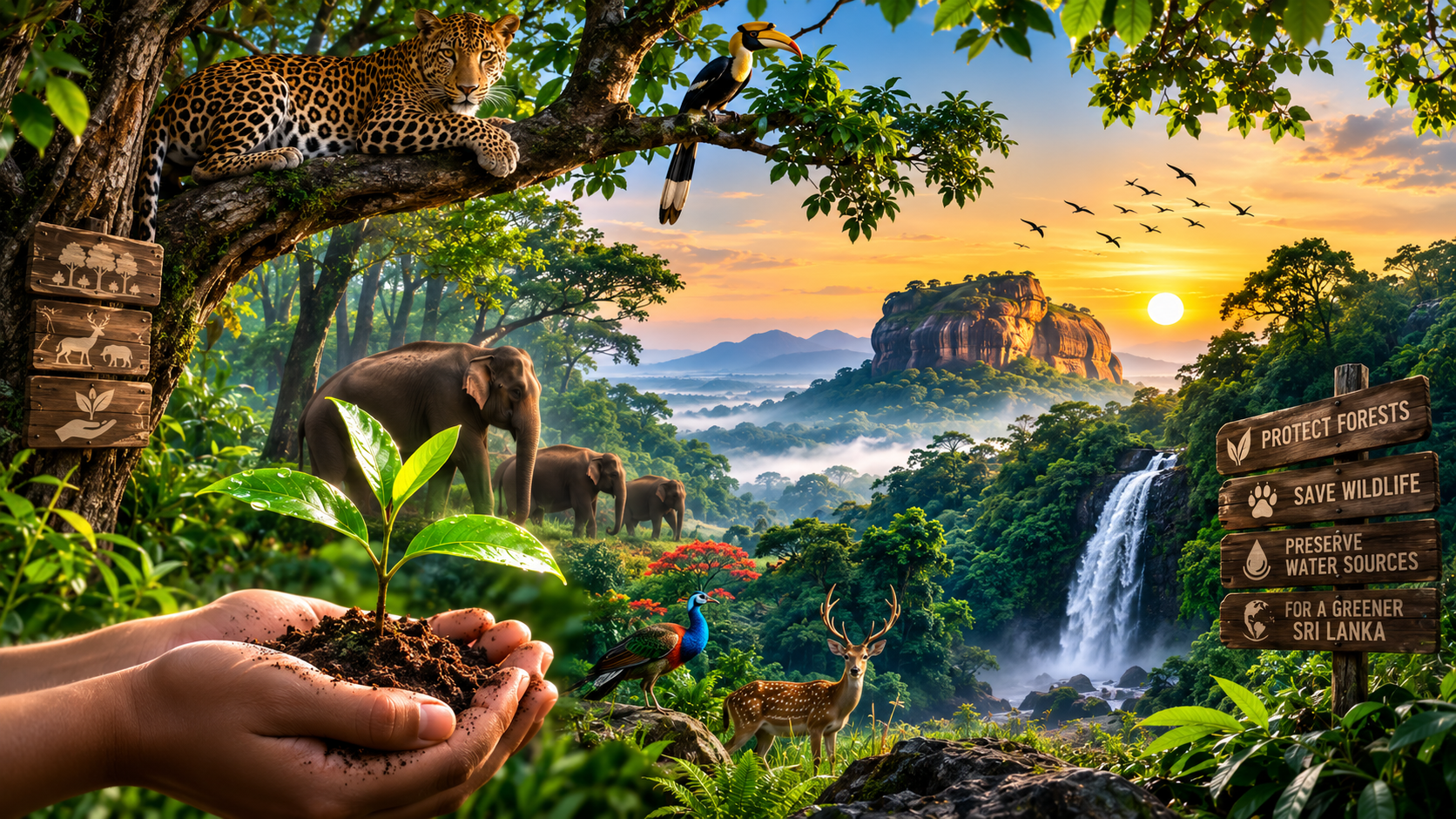
The Sri Lankan elephant, leopard, purple-faced langur, red slender loris, and many rare bird species depend heavily on forest ecosystems. When forests disappear, these animals lose their natural habitats, increasing the risk of population decline and extinction.
Forests also play a major role in protecting Sri Lanka’s water resources. Many rivers and streams begin in forest areas. Trees help absorb rainfall and slowly release water into rivers and groundwater systems. This process ensures a continuous water supply for agriculture, drinking purposes, and other human activities.
Forest Resources and Human Life
Throughout history, humans have depended on forests for survival. In Sri Lanka, rural communities have traditionally used forest resources for food, medicine, fuel, and other daily needs.
Many medicinal plants used in traditional healing systems grow naturally in forest environments. Forest products such as fruits, honey, herbs, and plant materials provide income opportunities for local communities.
Forests also support economic activities such as eco-tourism. Visitors from around the world come to Sri Lanka to experience its natural beauty, wildlife, and protected forest areas. Wildlife tourism creates employment opportunities for local people, including guides, accommodation providers, and small business owners.
Therefore, conserving forests does not mean stopping development. Instead, sustainable forest management allows people to benefit from natural resources while protecting the environment.
Causes of Forest Destruction in Sri Lanka
Despite their importance, Sri Lanka’s forests face many threats. One of the major causes of forest loss is agricultural expansion. As the demand for agricultural land increases, forest areas are sometimes cleared for cultivation and settlements.
Illegal logging is another serious problem. Valuable timber species are removed from forests without proper permission, causing damage to ecosystems and reducing forest quality.
Human settlement expansion and infrastructure development also contribute to forest destruction. The construction of roads, buildings, and other development projects can divide forests into smaller areas, affecting wildlife movement and survival.
Another growing challenge is climate change. Changes in rainfall patterns, rising temperatures, droughts, and extreme weather events affect forest health. Dry conditions increase the possibility of forest fires, while changing climates can disturb plant and animal life cycles.
Effects of Deforestation
Deforestation creates many environmental and social problems. When forests are removed, biodiversity decreases because animals and plants lose their natural habitats.
Loss of forests also contributes to climate change. Without enough trees to absorb carbon dioxide, greenhouse gases increase in the atmosphere, leading to higher temperatures and environmental changes.
Soil erosion is another major impact. Tree roots help hold soil together, preventing landslides and protecting agricultural lands. When forests disappear, heavy rainfall can wash away fertile soil and increase the risk of floods.
Deforestation also affects water resources. Reduced forest cover can lead to lower groundwater levels, drying of streams, and increased water shortages during dry seasons.
Forest Conservation Efforts in Sri Lanka
Sri Lanka has taken several steps to protect its forests and natural resources. Government institutions, environmental organizations, researchers, and local communities work together to conserve forest ecosystems.
Protected areas, national parks, and forest reserves have been established to protect important habitats and wildlife. These areas help control human activities and provide safe environments for endangered species.
Reforestation and tree-planting programs are also important conservation methods. Planting native tree species in damaged areas helps restore ecosystems and increase forest coverage.
Environmental education is another key approach. Teaching children and communities about the importance of forests encourages responsible environmental behavior. When people understand the value of forests, they are more likely to participate in conservation activities.
The Role of Communities in Forest Protection
Local communities have an important role in protecting forests. People living near forest areas often have valuable traditional knowledge about plants, animals, and natural resources.
Community-based conservation programs encourage local people to participate in forest protection activities. These programs can reduce illegal activities while creating sustainable income opportunities.
Farmers can also contribute by practicing environmentally friendly agriculture methods, protecting natural habitats, and planting trees around agricultural lands.
Individual actions also matter. Simple activities such as reducing paper waste, recycling, planting trees, and supporting environmentally responsible businesses can contribute to forest conservation.
The Relationship Between Forest Conservation and Sustainable Development
Economic development and environmental protection should work together. A country cannot achieve long-term progress by destroying its natural resources.
Sustainable development focuses on meeting current needs while protecting resources for future generations. Forest conservation is an essential part of this approach.
By promoting eco-friendly industries, responsible tourism, sustainable agriculture, and scientific forest management, Sri Lanka can achieve economic growth while protecting its natural environment.
Future Challenges and Opportunities
The future of Sri Lanka’s forests depends on strong environmental policies, public awareness, and effective conservation programs.
Climate change will continue to create challenges, but improved technology, research, and community involvement can help overcome these difficulties.
Increasing forest cover, protecting endangered species, preventing illegal activities, and restoring damaged ecosystems should remain national priorities.
Every citizen has a responsibility to protect forests because forests are directly connected to human survival.
Conclusion
Forest conservation is essential for protecting Sri Lanka’s environment, biodiversity, and future generations. Forests provide clean air, fresh water, climate regulation, economic opportunities, and habitats for countless species.
The protection of forests requires cooperation between the government, communities, organizations, and individuals. By conserving forests today, Sri Lanka can preserve its natural beauty and ecological balance for tomorrow.
Forests are not only valuable environmental resources; they are a priceless heritage of Sri Lanka. Protecting them means protecting life itself.
Additional Media