The Impact of Social Media on Body Image Among Young People
Rakshika Rathnayake9/8/20265 min read
Share:Facebook
Social media has become an important part of everyday life for young people. Platforms such as Instagram, TikTok, YouTube and Facebook allow users to communicate, share photographs and videos, follow celebrities and influencers, discover trends and express their personalities. For many young people, checking social media is now a normal part of the day.
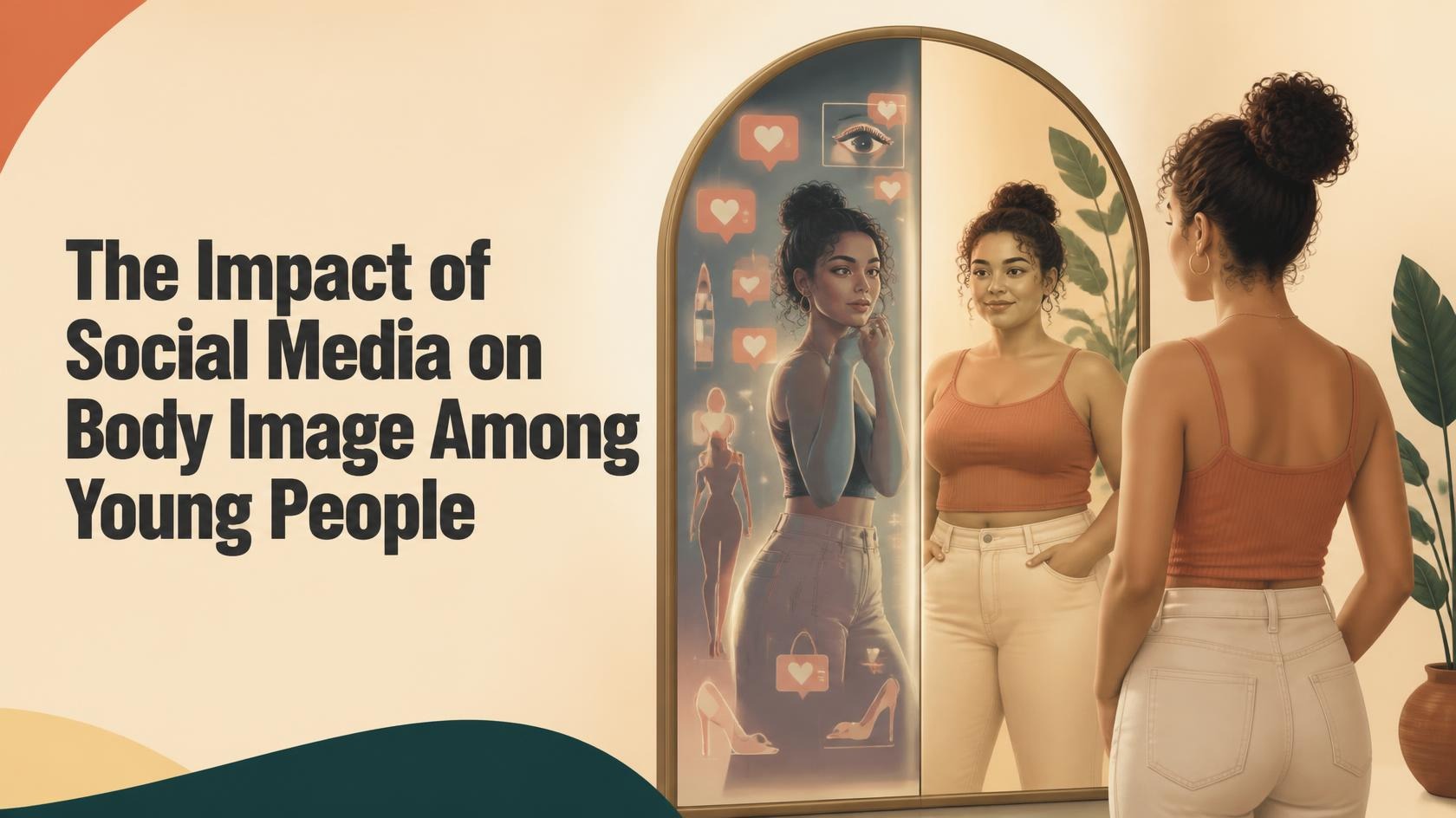
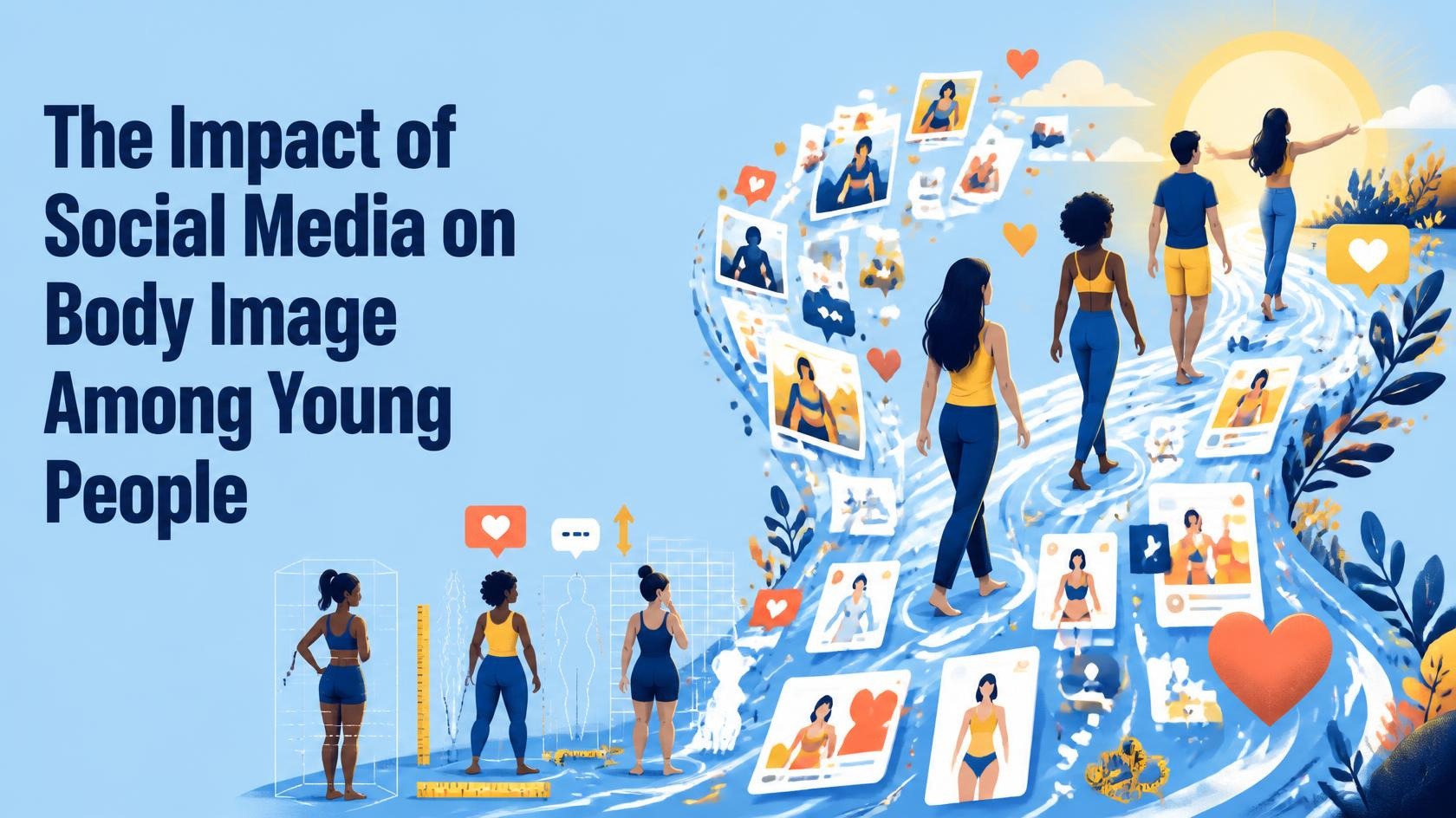
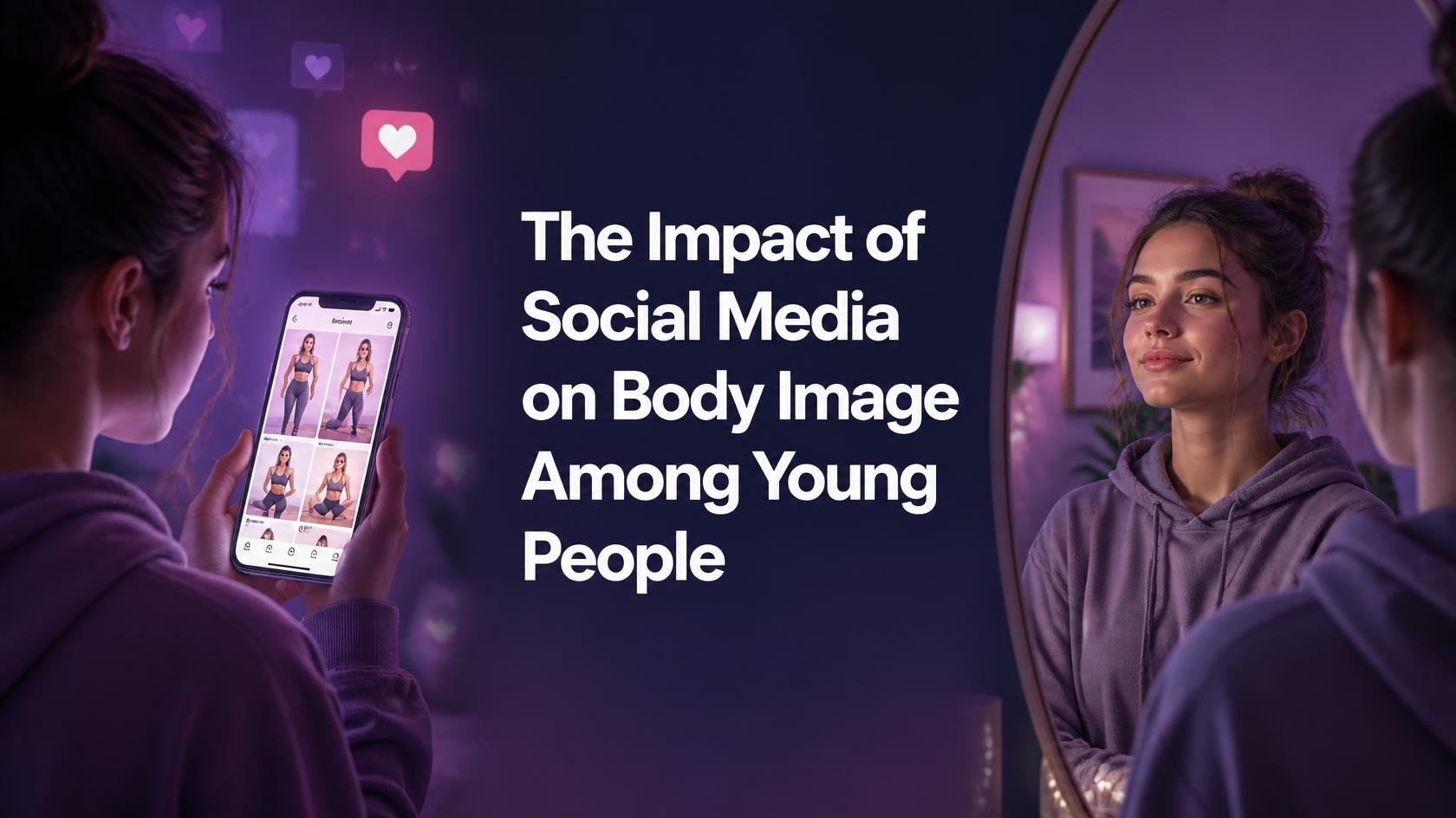
However, social media is not only a place where people communicate. It is also a space where appearance is constantly displayed and evaluated. Photographs of carefully styled bodies, fitness routines, beauty trends, fashion, makeup and edited selfies can influence how young people think about their own appearance. When these images are viewed repeatedly, some young people may begin to compare themselves with people they see online and feel that their own bodies do not meet socially desirable standards.
This does not mean that social media automatically causes poor body image. People's experiences are different, and social media can also provide supportive communities and positive messages about appearance. Nevertheless, research increasingly suggests that the type of content young people see, how they interact with it and how strongly they compare themselves with others can influence the way they feel about their bodies.
Understanding Body Image
Body image refers to the way a person thinks, feels and behaves in relation to their own body and appearance. It is not simply a question of whether someone likes or dislikes their physical appearance. Body image can include feelings about body size, weight, skin, hair, facial features, fitness and other physical characteristics.
A person can have a positive body image even when they do not consider themselves physically perfect. Positive body image is often connected with appreciating what the body can do, accepting natural differences and avoiding excessive concern about appearance.
Negative body image can develop when individuals become dissatisfied with their appearance or believe that their bodies do not match an ideal standard. For young people, this can be particularly difficult because adolescence and young adulthood are periods of significant physical, emotional and social development.
During these years, young people are often becoming more aware of how others perceive them. Social media can add another layer to this process by providing a constant stream of images against which they may judge themselves.
The Rise of Appearance-Focused Social Media
One important feature of modern social media is its highly visual nature. Instead of simply reading information, users constantly encounter photographs, short videos, stories and edited images.
Platforms built around visual content can create an environment where appearance receives considerable attention. A person may scroll through dozens of posts showing people with particular body shapes, clothing styles, hairstyles or beauty standards within only a few minutes.
Research has found that appearance-related exposure on social media can influence body-image concerns, particularly when users repeatedly encounter idealized appearances. A recent review also highlights that young people do not always intentionally search for appearance-related material. They may encounter it incidentally while simply scrolling through their feeds.
This is important because young people may not realize how much appearance-related content they are consuming. A person may open an app to watch entertainment videos and gradually encounter fitness influencers, beauty advertisements, celebrity photographs and transformation videos.
The Pressure to Look “Perfect”
Social media has contributed to a culture in which photographs can be carefully selected, edited and presented before being shared with others.
Lighting, camera angles, filters, makeup and editing applications can significantly change the appearance of photographs. Even when users understand that photographs may be edited, repeated exposure can still influence their expectations about what people are supposed to look like.
The problem is not simply that edited photographs exist. The greater concern is that young people may begin to treat these carefully constructed images as realistic standards.
For example, a young woman may see influencers with extremely smooth skin and a particular body shape and start wondering why she does not look the same. A young man may repeatedly see muscular bodies and fitness-related content and feel pressure to become more muscular himself.
These comparisons can gradually change the way individuals evaluate their own bodies.
Social Comparison and Body Dissatisfaction
Social comparison is one of the most important explanations for the connection between social media and body image.
People naturally compare themselves with others. However, social media makes comparison easier because users can constantly see selected aspects of other people's lives and appearances.
A young person may compare their body, clothing, skin, hairstyle or fitness level with someone they follow online. The comparison can become particularly harmful when the person believes that the other individual's appearance represents a normal or achievable standard.
A 2025 systematic review and meta-analysis covering 83 studies and more than 55,000 participants found a significant association between greater online social comparison and greater body-image concerns. It also found an association between online social comparison and eating-disorder symptoms, while higher comparison was associated with lower positive body image.
This does not mean that every person who compares themselves online will develop serious psychological problems. Rather, it shows that repeated appearance-based comparison can be an important risk factor.
Influencers and Beauty Standards
Influencers play a major role in shaping online appearance culture. Many young people follow influencers because they enjoy their lifestyle, fashion, fitness or beauty content.
The difficulty arises when commercial content becomes mixed with ordinary personal posts. An influencer may promote a particular diet, skincare product, exercise programme or beauty treatment while presenting the results as part of their everyday lifestyle.
Young viewers may then believe that achieving a similar appearance requires buying certain products or following particular routines.
Beauty standards can also change rapidly through social media trends. One year, a particular body shape may be promoted as desirable; later, another appearance may become fashionable. This can make young people feel that they are constantly expected to change themselves.
Effects on Boys and Young Men
Body-image discussions have traditionally focused heavily on girls and young women, but boys and young men can also experience appearance-related pressure.
Male-focused social media content often emphasizes muscular bodies, fitness, height, strength and physical definition. Young men who repeatedly see highly muscular or athletic bodies may begin to believe that they should have similar physiques.
Some may respond by spending excessive amounts of time exercising, following restrictive diets or becoming overly concerned about their physical appearance.
Therefore, body-image pressure should not be viewed as a problem affecting only one gender. Different groups may experience different appearance ideals, but the underlying pressure to meet unrealistic standards can be similar.
Social Media and Eating Habits
Body-image concerns can sometimes influence eating behaviour.
When young people become dissatisfied with their bodies, they may attempt to change their weight or shape through restrictive diets or other unhealthy behaviours. Social media can contribute to this environment through diet trends, weight-loss challenges and posts promoting rapid physical transformations.
A systematic review involving young people found that social-media use can be associated with body-image concerns and disordered eating, with social comparison, internalization of appearance ideals and self-objectification identified as important pathways.
At the same time, it is important not to suggest that social media alone causes eating disorders. Eating disorders are complex conditions influenced by psychological, biological, social and environmental factors.
Social media may be one contributing influence for some individuals rather than a single cause.
Filters, Editing and Selfies
Another important issue is the use of filters and image-editing tools.
Digital tools allow users to change skin texture, facial features, body proportions and other aspects of photographs. Using these tools occasionally for creativity is not necessarily harmful. Problems may arise when edited images become the standard against which people judge their real appearance.
Young people may become dissatisfied with features that are completely normal because they have become accustomed to seeing highly edited images online.
Research has also examined selfie-related behaviours and found that some appearance-focused social media activities can have negative effects on body image.
This creates an unusual situation in which people may compare their real bodies with photographs that do not accurately represent reality.
Mental Health and Self-Esteem
Body dissatisfaction can affect more than appearance-related confidence. It can also influence self-esteem, mood and social behaviour.
A young person who constantly feels unhappy about their appearance may avoid photographs, social events or situations where they believe their body will be noticed. Others may spend excessive amounts of time checking mirrors, photographs or social-media reactions.
Research reviews have linked problematic or intensive social media use with body dissatisfaction, lower self-esteem and other negative well-being outcomes among adolescents and young adults.
Again, individual experiences differ. Social media can also provide friendship, entertainment and emotional support. The important issue is how social media is being used and what kind of content dominates a person's online environment.
The Positive Side of Social Media
It would be unfair to describe social media as entirely harmful.
Social media can help young people discover diverse body types, cultures, lifestyles and personal experiences. It can provide communities for people who may feel isolated in their offline environments.
Body-positive content can also challenge unrealistic beauty standards. Research has found evidence that body-positive content can improve body satisfaction in some circumstances.
Young people can therefore benefit from following accounts that promote realistic representations, healthy behaviours, diversity and self-acceptance.
The goal should not necessarily be to eliminate social media from young people's lives. Instead, young people need the skills to use it more critically.
Building Social Media Literacy
Social media literacy can play an important role in protecting body image.
Young people should understand that many online photographs are carefully selected and may be edited, filtered, professionally photographed or commercially produced. They should also learn to recognize advertising and influencer marketing.
Instead of immediately thinking, “Why don't I look like this?”, users can learn to ask, “Why am I seeing this content?” and “Is this an ordinary representation of a person or carefully produced media?”
These questions can create distance between what appears on a screen and how a person evaluates themselves.
What Parents and Schools Can Do
Parents, teachers and universities can help young people develop healthier relationships with social media.
Open conversations are more useful than simply telling young people to stop using social media. Adults can discuss filters, advertising, unrealistic beauty standards and the emotional effects of comparison.
Schools and universities can also include digital and media literacy in education. Students should understand how online content is created and how algorithms can repeatedly expose users to similar types of material.
Mental-health support should also be available for young people who experience serious body dissatisfaction, anxiety or unhealthy eating behaviours.
What Young People Can Do
Young people themselves can take practical steps to create a healthier online environment.
They can unfollow accounts that consistently make them feel inadequate and follow a wider range of people and content. Taking regular breaks from social media can also help reduce constant exposure to appearance-focused material.
It is equally important to avoid judging personal worth according to likes, comments or followers. Online popularity does not determine someone's value.
Young people can also focus more on what their bodies can do rather than only how they look. Fitness, health, creativity, movement and everyday activities can provide a more balanced way of thinking about the body.
Conclusion
Social media has changed the way young people see themselves and others. While these platforms offer communication, entertainment and opportunities for self-expression, their strong focus on appearance can create pressure to meet unrealistic standards.
Repeated exposure to idealized images, appearance-based comparison, edited photographs and beauty trends can contribute to body dissatisfaction among some young people. Research suggests that social comparison is an important pathway connecting social media experiences with body-image concerns.
At the same time, social media should not be treated as the enemy. The same platforms can provide supportive communities, diverse representations and positive messages about body acceptance.
The real challenge is creating a healthier relationship with online content. Young people need to understand that social media presents selected and often carefully constructed versions of reality. A photograph on a screen does not provide a complete picture of another person's life, health or appearance.
Building media literacy, encouraging diverse representations and providing appropriate mental-health support can help reduce the negative effects of appearance pressure. Most importantly, young people should be reminded that their value is not determined by their body shape, weight, facial features or the number of likes they receive.
A healthier social-media culture is possible when appearance becomes only one small part of how people present themselves online rather than the main measure of personal worth.
Additional Media