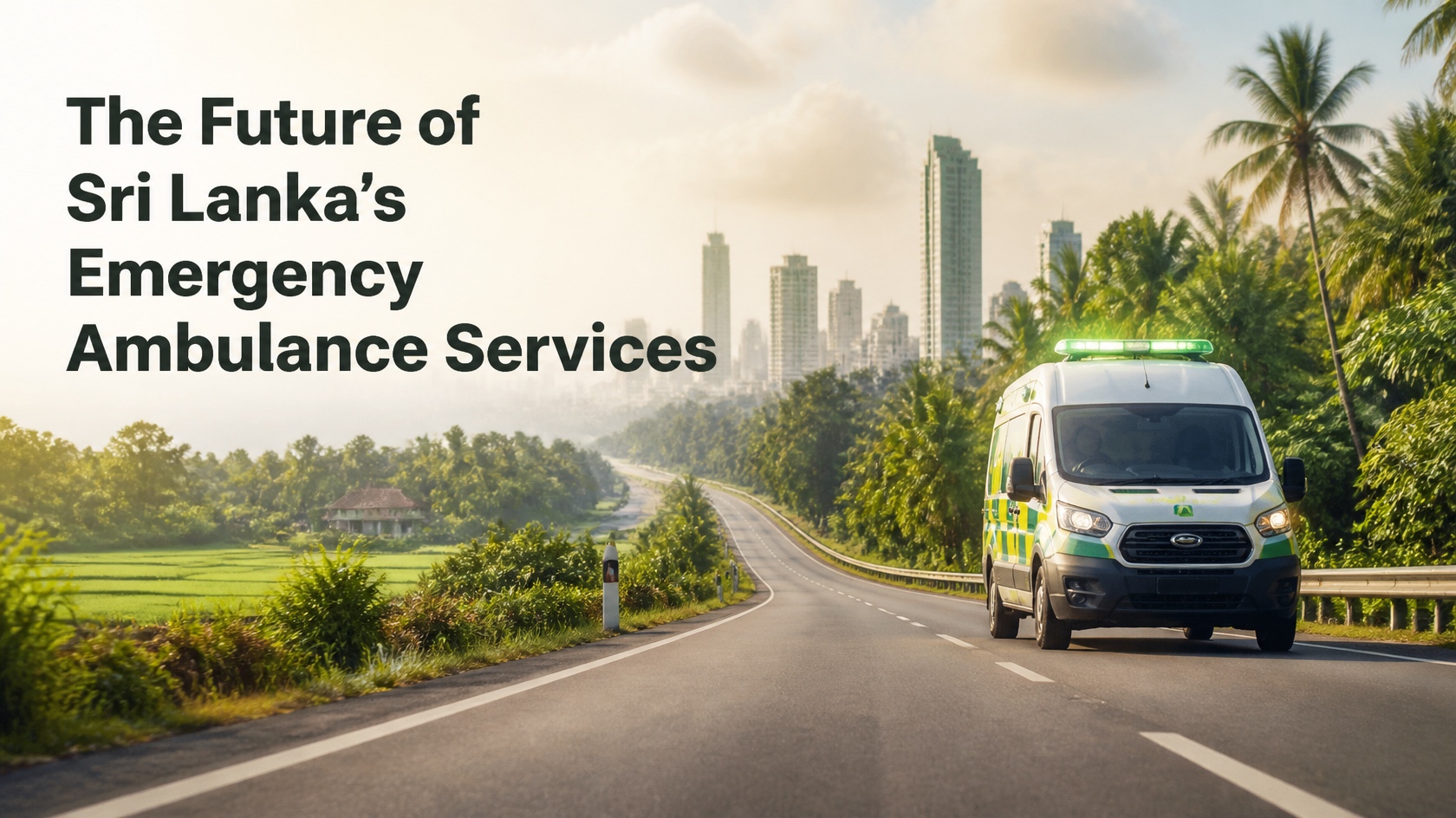
The Future of Sri Lanka’s Emergency Ambulance Services
Rakshika Rathnayake11/20/20265 min read
Share:Facebook

Introduction
Emergency ambulance services play an important role in protecting human lives. During road accidents, heart attacks, strokes, serious injuries and other medical emergencies, reaching a hospital quickly can make the difference between life and death. In many situations, patients need medical attention even before they arrive at a hospital. This is why a reliable ambulance service is an essential part of a country's healthcare system.
In Sri Lanka, emergency ambulance services have become increasingly important because of growing road traffic, population needs and the demand for accessible healthcare. One of the most significant developments in this area has been the introduction of the 1990 Suwa Seriya ambulance service, which provides free emergency pre-hospital medical assistance throughout the country.
Although Sri Lanka has made considerable progress, there are still challenges involving ambulance availability, traffic congestion, staffing, medical equipment and access to remote communities. As the country develops, improving emergency ambulance services should become an important national priority.
The future of Sri Lanka's emergency ambulance services will depend on modern technology, trained medical professionals, better infrastructure and continued government investment. Building a faster and more reliable system could help save thousands of lives and strengthen the country's healthcare services.
1. The Development of Emergency Ambulance Services in Sri Lanka
In the past, people experiencing medical emergencies often depended on private vehicles, hospital transport or other available methods to reach medical facilities. This could create serious difficulties, especially when patients needed immediate medical attention.
The introduction of the 1990 Suwa Seriya ambulance service marked an important improvement in Sri Lanka's emergency healthcare system. It was established with support from India and provides free emergency ambulance assistance through the 1990 emergency hotline.
The service is designed to respond to medical emergencies, send ambulances to patients and provide essential medical care during transportation to hospitals. Trained emergency medical technicians can assess patients, provide basic emergency treatment and communicate with relevant medical facilities.
This service has helped improve access to emergency medical assistance, particularly for people who cannot afford private ambulance transportation.
However, emergency healthcare needs continue to change. A growing population, increasing vehicle numbers and expanding urban areas mean that ambulance services must continue developing to meet future demands.
2. Why Emergency Ambulance Services Are Important
Ambulances are not simply vehicles used to transport sick or injured people. They are an important part of emergency medical care.
For example, when someone experiences a heart attack, every minute can matter. Immediate assessment and appropriate treatment can improve the chances of survival. Similarly, people involved in serious road accidents may require urgent medical attention before reaching a hospital.
Ambulance teams can provide essential support during these situations. They can assess a patient's condition, monitor vital signs, provide appropriate first aid and prepare the patient for hospital treatment.
Emergency ambulance services are particularly important for:
- Road accident victims who require immediate medical attention.
- Patients experiencing heart attacks or strokes.
- People with breathing difficulties or severe allergic reactions.
- Pregnant women experiencing serious pregnancy-related emergencies.
- Children and elderly people facing sudden medical complications.
- Patients suffering from serious injuries, burns or other life-threatening conditions.
A reliable ambulance service also reduces the pressure on family members and bystanders who may not have the knowledge or equipment needed to manage serious emergencies.
Therefore, strengthening ambulance services is not only about improving transportation. It is about providing timely medical assistance when people need it most.
3. The Future of the 1990 Suwa Seriya Service
The future development of Sri Lanka's emergency ambulance network will depend heavily on strengthening the existing 1990 Suwa Seriya service.
As demand increases, the country will need to maintain an adequate number of ambulances and ensure that vehicles are available in areas where emergency calls are frequent. More ambulances may be required in densely populated cities, busy highways and rapidly developing towns.
Vehicle maintenance is another important consideration. Ambulances must be regularly inspected to ensure that engines, communication systems, medical equipment and safety facilities are functioning properly.
The government should also consider expanding emergency response facilities and improving coordination between ambulance centres and hospitals.
Another important area is the availability of specialised ambulances. Although standard emergency ambulances can handle many medical situations, some patients require additional equipment or specialised medical support.
Developing different levels of ambulance services could help Sri Lanka respond more effectively to a wider range of emergencies.
Continued investment in Suwa Seriya would help ensure that the service remains reliable, accessible and capable of meeting future healthcare demands.
4. Increasing the Number of Ambulances
One of the biggest challenges facing emergency ambulance services is ensuring that enough vehicles are available to respond to emergencies.
Sri Lanka has a large population spread across cities, towns, villages and rural communities. A limited number of ambulances can create difficulties when several emergencies occur at the same time. Long distances, vehicle breakdowns and heavy traffic can also affect response times.
According to recent information, the existing Suwa Seriya fleet has faced increasing pressure due to frequent use and maintenance requirements. In November 2026, Sri Lanka and India signed a Memorandum of Understanding to provide 100 additional fully equipped ambulances through Indian grant assistance worth approximately Rs. 1.73 billion. This is an important step towards strengthening the national ambulance network.
HCI Colombo+1
However, purchasing new vehicles alone will not solve every problem. The government must also ensure that ambulances are properly maintained, supplied with medical equipment and operated by qualified staff.
In the future, ambulance distribution should be planned according to population density, emergency call volumes and geographical conditions. Areas with higher emergency demand may require additional vehicles, while remote communities need reliable ambulance coverage despite their distance from major hospitals.
5. Using Modern Technology to Improve Emergency Responses
Technology will play a major role in the future of Sri Lanka's emergency ambulance services. Modern digital systems can help ambulance teams respond faster and make better decisions.
One important development is GPS-based ambulance tracking. This technology allows emergency control centres to identify the location of available ambulances and select the most suitable vehicle for each emergency. It can also help drivers avoid traffic congestion by identifying alternative routes.
The 1990 Suwa Seriya service already uses vehicle tracking and navigation technology to support its operations. Future improvements could make these systems even more effective.
1990 Suwa Seriya Foundation
Artificial intelligence could also support emergency call management by helping identify urgent cases and organise available resources. However, medical decisions must remain under the responsibility of appropriately trained professionals.
Digital patient records are another valuable development. When ambulance teams collect important information about a patient, hospitals could receive those details before the ambulance arrives. This would help medical staff prepare for treatment and reduce unnecessary delays.
For example, if an ambulance is transporting a patient with suspected heart problems, the receiving hospital could prepare its emergency team and relevant facilities in advance.
These technological improvements could create a more connected emergency healthcare system in Sri Lanka.
6. Training More Emergency Medical Professionals
Ambulances are only as effective as the people who operate them. Skilled emergency medical technicians are essential because they provide medical assistance before patients reach hospitals.
During emergencies, ambulance staff must remain calm, understand the patient's condition and make quick decisions. They may need to provide first aid, perform cardiopulmonary resuscitation (CPR), manage breathing difficulties, control bleeding and monitor vital signs.
Therefore, Sri Lanka should continue investing in professional training programmes for emergency medical technicians.
Training should include both classroom education and practical experience. Staff members should regularly participate in emergency simulations involving road accidents, cardiac emergencies, fires and natural disasters.
The country should also develop opportunities for advanced training and professional development. International cooperation with experienced emergency medical organisations could help introduce modern treatment methods and improve professional standards.
Another important consideration is staff welfare. Emergency ambulance employees often work long hours and face stressful situations. Providing reasonable working conditions, proper salaries, psychological support and career development opportunities can help attract and retain qualified workers.
Without a sufficient number of trained professionals, expanding the ambulance fleet will not produce the expected improvements.
7. Improving Ambulance Services in Rural Areas
People living in rural communities should have the same opportunity to receive emergency medical assistance as those living in major cities.
However, providing ambulance services in rural Sri Lanka can be challenging. Some villages are located far from hospitals, while narrow roads, mountainous terrain and poor road conditions can make transportation difficult.
In certain areas, heavy rainfall, floods and landslides can also interrupt access to communities.
The future ambulance network should give special attention to these geographical challenges. Strategic ambulance stations, improved road infrastructure and better communication systems could help reduce delays.
Authorities should also work closely with regional hospitals, divisional health offices and local emergency organisations to identify areas where ambulance access needs improvement.
For extremely difficult locations, alternative emergency response arrangements may be necessary. These could include trained local first responders who can provide initial assistance until an ambulance arrives.
Ensuring equal emergency healthcare access across the country should remain a central objective of Sri Lanka's future ambulance development plans.
8. Reducing Response Times in Busy Cities
Traffic congestion is another major challenge for ambulance services, particularly in Colombo and other rapidly developing urban areas.
During peak hours, ambulances may struggle to reach patients quickly because of crowded roads, parked vehicles and limited road space. Even when ambulance drivers use emergency warning lights and sirens, other vehicles do not always provide a clear path.
Public awareness is therefore extremely important. Drivers should understand how to respond when an ambulance approaches. Moving safely to the side of the road and avoiding unnecessary obstruction can help emergency vehicles reach patients faster.
Authorities could also consider improving traffic signal systems to give emergency vehicles priority at selected intersections. GPS-based traffic management and coordination with police officers could provide additional support.
Another possible development is the introduction of motorcycle-based emergency medical response teams in congested urban areas. Motorcycles can sometimes reach locations more quickly than larger vehicles and provide initial medical assistance while an ambulance is travelling to the scene.
This approach would not replace ambulances but could support the emergency response system in busy cities.
9. Preparing for Natural Disasters and Major Emergencies
Sri Lanka regularly experiences natural hazards such as floods, landslides, severe storms and other weather-related emergencies. These situations can create serious challenges for ambulance services.
During major disasters, several people may require medical assistance at the same time. Roads may become blocked, communication networks may be interrupted and hospitals may experience increased pressure.
Future ambulance planning should therefore include strong disaster response arrangements.
Ambulance teams should receive specialised training in mass-casualty incidents, emergency evacuation and disaster-related medical care. They should also participate in joint exercises with the police, fire services, military and disaster management authorities.
A coordinated communication system would help emergency organisations share information and organise resources more effectively.
Hospitals should also establish clear procedures for receiving large numbers of injured patients. Better coordination between ambulance teams and hospitals can reduce confusion and support faster treatment.
Investing in disaster preparedness will help Sri Lanka protect communities during both everyday emergencies and major national crises.
10. Ensuring Long-Term Financial Sustainability
Maintaining a national emergency ambulance service requires continuous financial support. Expenses include purchasing vehicles, fuel, medical equipment, staff salaries, vehicle maintenance, training and communication systems.
Although the 1990 Suwa Seriya service provides free emergency assistance to the public, operating such a large network requires considerable resources.
The government should develop a sustainable funding strategy to ensure that the service can continue operating without interruptions. Financial support from international development partners, private organisations and responsible corporate donors could also contribute to future improvements.
Sri Lanka should ensure that funding is used transparently and effectively. Regular maintenance, equipment replacement and staff development should receive sufficient attention rather than focusing only on purchasing new ambulances.
The government should also establish long-term plans to replace ageing vehicles before they become unreliable.
A financially stable ambulance service will be better prepared to meet increasing public demand and maintain consistent emergency healthcare standards.
11. Public Awareness and Community Responsibility
Improving ambulance services is not only the responsibility of the government and healthcare professionals. The public also has an important role to play.
Many people do not fully understand how emergency ambulance services operate or when they should contact 1990. Public awareness programmes can help communities understand how to request emergency assistance and provide accurate information to emergency operators.
People should also learn basic first aid and CPR. These skills can be valuable when someone experiences a sudden medical emergency before professional assistance arrives.
Schools, universities, workplaces and community organisations could organise basic emergency response training programmes.
Another important issue is the misuse of emergency hotline services. Calling 1990 without a genuine emergency can waste valuable time and resources that may be needed by someone facing a life-threatening situation.
Public education should encourage responsible use of emergency services and greater respect for ambulance workers.
12. Building a Stronger Emergency Healthcare Network
The future of ambulance services should not be considered separately from the development of hospitals and other healthcare facilities.
An ambulance may reach a patient quickly, but the patient also needs access to an appropriate hospital with qualified doctors, medical equipment and emergency treatment facilities.
Sri Lanka should improve coordination between ambulance control centres, regional hospitals and specialised medical units.
For example, patients experiencing serious heart conditions, strokes or major injuries may require treatment at hospitals with appropriate facilities. Better communication can help ambulance teams identify suitable destinations and avoid unnecessary delays.
The development of standard emergency treatment procedures, digital patient information systems and coordinated hospital networks would further strengthen pre-hospital care.
Research and accurate emergency service data should also guide future decisions. Understanding where emergencies occur most frequently, how long responses take and which services experience the greatest demand can help authorities distribute resources more effectively.
Conclusion
The future of Sri Lanka's emergency ambulance services depends on how successfully the country addresses its existing challenges and prepares for changing healthcare needs. The 1990 Suwa Seriya service has already made an important contribution by providing free emergency medical assistance across the country. However, increasing demand requires further improvements.
Expanding the ambulance fleet, introducing modern technology, training more emergency medical professionals and improving services in rural communities should remain important priorities. Better traffic management, disaster preparedness and cooperation between hospitals and ambulance teams will also help strengthen emergency responses.
The recent agreement to provide 100 additional ambulances through Indian grant assistance represents an encouraging development. However, long-term success will depend on maintaining these vehicles, recruiting sufficient staff and ensuring sustainable financial support.
Ultimately, emergency ambulance services are not simply about reaching patients quickly. They are about giving people a better chance of survival when unexpected medical emergencies occur. With proper planning, investment and public cooperation, Sri Lanka can build a more efficient, accessible and reliable emergency ambulance network for future generations.
Additional Media