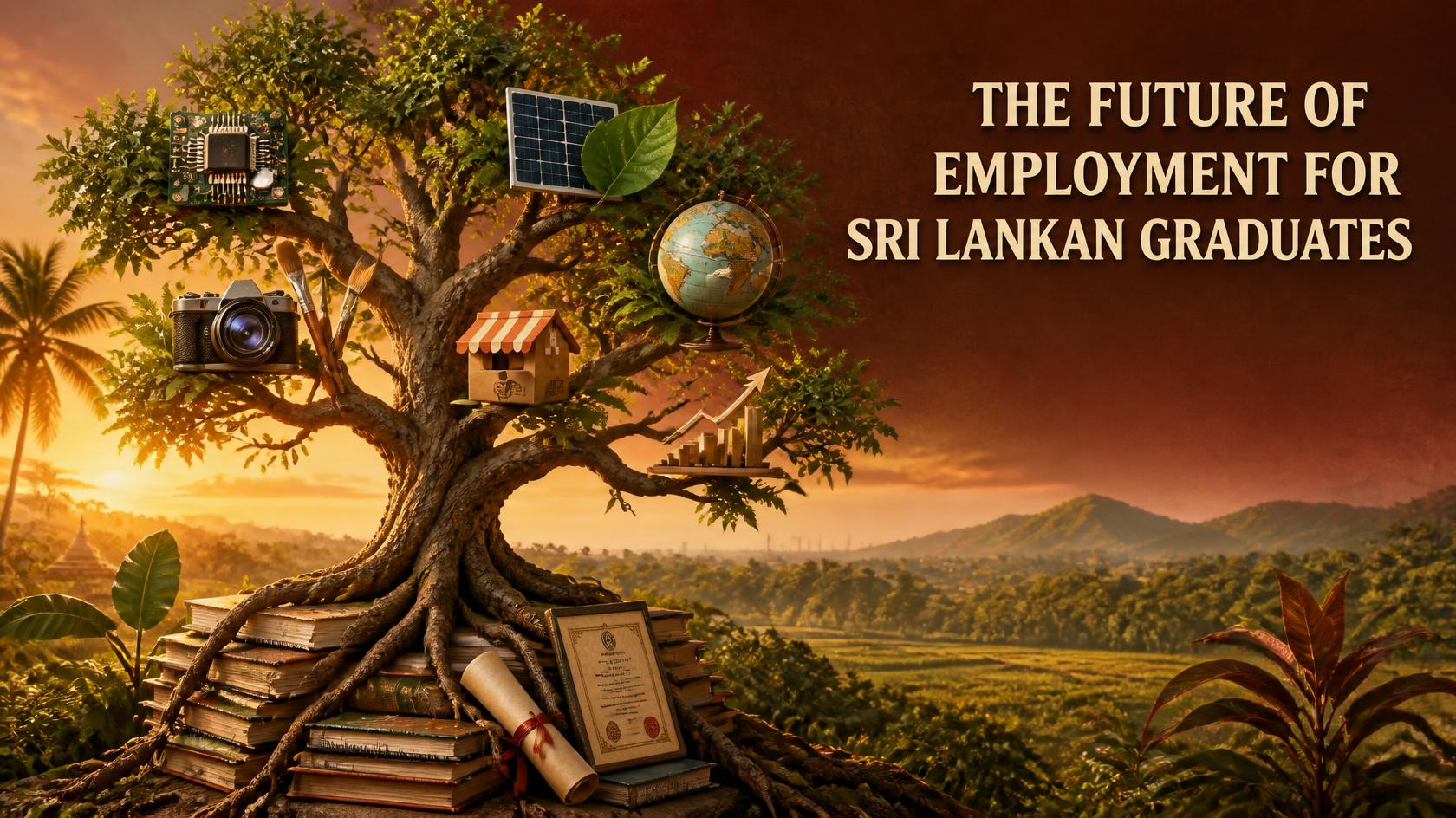
The Future of Employment for Sri Lankan Graduates
Rakshika Rathnayake8/28/20265 min read
Share:Facebook
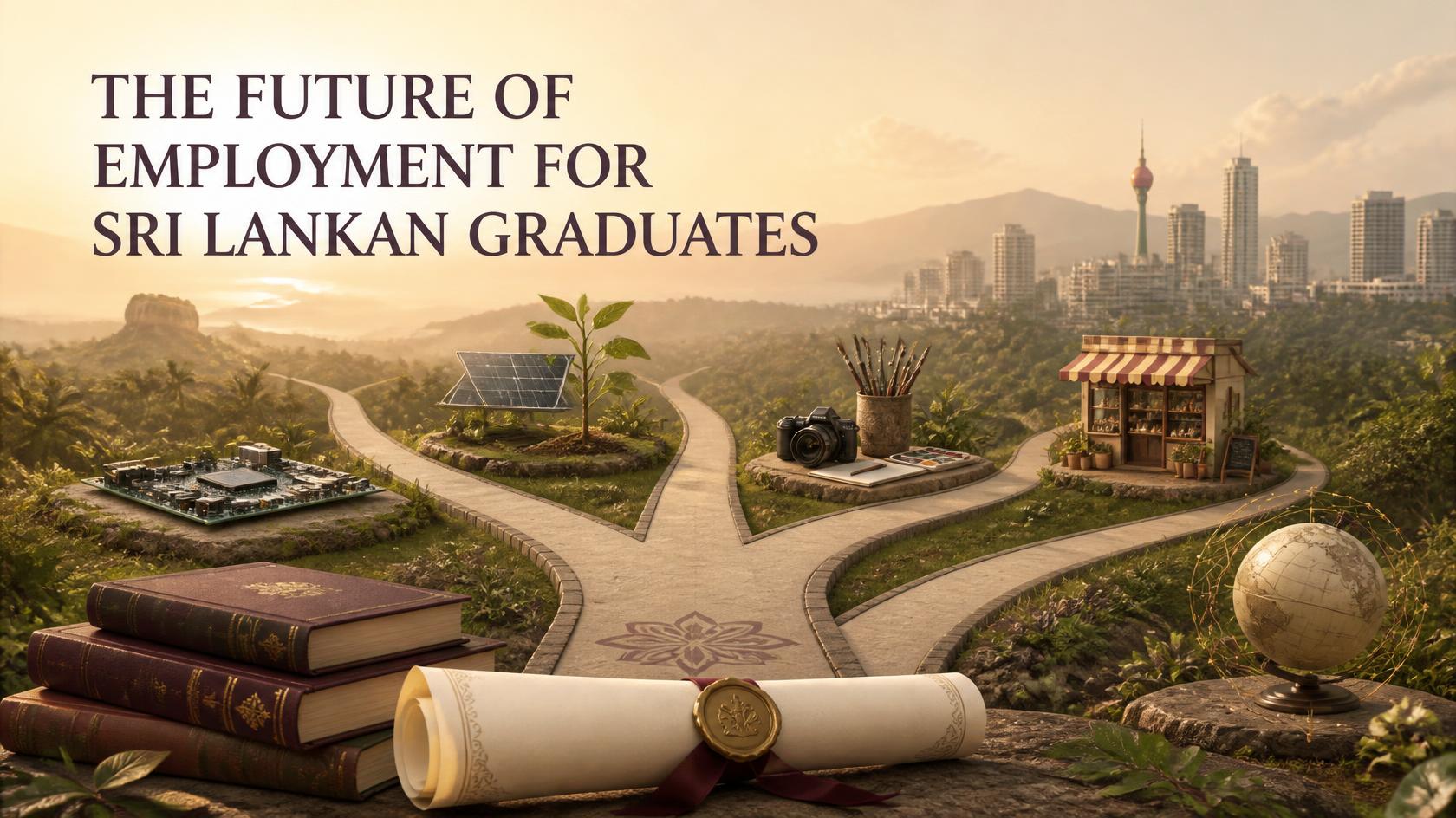
The future of employment for Sri Lankan graduates is becoming an increasingly important topic as the country's economy, technology, education system, and labour market continue to change. A university degree has traditionally been viewed as an important pathway to a stable and respected career. However, a degree alone is no longer always enough to guarantee employment. Employers are increasingly looking for practical skills, digital knowledge, communication abilities, adaptability, problem-solving skills, and relevant work experience.
Sri Lankan graduates are entering a labour market that is different from the one faced by previous generations. Technological development, globalization, changing business models, remote work, artificial intelligence, entrepreneurship, and the growth of the digital economy are creating new employment opportunities. At the same time, economic uncertainty, competition for jobs, skills gaps, and limited opportunities in some traditional sectors are creating significant challenges.
The future of graduate employment will therefore depend not only on the number of graduates produced by universities but also on how effectively education prepares them for changing labour-market demands.
The Changing Nature of Graduate Employment
In the past, many graduates expected to find employment in government institutions, banks, schools, large private companies, or established professional fields. These career paths are still important, but employment opportunities are becoming more diverse.
Today, graduates may work in technology companies, international organizations, startups, digital businesses, tourism, financial services, education technology, creative industries, logistics, consulting, and many other fields.
Employment is also becoming less traditional. Freelancing, contract work, remote employment, project-based work, and entrepreneurship are becoming increasingly relevant options for skilled graduates. A graduate with the right digital skills may be able to work for an overseas client without leaving Sri Lanka.
This shift means that young graduates need to think beyond the traditional idea of finding one permanent job immediately after university.
The Importance of Digital Skills
Digital technology will play a major role in the future of employment.
Almost every industry is becoming more dependent on digital systems. Businesses use software for accounting, marketing, communication, customer management, data analysis, inventory control, and business operations.
As a result, graduates with strong digital skills are likely to have an advantage. Depending on their field, useful skills may include programming, data analysis, digital marketing, graphic design, cybersecurity, cloud technologies, software applications, spreadsheet analysis, and digital communication.
Even graduates who do not work in technology-related professions need a certain level of digital literacy. A graduate working in human resources, accounting, education, tourism, business administration, or manufacturing may still be expected to use digital tools effectively.
Therefore, digital competence is increasingly becoming a basic employability skill rather than an additional advantage.
Artificial Intelligence and the Future Workplace
Artificial intelligence is expected to influence many types of employment. AI-powered tools are already being used in areas such as customer service, content production, data processing, research, software development, translation, design, and business analysis.
This does not necessarily mean that technology will simply eliminate jobs. In many situations, it is more likely to change the tasks people perform within their jobs.
For Sri Lankan graduates, this creates both opportunities and challenges. Graduates who learn how to use AI tools responsibly may become more productive and competitive. They may use AI to analyze information, automate repetitive tasks, generate ideas, support research, and improve business processes.
At the same time, graduates who depend only on routine skills may face greater competition as automation develops.
The ability to work alongside technology will therefore become increasingly important.
Soft Skills Will Matter More
Technical knowledge alone will not determine graduate employability. Employers also value soft skills, including communication, teamwork, leadership, creativity, time management, critical thinking, and problem-solving.
A graduate may have excellent academic qualifications but still struggle in the workplace if they cannot communicate clearly, work with colleagues, handle responsibility, or adapt to changing situations.
English-language communication can also be valuable in many sectors, particularly where employees work with international customers, companies, software platforms, or overseas teams.
For this reason, universities and graduates should place greater emphasis on developing both technical and interpersonal abilities.
The Gap Between Education and Industry
One of the major challenges facing Sri Lankan graduates is the gap that can exist between academic education and practical workplace requirements.
Universities provide important theoretical knowledge, but some employers expect graduates to have practical experience with industry tools, software, processes, and professional environments.
This can make the transition from university to employment difficult.
Internships, industrial placements, practical projects, career guidance, professional certifications, and collaboration between universities and employers can help reduce this gap.
Graduates can also improve their employability by participating in volunteer projects, student organizations, competitions, freelance work, and personal projects that demonstrate their abilities.
A graduate who can show what they can do—not simply what they have studied—may be better positioned in a competitive job market.
The Growth of Remote Work
Remote work has changed traditional ideas about where employment takes place.
A graduate living in Sri Lanka may be able to work for a company based in another city or country, provided they have the necessary skills, communication abilities, internet access, and professional discipline.
Remote work can create opportunities for graduates who live outside major urban centers. It can also allow businesses to access skilled workers without requiring everyone to work in the same physical location.
However, remote employment requires strong time management, independent working skills, digital communication, and the ability to meet deadlines without constant supervision.
Graduates who develop these abilities may be better prepared for international and technology-enabled employment opportunities.
Freelancing and the Gig Economy
Freelancing is another area with potential for graduate employment.
Graduates with skills in writing, translation, graphic design, web development, programming, video editing, digital marketing, accounting, research, and other professional services can offer their skills to clients through online platforms.
Freelancing can provide flexibility and access to international clients, but it is not always as stable as traditional employment. Income can fluctuate, competition can be high, and freelancers must manage their own clients, schedules, taxes, contracts, and professional development.
Despite these challenges, freelancing can be an important source of employment for graduates who build specialized skills and strong professional reputations.
Entrepreneurship as an Alternative Career Path
Not every graduate will find their ideal future through conventional employment. Entrepreneurship can provide another pathway.
Young graduates can start businesses based on technology, agriculture, tourism, education, food production, creative services, e-commerce, logistics, and other opportunities.
Digital platforms have made it easier for small businesses to reach customers. Social media can be used for marketing, while online payment services and e-commerce tools can support sales.
However, entrepreneurship requires more than a good idea. Business planning, financial management, customer research, marketing, legal knowledge, risk management, and persistence are also important.
Universities, government agencies, financial institutions, and private organizations can support graduate entrepreneurs through training, mentoring, incubation programs, and access to finance.
The Importance of Continuous Learning
A university degree represents an important achievement, but learning cannot stop after graduation.
Technology and industry practices continue to change. Skills that are valuable today may become less important in the future, while new professions may emerge.
Graduates therefore need to develop a habit of continuous learning. Professional certifications, online courses, workshops, postgraduate education, industry training, and self-directed learning can help graduates remain competitive.
Lifelong learning is particularly important in technology-related fields, but it is also relevant to business, finance, education, healthcare, tourism, engineering, agriculture, and other sectors.
The most successful graduates of the future may be those who are willing to continue learning throughout their careers.
The Role of English and Other Languages
Language skills can have a significant influence on employment opportunities.
English remains particularly important in many professional environments because international companies, digital platforms, technical documentation, research materials, and global business communication often use English.
Strong English communication can help graduates participate in interviews, communicate with international clients, access professional knowledge, and pursue overseas opportunities.
At the same time, knowledge of Sinhala and Tamil remains important in serving local communities and communicating effectively across Sri Lanka's diverse society.
Graduates who can communicate professionally in multiple languages may have an additional advantage in customer service, tourism, education, administration, media, and international business.
Green Jobs and the Future Economy
Environmental concerns are also creating new employment possibilities.
As Sri Lanka and other countries focus more on renewable energy, climate adaptation, waste management, sustainable agriculture, environmental conservation, and resource efficiency, demand for professionals in these areas may grow.
Graduates in environmental science, engineering, agriculture, technology, economics, business, and social sciences may find opportunities in sustainability-related work.
The development of a greener economy could create jobs in solar energy, energy efficiency, recycling, sustainable construction, environmental consulting, conservation, and climate-related projects.
This is an important reminder that future employment will not be limited to traditional industries.
Opportunities in Tourism and the Service Sector
Tourism remains an important source of employment potential for Sri Lankan graduates.
The country's beaches, cultural heritage, wildlife, landscapes, and historical sites create opportunities across hotels, travel companies, digital tourism, event management, hospitality, guiding, marketing, and related services.
Graduates with qualifications in tourism, hospitality, business, languages, information technology, and marketing can contribute to the industry's modernization.
Digital technology is also changing tourism. Online booking systems, digital marketing, travel applications, social media promotion, data analysis, and customer relationship management have become important parts of the industry.
Graduates who combine tourism knowledge with digital and communication skills may therefore have broader career opportunities.
The Importance of Internships and Work Experience
Work experience can play an important role in the transition from education to employment.
An internship allows graduates and students to understand how organizations operate, how teams communicate, how deadlines are managed, and how professional responsibilities are handled.
Employers can also use internships to identify talented candidates.
For graduates without formal work experience, personal projects can serve as evidence of practical capability. For example, an IT graduate may create software or websites, a marketing graduate may develop a campaign project, and an accounting graduate may demonstrate practical financial analysis skills.
The key is to develop a portfolio that shows employers what the candidate can actually contribute.
The Challenge of Competition
The increasing number of graduates in different fields means competition for attractive jobs can be intense.
Academic results remain important, but employers may compare candidates based on practical skills, experience, communication, digital literacy, professional behavior, and problem-solving ability.
This means graduates need to differentiate themselves.
A strong CV is useful, but a graduate should also be able to demonstrate specific achievements and skills. Professional networking, LinkedIn profiles, career events, industry seminars, alumni connections, and professional associations can help graduates learn about opportunities that may not be widely advertised.
Building professional relationships early can therefore be an important part of career development.
Employment Outside Sri Lanka
International employment is another possibility for Sri Lankan graduates.
Some graduates may choose to pursue postgraduate education overseas, while others may seek professional employment in other countries. International employment can provide valuable experience, income opportunities, and professional exposure.
However, working overseas may also involve significant challenges, including visa requirements, professional qualifications, cultural differences, language requirements, living costs, and competition.
Graduates planning international careers should research the requirements of their chosen profession and destination carefully.
At the same time, the growth of remote work means international employment does not always require permanent migration. Skilled graduates can increasingly serve global organizations while remaining in Sri Lanka.
What Universities Need to Do
Universities have an important role in preparing graduates for the future.
Higher education institutions need to maintain strong academic standards while also providing opportunities for practical learning.
Industry collaboration, internships, entrepreneurship programs, career services, professional training, digital learning, research opportunities, and interdisciplinary education can help students develop broader employability.
Universities should also encourage students to understand changing labour-market trends and identify emerging career paths.
Education should not simply prepare students to pass examinations. It should prepare them to solve real problems and contribute effectively in professional environments.
What Graduates Can Do
Graduates also need to take responsibility for their career development.
Instead of waiting only for a job advertisement, they can identify growing industries, develop relevant skills, build portfolios, gain work experience, attend professional events, and create networks.
They should also remain realistic and flexible. The first job may not be the perfect job, but it can provide valuable experience and opportunities for future growth.
A willingness to learn from mistakes and adapt to new circumstances can be more valuable over the long term than simply finding a job immediately after graduation.
The Future of Graduate Employment in Sri Lanka
The future labour market is likely to reward graduates who combine knowledge with practical ability.
Technology will continue to influence employment, but human skills such as creativity, communication, leadership, empathy, decision-making, and critical thinking will remain highly valuable.
The most competitive graduates may be those who can combine several areas of expertise. For example, a business graduate with data-analysis skills, a science graduate with digital communication skills, or an arts graduate with technology and research skills may have opportunities across multiple industries.
This suggests that the future of employment will be less about one fixed career and more about developing a flexible set of skills that can be applied in different environments.
Conclusion
The future of employment for Sri Lankan graduates presents both significant challenges and promising opportunities. Traditional career paths continue to exist, but the labour market is becoming more diverse, digital, competitive, and internationally connected.
A university degree remains valuable, but graduates increasingly need practical skills, digital competence, communication abilities, adaptability, work experience, and a commitment to lifelong learning.
Artificial intelligence, remote work, freelancing, entrepreneurship, green industries, tourism, digital services, and international employment are creating new possibilities. At the same time, the competition for desirable jobs means graduates must actively develop their capabilities rather than depending entirely on academic qualifications.
Universities, employers, policymakers, and graduates all have roles to play in creating a stronger employment future. Universities must connect education more closely with industry. Employers can provide internships and practical learning opportunities. Policymakers can support entrepreneurship, digital skills, innovation, and emerging industries. Graduates must remain adaptable and take responsibility for continuous professional development.
Ultimately, the future of employment for Sri Lankan graduates will not be determined by degrees alone. It will be shaped by the ability to learn, adapt, innovate, communicate, and apply knowledge to real-world problems.
For Sri Lankan graduates, the changing labour market should not be viewed only as a source of uncertainty. It can also be seen as an opportunity to develop new skills, explore unconventional career paths, connect with global markets, and create employment rather than simply search for it. With the right combination of education, practical experience, digital skills, and adaptability, Sri Lanka's graduates can play a significant role in shaping the country's future workforce and economic development.
Additional Media