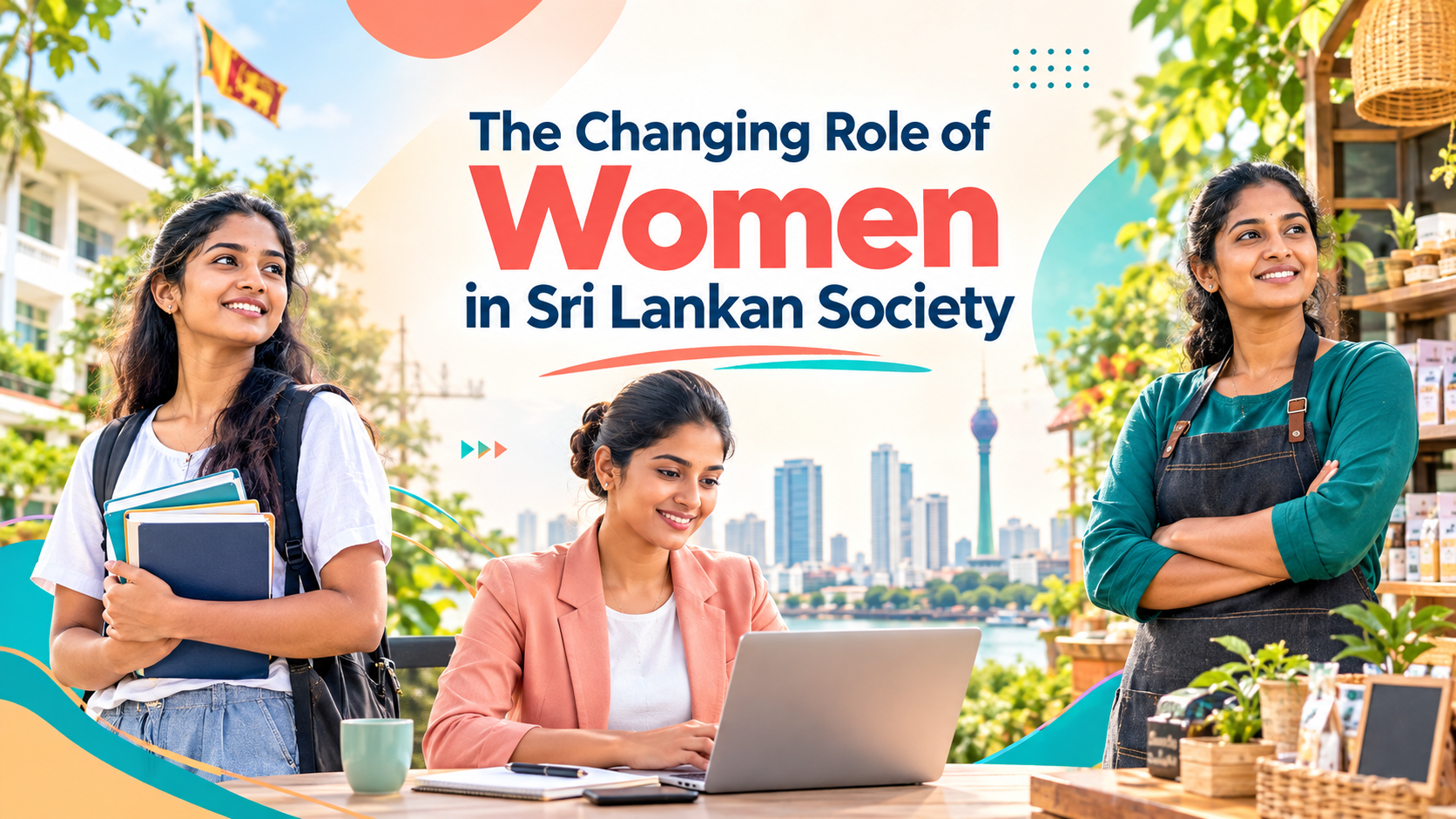
The Changing Role of Women in Sri Lankan Society
Rakshika Rathnayake9/24/20265 min read
Share:Facebook
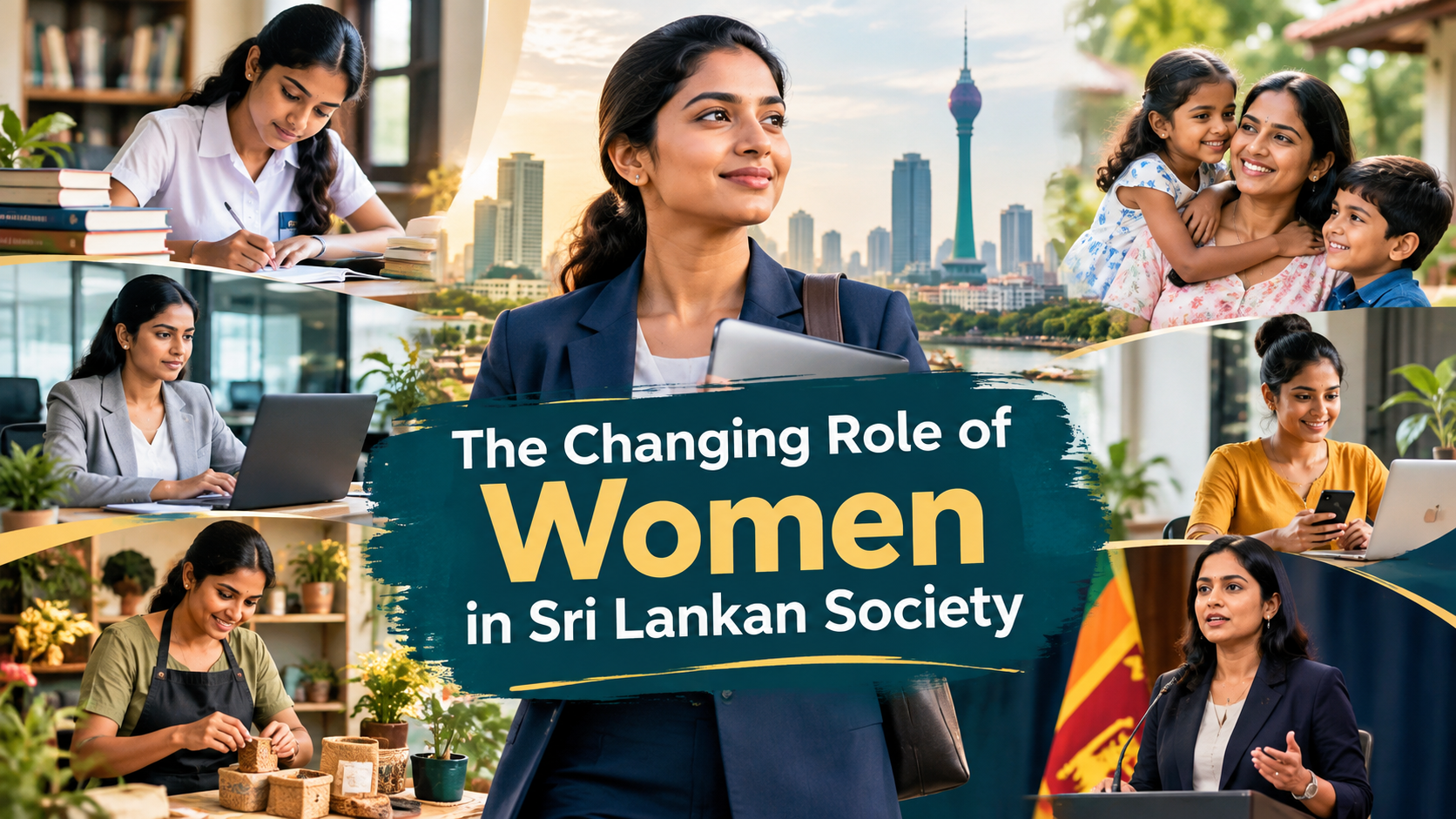
The role of women in Sri Lankan society has changed significantly over the past several decades. Traditionally, women were often associated mainly with household responsibilities, childcare and family care. Although women have always contributed to agriculture, trade, education and community life, their work was not always recognized in the same way as paid employment or formal leadership.
Today, Sri Lankan women participate in almost every area of society. They are teachers, doctors, engineers, entrepreneurs, academics, athletes, managers, public servants, artists, professionals and political leaders. Women also make important contributions to agriculture, manufacturing, tourism, overseas employment and small businesses.
However, the changing role of women does not mean that gender-related challenges have disappeared. Women continue to face difficulties involving employment opportunities, unpaid care work, workplace barriers, political representation, violence and social expectations. Understanding this changing role therefore requires looking at both the progress that has taken place and the challenges that remain.
Education Has Changed Women's Opportunities
Education has been one of the most important factors influencing the changing role of Sri Lankan women. Sri Lanka has historically placed considerable importance on education, and girls have benefited from access to schooling.
Current data show that women have achieved high levels of educational participation. According to the World Bank's Gender Data Portal, the lower-secondary completion rate in Sri Lanka was about 93% for girls compared with 91% for boys in 2023. Adult literacy was also very high, with the female literacy rate at 93.5% compared with 92.1% for males in 2024.
Education has changed the expectations of many families. A daughter's education is increasingly viewed not simply as preparation for marriage and family life, but as an investment in her future. More women are pursuing university education, professional qualifications and specialized training.
This has opened opportunities in areas that were once dominated by men. Women can now be found in engineering, information technology, medicine, law, science, finance, business and other professional fields.
Education has also helped women make more informed decisions about employment, marriage, family planning and personal development. An educated woman may also contribute to the education and economic wellbeing of the next generation.
Women's Participation in Employment
Women's participation in the economy is another major part of this transformation. Sri Lankan women have long worked outside the home, particularly in agriculture, plantations, factories, domestic employment and overseas employment. However, the nature and visibility of women's economic contribution have changed.
Women today work in offices, banks, hospitals, schools, factories, technology companies, hotels, government institutions and many other workplaces. A growing number are also establishing their own businesses.
Nevertheless, women's labour force participation remains considerably lower than men's. The 2024 Census of Population and Housing reported a labour force participation rate of 28.9% for females aged 15 and over, compared with 67.4% for males.
The latest Labour Force Survey also illustrates the continuing difference. In 2025, female labour force participation was 32.3% in the fourth quarter, compared with 68.1% for males. Female unemployment was 5.7%, while male unemployment was 2.7% in that quarter.
These figures do not mean that women are not working. A substantial amount of women's work takes place inside households or in activities that may not be counted as formal economic employment.
The Importance of Unpaid Care Work
One of the biggest changes in discussions about women's roles is the recognition of unpaid domestic and care work.
Cooking, cleaning, caring for children, looking after elderly family members and managing household responsibilities require considerable time and effort. Traditionally, much of this work has been treated as a woman's responsibility.
This expectation can create difficulties for women who also have full-time employment. A woman may complete her working day at an office and then return home to another set of responsibilities.
UN Women has highlighted the unequal distribution of unpaid care work in Sri Lanka, noting that women spend more time on unpaid household and care responsibilities than men.
The changing role of women therefore also requires a change in the way families think about household responsibilities. Sharing childcare, cooking, cleaning and elderly care between family members can make it easier for both women and men to participate in employment and family life.
Women in Business and Entrepreneurship
Women are increasingly becoming entrepreneurs in Sri Lanka. Some operate small shops, food businesses, clothing businesses, beauty services, online businesses, agricultural enterprises and home-based businesses. Others manage larger companies and employ other workers.
The growth of digital technology has created additional opportunities. Social media platforms and online marketplaces allow women to advertise products without having to establish a traditional physical shop. A person can prepare food, clothing, handmade products or other goods at home and reach customers through digital platforms.
Women entrepreneurs can also contribute to household income and create employment opportunities for others.
However, women-owned businesses may face challenges such as access to finance, business knowledge, technology, markets and professional networks. Women who are responsible for household and childcare duties may also have less time to develop their businesses.
Supporting women's entrepreneurship therefore involves more than encouraging women to start businesses. Access to training, financial services, technology, markets and childcare support can also be important.
Women in Professional Careers
The presence of women in professional occupations is now a normal part of Sri Lankan society. Female doctors, nurses, teachers, lawyers, engineers, accountants, researchers, journalists and IT professionals contribute to the country's development.
Women have also entered careers that were traditionally seen as more suitable for men. Female engineers, pilots, police officers, military personnel and technology professionals demonstrate how occupational expectations have changed.
This transformation has an important effect on younger generations. When girls see women working successfully in different professions, they may develop broader ideas about the careers available to them.
At the same time, having women enter professional careers does not automatically remove workplace inequality. Issues such as career interruptions because of childbirth, childcare responsibilities, workplace discrimination and access to senior positions can continue to influence women's careers.
Women in Leadership and Public Life
Women have also played important roles in Sri Lanka's public life. Sri Lanka has a notable history of women reaching the highest levels of political office, including Sirimavo Bandaranaike, who became the world's first woman prime minister in 1960.
Despite this history, women's representation in politics remains relatively low. UN Women reports that women held only about 5.3% of seats in Sri Lanka's national parliament as of February 2024.
This creates an interesting contrast. Women represent roughly half of the country's population, but their representation in national political decision-making remains limited.
Women's participation in local government, community organizations, professional associations and civil society is also important. Greater participation in decision-making can ensure that issues affecting different groups within society are considered when policies are developed.
Changing Family Roles
The traditional Sri Lankan family structure has also experienced changes. Marriage and motherhood remain important to many people, but women increasingly combine family responsibilities with education and employment.
In many households, both husband and wife contribute financially. This can change traditional ideas about who should make financial decisions or provide for the family.
Women who earn their own income may have greater control over personal and household financial decisions. Economic independence can also provide greater security when families face financial difficulties.
However, balancing employment and family responsibilities can be difficult. Many women face a "double burden" in which they are expected to perform strongly at work while also carrying a large share of household responsibilities.
A healthier approach is to understand family life as a shared responsibility. Both men and women can contribute to childcare, household work and financial decisions.
Women and Sri Lanka's Economy
Women make important contributions to Sri Lanka's economy through many different sectors.
The apparel industry, for example, has employed large numbers of women and has become an important part of Sri Lanka's export economy. Women also contribute to plantation work, agriculture, tourism, healthcare, education, services and overseas employment.
The 2024 Labour Force Survey found that among employed women, 52.3% were in the formal sector and 47.7% in the informal sector.
This shows why women's economic participation should not be understood only through traditional office employment. Women contribute through formal jobs, informal work, self-employment and family businesses.
Increasing women's participation in productive employment could also have wider economic effects. When women have opportunities to earn, develop skills and advance professionally, households and the wider economy can benefit.
Challenges Faced by Women
Despite considerable progress, women in Sri Lanka continue to face several challenges.
One major issue is violence against women. Available UN Women data indicate that 4.1% of women aged 15–49 reported experiencing physical and/or sexual violence by a current or former intimate partner during the previous 12 months in the referenced 2018 data.
Another challenge is social attitudes. Women may still face expectations about how they should dress, behave, marry, raise children or choose careers. Such expectations can restrict personal and professional choices.
Women can also experience difficulties in reaching senior positions in organizations. Although women are highly represented in education and many professions, this does not necessarily translate into equal representation in leadership.
Digital technology has created new opportunities but also new risks. Women may face online harassment, abuse and attacks through social media. Therefore, greater digital participation also needs to be accompanied by digital safety and awareness.
The Influence of Social Media and Technology
Technology is changing women's lives in Sri Lanka in several ways.
Social media allows women to promote businesses, build professional networks, share knowledge and communicate with customers. Online education and digital skills can provide opportunities to learn without always travelling to a physical institution.
Women can also use digital platforms to discuss social issues and connect with communities beyond their immediate surroundings.
At the same time, social media can reinforce unrealistic expectations about appearance, lifestyle and success. Online harassment and privacy concerns are additional challenges.
Therefore, digital empowerment should include not only access to technology but also digital literacy, online safety and the ability to critically evaluate information.
Changing Attitudes Among Younger Generations
Younger Sri Lankans are growing up in a society where women's educational and professional achievements are increasingly visible. A young woman can aspire to become a scientist, entrepreneur, athlete, engineer, artist or business leader rather than being expected to follow only traditional roles.
Young men are also increasingly participating in conversations about shared household responsibilities and gender equality.
However, change does not happen at the same speed everywhere. Urban and rural communities may experience social and economic changes differently, and individual families may have different attitudes toward women's education, employment and marriage.
The changing role of women is therefore not a single process. It is a gradual transformation taking place across different communities, generations and economic groups.
What the Future May Look Like
The future role of women in Sri Lanka will depend on several factors. Better access to employment, affordable childcare, safe workplaces, skills training and financial services can help women participate more fully in economic life.
Education will continue to be particularly important. Sri Lanka already has high levels of female educational achievement, so the next challenge is to ensure that educational success translates into wider economic and leadership opportunities.
Families also have an important role. When household responsibilities are shared more equally, women may have more time to pursue education, employment or entrepreneurship.
Employers can contribute by creating fair recruitment and promotion systems, supporting maternity and family responsibilities, and maintaining safe workplaces.
Government institutions and communities also have roles to play in addressing violence, improving women's economic opportunities and increasing participation in decision-making.
Conclusion
The role of women in Sri Lankan society has changed considerably. Women are no longer viewed only through traditional family roles. They are students, professionals, entrepreneurs, workers, community leaders, athletes, academics and decision-makers.
Sri Lanka has made significant progress in women's education and literacy, and women have entered many areas of professional and economic life. At the same time, the relatively low female labour-force participation rate, unequal unpaid care responsibilities, limited political representation and continuing concerns about violence show that important challenges remain.
The changing role of women is therefore not simply about women entering workplaces or achieving higher education. It is about creating a society in which women and men can share responsibilities, make choices about their futures and contribute according to their abilities.
The progress already achieved provides an important foundation. The next stage is to ensure that women have genuine opportunities to turn their education, skills and ambitions into economic independence, leadership and participation in society. When women's contributions are recognized both inside and outside the home, the benefits extend beyond individual women to families, communities and Sri Lanka as a whole.
Additional Media