
Sponsored
The Ancient Origins of Cinnamon: A Global Journey
Rakshika Rathnayake7/7/20265 min read
Share:Facebook
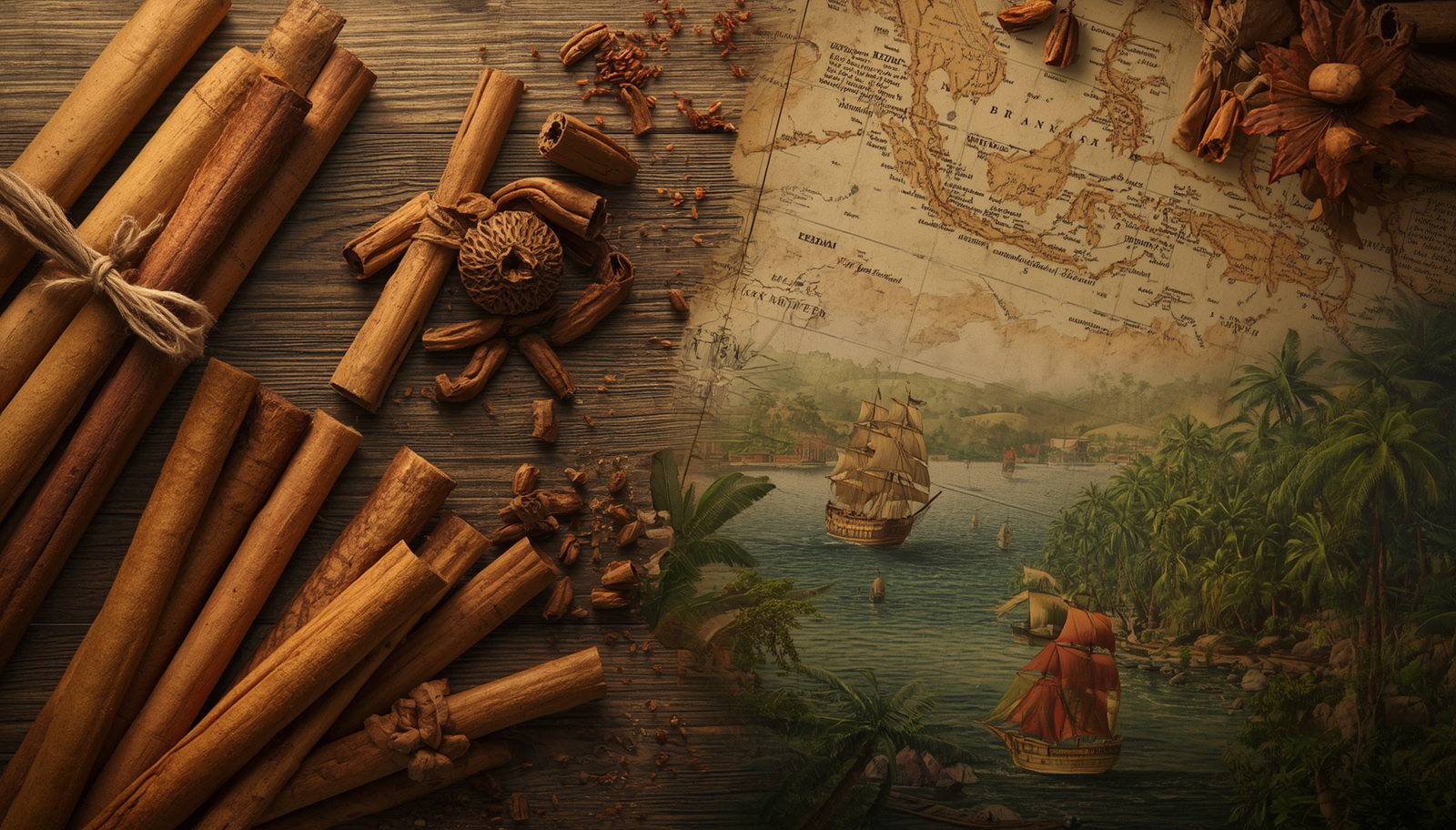
The warm, sweet aroma of cinnamon is a familiar comfort in kitchens worldwide, instantly evoking images of festive desserts and spiced beverages. But behind this common pantry staple lies a rich and tumultuous history stretching back thousands of years. Once more valuable than gold, cinnamon was one of the world's oldest and most cherished spices, driving exploration, building empires, and shaping global trade. Its story is a fascinating journey that begins in antiquity and travels across continents, shrouded in myth and intrigue.
From the temples of ancient Egypt to the trade routes of the Roman Empire, this humble tree bark has been a symbol of luxury, a component of sacred rituals, and a prize worth fighting for. This article explores the remarkable history of cinnamon, tracing its path from a mysterious, coveted spice to a beloved ingredient enjoyed by all.
Key Takeaways
Cinnamon is one of the world's most ancient spices, with documented use in Egypt dating back to 2000 BCE for embalming and religious rites.
For centuries, Arab traders monopolized the cinnamon trade, protecting its true origin with fantastical myths of giant cinnamon birds and other dangers.
Sri Lanka, formerly Ceylon, is the historical source of "true cinnamon" (Cinnamomum verum), which is considered superior to the more common Cassia variety.
Beginning in the 16th century, European powers—first the Portuguese, then the Dutch and British—fought for control over Sri Lanka's lucrative cinnamon trade, profoundly shaping the island's history.
The primary difference between Ceylon and Cassia cinnamon lies in their flavor, appearance, and concentration of coumarin, a compound that can be harmful in large doses.
Tracing Cinnamon's Roots: From Ancient Egypt to Global Trade
The story of cinnamon begins in the ancient world, where it was a rare and precious commodity. The earliest records of its use date back to ancient Egypt around 2000 BCE, where it was a key ingredient in the embalming process for pharaohs and a prized aromatic burned during sacred temple rituals. Its inclusion in holy anointing oil is also mentioned in the Bible, highlighting its immense cultural and religious significance long before it became a culinary staple.
As demand grew, cinnamon became a cornerstone of the early spice trade, traveling along ancient land and sea routes that connected Southeast Asia with the Middle East and Europe. For centuries, Arab traders masterfully controlled the supply, keeping the true source of the spice a closely guarded secret. To protect their monopoly and justify its exorbitant price—at times equaling that of gold—they spread elaborate and fearsome myths. The Greek historian Herodotus famously wrote of giant "cinnamon birds" that built their nests from cinnamon sticks on treacherous cliffs, forcing traders to undertake perilous schemes to retrieve them. These tales of danger and fantasy successfully deterred competitors for centuries, preserving the mystery of cinnamon's origin.
Sri Lanka's Enduring Legacy: The History of Ceylon Cinnamon
The long-held secret of cinnamon's origin was eventually revealed: the island of Sri Lanka (formerly Ceylon), was the home of Cinnamomum verum, or "true cinnamon." When Portuguese explorers landed there by chance in 1505, they discovered the source of the world's finest cinnamon and quickly moved to seize control. By establishing forts and enforcing a brutal monopoly, the Portuguese dominated the trade for over a century.
The immense profits did not go unnoticed. In the mid-17th century, the Dutch ousted the Portuguese and established their own, even more systematic and exploitative control over the cinnamon trade. The Dutch East India Company turned cinnamon cultivation into a highly organized enterprise, which was later taken over by the British in 1796. This long history of spice colonialism profoundly impacted Sri Lanka's economy and cemented the global reputation of Ceylon cinnamon. Today, the cultivation process remains a craft passed down through generations. Harvesters skillfully peel the delicate inner bark of young shoots, which naturally curl into quills as they dry, a traditional method that distinguishes Ceylon cinnamon from all others.
Cinnamon's Journey Through Time: From Ancient Spice to Modern Staple
Once a luxury reserved for monarchs and gods, cinnamon has completed a remarkable journey to become a staple in kitchens around the globe. The breaking of trade monopolies and the cultivation of cinnamon in other parts of the world made it more accessible and affordable. As it spread, different varieties became prominent in the global market. The most common type found in supermarkets today is Cassia cinnamon, which primarily comes from China and Indonesia.
While related, Ceylon and Cassia cinnamon have distinct differences. Ceylon cinnamon, the "true" variety from Sri Lanka, is lighter in color, with thin, papery layers and a milder, more delicate and complex flavor. Cassia is darker, with a thicker, single-layered bark and a stronger, spicier taste. Notably, Cassia contains significantly higher levels of a compound called coumarin, which can be harmful to the liver in large quantities, making Ceylon the safer choice for regular consumption. Despite these variations, cinnamon's cultural and culinary importance endures, adding warmth and depth to countless dishes and continuing its legacy as one of history's most beloved spices.
Conclusion
From its sacred role in ancient rituals to its central part in the brutal colonial spice trade, the history of cinnamon is as rich and complex as its flavor. For millennia, this unassuming bark drove economies, sparked exploration, and connected distant cultures. The myths spun by early traders to protect its origin only add to its mystique, reminding us of a time when spices were the world's most valuable treasures. The journey from the mythical nests of giant birds to the spice racks of modern kitchens is a testament to its enduring appeal.
Today, the distinction between "true" Ceylon cinnamon and the more common Cassia variety speaks to this long history. While the wars for its control are long over, Sri Lanka's legacy as the source of the world's finest cinnamon continues. The next time you sprinkle cinnamon on your food or into a warm drink, take a moment to appreciate its incredible voyage through time—a simple spice that truly changed the world.
Additional Media