Sponsored
Sri Lanka: Exploring the Island Nation's Identity
Rakshika Rathnayake7/14/20265 min read
Share:Facebook
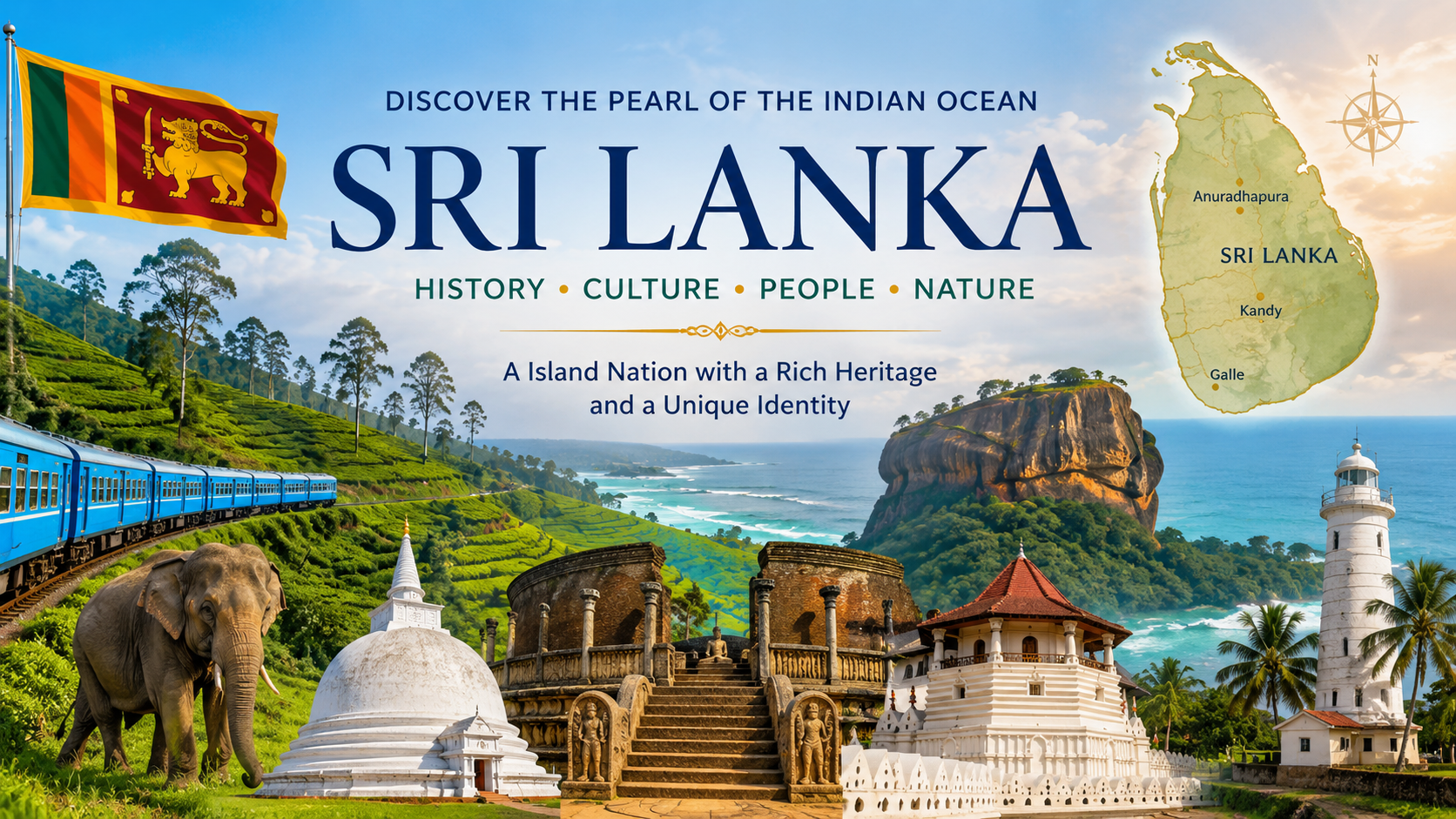
Floating in the azure waters of the Indian Ocean, Sri Lanka is a captivating island nation that boasts a heritage as deep and vibrant as its stunning landscapes. This pearl of the Indian Ocean is more than just a tourist destination; it's a country with a complex and profound identity shaped by millennia of history, a mosaic of cultures, and a unique geographical setting. This article delves into the story of the Sri Lanka country, exploring its journey from ancient origins through colonial times to its modern independent status, its diverse people, and its distinct place in the world.
Key Takeaways
Sri Lanka has a documented history stretching back thousands of years, with evidence of prehistoric settlements dating back over 125,000 years.
The island was colonized by the Portuguese, Dutch, and British, and was known as Ceylon during the colonial era.
Sri Lanka gained independence from British rule on February 4, 1948, and became a republic in 1972.
The country officially changed its name from Ceylon to Sri Lanka on May 22, 1972, to reflect its break from its colonial past.
Sri Lanka has always been a distinct political and geographical entity and was never a part of modern India, despite strong historical and cultural ties.
The nation is home to a diverse population, with the Sinhalese and Tamils as the two largest ethnic groups, and Buddhism, Hinduism, Islam, and Christianity as the main religions.
A Glimpse into Sri Lanka's Rich History
The history of Sri Lanka is a rich and complex tapestry that stretches back to prehistoric times. There is compelling evidence of early human settlements on the island dating back at least 125,000 years. Over the centuries, a sophisticated civilization emerged, giving rise to powerful ancient kingdoms. The most prominent of these were the kingdoms of Anuradhapura and Polonnaruwa, which are celebrated for their colossal dagobas (stupas), intricate irrigation systems with massive reservoirs, and magnificent Buddhist art and architecture that still inspire awe today.
The island's strategic location on maritime trade routes brought it to the attention of European powers. The colonial era began in the 16th century with the arrival of the Portuguese, who were followed by the Dutch in the 17th century. By 1815, the entire island fell under British rule and became known to the world as Ceylon. This period brought significant changes, including the introduction of plantation agriculture, particularly tea, coffee, and rubber, which reshaped the economy and landscape.
However, the colonial presence also fueled a growing desire for self-rule. The 20th century saw the rise of peaceful nationalist movements led by the educated middle class. These efforts culminated on February 4, 1948, when the nation, then known as the Dominion of Ceylon, was granted independence from British rule, marking the dawn of a new era as a sovereign state.
From Ceylon to Sri Lanka: A Name and a Place
Nestled in the Indian Ocean, just off the southeastern coast of India, Sri Lanka is an island of remarkable geographical diversity. The total Sri Lanka area is approximately 65,610 square kilometers (25,332 square miles), encompassing a wide range of landscapes. From sun-drenched golden beaches and coastal plains to lush, rolling hills of the tea country and the rugged mountains of the central highlands, the island's terrain is as varied as it is beautiful. This compact size belies a climate that shifts from the tropical heat of the lowlands to the cool, misty air of the upcountry.
For much of its colonial history, the world knew this island as "Ceylon." The name was given by the Portuguese in the 16th century and was later adopted by the Dutch and the British. The name became synonymous with high-quality products, most notably "Ceylon tea," which remains a globally recognized brand and a vital part of the nation's economy. The colonial-era name, however, represented a period of foreign rule for many of its people.
In a move to reclaim its national identity and sever ties with its colonial past, the country officially changed its name. On May 22, 1972, the Dominion of Ceylon became the Republic of Sri Lanka. The name "Sri Lanka" is derived from the Sinhala language, meaning "resplendent island," a fitting tribute to its natural beauty and rich heritage. This change signified a profound step in defining the nation's post-independence identity.
The Vibrant People and Culture of Sri Lanka
The heart of Sri Lanka lies in its people, a vibrant mix of cultures and ethnicities that create a dynamic and diverse society. The majority of the population are the Sinhalese, who are predominantly Buddhist. The largest minority group is the Tamils, who are mainly Hindu and are concentrated in the northern and eastern parts of the island. The country is also home to a significant Muslim community, often referred to as Moors, and the Burghers, who are descendants of European colonists. Each group has contributed to the island's rich cultural tapestry.
This diversity is reflected in the nation's languages and religions. Sinhala and Tamil are the two official languages of Sri Lanka, with English widely used as a link language in administration and commerce. The religious landscape is equally varied. Buddhism is the most widespread religion and has deeply influenced the country's art, literature, and social customs. Hinduism, Islam, and Christianity also have a strong presence, with each faith contributing to the island's colorful festivals and traditions.
Despite the distinct cultural threads, a shared Sri Lanka nationality unites its people. This national identity is built on a common history, a deep-seated sense of hospitality, and a love for shared traditions. From the vibrant Esala Perahera festival in Kandy to the delicious complexity of its cuisine, which blends spices and flavors from various cultures, the spirit of Sri Lanka is one of celebration and resilience. The warmth and generosity of its people are often cited as one of the country's greatest treasures.
Sri Lanka's Independent Path: Was it Part of India?
A common question that arises due to its geographical proximity is, "was Sri Lanka part of India?" The answer is straightforward: No, Sri Lanka has never been a political part of modern India. Throughout its long history, the island has maintained its status as a distinct and separate political entity, with its own kingdoms, governance, and identity. The Palk Strait and the Gulf of Mannar have always formed a natural, and political, boundary between the island and the Indian subcontinent.
This is not to say the two nations don't share a deep connection. For millennia, Sri Lanka and India have been linked by powerful cultural, religious, and trade ties. The introduction of Buddhism to Sri Lanka from India in the 3rd century BCE is a cornerstone of the island's history. Similarly, the Tamil population of Sri Lanka shares a linguistic and cultural heritage with the southern Indian state of Tamil Nadu. This constant exchange has enriched both societies but never resulted in political unification.
Therefore, the question of "when did Sri Lanka separated from India" is based on a false premise. The island did not separate from India because it was never annexed by it in the modern era. Sri Lanka's journey to sovereignty was about gaining independence from its last colonial ruler, Great Britain, in 1948. It emerged on the world stage as the independent nation of Ceylon, and later Sri Lanka, charting its own course as a sovereign state.
Frequently Asked Questions About Sri Lanka
Understanding the identity of Sri Lanka often involves a few common questions that touch upon its age, reputation, and practicalities for visitors.
How Old is Sri Lanka as a Country?
This question has two answers. As a civilization, Sri Lanka is ancient, with a recorded history of over 2,500 years and archaeological evidence of human life stretching back millennia. However, as a modern, independent state, its history is more recent. The nation gained independence on February 4, 1948. It became a fully independent republic, severing its final ties to the British crown, on May 22, 1972. So, while the culture is ancient, the modern republic is over 50 years old.
What is Sri Lanka Known For?
Sri Lanka is famous for a multitude of treasures. It is one of the world's leading exporters of tea (formerly Ceylon Tea), spices like cinnamon, and precious gemstones. Its natural beauty is legendary, from pristine beaches to misty mountains and national parks teeming with wildlife, including elephants and leopards. The country is also a UNESCO World Heritage hotspot, with ancient cities like Anuradhapura and Sigiriya rock fortress attracting visitors from around the globe.
Is Sri Lanka Safe for Tourists?
Generally, Sri Lanka is considered a safe destination for tourists. The people are known for their hospitality and warmth towards visitors. As with any travel, it is wise to stay informed about the current situation and follow the travel advisories issued by your home country. Standard precautions like being aware of your surroundings and safeguarding your belongings are always recommended to ensure a smooth and enjoyable trip.
Additional Media