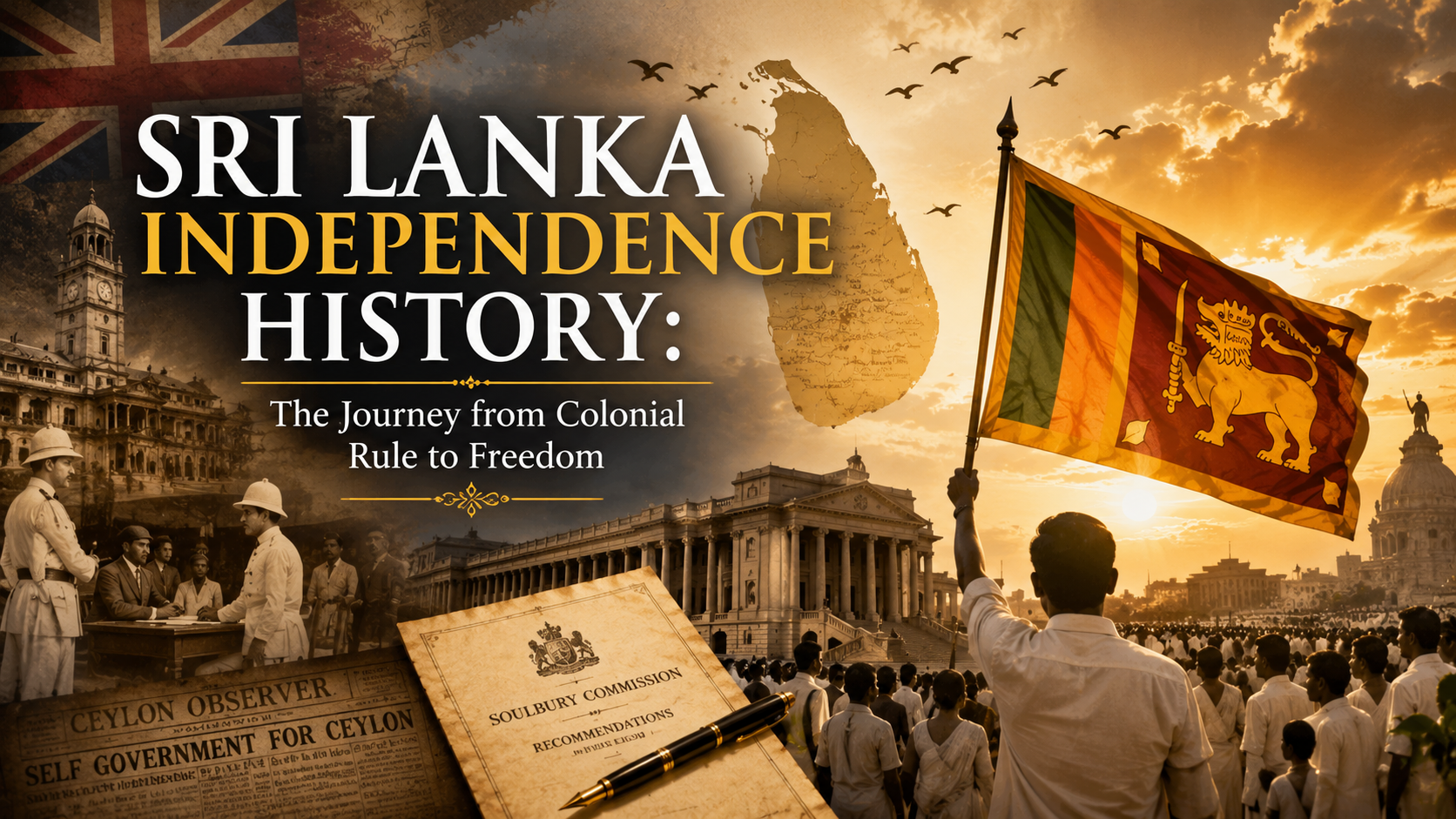
Sri Lanka Independence History: The Journey from Colonial Rule to Freedom
Rakshika Rathnayake7/16/20265 min read
Share:Facebook
Introduction
Sri Lanka, formerly known as Ceylon, has a long and fascinating history shaped by ancient civilizations, foreign influences, and the struggle for national identity. Among the most important events in modern Sri Lankan history is gaining independence from British colonial rule on 4 February 1948.
Sri Lanka’s independence was not achieved through a single event but was the result of decades of political movements, social changes, and the dedication of national leaders who worked towards self-governance. The journey from colonial control to independence reflects the determination of Sri Lankan people to protect their culture, traditions, and right to govern themselves.
Today, Sri Lanka Independence Day, celebrated every year on 4 February, represents freedom, national pride, and the achievements of generations who contributed to the country’s independence movement.
Colonial History of Sri Lanka
Before independence, Sri Lanka experienced several periods of foreign rule. Due to its strategic location in the Indian Ocean, the island became an important destination for European powers interested in trade and resources.
The three major colonial powers that ruled parts of Sri Lanka were:
Portuguese (1505–1658)
Dutch (1658–1796)
British (1796–1948)
Each colonial period had a significant impact on Sri Lanka’s administration, economy, culture, and society.
Portuguese and Dutch Period
The Portuguese arrived in Sri Lanka in 1505 and established control over coastal areas of the island. Their main interests were trade, especially valuable resources such as cinnamon. They introduced European administrative systems and influenced local culture and religion.
In 1658, the Dutch replaced the Portuguese and gained control over many coastal regions. The Dutch East India Company managed trade activities, particularly the cinnamon industry. However, the central highlands, controlled by the Kingdom of Kandy, remained independent.
The Dutch period continued until the British took control of the island at the end of the 18th century.
British Rule in Sri Lanka
The British captured Sri Lanka from the Dutch in 1796 and gradually expanded their control throughout the island. The final step came in 1815 when the British signed the Kandyan Convention, bringing the Kandyan Kingdom under British rule.
During British rule, Sri Lanka experienced major economic and social transformations.
The British introduced:
Modern administrative systems
Western education
Railway networks
Road development
Plantation agriculture
The plantation economy became a major part of Sri Lanka’s economy. Crops such as:
Coffee
Tea
Rubber
Coconut
became important exports.
However, British colonial policies also created social and economic inequalities. Many Sri Lankans began to demand greater political representation and the right to govern their own country.
The Beginning of the Independence Movement
The early 20th century marked the growth of political awareness among Sri Lankans. Educated leaders and intellectuals started demanding constitutional reforms and greater participation in government.
One of the important milestones was the establishment of the Ceylon National Congress in 1919. This organization played a major role in bringing together political leaders from different communities to discuss self-government.
The independence movement in Sri Lanka was largely based on peaceful negotiations rather than armed conflict. Leaders focused on constitutional reforms, political discussions, and cooperation with the British government.
Key Leaders of Sri Lanka’s Independence Movement
D.S. Senanayake
Don Stephen Senanayake played the most important role in Sri Lanka’s journey toward independence. He negotiated with British authorities and worked to establish a self-governing system.
After independence was achieved in 1948, he became the first Prime Minister of Sri Lanka. Because of his contribution, he is often known as the Father of Independent Sri Lanka.
Ponnambalam Arunachalam
Ponnambalam Arunachalam was an important political reformer who contributed to improving political representation during the colonial period. His efforts helped develop national awareness and political participation.
Sir Ponnambalam Ramanathan
Sir Ponnambalam Ramanathan was a respected political leader who played a significant role in constitutional reforms and discussions about Sri Lanka’s future governance.
Anagarika Dharmapala
Anagarika Dharmapala contributed greatly to cultural and religious revival movements. His work helped strengthen national consciousness and pride among Sri Lankans.
Sri Lanka Achieves Independence in 1948
After years of political discussions and constitutional reforms, Sri Lanka finally gained independence from British rule on:
4 February 1948
The country became a self-governing nation within the British Commonwealth.
The first Prime Minister of independent Sri Lanka was D.S. Senanayake.
The independence celebrations included:
National flag-raising ceremonies
Cultural performances
Government events
Public celebrations across the country
This historic moment marked the beginning of a new chapter in Sri Lanka’s history.
The Importance of Sri Lanka Independence Day
Every year on 4 February, Sri Lanka celebrates Independence Day to remember the country’s freedom and national achievements.
The day symbolizes:
Freedom from colonial rule
National sovereignty
Cultural identity
Unity among citizens
Respect for independence heroes
It is a time for Sri Lankans to reflect on the sacrifices made by previous generations and the responsibility of protecting national unity.
Sri Lanka After Independence
After gaining independence, Sri Lanka focused on developing the country through improvements in education, healthcare, agriculture, and infrastructure.
The government introduced various programs to improve living standards and strengthen the economy.
Although Sri Lanka faced many challenges after independence, including political, economic, and social difficulties, independence allowed the country to make decisions based on its own national interests.
Conclusion
The history of Sri Lanka’s independence is a story of courage, determination, and national unity. After centuries of Portuguese, Dutch, and British influence, Sri Lanka achieved freedom on 4 February 1948, creating a new path as a self-governing nation.
The independence movement was built on peaceful political efforts, leadership, and the desire of Sri Lankan people to protect their identity and control their future.
Today, Sri Lanka Independence Day remains a powerful reminder of the value of freedom, unity, and national pride. Understanding this history helps future generations appreciate the struggles and achievements that shaped modern Sri Lanka.
Additional Media