Sri Lanka and El Niño: What Could It Mean for the Country?
Rakshika Rathnayake9/28/20265 min read
Share:Facebook
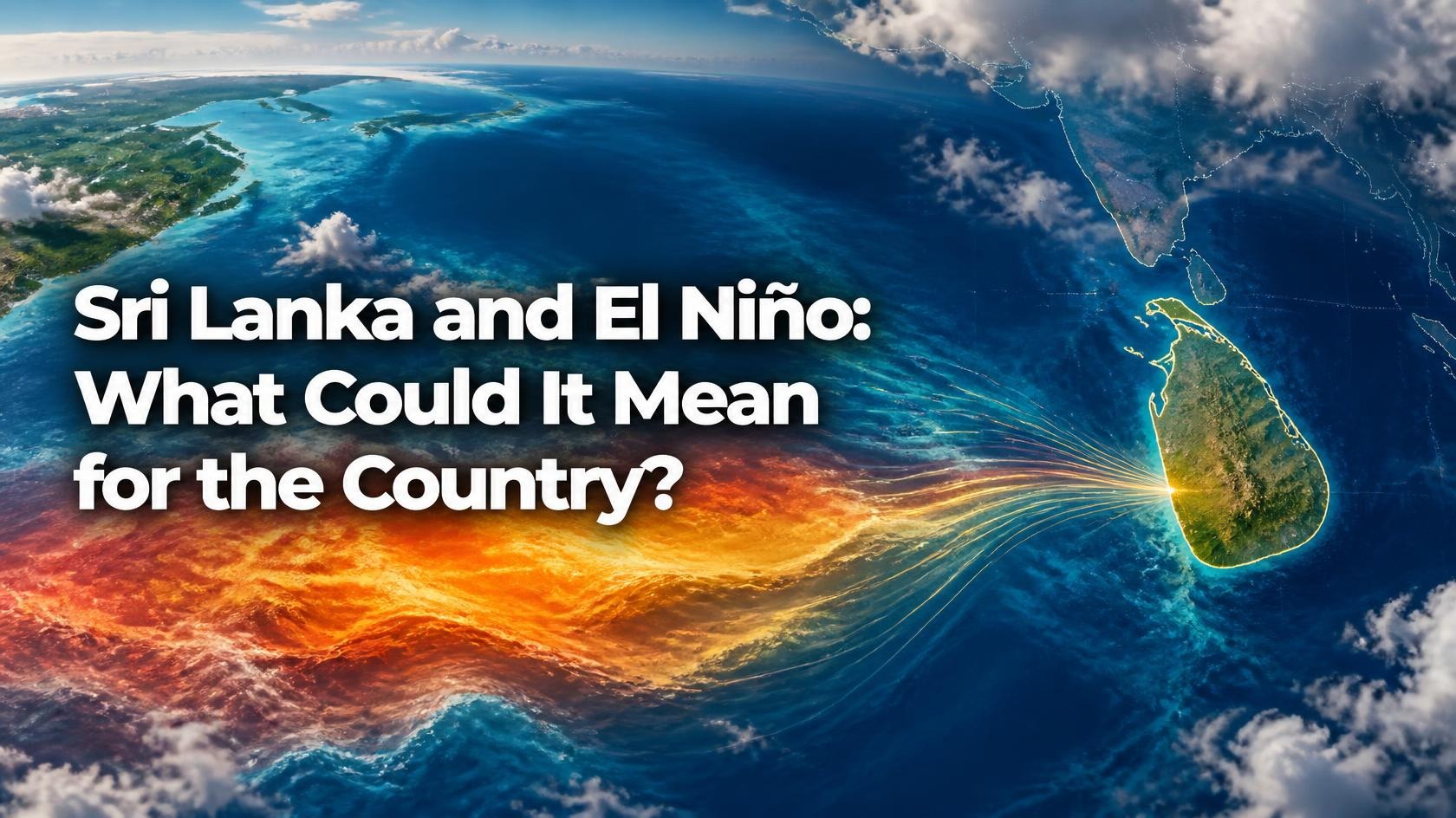
El Niño is a natural climate phenomenon that occurs when sea-surface temperatures in the central and eastern tropical Pacific Ocean become unusually warm. Although it develops thousands of kilometres away from Sri Lanka, El Niño can influence atmospheric circulation and alter rainfall and temperature patterns across many parts of the world, including South Asia.
For Sri Lanka, this is particularly important because agriculture, drinking-water supplies, hydropower generation, ecosystems and many economic activities depend heavily on rainfall. However, El Niño does not mean that Sri Lanka will automatically experience drought or unusually hot weather. Its effects vary according to the strength and timing of the event, the season, other climate systems and local weather conditions.
This issue has become especially relevant in 2026. The World Meteorological Organization reported in August 2026 that El Niño was expected to strengthen further and potentially reach very strong intensity before peaking toward the end of the year. The WMO also cautioned that the strength of an El Niño event does not directly determine the size of its impacts in every individual region.
What Is El Niño?
El Niño is one phase of the El Niño–Southern Oscillation (ENSO), a natural climate pattern involving interactions between the tropical Pacific Ocean and the atmosphere.
During an El Niño event, warmer-than-normal sea-surface temperatures develop across parts of the central and eastern tropical Pacific. This changes atmospheric pressure, winds, cloud formation and the movement of tropical rainfall systems.
Because the atmosphere is interconnected, these changes can influence weather patterns far from the Pacific Ocean. Some regions may experience increased rainfall, while others may experience reduced rainfall or unusual temperatures.
The opposite phase is known as La Niña, when sea-surface temperatures in the relevant parts of the tropical Pacific become cooler than normal. Between the two phases is ENSO-neutral.
For Sri Lanka, understanding ENSO is useful because historical research by the Department of Meteorology has identified significant relationships between ENSO events and seasonal rainfall patterns over the island.
How Can El Niño Affect Sri Lanka?
Sri Lanka has four main rainfall seasons commonly used in climate studies: the First Inter-Monsoon (FIM), Southwest Monsoon (SWM), Second Inter-Monsoon (SIM), and Northeast Monsoon (NEM).
The influence of El Niño is not the same during all four seasons.
Research published by Sri Lanka's Department of Meteorology, based on rainfall records from 90 stations and ENSO data covering 1950–2011, found that the strongest ENSO-related rainfall signals occurred during the Second Inter-Monsoon season. During El Niño events, much of Sri Lanka showed a tendency toward above-median rainfall in that season, while La Niña years showed the opposite pattern.
The same research found that the Southwest Monsoon rainfall over parts of central Sri Lanka could decrease during El Niño events. There were also indications of reduced Northeast Monsoon rainfall over areas including the North Western, North Central and central regions during El Niño conditions.
Another Department of Meteorology study examining monthly rainfall found particularly clear rainfall reductions across the country in February during El Niño years. In contrast, rainfall increases were observed during May, October and November in the historical El Niño composites studied.
These findings show why it is too simplistic to say that "El Niño means drought in Sri Lanka." Its influence changes from month to month and season to season.
Possible Effects on Agriculture
Agriculture is one of the sectors that could be affected by changes in rainfall associated with El Niño.
Sri Lankan farmers depend on rainfall as well as irrigation systems for crops such as paddy, vegetables, maize and other field crops. If rainfall becomes lower than expected during an important cultivation period, farmers may face difficulties with land preparation, planting and maintaining crops.
Reduced rainfall can also increase the demand for irrigation water. If reservoirs, tanks and other water sources are already below normal levels, farmers may face greater competition for available water.
However, increased rainfall during some periods can create the opposite problem. Excessive rain can waterlog agricultural land, damage crops, delay harvesting and increase erosion.
Therefore, the effect of El Niño on agriculture depends heavily on when the rainfall changes occur, rather than simply whether the annual rainfall is higher or lower.
Farmers can reduce some of these risks by paying attention to seasonal forecasts, selecting suitable planting dates and using water efficiently.
Water Resources and Reservoirs
Water availability is another important concern.
Sri Lanka's reservoirs support irrigation, drinking-water supply and electricity generation. When rainfall is lower than normal during important periods, inflows into reservoirs can decline.
A prolonged rainfall deficit could therefore increase pressure on water resources, particularly in areas that depend strongly on irrigation.
On the other hand, periods of increased rainfall can improve reservoir levels. This is one reason why El Niño should not automatically be described as a threat to Sri Lanka's water supply. Its influence can produce different outcomes during different seasons.
Historical Department of Meteorology research also emphasizes that rainfall variability associated with ENSO can have significant socioeconomic consequences because drought can create water-supply and agricultural problems, while excessive rainfall can contribute to flooding and damage.
Hydropower Generation
Sri Lanka's electricity system has historically depended significantly on hydropower, although the country's electricity generation mix has changed over time.
Rainfall plays an important role in determining the amount of water available for hydropower generation. If an El Niño-related rainfall deficit reduces reservoir inflows, hydropower generation could be affected.
This could increase the importance of other electricity sources and careful management of available water.
However, the actual impact cannot be determined simply from the presence of El Niño. Reservoir storage, rainfall distribution, electricity demand, other generating sources and national energy policy all influence the final outcome.
Floods Are Also Possible
It may seem contradictory to discuss both drought and flooding in relation to El Niño, but Sri Lanka's rainfall response to ENSO is complex.
Historical studies show that some periods during El Niño years can receive more rainfall than normal. The Department of Meteorology has found particularly notable increases during certain months, including October and November, in its historical analysis.
Heavy rainfall over a short period can cause flash floods, landslides and localized flooding even when another part of the year has experienced below-average rainfall.
Therefore, El Niño should not be viewed simply as a "dry-weather event." The timing, intensity and geographical distribution of rainfall are more important for understanding its effects.
Effects on Daily Life
Changes in rainfall and temperature can eventually affect ordinary households.
If water resources become limited, some communities may experience greater pressure on drinking-water supplies. Farmers may face higher production costs if additional irrigation is required.
Food prices can also be influenced indirectly if adverse weather conditions reduce agricultural production. At the same time, good rainfall during appropriate periods can support agricultural output.
Urban communities can also be affected by heavy rainfall. Drainage systems may become overwhelmed during intense rainfall, creating temporary flooding in low-lying areas.
The important point is that these impacts are possible consequences of changing weather patterns, rather than guaranteed results of every El Niño event.
Could El Niño Increase Temperatures in Sri Lanka?
El Niño can influence global and regional temperature patterns, but its relationship with Sri Lankan temperatures is more complicated than simply saying "El Niño will make Sri Lanka hotter."
Global temperatures are influenced by several factors, including long-term human-caused climate change, ocean temperatures, atmospheric circulation and natural climate variability.
The WMO's 2026 assessment notes that a very strong El Niño increases the likelihood of significant shifts in temperature and rainfall patterns in many parts of the world, while also emphasizing that the strength of El Niño does not directly translate into the magnitude of impacts in every region.
For Sri Lanka, local forecasts remain essential for understanding actual temperature and rainfall conditions.
What Does the 2026 El Niño Mean for Sri Lanka?
The 2026 situation deserves particular attention because international and Sri Lankan meteorological authorities have been monitoring a strengthening El Niño.
The World Meteorological Organization's August 2026 update indicated that El Niño was expected to strengthen further and reach very strong intensity before its expected peak toward the end of 2026.
Sri Lanka's Department of Meteorology has also issued El Niño updates and highlighted historical relationships between El Niño conditions and Sri Lankan rainfall. Its 2026 information emphasizes the importance of following updated seasonal forecasts rather than relying on general assumptions about what El Niño will do.
The Department's current information also reports an 81% probability, based on a NOAA forecast issued on July 13, 2026, of a very strong El Niño during October–December 2026.
These forecasts should not be interpreted as a prediction that Sri Lanka will definitely experience a particular disaster. Seasonal forecasts describe probabilities and large-scale climate tendencies, while actual weather can vary considerably from place to place.
The Importance of Climate Forecasting
Improved climate forecasting can help Sri Lanka prepare for possible changes.
Government agencies can use seasonal forecasts when planning water management, agriculture, disaster preparedness and energy production.
Farmers can use climate information to make decisions about planting dates and irrigation.
Communities can prepare for possible heavy rainfall or water shortages.
Businesses can also consider climate risks when planning agricultural supply chains, construction activities, tourism and other weather-sensitive operations.
The Department of Meteorology provides seasonal forecasts and weather information that can help the public follow developing conditions.
El Niño and Climate Change
El Niño is a natural climate phenomenon, while human-caused climate change is driven primarily by the accumulation of greenhouse gases in the atmosphere. They are different processes, although they can interact.
Climate change is increasing the long-term average temperature of the planet and influencing the background conditions in which natural climate variations such as El Niño occur.
This means Sri Lanka needs to consider both short-term climate variability and long-term climate change.
An El Niño event may last for months, whereas climate change is a long-term trend. Effective climate planning therefore requires attention to both.
How Sri Lanka Can Prepare
Sri Lanka cannot prevent El Niño, but it can reduce some of the risks associated with climate variability.
First, better use of climate forecasts can help government agencies and communities prepare earlier.
Second, efficient water management is important. Reservoirs, irrigation systems and drinking-water supplies need to be managed according to changing rainfall conditions.
Third, farmers can benefit from climate-smart agricultural practices, including appropriate crop selection, efficient irrigation and improved soil-water management.
Fourth, flood and landslide preparedness remains important when heavy rainfall is possible. Maintaining drainage systems, monitoring vulnerable locations and communicating warnings quickly can reduce damage.
Finally, the public should rely on information from official meteorological authorities rather than unverified social-media claims.
Conclusion
El Niño is a Pacific Ocean climate phenomenon, but its effects can extend to countries such as Sri Lanka through changes in atmospheric circulation and rainfall patterns.
Historical research shows that ENSO has a measurable influence on Sri Lanka's rainfall, particularly during certain seasons and months. El Niño has been associated with reduced rainfall in some periods and increased rainfall in others. Therefore, it cannot accurately be described simply as a cause of drought or extreme heat in Sri Lanka.
For Sri Lanka, the most important concerns are the possible effects on rainfall, agriculture, water resources, hydropower, flooding and household livelihoods. The actual impact will depend on the timing and strength of the event as well as other atmospheric and oceanic conditions.
With El Niño expected to strengthen during 2026 according to international and Sri Lankan meteorological assessments, continued monitoring is important. The best approach is not to assume a single outcome, but to follow updated seasonal forecasts and prepare for different possibilities.
For a country where agriculture, water and energy are closely connected to the climate, understanding El Niño is another important part of building greater resilience to changing weather conditions.
Additional Media