Sponsored
Nallur Kandaswamy Temple: Cultural Identity of Jaffna
Rakshika Rathnayake8/7/20265 min read
Share:Facebook
Introduction
Located in the heart of Jaffna, the Nallur Kandaswamy Temple stands as one of the most significant Hindu religious and cultural landmarks in Sri Lanka. More than just a place of worship, this ancient temple represents the history, traditions, identity, and spiritual heritage of the Tamil community in the northern region of the island.
For centuries, Nallur Kandaswamy Temple has been a symbol of devotion to Lord Murugan (Kandaswamy), the Hindu deity associated with courage, wisdom, and victory. The temple has survived periods of political change, colonial influence, and social transformation while continuing to preserve the cultural values of Jaffna.
Today, the temple attracts thousands of devotees, tourists, researchers, and cultural enthusiasts who come to experience its religious significance, architectural beauty, and the vibrant traditions surrounding it.
Historical Background of Nallur Kandaswamy Temple
The history of Nallur Kandaswamy Temple is deeply connected with the ancient Kingdom of Jaffna. Nallur was once the capital city of the Jaffna Kingdom and served as an important political, cultural, and religious centre for Tamil society.
The original temple is believed to have been established during the reign of the Jaffna kings in the 15th century. Historical records suggest that the temple was built under the patronage of King Bhuvanekabahu, a ruler of the Jaffna Kingdom. During this period, Nallur developed as a significant centre of Hindu culture and religious activities.
However, the temple experienced destruction during the Portuguese colonial period in the 17th century. The Portuguese, who controlled Jaffna from 1619, destroyed many Hindu temples as part of their religious policies. The original Nallur temple was demolished, and its sacred site faced years of decline.
Later, during the Dutch period, efforts were made to restore Hindu religious practices in Jaffna. The present-day temple was rebuilt in the 18th century under the leadership of religious devotees and local communities. Since then, Nallur Kandaswamy Temple has continued to grow as a major spiritual centre.
Religious Significance of Lord Murugan Worship
Nallur Kandaswamy Temple is dedicated to Lord Murugan, also known as Skanda, Kartikeya, or Kandaswamy. In Hindu tradition, Lord Murugan is considered the god of war, knowledge, youth, and victory over evil forces.
For Tamil Hindus, Lord Murugan holds a special place in religious and cultural identity. Worship of Murugan is deeply connected with Tamil literature, traditions, and festivals. Temples dedicated to Murugan are found across Tamil communities around the world, but Nallur Kandaswamy Temple holds a unique position due to its historical importance.
Devotees visit the temple seeking blessings for prosperity, protection, success, and spiritual strength. Daily rituals, prayers, and religious ceremonies create a peaceful spiritual environment where traditions are passed from one generation to another.
Architectural Beauty of Nallur Kandaswamy Temple
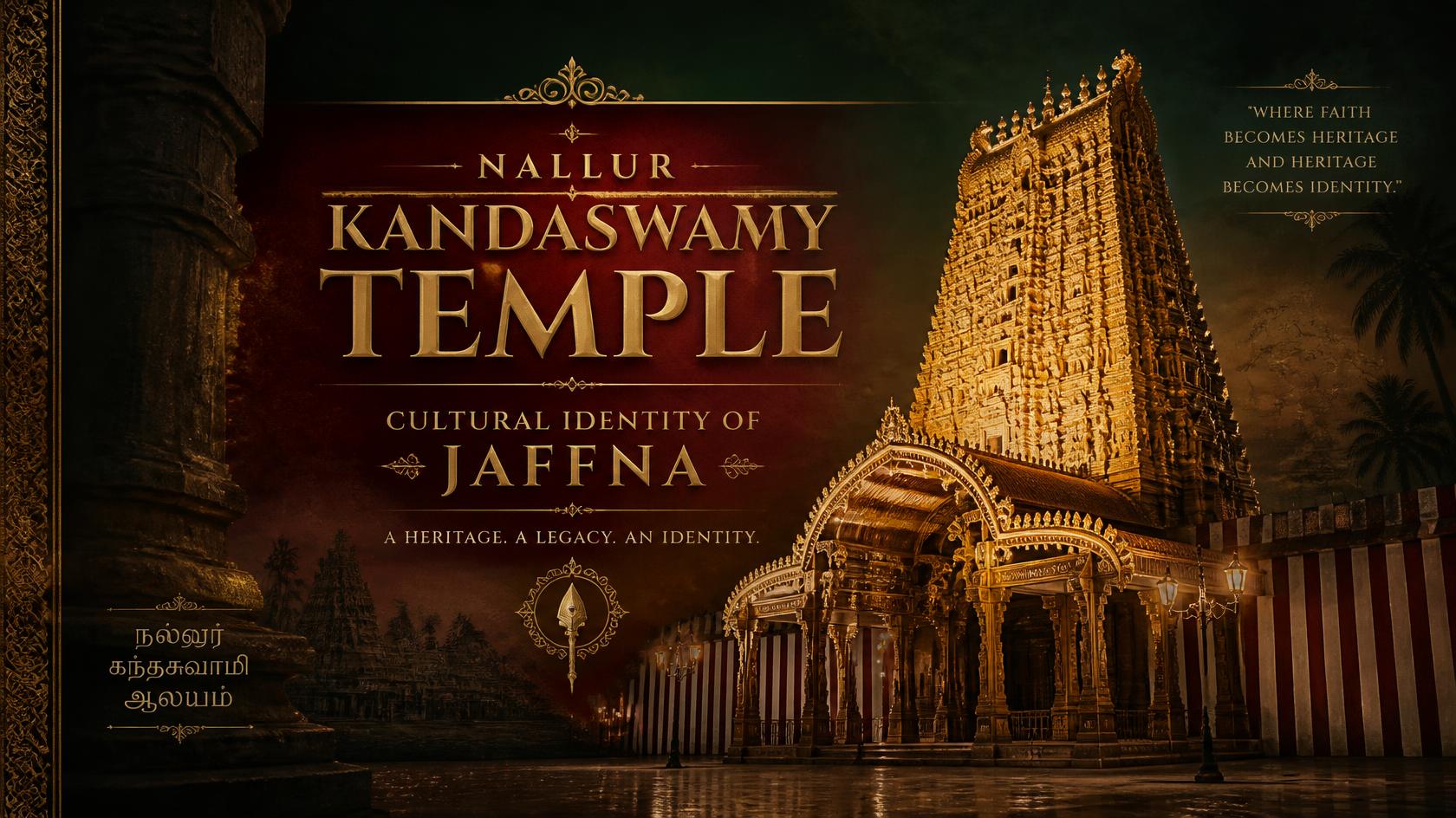
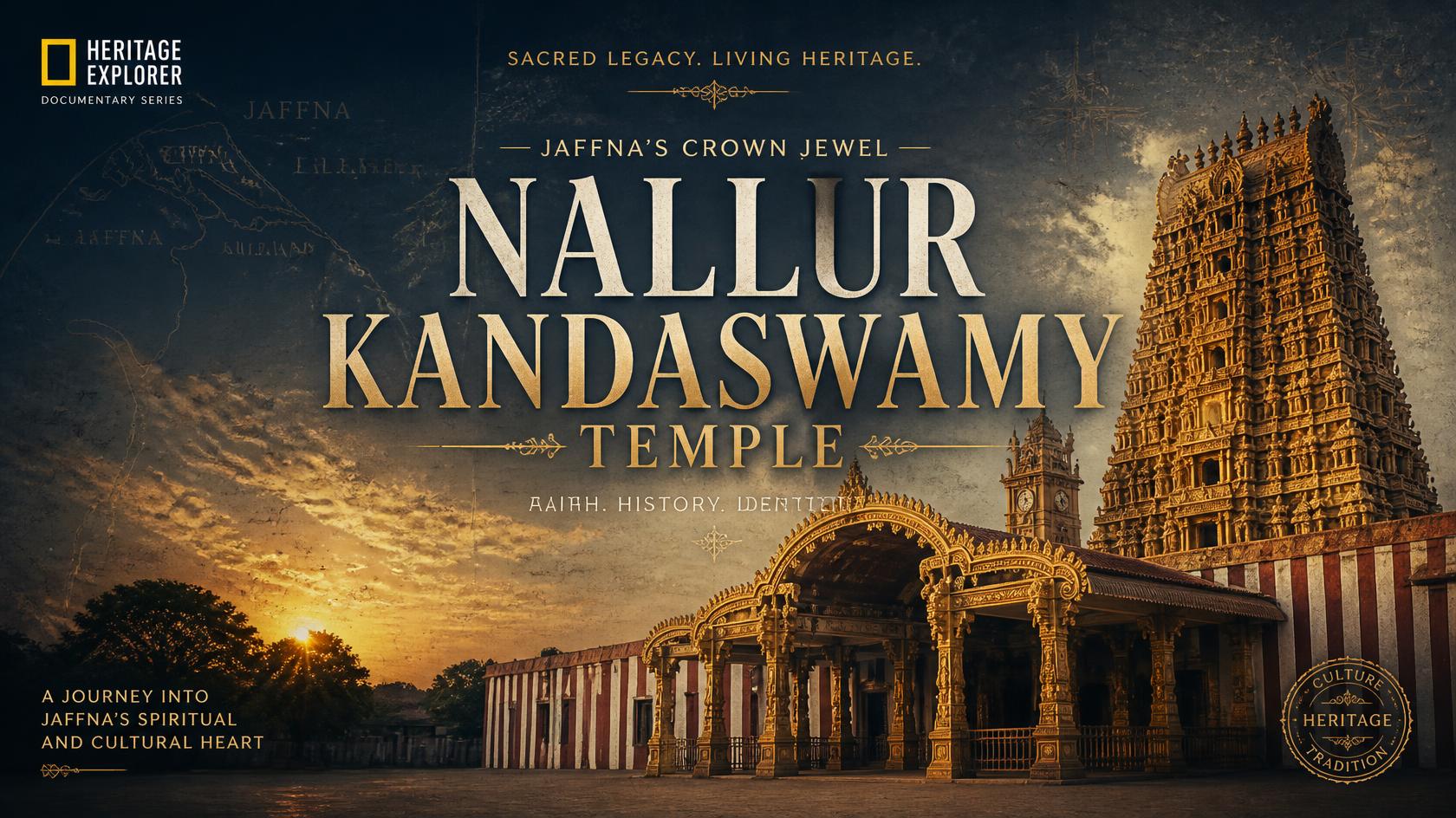
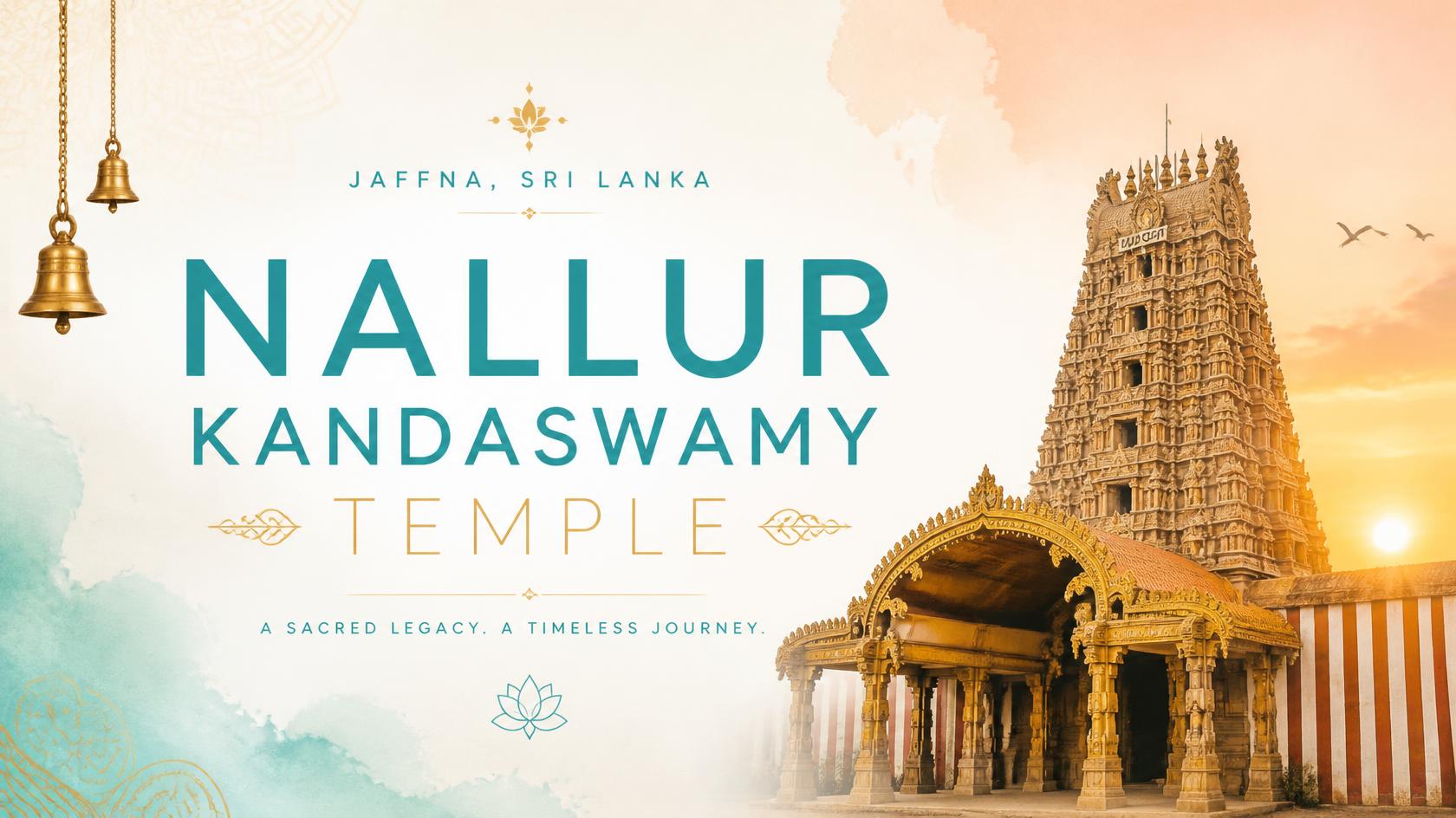
The architecture of Nallur Kandaswamy Temple reflects the traditional Dravidian style commonly seen in South Indian Hindu temples. The temple complex features beautifully designed structures, colourful sculptures, sacred halls, and impressive entrances.
One of the most recognizable features of the temple is its magnificent gopuram (entrance tower). The tall tower decorated with detailed Hindu sculptures represents the artistic excellence of traditional temple architecture.
Inside the temple premises, visitors can observe:
Beautifully designed shrines
Traditional pillars and halls
Religious sculptures
Sacred courtyards
Areas dedicated to different rituals
The temple maintains a strict spiritual atmosphere. Visitors are expected to follow traditional customs, including appropriate clothing and respectful behaviour, reflecting the importance of preserving religious values.
Nallur Festival: A Celebration of Culture and Devotion
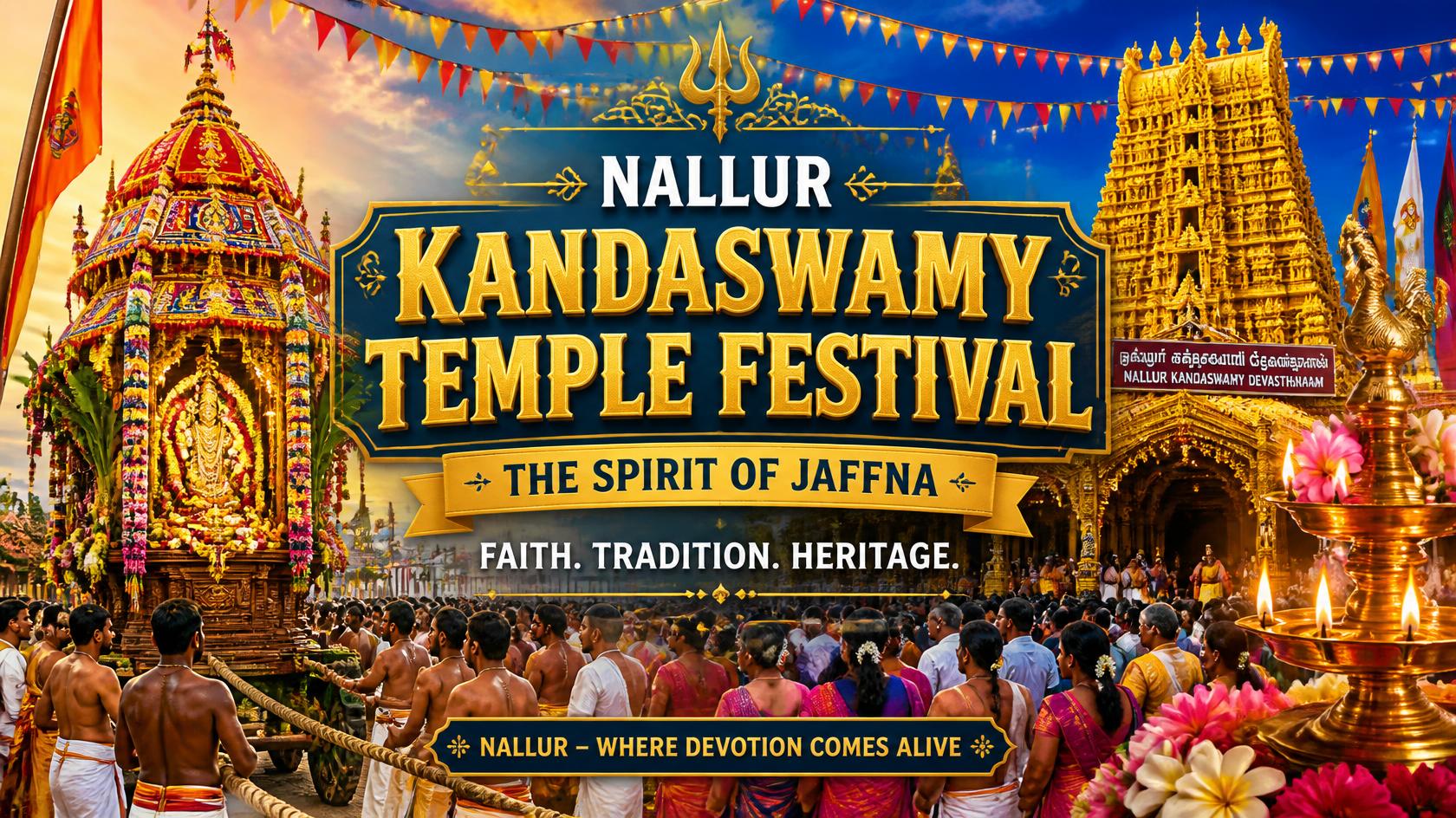
The annual Nallur Festival is the most famous event associated with the temple. Held for approximately 25 days, this grand religious celebration attracts thousands of devotees from Sri Lanka and abroad.
The festival usually takes place during July or August and includes various religious ceremonies, processions, cultural performances, and traditional rituals.
One of the most important events is the grand chariot procession, where the statue of Lord Murugan is carried through the streets around the temple. Thousands of devotees participate in prayers, offerings, and religious activities during this period.
The festival represents more than religious devotion. It also reflects:
Tamil cultural traditions
Community unity
Traditional music and arts
Family connections
Social cooperation
During the festival season, Jaffna becomes a vibrant cultural centre where people from different parts of Sri Lanka and the world gather together.
Nallur Temple and Jaffna’s Cultural Identity
The importance of Nallur Kandaswamy Temple extends beyond religion. It has become a powerful symbol of Jaffna’s cultural identity and heritage.
Jaffna has a unique cultural character shaped by Tamil language, literature, music, food traditions, and religious practices. The temple represents the continuity of these traditions despite historical challenges.
For many Tamil families, visiting Nallur is not only a religious activity but also a cultural experience. Generations of families have maintained connections with the temple, creating a strong emotional bond between the community and this sacred place.
The temple has also played an important role in preserving traditional practices such as:
Hindu rituals
Classical music traditions
Religious festivals
Cultural ceremonies
Community gatherings
Through these activities, Nallur Kandaswamy Temple continues to strengthen the cultural identity of Jaffna.
Role of the Temple in Social Life
Historically, temples in Sri Lankan Tamil society have served as centres of community life. Nallur Kandaswamy Temple has contributed to social development by bringing people together through religious and cultural activities.
The temple environment encourages community participation and cooperation. During major festivals, thousands of volunteers contribute to organizing events, maintaining facilities, and supporting devotees.
The temple also attracts researchers, historians, photographers, and travellers interested in understanding Sri Lanka’s multicultural heritage.
Although primarily a Hindu religious institution, Nallur represents the broader cultural diversity of Sri Lanka by demonstrating the island’s rich history of different communities and traditions.
Nallur Kandaswamy Temple as a Tourism Attraction
In recent years, Nallur Kandaswamy Temple has become one of the most visited cultural attractions in Jaffna. Both local and international tourists visit the temple to experience its architecture, religious traditions, and historical significance.
Visitors are attracted by:
Ancient heritage value
Unique Hindu architecture
Religious festivals
Traditional ceremonies
Cultural experiences
The temple has contributed to the growth of cultural tourism in northern Sri Lanka. Many visitors combine their trip with other attractions in Jaffna, such as Jaffna Fort, Delft Island, Nagadeepa Temple, and local cultural sites.
However, tourism development around sacred places requires careful management to protect religious values and maintain the spiritual atmosphere of the temple.
Preservation of Heritage and Future Importance
Preserving Nallur Kandaswamy Temple is important not only for the Hindu community but also for Sri Lanka’s overall cultural heritage. The temple represents centuries of history, artistic traditions, and religious practices.
Future generations can learn valuable lessons from Nallur about:
Cultural preservation
Religious diversity
Traditional architecture
Community cooperation
Historical awareness
Maintaining such heritage sites helps protect the multicultural identity of Sri Lanka and promotes understanding among different communities.
Conclusion
Nallur Kandaswamy Temple is much more than an ancient Hindu temple in Jaffna. It is a living symbol of faith, culture, history, and identity. Through centuries of challenges and transformations, the temple has remained a centre of spiritual devotion and cultural preservation.
The temple’s magnificent architecture, famous annual festival, and deep connection with the Tamil community make it one of Sri Lanka’s most valuable cultural landmarks.
For the people of Jaffna, Nallur Kandaswamy Temple represents their roots, traditions, and collective memories. For visitors, it offers a unique opportunity to experience the rich cultural heritage of Sri Lanka.
As a symbol of devotion and unity, Nallur Kandaswamy Temple continues to shine as the cultural heart of Jaffna.
Additional Media