Sponsored
Mihintale: The Birthplace of Buddhism in Sri Lanka
Rakshika Rathnayake7/30/20265 min read
Share:Facebook
Introduction
Mihintale is one of the most sacred and historically significant places in Sri Lanka. Located approximately 13 kilometers east of Anuradhapura, this ancient mountain complex is widely recognized as the place where Buddhism was introduced to Sri Lanka more than two thousand years ago. For Buddhists around the world, Mihintale represents not only a religious landmark but also a symbol of spiritual awakening, cultural transformation, and the beginning of a new era in Sri Lankan history.
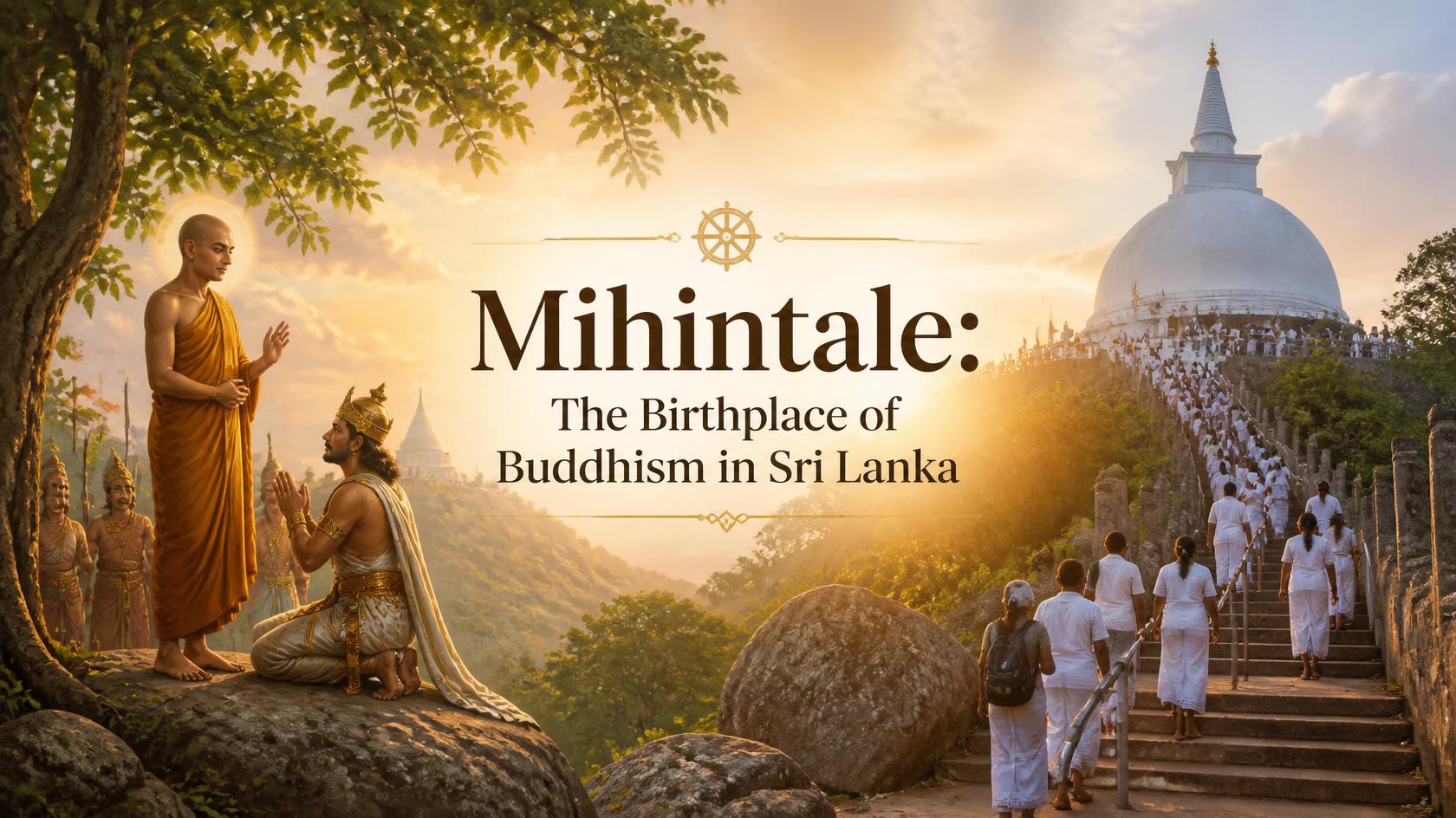
The arrival of Buddhism in Sri Lanka changed the island’s social, political, cultural, and architectural landscape. The meeting between King Devanampiya Tissa and Arahant Mahinda Thera at Mihintale in the 3rd century BCE marked a turning point that shaped Sri Lanka’s identity for centuries. Today, Mihintale remains a popular pilgrimage destination, attracting thousands of devotees and tourists who come to experience its religious importance, ancient monuments, and peaceful natural environment.
Historical Background of Mihintale
The history of Mihintale is closely connected with the reign of King Devanampiya Tissa (250–210 BCE), who ruled the ancient kingdom of Anuradhapura. According to historical chronicles such as the Mahavamsa, Buddhism was introduced to Sri Lanka during the reign of this king through the efforts of Arahant Mahinda Thera, the son of Emperor Ashoka of India.
Emperor Ashoka, one of the greatest rulers of ancient India, embraced Buddhism after witnessing the destruction caused by the Kalinga War. Later, he became a major supporter of spreading Buddhist teachings beyond India. As part of this mission, he sent Buddhist missionaries to various regions, including Sri Lanka.
Arahant Mahinda Thera, accompanied by several monks, arrived in Sri Lanka and met King Devanampiya Tissa at Mihintale. This historic meeting became known as the beginning of Buddhism in Sri Lanka. After discussing Buddhist philosophy and testing the king’s wisdom, Arahant Mahinda Thera introduced the teachings of the Buddha to the king and his people.
The king accepted Buddhism and became a devoted follower. With royal support, Buddhism quickly spread throughout the island, becoming a central part of Sri Lankan civilization.
The Sacred Meeting Between King Devanampiya Tissa and Arahant Mahinda Thera
The most important event associated with Mihintale is the first encounter between King Devanampiya Tissa and Arahant Mahinda Thera.
According to tradition, the king was hunting deer near Mihintale when he saw a group of Buddhist monks on the mountain. Arahant Mahinda Thera approached the king and tested his intelligence by asking questions about a mango tree and its surroundings. After realizing the king had the ability to understand deeper teachings, Mahinda Thera preached Buddhism to him.
The first sermon delivered at Mihintale introduced the king and his followers to Buddhist principles such as wisdom, compassion, morality, and the path toward liberation. This event laid the foundation for the development of Buddhist society in Sri Lanka.
Following this meeting, King Devanampiya Tissa built monasteries and supported the growth of the Buddhist community. The establishment of Buddhism also encouraged the development of education, literature, art, architecture, and social values based on Buddhist principles.
Religious Importance of Mihintale
Mihintale holds a special place in the hearts of Sri Lankan Buddhists because it is considered the "Cradle of Buddhism" or the "Birthplace of Buddhism in Sri Lanka." Unlike many other religious sites that are connected to legends, Mihintale has a direct historical connection with the arrival of Buddhist teachings on the island.
Every year, thousands of devotees visit Mihintale, especially during Poson Poya, which is celebrated in June. Poson commemorates the arrival of Arahant Mahinda Thera and the introduction of Buddhism to Sri Lanka.
During the Poson festival, Mihintale becomes a center of religious activities. Devotees participate in religious observances, meditate, offer flowers and lamps, and listen to Buddhist sermons. The mountain is illuminated with thousands of oil lamps, creating a peaceful and spiritual atmosphere.
Ancient Monuments and Attractions in Mihintale
Mihintale is not only important for its religious history but also for its remarkable ancient architecture. The site contains numerous stupas, caves, temples, and structures that reflect the advanced skills of ancient Sri Lankan builders.
1. Mihintale Rock
The Mihintale Rock is the central attraction of the site. Visitors climb hundreds of steps to reach the top, where they can enjoy breathtaking views of the surrounding landscape. This area is believed to be the location where Arahant Mahinda Thera met King Devanampiya Tissa.
The climb itself is considered a spiritual journey, allowing visitors to experience peace and reflection while moving toward the sacred summit.
2. Ambasthala Dagoba
Ambasthala Dagoba is one of the most important monuments in Mihintale. It is believed to have been built at the exact location where Arahant Mahinda Thera first met King Devanampiya Tissa.
The white stupa stands surrounded by stone pillars and ancient structures. It remains a major place of worship for pilgrims visiting Mihintale.
3. Mihindu Maha Seya
Mihindu Maha Seya is another important stupa located at the highest point of Mihintale. It was built in honor of Arahant Mahinda Thera. From this location, visitors can enjoy a spectacular view of the surrounding areas, including the ancient city of Anuradhapura.
The stupa represents the deep respect Sri Lankan Buddhists have for Arahant Mahinda Thera and his contribution to the country’s spiritual development.
4. Aradhana Gala
Aradhana Gala is a sacred rock where Arahant Mahinda Thera is believed to have landed after arriving in Sri Lanka. The name means the "Invitation Rock," referring to the belief that divine beings invited Mahinda Thera to visit the island.
Today, many devotees climb Aradhana Gala to pay respect and enjoy the beautiful scenery from the top.
5. Ancient Monastic Complex
Mihintale contains the remains of an ancient monastery complex that once housed thousands of monks. The ruins include meditation caves, hospital buildings, stone inscriptions, bathing ponds, and residential areas.
These remains provide evidence of the advanced organization of Buddhist monastic life in ancient Sri Lanka.
Mihintale and Sri Lankan Culture
The influence of Mihintale extends beyond religion. The introduction of Buddhism transformed Sri Lankan culture and contributed to the development of many aspects of society.
Buddhism encouraged values such as kindness, respect for life, discipline, and social responsibility. It influenced traditional art, literature, architecture, and education.
The construction of stupas, temples, and monasteries became a major feature of Sri Lankan civilization. Many ancient cities developed around Buddhist religious centers, making Buddhism a foundation of Sri Lanka’s cultural heritage.
The Sinhala language and literature also benefited from Buddhist influence. Religious texts, historical chronicles, and educational works played an important role in preserving knowledge for future generations.
Environmental and Natural Beauty of Mihintale
Apart from its historical and religious value, Mihintale is also admired for its natural beauty. The rocky hills, forests, and peaceful surroundings create an environment suitable for meditation and reflection.
The area is home to various species of birds and wildlife, adding ecological value to the site. The combination of nature and spirituality makes Mihintale a unique destination where visitors can experience both cultural and environmental harmony.
The quiet atmosphere of Mihintale allows visitors to escape from modern distractions and connect with the peaceful surroundings.
Mihintale as a Tourist Destination
Today, Mihintale is one of the most visited historical attractions in Sri Lanka. Both local and international tourists visit the site to learn about Sri Lanka’s Buddhist heritage and ancient civilization.
Tourists are attracted by:
Ancient Buddhist monuments
Historical significance
Beautiful landscapes
Traditional religious practices
Archaeological discoveries
Visitors are encouraged to respect the religious nature of the site by dressing appropriately, maintaining silence in sacred areas, and following cultural traditions.
The development of tourism around Mihintale also supports local communities by creating opportunities in transportation, accommodation, food services, and handicraft industries.
Conservation of Mihintale Heritage
Preserving Mihintale is important for protecting Sri Lanka’s cultural identity. Archaeological authorities and religious organizations work together to maintain ancient structures and protect the site from environmental damage.
Conservation efforts include restoring monuments, maintaining pathways, protecting inscriptions, and educating visitors about the historical importance of Mihintale.
Future generations should be able to experience and understand the value of this unique heritage site.
Conclusion
Mihintale is more than an ancient mountain; it is a symbol of Sri Lanka’s spiritual and cultural foundation. The historic meeting between Arahant Mahinda Thera and King Devanampiya Tissa transformed the island’s history by introducing Buddhism and shaping the values of Sri Lankan society.
With its sacred monuments, ancient ruins, peaceful environment, and deep historical importance, Mihintale continues to inspire millions of people. It stands as a reminder of the power of knowledge, compassion, and cultural exchange.
As the birthplace of Buddhism in Sri Lanka, Mihintale remains an unforgettable destination that represents the island’s rich heritage and spiritual journey.
Additional Media