Jaffna Fort: History and Cultural Importance of Northern Sri Lanka
Rakshika Rathnayake8/12/20265 min read
Share:Facebook
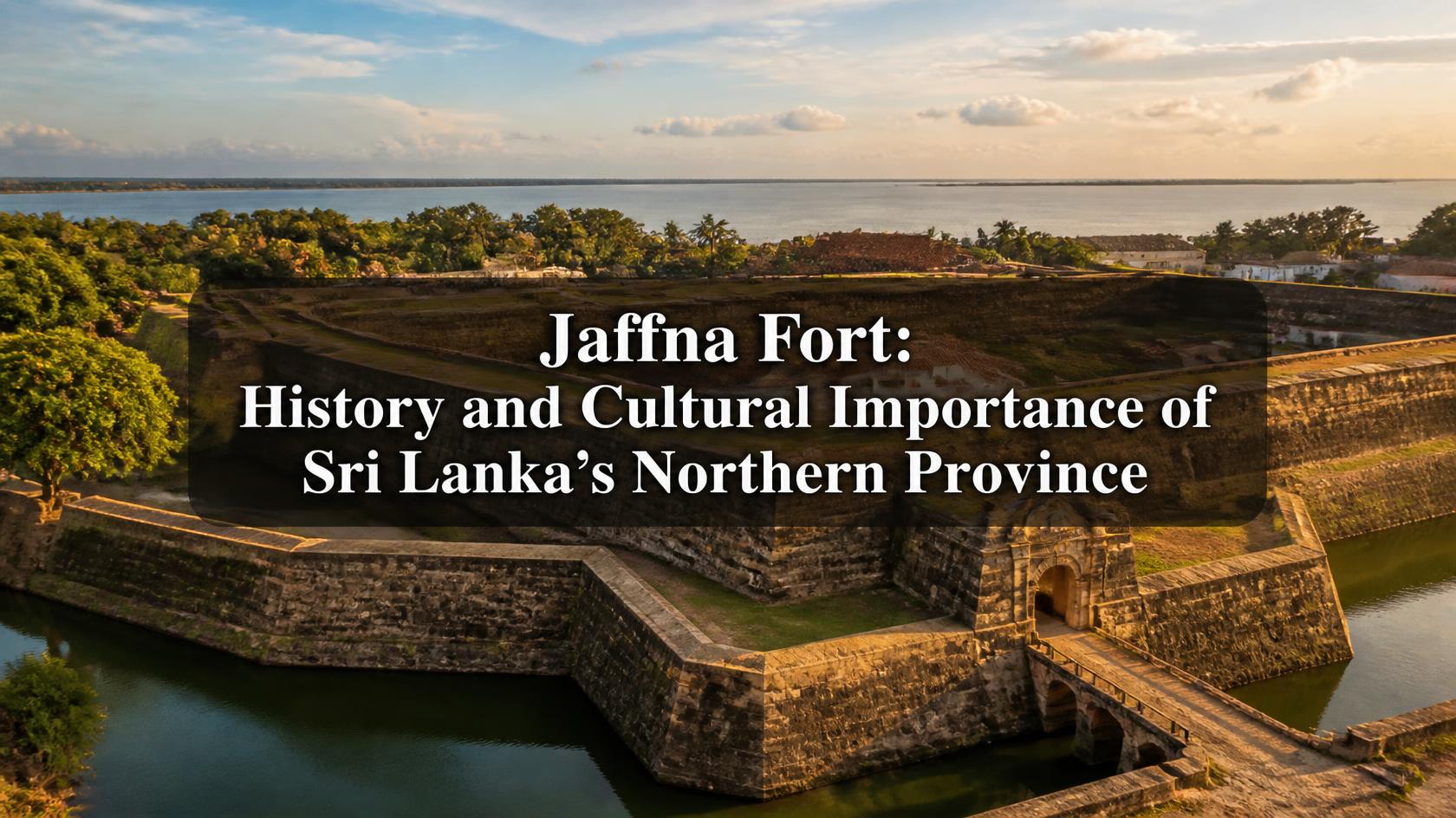
At the southern edge of Jaffna city, overlooking the Jaffna Lagoon, stands one of the most important surviving colonial fortifications in northern Sri Lanka. Jaffna Fort is more than an old military structure. Its massive walls, bastions, moat, gateways and surviving buildings reflect several centuries of political change, warfare, trade and cultural interaction in the northern part of the island.
The fort is closely connected with the history of the Jaffna Peninsula, the Portuguese and Dutch colonial periods, British administration, and the more recent history of Sri Lanka. Archaeological investigations have also provided evidence that the location had importance in regional maritime networks before European occupation.
Today, Jaffna Fort is an important heritage landmark and a major attraction for visitors exploring the cultural landscape of Northern Sri Lanka. Its historical value comes not from a single period, but from the many layers of history represented within and around its walls.
The Historical Background of Jaffna
The Jaffna Peninsula has a long and complex history. Following political changes in Sri Lanka after the decline of the Polonnaruwa kingdom, a distinct political centre developed in the north. The Jaffna Kingdom emerged as an important regional power, while the peninsula also benefited from its location close to southern India and important maritime routes.
Jaffna's geographical position made it strategically valuable. The peninsula was connected to networks of trade and communication across the Palk Strait and the wider Indian Ocean. Archaeological research at Jaffna Fort has produced evidence of pre-colonial contact and has highlighted the site's connection with earlier Indian Ocean trade and communication networks.
This strategic importance attracted European powers during the period when Portugal, the Netherlands and Britain competed for control of Sri Lanka's ports, trade routes and political territories.
Portuguese Origins of Jaffna Fort
The first European fortification at Jaffna was constructed by the Portuguese in the early seventeenth century. Sources commonly associate the beginning of the original fort with 1618, while the Portuguese conquest of the Jaffna Kingdom was completed in 1619. The original Portuguese fort was considerably smaller and simpler than the impressive pentagonal structure visible today.
The Portuguese had strategic reasons for establishing a fort in Jaffna. Control of the peninsula allowed them to strengthen their position in northern Sri Lanka and monitor maritime movement between the island and southern India. The fort also provided military protection for Portuguese administrative and commercial interests.
The Portuguese structure was essentially a small four-sided fortification. However, it did not remain unchanged for long. The growing rivalry between European colonial powers eventually brought the Dutch to Jaffna.
The Dutch Capture and Transformation
The Dutch East India Company, commonly known by its Dutch abbreviation VOC, challenged Portuguese control over Sri Lanka during the seventeenth century. In 1658, Dutch forces laid siege to Jaffna Fort. After a prolonged struggle, the Portuguese surrendered on 22 June 1658.
The Dutch considered Jaffna strategically important and significantly altered the existing fort. Rather than simply maintaining the Portuguese structure, they developed a much larger and more sophisticated defensive system based on European military engineering.
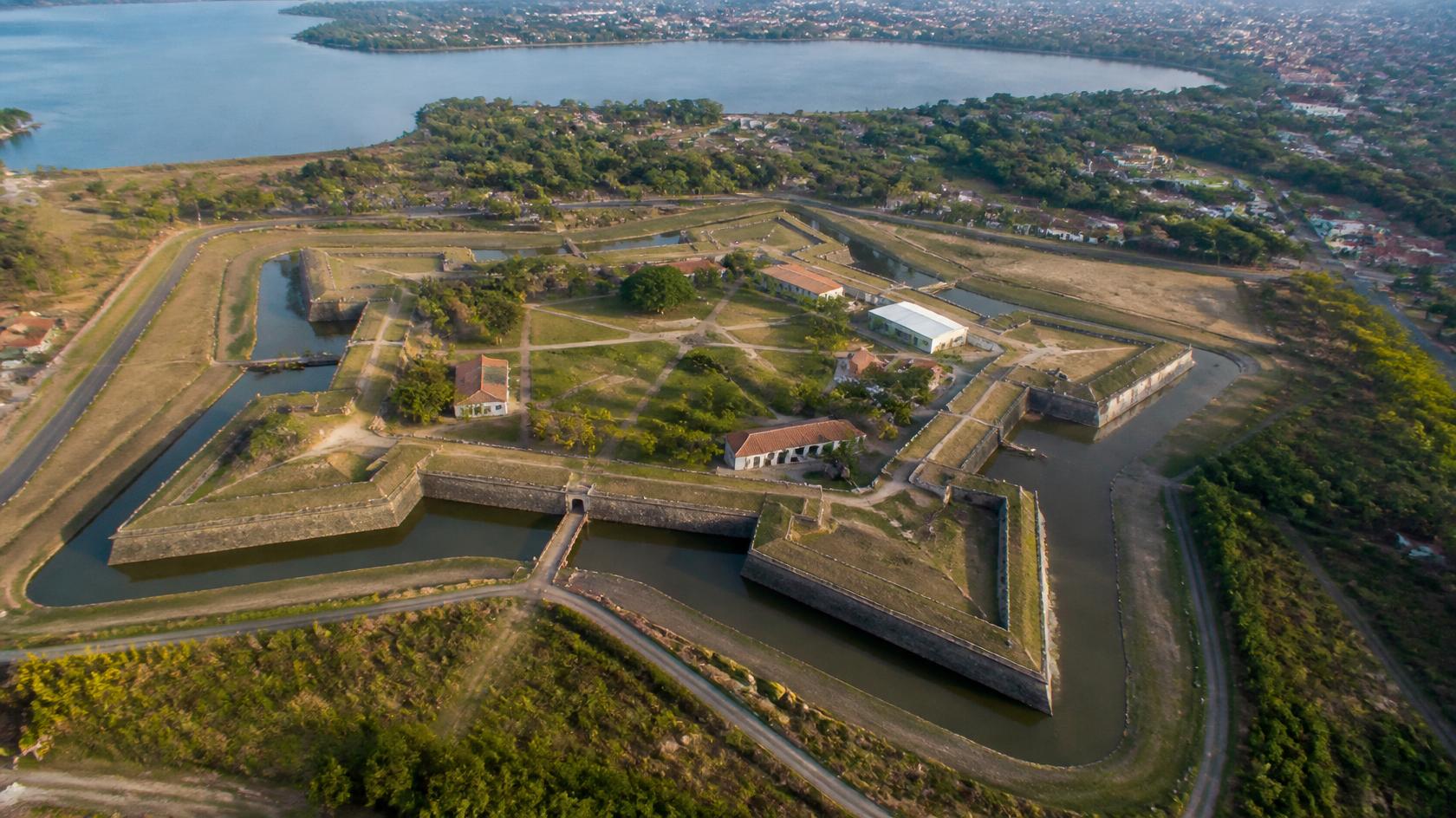
The result was the distinctive pentagonal fortification associated with Jaffna Fort today. The Dutch redesigned the fort with massive walls, angular bastions, defensive spaces and a surrounding moat. These features were intended to protect the garrison from artillery attacks and provide soldiers with better defensive positions.
The development of the fort continued over many decades. According to archaeological research, the outer works were completed in 1792, creating the large pentagonal defensive complex that visitors can recognize today.
The fort therefore represents an important stage in the development of European military architecture in Sri Lanka.
British Rule and a New Historical Chapter
Dutch control of Jaffna Fort ended when British forces took possession of the fort in 1795, during the British takeover of Dutch-controlled territories in Ceylon. British rule was formally established across the island in the following period. The fort subsequently became part of the British colonial administrative and military system.
Under British rule, the military importance of the fort gradually changed. New administrative and institutional arrangements developed in Jaffna, and some of the fort's buildings were adapted for different purposes.
This period added another layer to the site's architectural and political history. As a result, Jaffna Fort cannot be described simply as a Portuguese or Dutch monument. It is a historical landscape shaped by Portuguese, Dutch and British occupation, as well as the earlier history of the Jaffna region. The Sri Lankan Department of Archaeology recognizes the architectural remains associated with these different colonial periods as part of the site's heritage value.
Architecture of Jaffna Fort
One of the most striking features of Jaffna Fort is its geometric design. Unlike many conventional castles, the fort was designed primarily as an artillery fortress. Its pentagonal layout allowed defenders to protect different sections of the walls and respond more effectively to attacks.
The fort is surrounded by a moat, which added another defensive barrier between the outer landscape and the main walls. The massive ramparts and bastions demonstrate the importance of artillery warfare during the European colonial period.
The main entrance, known as the Land Gate, provides access through the fort's defensive walls. The entrance is connected to the outer area by a bridge across the moat. The design illustrates how European military architecture was adapted to the geographical conditions of the Jaffna Peninsula.
Inside the fort are the remains of several historic structures associated with military, administrative and residential functions. These buildings help visitors understand that the fort was not simply a battlefield. It was a functioning colonial settlement containing spaces for officials, soldiers and other activities.
The architecture also demonstrates how military planning, colonial administration and local environmental conditions interacted over time.
Jaffna Fort and Maritime Trade
Jaffna Fort's importance is closely connected with the sea. Its position beside the lagoon gave it strategic access to maritime routes linking northern Sri Lanka with southern India and other parts of the Indian Ocean world.
Recent archaeological investigations have made this aspect of the site's history particularly important. Researchers found evidence demonstrating that the location had connections with pre-colonial networks of trade and communication. This suggests that the importance of the site did not begin with the arrival of European colonial powers.
The fort's location therefore provides an opportunity to understand Jaffna within the broader history of Indian Ocean trade. Goods, people, ideas and cultural practices moved across the sea for centuries, and the northern coastline of Sri Lanka was an important part of these networks.
Cultural Importance to Northern Sri Lanka
Jaffna Fort has considerable cultural importance because it stands within a region with a distinctive historical and cultural identity. Jaffna is widely recognized for its Tamil linguistic, religious and cultural traditions, while its historical landscape also reflects interactions among different communities and political powers.
The fort should therefore be understood as part of a much larger cultural environment. Nearby historical and religious sites, traditional settlements, archaeological remains and the Jaffna Lagoon together create a landscape that reflects the region's long history.
The fort also reminds visitors that Sri Lankan history cannot be understood only through the major kingdoms of the central and southern regions. Northern Sri Lanka developed its own political, economic and cultural connections, particularly through its relationship with southern India and the Indian Ocean.
In this sense, Jaffna Fort is an important physical reminder of the historical diversity of Sri Lanka.
Jaffna Fort During the Civil Conflict
The fort also has a difficult and more recent chapter in its history. During Sri Lanka's civil conflict, Jaffna and the surrounding region became a major area of military confrontation. Jaffna Fort itself became a strategic and symbolic location during the conflict.
Archaeological research notes that the conflict caused serious damage to cultural heritage in the region, while the fort itself became associated with the wider humanitarian and political crisis of the period.
This modern history makes the fort different from a monument that exists only as a reminder of colonial times. Its walls have witnessed political change, warfare and social transformation across several centuries.
For many people in Northern Sri Lanka, heritage sites such as Jaffna Fort therefore carry memories that extend beyond architecture. They form part of a landscape shaped by both historical achievements and painful experiences.
Conservation and Preservation
Because of its historical and archaeological significance, preserving Jaffna Fort is an important responsibility. The Sri Lankan Department of Archaeology lists the conservation of Jaffna Fort as an ongoing major project, demonstrating the continuing institutional importance given to the monument.
Conservation of an ancient fort is not simply a matter of repairing damaged walls. Specialists must consider the historical materials, architectural character, archaeological evidence and environmental conditions of the site. Inappropriate reconstruction could remove valuable evidence about the past.
For this reason, archaeological conservation should aim to protect the remaining original structures while allowing visitors to understand the site's history.
Jaffna Fort as a Tourism Destination
Today, Jaffna Fort is one of the most recognizable landmarks in Northern Sri Lanka. Visitors can walk along sections of the historic fortification, observe the massive walls and bastions, and enjoy views towards the lagoon.
The site is particularly attractive for people interested in history, archaeology, architecture and photography. Its location also makes it possible to combine a visit to the fort with other cultural attractions in Jaffna.
However, visiting the fort is more meaningful when it is approached as a historical site rather than simply as a scenic attraction. The stones and walls represent different periods of Sri Lankan history, from European colonial expansion to modern conflict and post-war heritage conservation.
Heritage tourism can also contribute to the local economy when it is managed responsibly. Research on Jaffna Fort has identified heritage tourism as having potential connections with reconciliation, renewal and economic development.
Why Jaffna Fort Matters Today
Jaffna Fort is important because it tells several stories at the same time. It tells the story of European colonial expansion, the strategic importance of northern Sri Lanka, the development of military architecture and the role of Jaffna in Indian Ocean networks.
At the same time, it forms part of the cultural landscape of a region with a rich Tamil heritage and a complex history of political and social change.
The fort also demonstrates why historical monuments should be studied from multiple perspectives. Looking only at the Portuguese or Dutch period would provide an incomplete picture. The earlier history of the site, British administration, modern conflict and present-day conservation are all essential parts of its story.
Conclusion
Jaffna Fort is one of Northern Sri Lanka's most significant historical landmarks. Beginning as a Portuguese fortification in the early seventeenth century and later transformed by the Dutch into a large pentagonal fortress, it has witnessed major political and military changes throughout Sri Lankan history. British rule added another chapter, while the twentieth-century conflict gave the fort a difficult modern history.
Its importance today extends beyond its impressive walls and bastions. Jaffna Fort provides evidence of northern Sri Lanka's connections with maritime trade, colonial politics, military technology and cultural change. Archaeological research has also demonstrated that the location had significance before European occupation.
As conservation efforts continue, the fort remains an important part of Sri Lanka's shared heritage. Protecting it is not only about preserving old buildings; it is about safeguarding the historical memories and archaeological evidence that help future generations understand the complex story of Northern Sri Lanka.
Jaffna Fort therefore stands as a powerful symbol of history, resilience and cultural heritage—an enduring monument overlooking the lagoon and reminding visitors that the history of Sri Lanka is made up of many interconnected regional stories.
Additional Media