
Sponsored
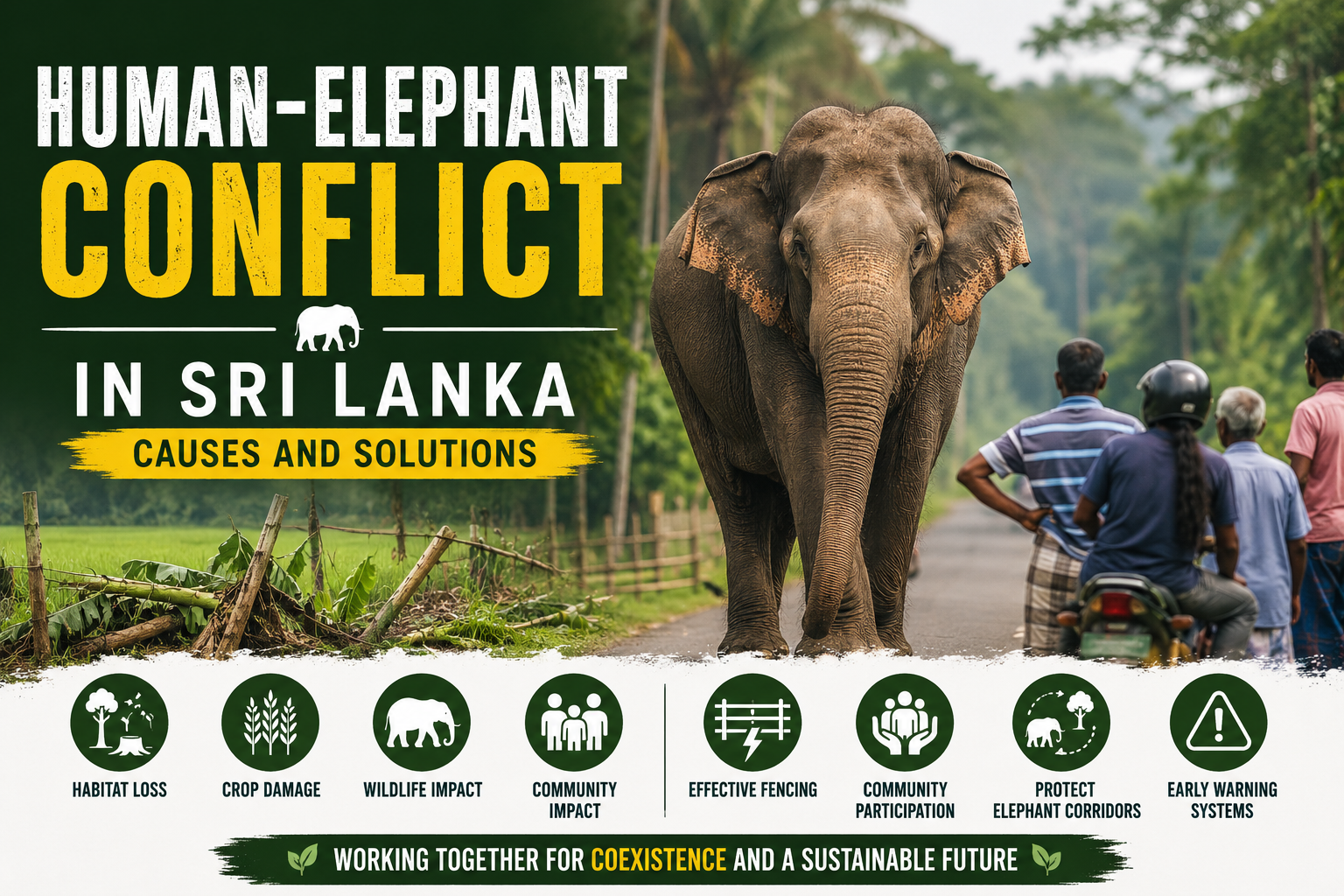
Human-Elephant Conflict in Sri Lanka: Causes and Solutions
Rakshika Rathnayake7/18/20265 min read
Share:Facebook
Introduction
Sri Lanka is one of the world's biodiversity hotspots and is home to the Asian elephant, an iconic species that holds great cultural, religious, and ecological significance. The Sri Lankan elephant is a subspecies of the Asian elephant and is found nowhere else in the world. Despite its importance, the species faces growing threats due to the increasing human-elephant conflict (HEC), which has become one of Sri Lanka's most pressing environmental and social challenges.
Human-elephant conflict refers to the interactions between humans and elephants that result in negative consequences for both. In Sri Lanka, the conflict has intensified over the past few decades, leading to significant losses of human lives, elephant deaths, property damage, and economic hardship for rural communities. Addressing this issue requires sustainable and long-term solutions that balance wildlife conservation with human well-being.
Understanding Human-Elephant Conflict
Human-elephant conflict occurs when elephants and humans compete for land, water, and other resources. Sri Lanka has one of the highest rates of human and elephant deaths caused by such conflicts in the world. Every year, hundreds of elephants and dozens of people lose their lives due to encounters between the two.
Traditionally, elephants roamed freely across forests and grasslands. However, rapid development projects, expanding human settlements, agricultural activities, and infrastructure development have significantly reduced their natural habitats. As a result, elephants are increasingly forced to enter villages and farmlands in search of food and water.
The conflict is particularly severe in the dry zone districts of Sri Lanka, including areas such as Anuradhapura, Polonnaruwa, Monaragala, Hambantota, Ampara, and Trincomalee.
Causes of Human-Elephant Conflict in Sri Lanka
1. Habitat Loss and Fragmentation
One of the primary causes of human-elephant conflict is habitat destruction. Forest lands are increasingly being converted into agricultural lands, settlements, roads, and development projects. This has fragmented elephant habitats and disrupted their traditional migration routes.
Elephants require vast areas for feeding and movement. When these areas become inaccessible, they are compelled to move into human settlements, increasing the likelihood of conflict.
2. Expansion of Agricultural Activities
Agriculture remains a major livelihood source in rural Sri Lanka. Crops such as paddy, maize, bananas, sugarcane, and vegetables attract elephants due to their nutritional value. Farmers frequently experience crop damage, which can result in severe economic losses.
Many farming communities are located near elephant habitats, making encounters between humans and elephants increasingly common.
3. Human Encroachment into Elephant Territories
Population growth and land settlement programs have expanded human activities into traditional elephant territories. In many instances, settlements have been established along elephant corridors, blocking their natural movement patterns.
When elephants encounter barriers such as fences, roads, or human settlements, they may become stressed or aggressive while attempting to reach feeding grounds.
4. Climate Change and Resource Scarcity
Climate change has also contributed to the conflict by altering rainfall patterns and increasing drought conditions in certain regions. During prolonged dry periods, elephants often leave protected areas in search of food and water sources available near villages and agricultural lands.
Resource scarcity significantly increases competition between humans and wildlife.
5. Inadequate Land Use Planning
Poor land-use planning remains a major challenge. Development projects that fail to consider wildlife movement patterns can unintentionally increase conflict situations. Sustainable planning is essential to ensure coexistence between human populations and wildlife.
Impacts of Human-Elephant Conflict
Human-elephant conflict has serious consequences for both people and elephants.
Human Impacts
Loss of human lives and injuries.
Destruction of houses and property.
Damage to agricultural crops and livelihoods.
Psychological stress among rural communities.
Increased economic burdens on affected families.
Elephant Impacts
Elephant deaths caused by shootings, poisoning, and explosive devices.
Habitat degradation and restricted movement.
Increased stress and behavioral changes among elephant populations.
Declining elephant numbers in conflict-prone areas.
The loss of elephants not only affects biodiversity conservation but also impacts Sri Lanka's tourism industry and cultural heritage.
Solutions to Human-Elephant Conflict
1. Scientific Land Use Planning
Proper land-use planning is essential to minimize conflicts. Development projects should consider elephant migration routes and wildlife corridors before implementation.
Protected buffer zones between human settlements and elephant habitats can significantly reduce encounters.
2. Strengthening Electric Fence Management
Electric fences are widely used in Sri Lanka to prevent elephants from entering villages and farmlands. However, proper maintenance and community participation are necessary for their effectiveness.
Community-managed electric fencing programs have shown promising results in several areas.
3. Community-Based Conservation
Local communities should actively participate in conservation initiatives. Awareness programs can educate residents about elephant behavior and safe practices during encounters.
Providing alternative livelihood opportunities may also reduce dependence on conflict-prone agricultural activities.
4. Protection of Elephant Corridors
Preserving natural elephant corridors allows elephants to move safely between habitats without entering human settlements. Identifying and legally protecting these movement pathways is vital for long-term conservation efforts.
5. Early Warning Systems
Technological solutions such as GPS tracking, mobile alert systems, and community monitoring programs can provide early warnings when elephants approach villages.
These systems help minimize unexpected encounters and improve public safety.
6. Sustainable Policy Implementation
Government agencies, conservation organizations, researchers, and local communities must work collaboratively to develop sustainable policies. Long-term strategies are far more effective than temporary solutions.
Investment in wildlife conservation, research, and community development programs remains essential.
Conclusion
Human-elephant conflict in Sri Lanka represents a complex environmental and social challenge that requires immediate and sustained attention. Habitat loss, agricultural expansion, climate change, and inadequate planning have intensified interactions between humans and elephants, resulting in devastating consequences for both.
Effective solutions must focus on coexistence rather than separation. Protecting elephant habitats, improving land-use planning, strengthening conservation programs, and empowering local communities can significantly reduce conflict while preserving one of Sri Lanka's most treasured wildlife species.
The future of both Sri Lanka's people and elephants depends on our collective commitment to sustainable conservation practices that ensure peaceful coexistence for generations to come.
Additional Media