How Social Pressure Influences Young Sri Lankans
Rakshika Rathnayake9/30/20265 min read
Share:Facebook
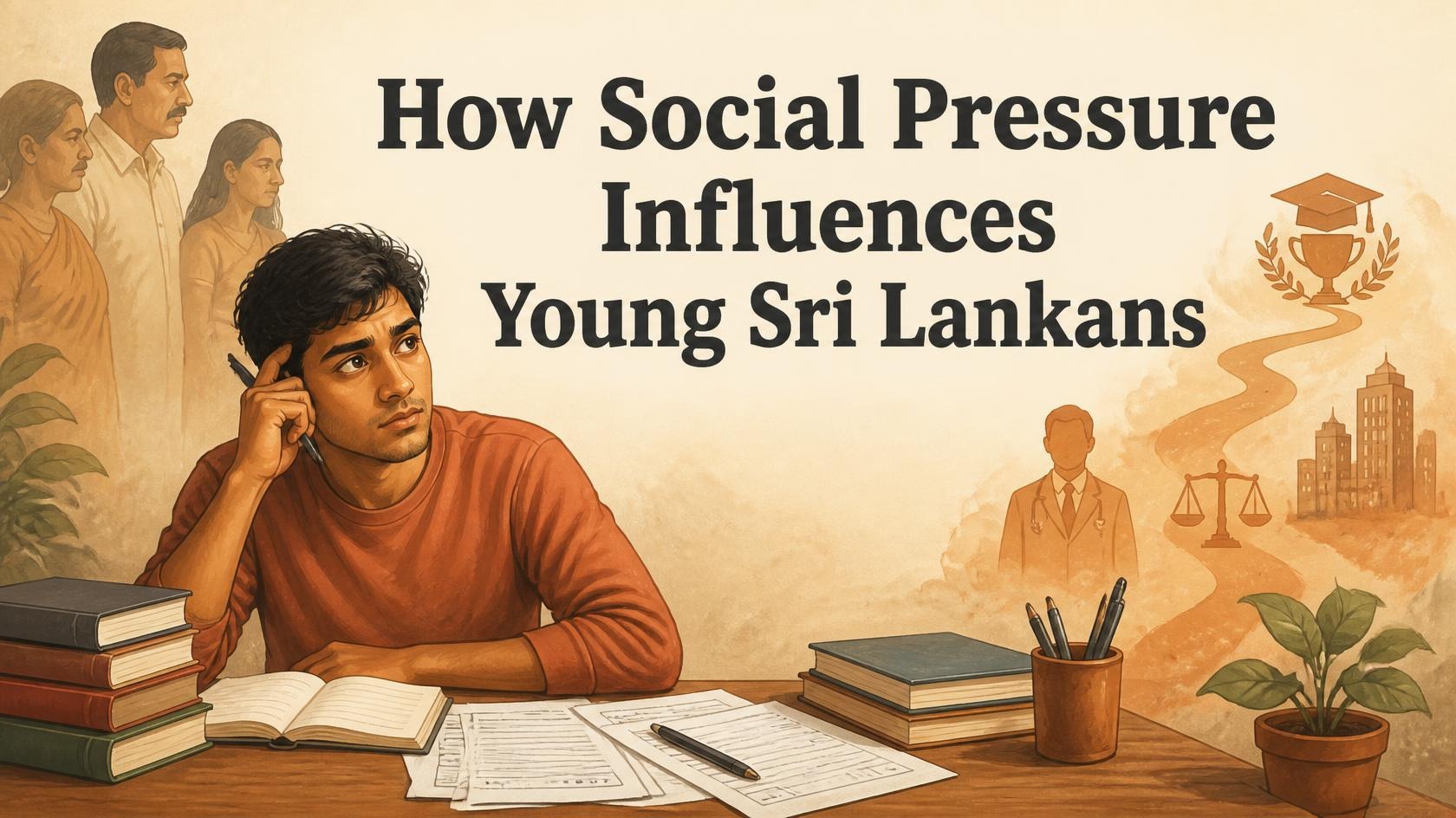
Social pressure is an important part of growing up, especially in a society where family relationships, education, career success, cultural traditions, and public opinion play a major role in everyday life. For many young Sri Lankans, becoming an adult is not simply about discovering personal interests and making independent decisions. It also involves meeting expectations from parents, relatives, teachers, friends, and the wider community.
In Sri Lanka, young people often face questions about their examination results, university admission, employment, salary, marriage, and future plans. These questions may come from people who genuinely care about their well-being. However, when expectations become excessive, young people may feel that their own wishes and abilities are less important than what others expect from them.
Social pressure is not always harmful. Encouragement from family members, teachers, and friends can motivate young people to work hard, develop good habits, and achieve meaningful goals. Problems arise when encouragement turns into constant comparison, criticism, fear of failure, or pressure to follow a particular path.
Understanding how social pressure influences young Sri Lankans requires looking at family life, the education system, employment opportunities, social media, cultural expectations, and the changing attitudes of younger generations. It is also important to recognise that young people do not all experience these pressures in the same way. Their experiences can differ according to family circumstances, financial resources, gender, location, education, and personal ambitions.
1. Family Expectations and the Pressure to Succeed
In Sri Lankan society, family relationships have a strong influence on the decisions many young people make. Parents often work hard to provide their children with education, food, housing, and other opportunities. Naturally, many hope that their children will achieve a stable and successful future.
However, family expectations can sometimes become a source of stress. Some young people feel that they must choose a career their parents approve of, even when their personal interests lie elsewhere. A student who wants to become an artist, chef, musician, designer, or entrepreneur may face resistance from family members who prefer a career such as medicine, engineering, teaching, or government service.
These expectations are often connected to financial security and social respect. Parents who have experienced economic difficulties may believe that a traditional profession offers their children a safer future. Their concerns may come from genuine love and a desire to protect their children from hardship.
Nevertheless, problems can develop when parents make decisions without listening to their children's interests, strengths, and limitations. A young person may continue studying a subject they dislike because they fear disappointing their family. Over time, this can lead to frustration, a lack of motivation, and uncertainty about the future.
Open communication can help families manage these differences. Parents can share their concerns while allowing their children to explain their ambitions. Young people, in turn, can research their preferred careers, understand the financial realities involved, and discuss practical plans with their families.
Supporting a young person's future does not mean agreeing with every decision. It means helping them make informed choices rather than making them feel that love and acceptance depend on success.
2. Examination Results and Educational Competition
Education is widely viewed as a pathway to better opportunities in Sri Lanka. The Grade 5 Scholarship Examination, the General Certificate of Education Ordinary Level (G.C.E. O/L) examination, and the Advanced Level (G.C.E. A/L) examination are important stages in the educational journey of many students.
Although these examinations serve different purposes, students may experience considerable pressure surrounding their results. Families may invest substantial time and money in tuition classes, learning materials, and other educational support. Students can consequently feel responsible not only for their own future but also for their parents' sacrifices.
The A/L examination can be particularly stressful because university admission depends on several factors, including examination performance, the course applied for, and the applicable selection criteria. Since places in state universities are limited, not every student who hopes to enter a particular course will be admitted.
When academic achievement becomes the main measure of a student's value, an examination result can feel like a judgment of their entire future. A student who does not achieve the expected grades may feel ashamed when comparing themselves with classmates or relatives who performed better.
Some students may also hide their disappointment because they are afraid of criticism. Others may continue attending tuition classes and studying for long hours without sufficient rest, believing that taking a break means falling behind.
It is important to understand that educational achievement matters, but it does not define a person's complete ability or potential. Vocational training, professional qualifications, technical education, entrepreneurship, and other learning pathways can also lead to meaningful careers.
Parents and teachers can reduce unnecessary pressure by focusing on individual progress, effective study habits, and realistic goals. Students should be encouraged to seek help when they struggle rather than feeling that they must handle every difficulty alone.
3. Career Choices and the Fear of Disappointing Others
Choosing a career is another major source of social pressure among young Sri Lankans. After completing their education, many face expectations to find a respectable job, earn a good salary, and become financially independent as quickly as possible.
Government employment has traditionally appealed to many families because it is associated with job security, regular income, and retirement benefits. At the same time, private-sector employment, information technology, freelancing, skilled trades, and entrepreneurship offer other possibilities. However, these options may not receive equal support from every family or community.
For example, a young person interested in graphic design or software development may be encouraged to pursue a career considered more prestigious by their relatives. Another person may want to start a small business but feel pressured to accept a conventional job because entrepreneurship is perceived as uncertain.
Financial concerns can make these decisions more complicated. Young people who need to contribute to household expenses may have less freedom to explore their interests. They may choose immediate employment over further education or professional training because their families depend on their income.
The problem is not that parents offer career advice. Their experience can be valuable. Difficulties arise when a young person's career is selected mainly to satisfy other people's expectations.
Young people can respond to this pressure by gathering information about different career paths, comparing training costs and employment opportunities, and preparing realistic plans. Families can also help by recognising that professional success can take different forms.
A person's career should ideally reflect a combination of personal interests, abilities, financial circumstances, and available opportunities rather than social prestige alone.
4. Social Media and the Culture of Comparison
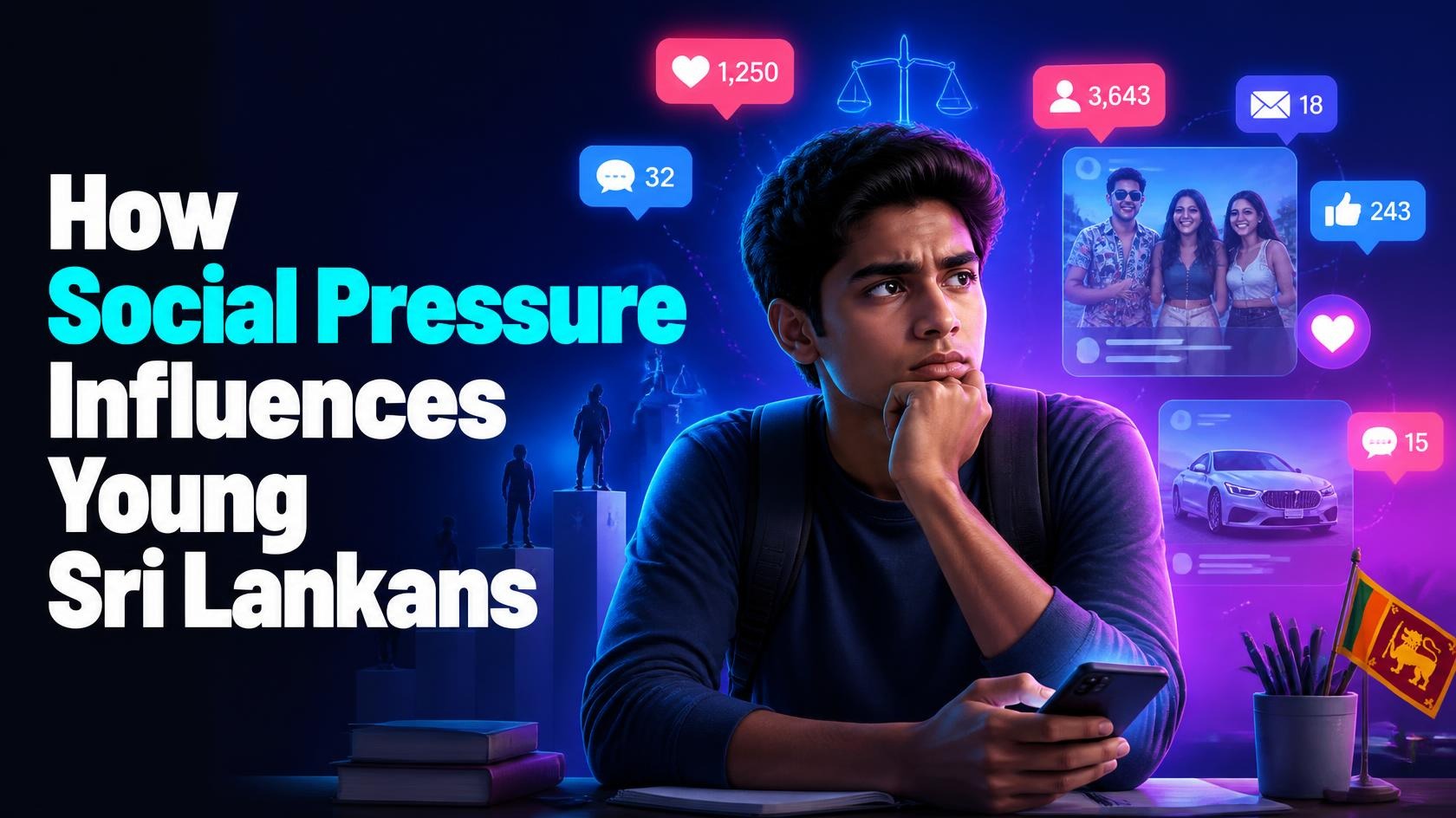
Social media has introduced another dimension to social pressure. Platforms such as Facebook, Instagram, TikTok, and YouTube allow young Sri Lankans to communicate, discover opportunities, learn new skills, and share their experiences. However, these platforms can also encourage constant comparison.
A young person scrolling through social media may see photographs of friends attending university, travelling abroad, purchasing vehicles, celebrating promotions, or getting married. These posts can create the impression that everyone else is progressing smoothly through life.
In reality, social media usually presents selected moments rather than the complete picture. A photograph of an expensive holiday does not reveal the person's financial responsibilities. A post about a new job does not show every rejection or difficulty that came before it. Similarly, a successful business announcement may not reveal the challenges involved in running the business.
Despite this, repeated exposure to carefully selected images can make some young people dissatisfied with their own circumstances. Someone who is working hard to support their family may feel unsuccessful when comparing their life with that of a friend who appears financially comfortable.
Social media can also influence spending habits. Young people may feel pressure to purchase fashionable clothing, expensive phones, cosmetics, or other products to fit in with their peers or maintain a particular online image. For those with limited incomes, this pressure can create unnecessary financial strain.
The answer is not necessarily to avoid social media completely. Instead, young people can become more aware of how online content is presented, limit accounts that encourage unhealthy comparison, and remember that personal progress cannot be measured accurately through photographs, followers, or likes.
Using social media to learn, build professional connections, and share genuine interests can make the experience more constructive.
5. Peer Pressure and the Need to Belong
Friends play an important role in the lives of young people. Good friendships provide emotional support, encouragement, companionship, and opportunities to learn from others. However, the desire to belong can sometimes lead young people to make choices that do not reflect their personal values.
Peer pressure may appear in everyday situations. A student might feel compelled to buy something because everyone in the group owns it. Another young person may join activities they dislike because they fear being excluded. Some may feel pressured to experiment with alcohol, smoking, or other risky behaviours to avoid appearing different.
Not all peer pressure is direct. Friends do not always need to demand something openly. Sometimes, a young person simply observes what the group considers normal and changes their behaviour to gain acceptance.
This can be especially difficult during adolescence and early adulthood, when friendships and social belonging are important parts of developing an identity.
Learning to say no is therefore an important life skill. Young people can practise expressing their boundaries calmly, suggesting alternative activities, and maintaining friendships with people who respect their decisions.
It is equally important to recognise positive peer influence. Friends who encourage education, exercise, creative activities, volunteering, or professional development can help one another build confidence and achieve goals.
The quality of a friendship is not determined by how closely someone follows the group. Healthy friendships allow individuals to have different opinions and make independent choices without fear of humiliation or rejection.
6. Marriage, Relationships, and Cultural Expectations
Marriage and romantic relationships can become sensitive subjects for young Sri Lankans, particularly as they approach adulthood. In some families, relatives begin asking about marriage soon after a young person completes their education or starts working.
Questions about when someone will marry, whom they will marry, and whether they intend to have children may be treated as ordinary family conversations. However, repeated questioning can become uncomfortable when a person is not ready for marriage or has different priorities.
Young people may wish to establish their careers, become financially independent, continue their education, or spend time understanding what they want from a relationship before making a long-term commitment.
Gender expectations can add another layer of pressure. In some communities, women may face stronger expectations to marry by a certain age, while men may be expected to demonstrate financial stability before marriage. These expectations are not universal, and attitudes vary considerably between families and generations.
Social pressure can also influence decisions about partners. Some individuals may feel that family approval, social status, religion, ethnicity, or financial background matters more than compatibility and mutual respect. Cultural and family considerations can be important, but they should not replace honest communication between the people involved.
Marriage is a personal commitment that carries emotional and practical responsibilities. Young people benefit from having the space to make informed decisions without being made to feel that their lives are incomplete because they do not follow a particular timetable.
Families can preserve meaningful traditions while respecting the different circumstances and aspirations of younger generations.
7. Financial Pressure and the Expectations of Adulthood
Financial responsibility is another challenge facing young Sri Lankans. The cost of education, transportation, housing, food, and other daily necessities can make it difficult for young adults to become independent, especially when employment opportunities or starting salaries do not meet their expectations.
Social pressure can make these difficulties feel even heavier. A young person may compare their income with that of former classmates or feel embarrassed about continuing to live with their parents. Others may believe they should already own a house, purchase a vehicle, or support their entire family by a particular age.
These expectations can overlook important differences in circumstances. One person may receive financial assistance from their family, while another may need to pay for their education or support younger siblings. Two people of the same age can therefore have very different financial responsibilities.
Pressure to appear successful may also encourage borrowing or unnecessary spending. Buying expensive items to maintain a particular image can create debt without improving long-term financial security.
Developing realistic financial goals can help young adults manage these challenges. Creating a budget, saving what is affordable, improving professional skills, and seeking reliable financial information are useful starting points.
It is also important for families and communities to recognise that financial independence takes time. Progress should be assessed in relation to a person's circumstances rather than a fixed social timetable.
8. Mental Well-Being and the Effects of Constant Pressure
When social expectations become overwhelming, they can affect a young person's emotional well-being. Constant criticism, fear of failure, repeated comparisons, and the feeling of never being good enough may contribute to stress, worry, reduced confidence, and difficulties with concentration or sleep.
Some young people may become reluctant to discuss their problems because they believe that expressing emotional distress will be interpreted as weakness. Others may continue pretending to be happy and successful to avoid worrying their families or attracting criticism.
This can make it harder for them to seek support when they need it.
However, social pressure does not affect everyone in the same way. Its effects depend on factors such as the intensity of the expectations, available support, personal coping strategies, and existing life circumstances. It would therefore be inaccurate to assume that every young person experiencing pressure will develop a mental health condition.
Families, schools, universities, and workplaces can help by creating environments where young people feel comfortable discussing difficulties. Listening without immediately criticising, acknowledging effort, and encouraging realistic expectations can make a meaningful difference.
Young people who experience persistent distress that interferes with everyday life should consider speaking with a qualified mental health professional or another trusted support person.
Emotional well-being deserves attention just as much as educational achievement and career development.
9. How Young Sri Lankans Can Respond to Social Pressure
Managing social pressure does not mean rejecting every social expectation. Families, friendships, and cultural values can provide a valuable sense of belonging. The challenge is learning how to respect others while making decisions that are appropriate for one's own life.
Several practical steps can help.
Understand personal values and goals. Young people can identify what matters most to them, whether it is education, financial stability, family responsibilities, creativity, or community service. Clear priorities make it easier to evaluate outside expectations.
Learn to communicate confidently. Respectful conversations with parents, teachers, and friends can help explain personal decisions. Showing that a choice has been carefully considered may also help others understand it.
Avoid constant comparison. Every individual has different resources, responsibilities, and opportunities. Focusing on personal improvement rather than another person's achievements can create a healthier perspective.
Seek advice from trustworthy people. Teachers, career counsellors, experienced professionals, and supportive relatives can offer guidance without demanding that young people follow a particular path.
Accept that mistakes are part of learning. Not every examination, job application, relationship, or business decision will produce the desired result. A setback can provide useful information for future decisions.
Build a balanced life. Rest, exercise, hobbies, friendships, and family time are important alongside education and employment. A person's life should not become a continuous attempt to satisfy other people's expectations.
These steps cannot remove every social difficulty, particularly when financial dependence or family conflict limits a person's choices. Nevertheless, they can help young people develop greater confidence and make more considered decisions.
10. The Role of Parents, Schools, and Society
Responsibility for managing social pressure should not fall entirely on young people. Adults and institutions also have an important role in creating a supportive environment.
Parents can recognise that children may have different interests, abilities, and ambitions. Comparing siblings or relatives can create unnecessary competition, whereas acknowledging individual strengths can encourage confidence and motivation.
Schools and universities can help students understand that educational success involves more than examination results. Career guidance, practical skills, communication, teamwork, and access to counselling can help prepare students for the challenges of adulthood.
Employers can contribute by offering fair opportunities for training, professional development, and advancement. Communities can also recognise the value of different occupations rather than judging people solely by job titles or income.
Media organisations and online creators have a role in presenting realistic experiences of education, employment, relationships, and financial life. Showing both achievements and challenges can help audiences develop a more balanced understanding of success.
Most importantly, conversations between generations should remain open. Older generations can share valuable experience, while younger people can explain how changing technology, employment patterns, and social expectations influence their lives.
Mutual understanding is more productive than assuming that one generation's experience applies equally to everyone.
Conclusion
Social pressure influences many aspects of life for young Sri Lankans, from education and career decisions to friendships, relationships, financial responsibilities, and personal identity. It can encourage ambition and responsible behaviour, but excessive expectations can also create stress, undermine confidence, and make young people feel that their own wishes do not matter.
Sri Lanka's younger generation is growing up in a changing environment where traditional family values exist alongside new career opportunities, digital communication, and different ideas about adulthood. Finding a balance between these influences is an important challenge for individuals, families, and society.
Success does not have the same meaning for everyone. For one person, it may mean entering university and building a professional career. For another, it may involve learning a practical skill, supporting a family, starting a business, or contributing to the community.
What matters is that young people have opportunities to understand their abilities, make informed decisions, and pursue meaningful goals without being constantly judged against other people's lives.
Families can guide without controlling, friends can support without demanding conformity, and society can encourage achievement without treating it as the only measure of a person's worth.
Ultimately, a healthier approach to social pressure begins when people recognise that young Sri Lankans deserve both guidance and independence. By creating space for honest conversations, respecting different life paths, and valuing personal growth, Sri Lankan society can help its younger generation build futures based on responsibility, confidence, and genuine purpose.
Additional Media