Introduction
Social media has become an important part of everyday life. People use Facebook, Instagram, TikTok and WhatsApp to communicate with friends, discover new products, follow businesses and find special offers. From discounted clothing and mobile phones to free gifts and holiday packages, attractive deals appear on our screens every day. Many of these offers are genuine, but some are designed to deceive people and steal their money or personal information.
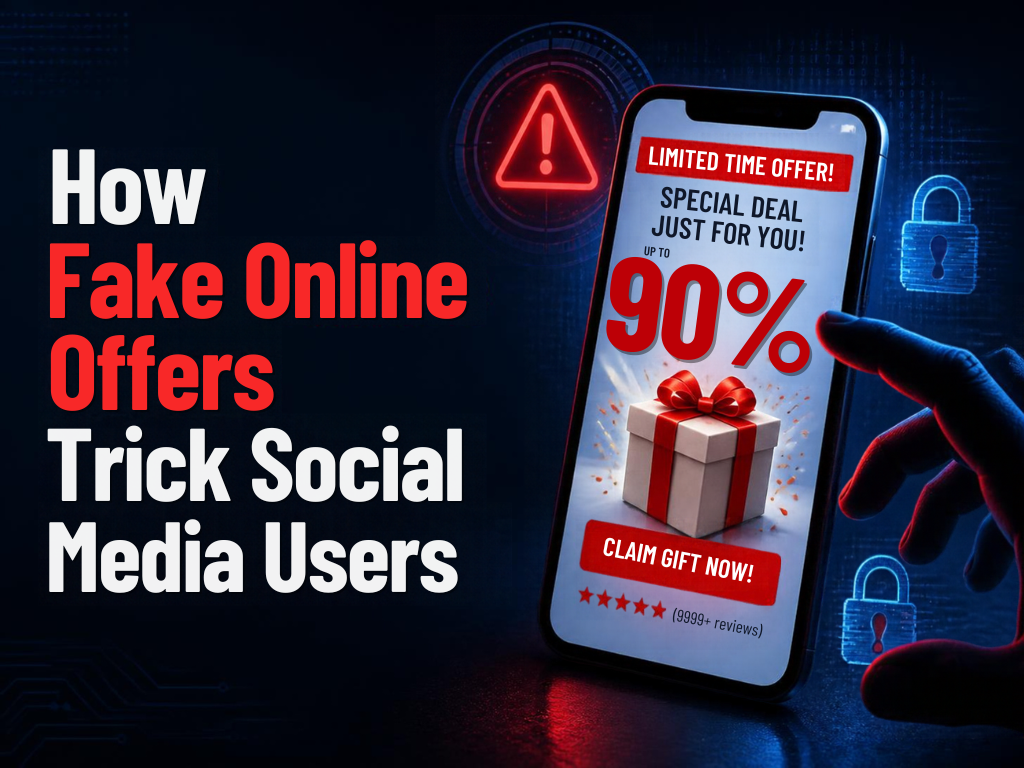
Fake online offers have become a growing concern as more people depend on social media to discover products and make purchases. A post promising a smartphone at half its normal price or a message claiming that someone has won a valuable prize can easily attract attention. When an offer looks exciting and appears to come from a familiar brand, people may act quickly without checking whether it is real.
These scams do not affect only people who are unfamiliar with technology. Anyone can be deceived when a message looks convincing, arrives at the right moment or creates a sense of urgency. Understanding how fake offers work is therefore essential for anyone who uses social media.
Why Fake Online Offers Attract So Many People
One of the main reasons fake offers succeed is that they appeal to people's everyday needs and desires. Everyone likes to save money, receive gifts or find a good deal. When people see an expensive product advertised at a much lower price, they may feel that they have discovered a special opportunity.
For example, a social media page might advertise a branded pair of shoes at a price far below its usual market value. The post may include attractive photographs, positive comments and a message saying that only a few pairs remain. A customer who does not want to miss the deal may place an order immediately.
Scammers also understand how people behave online. Social media users often scroll through posts quickly and make decisions based on photographs, short descriptions and comments. They may not have enough time or patience to investigate every advertisement.
Another reason is trust. People sometimes assume that a business is legitimate because its page looks professional or because a friend has shared its post. However, a professional appearance does not prove that a seller is genuine. Scammers can copy photographs, business names, logos and promotional designs from legitimate companies.
Common Types of Fake Online Offers
Fake offers appear in many forms, and recognising their differences can help users avoid financial losses.
1. Products Advertised at Unrealistically Low Prices
One common scam involves selling popular products at prices that seem too good to be true. These may include mobile phones, laptops, branded clothing, cosmetics, shoes and household appliances.
A fraudulent seller might advertise a phone worth a substantial amount of money for a fraction of its normal price. The seller may claim that the offer is part of a clearance sale, a shop closure or a limited-time promotion.
After receiving payment, the seller may stop responding, block the buyer or send an item that is different from the advertised product. In some cases, nothing arrives at all.
Low prices alone do not prove that an offer is fraudulent. Genuine businesses also run discounts. However, a price that is dramatically lower than those offered by reputable sellers should encourage customers to investigate further.
2. Fake Prize and Giveaway Messages
Another common method involves messages claiming that users have won cash, mobile phones, shopping vouchers or other valuable prizes.
A message may say that the recipient has been selected as a lucky winner in a competition. To claim the prize, the person may be asked to pay a delivery charge, provide personal details or click a link.
Some messages imitate well-known brands or use the names of popular businesses to appear trustworthy. Others claim that a prize will expire within a few hours.
A genuine competition should have clear rules and a verifiable organiser. Anyone who receives an unexpected winning message should check the competition through the company's official website or verified social media account. Being asked to pay an unexplained fee or disclose banking credentials to receive a prize is a serious warning sign.
3. Fake Online Shopping Pages
Fraudulent sellers may create entire social media pages that look like legitimate online shops. These pages can contain product catalogues, promotional videos, customer reviews and carefully designed logos.
Some copy information from real businesses, making it difficult for customers to identify the difference. A page may even use the name and photographs of a genuine shop without the owner's permission.
Scammers may encourage customers to pay in advance through a bank transfer or another payment method. Once the money is received, communication may stop.
Before purchasing from an unfamiliar seller, users should check the page's history, contact details, independent reviews and links to an established business website. A newly created page is not automatically fraudulent, but a lack of verifiable information should make buyers cautious.
4. Fake Job Offers and Work-from-Home Opportunities
Social media advertisements sometimes promise high earnings for simple tasks, such as liking videos, following accounts, completing surveys or promoting products. These offers can appeal particularly to students, unemployed people and those looking for additional income.
Some schemes initially pay small amounts to gain trust. Later, participants may be asked to deposit their own money to unlock higher earnings, complete tasks or withdraw a supposed balance. Once a larger payment is made, the organisers may disappear or demand further deposits.
A legitimate job should provide understandable information about the employer, responsibilities, payment arrangements and recruitment process. Applicants should be especially careful when a supposed employer demands money before providing work or guarantees unusually high earnings with little effort.
5. Fake Travel Deals and Holiday Packages
Travel offers can also be used to deceive customers. A fraudulent page may advertise hotel stays, airline tickets or holiday packages at unusually low prices.
The advertisement may feature beautiful photographs of real destinations and accommodation, even though the person promoting the deal has no connection to the actual service provider.
Customers who transfer money without checking the booking may discover that their reservation does not exist. Before paying, they should contact the hotel, airline or travel company using independently verified contact details and request written confirmation of the booking terms.
How Scammers Make Fake Offers Look Real
Fake offers are not always easy to identify because scammers often spend time making their advertisements look convincing.
One technique is impersonation. They copy the name, logo and photographs of a recognised company, then create a page that resembles its official account. A small difference in the page name or web address may go unnoticed.
Another technique is the use of fake reviews and comments. A post filled with messages such as "Excellent service" or "I received my order today" may appear trustworthy. However, comments can be fabricated, copied or posted by accounts controlled by the scammer. Even genuine-looking customer photographs do not guarantee that the seller is reliable.
Scammers also use urgency to influence decisions. Phrases such as "last chance", "only three items left" and "offer ends in ten minutes" encourage people to act before thinking carefully. The aim is to reduce the time available for checking the offer.
Some advertisements include links to imitation websites. These websites may resemble genuine shopping or payment pages but are designed to collect passwords, card details or other sensitive information. Clicking a link can also lead users to pages that request unnecessary permissions or encourage them to download unsafe files.
Social media advertising itself does not guarantee that an offer is safe. Fraudulent advertisements or accounts may appear on familiar platforms, so users should verify the seller independently.
The Role of Social Media Algorithms
Social media platforms use algorithms to recommend content based on signals such as users' interests, viewing activity and engagement. Advertising systems may also use information about browsing behaviour and audience preferences, depending on the platform and its privacy settings.
This personalisation can make shopping more convenient, but it can also mean that people repeatedly encounter similar offers. Someone who watches several videos about mobile phones, for example, may see more advertisements for electronic devices.
Scammers may try to take advantage of these patterns by promoting products that attract a particular audience. Attractive images, emotional messages and promises of large savings can encourage users to share posts or click links.
However, seeing an advertisement repeatedly does not prove that it is legitimate. Likewise, a high number of likes or shares is not reliable evidence that a seller can be trusted. Users should assess the business itself rather than relying only on the popularity of its content.
How Fake Offers Affect Individuals and Families
The effects of online scams extend beyond the amount of money lost. For a family managing a limited household budget, even a relatively small payment can create difficulties. Losing money intended for food, education, transport or bills can have a serious impact.
Victims may also experience embarrassment, anger and anxiety. Some hesitate to report what happened because they fear being blamed for making a mistake. This silence can allow scammers to continue targeting others.
The consequences may become more serious when victims share identity documents, passwords or financial information. Such information can potentially be misused for further fraud, unauthorised transactions or attempts to impersonate the victim.
Businesses can suffer too. Fraudsters who copy the name of a genuine shop may damage its reputation when customers believe the real business has cheated them.
These effects show why online safety is not only an individual concern. It is also important for families, businesses and the wider community.
How Sri Lankan Social Media Users Can Protect Themselves
There is no single method that can identify every scam, but a few practical habits can significantly reduce the risk.
Check the seller before paying. Look for a genuine business website, verifiable contact details, a consistent business history and independent customer feedback. Contact the business through details obtained separately from the advertisement.
Compare the price. Check the same product with several established sellers. If an offer is far below the usual price, ask why. Do not let an apparent bargain replace basic verification.
Avoid rushed decisions. A legitimate offer should allow you enough time to understand its terms. Be suspicious of sellers who pressure you to pay immediately or refuse reasonable questions.
Be careful with advance payments. Where possible, use a payment method that provides buyer protection. Cash on delivery may reduce certain risks, but it is not a guarantee that the item will be genuine or that the transaction is safe. Check the seller's terms before ordering.
Never share security credentials. Do not disclose your bank PIN, password, one-time password (OTP) or account recovery code to a seller or a person claiming to be a representative of a bank. A request for these details is a major warning sign.
Examine links carefully. Check the complete website address before entering personal or payment information. Avoid unfamiliar shortened links, unexpected attachments and websites with misspelled brand names. When in doubt, open the official website independently rather than following the link.
Check giveaways independently. Visit the company's official account or website to confirm that the competition exists. Do not assume that a message is genuine because it uses a familiar logo.
Keep evidence. Save screenshots of advertisements, conversations, payment receipts, account names and transaction details. This information may help when reporting a scam.
What to Do If You Have Been Scammed
If you discover that an online offer was fraudulent, act as soon as possible.
Contact your bank or payment provider immediately if you have transferred money or shared financial information. Explain what happened and ask whether the transaction can be stopped, disputed or investigated. Do not assume that a transfer can automatically be reversed.
If you disclosed a password, change it immediately, starting with the affected account. If the same password is used elsewhere, change it on those accounts as well. Enable two-factor authentication where available and sign out of unfamiliar sessions.
Report the fraudulent advertisement, account or message to the social media platform. If money was lost or sensitive information was misused, keep the evidence and report the incident to the relevant Sri Lankan authorities, including the Sri Lanka Police or the appropriate cybercrime reporting channel. For banking-related fraud, follow the bank's official reporting process.
Warn friends and family if the scam is circulating among your contacts. A short, factual warning can prevent someone else from making the same mistake. Avoid publicly sharing unverified accusations or exposing other people's private information.
Most importantly, do not pay someone who promises to recover your lost money in exchange for an advance fee. Fraud victims are sometimes targeted again by people claiming they can retrieve stolen funds.
The Importance of Digital Awareness
Preventing online scams requires more than individual caution. Parents can discuss online safety with children, schools can teach students how to evaluate digital information, and businesses can help customers identify their genuine accounts and official payment methods.
Social media users should also learn how to report suspicious content and recognise common manipulation techniques. Sharing accurate information about scams can help create a safer online environment.
Platforms have a role to play as well. Better detection of fraudulent accounts, effective reporting systems and faster action against impersonation can help reduce exposure to harmful content. Nevertheless, no platform can guarantee that every fake offer will be detected before someone sees it.
Conclusion
Fake online offers succeed because they combine attractive promises with carefully designed deception. A large discount, a surprise prize or a chance to earn money quickly can appear harmless, especially when the offer is shared by someone familiar or displayed on a popular social media platform.
The best protection is to pause and verify before taking action. Check the seller, investigate unusual prices, avoid suspicious links and never share confidential banking details. If something feels rushed or too good to be true, take time to examine it.
Social media can provide valuable opportunities for shopping, communication and learning. By developing responsible online habits and sharing awareness with others, Sri Lankan users can enjoy these benefits while reducing the risks of fake offers and digital fraud.