How Digital Payments Are Changing Daily Life in Sri Lanka
Rakshika Rathnayake8/28/20265 min read
Share:Facebook
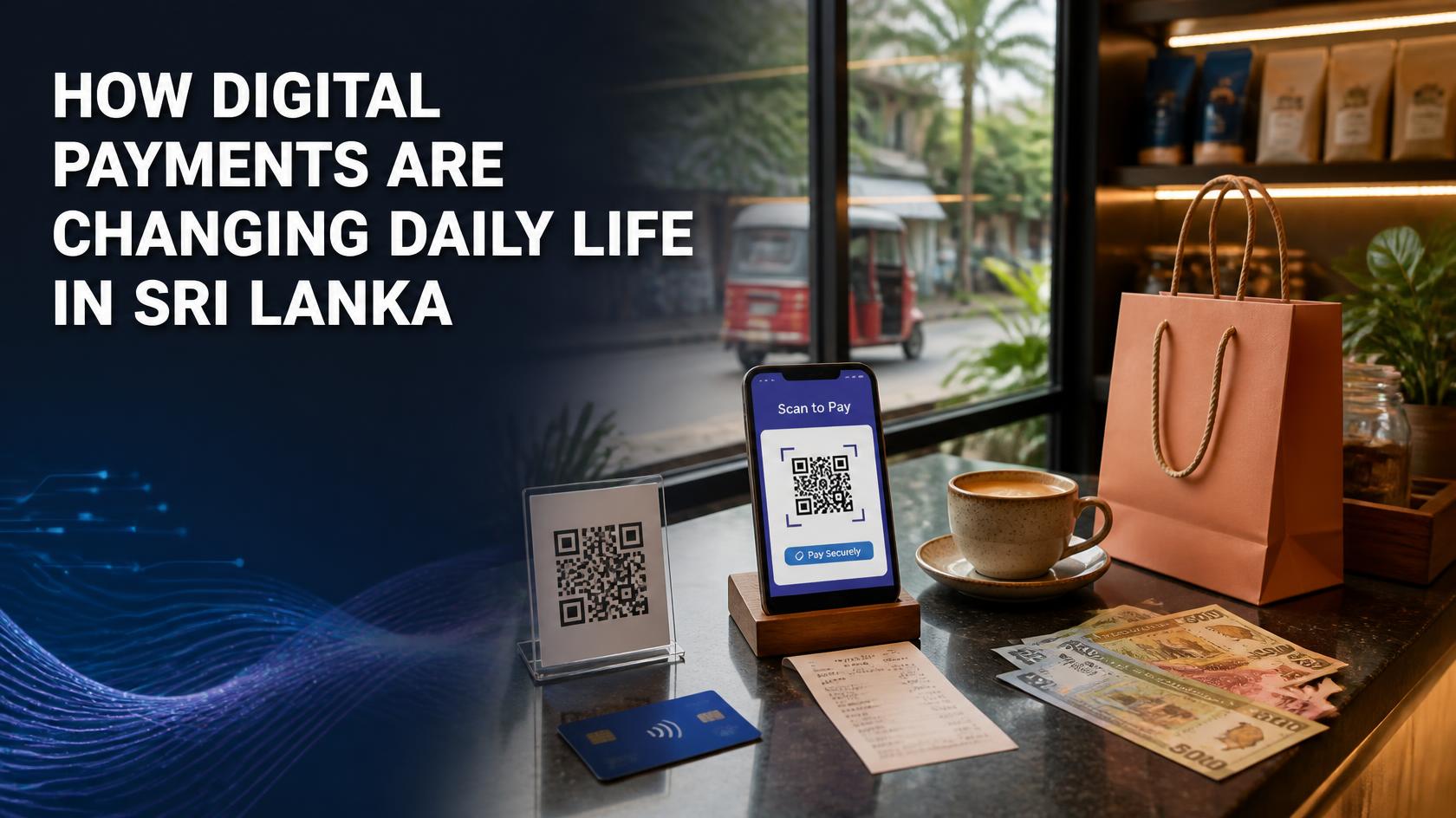
Digital payments are becoming an increasingly important part of everyday life in Sri Lanka. The way people pay for goods and services has changed significantly as smartphones, internet connectivity, mobile banking, cards, QR payments, and electronic fund transfers have become more widely available.
In the past, cash was the primary method used for most daily transactions. People carried money in their wallets to buy groceries, pay utility bills, travel, eat at restaurants, or make purchases from small shops. Today, many of these activities can be completed without handling physical cash.
Digital payments are not simply changing how money moves from one person to another. They are also changing consumer behavior, business practices, financial management, and access to financial services. From a small grocery shop accepting a QR payment to a customer transferring money through a mobile banking application, digital transactions are becoming part of normal daily routines.
The growth of digital payments is also connected to Sri Lanka's broader movement toward a more digital economy. However, while these systems create many advantages, they also introduce challenges related to cybersecurity, digital literacy, privacy, internet access, and financial inclusion.
What Are Digital Payments?
Digital payments refer to financial transactions made electronically rather than through physical cash. They include debit and credit card payments, online bank transfers, mobile banking, internet banking, QR-code payments, mobile wallets, and other electronic payment methods.
Sri Lanka has developed several systems that support digital transactions. The LankaPay national payment network plays an important role in the country's electronic payment infrastructure, while the Central Bank of Sri Lanka has promoted digital payment adoption through various initiatives.
QR-based payments have become particularly visible because they allow businesses to accept payments without requiring expensive traditional card-processing equipment. Customers can use a compatible banking or payment application to scan a QR code and complete a transaction within seconds.
The availability of these technologies has made electronic payments increasingly accessible to individuals, small businesses, large companies, and public institutions.
The Shift from Cash to Digital Payments
Cash remains important in Sri Lanka, especially for small transactions and among people who have limited access to digital financial services. However, digital payment methods are gradually becoming more common.
One reason is convenience. Carrying cash requires people to withdraw money in advance and sometimes visit an ATM or bank. Digital payments allow people to pay directly from a bank account or card.
For example, someone purchasing a meal can scan a QR code and complete the payment without searching for cash. A customer buying household items from a supermarket can pay using a debit card. A person can transfer money to a family member without physically travelling to a bank.
This shift is especially visible in urban areas, where smartphones and internet services are widely used. At the same time, digital payment options are gradually expanding beyond major cities.
Digital Payments in Everyday Shopping
One of the clearest ways digital payments are changing daily life is through shopping.
Supermarkets, restaurants, pharmacies, clothing stores, cafés, fuel stations, and many other businesses now provide electronic payment options. Some small shops that previously accepted only cash have also started offering QR payments.
This gives customers greater flexibility. Instead of deciding where to shop based on how much cash they have, they can often make purchases using their bank account, card, or mobile application.
Digital payments can also make small transactions faster. Rather than counting notes and coins, a customer can scan a QR code and confirm the payment.
For businesses, electronic payments can reduce the need to keep large amounts of cash at the premises. It may also make transaction records easier to maintain.
QR Payments and Small Businesses
QR payments are particularly significant for small and micro businesses.
A small shop, home-based food business, tuk-tuk service, freelance worker, or street vendor can potentially accept electronic payments without investing in sophisticated payment infrastructure.
The QR model is especially useful because the payment process can be completed using a customer's smartphone. For businesses, it can help them serve customers who do not carry cash.
Digital payments may also help small businesses establish more organized financial records. When transactions are recorded electronically, owners may be able to review their income more easily than when all sales are handled in cash.
However, this benefit depends on proper account management and the ability of business owners to use digital financial tools effectively.
Mobile Banking and Money Transfers
Mobile banking has changed the way people manage everyday finances.
Instead of visiting a branch to transfer money, customers can often use a banking application to send money to another account, pay bills, check balances, manage cards, or review transaction histories.
This is particularly useful for people who need to send money to family members living in different parts of the country.
A parent can transfer money to a child studying in another city. A customer can pay a service provider remotely. A business owner can make supplier payments without visiting a bank.
These services save time and reduce the need for physical travel.
Paying Bills Becomes Easier
Digital payments have also changed the way people pay recurring bills.
Electricity, water, telephone, internet, insurance, education-related fees, and other payments can increasingly be made through digital banking platforms and electronic payment services.
Previously, paying certain bills required visiting a payment counter or waiting in line. Online payment systems allow many users to complete such transactions from home, at work, or while travelling.
This convenience can be especially valuable for people with busy schedules or limited access to physical branches.
Digital payment records also make it easier for customers to confirm when a payment was made.
Public Transport and Digital Payments
The use of digital payment methods is gradually expanding into transportation and other public-facing services.
Card-based and electronic payment technologies can potentially reduce the need to carry cash for certain transport-related services. Digital payment systems can also improve transaction recording and reduce the handling of physical money.
Although cash remains important in many parts of Sri Lanka's transport system, continued development of digital payment infrastructure could make public and private transportation more convenient.
The wider use of electronic payments in transportation would require reliable connectivity, user-friendly systems, and accessibility for people who are less familiar with digital technology.
Online Shopping and Digital Payments
The growth of e-commerce has also increased demand for digital payments.
Consumers can purchase clothing, electronics, food, household products, services, and other goods through websites and social media platforms. Digital payment methods allow customers to pay remotely without visiting a physical store.
The relationship between online shopping and digital payments is particularly important for small businesses. A home-based entrepreneur can advertise products through social media, receive orders online, and accept payments electronically.
This allows businesses to reach customers beyond their immediate neighborhoods.
However, online shopping also creates risks. Customers need to confirm that websites, payment links, and sellers are legitimate before making payments.
Digital Payments and Financial Inclusion
One of the potential benefits of digital payments is greater access to formal financial services.
People who have bank accounts and smartphones can potentially access services that were previously difficult to reach. Digital channels can reduce the importance of physical distance because a customer does not always need to visit a bank branch to complete a transaction.
This can be particularly useful for people living far from financial institutions.
However, digital financial inclusion cannot be achieved through technology alone. Users also need affordable internet access, suitable devices, basic financial knowledge, digital literacy, and confidence in electronic systems.
People who are elderly, have limited digital skills, or live in areas with weaker connectivity may find digital payment systems more difficult to use.
Digital Payments and Young People
Young people are among the groups most comfortable with digital technology, making them important users of electronic payment systems.
Many young Sri Lankans are familiar with mobile banking, QR payments, online shopping, and electronic money transfers.
Students may use digital payments to pay for food, transportation, educational services, or online purchases. Young entrepreneurs can use digital platforms to receive payments from customers.
Digital payment habits may also encourage younger consumers to become more familiar with budgeting and transaction records.
At the same time, easy access to electronic payments can make spending feel less tangible. When people no longer physically hand over cash, they may spend money more easily without noticing how quickly small transactions accumulate.
Financial education is therefore important, particularly for younger users.
Benefits for Businesses
Digital payments can offer several advantages to businesses.
Electronic transactions can reduce the amount of cash businesses need to store and manage. They can also make transactions faster and provide electronic records.
For businesses with high transaction volumes, digital payments can improve efficiency. Online records may support bookkeeping, accounting, reconciliation, and financial planning.
Digital payments can also make businesses more attractive to customers who prefer cashless transactions.
For small businesses, accepting digital payments may expand their customer base because some consumers increasingly expect electronic payment options.
However, transaction fees, equipment costs, internet reliability, and technical difficulties may still influence whether a business chooses to adopt certain payment systems.
Digital Payments and the Formal Economy
Digital payments can also support the wider formal economy.
When transactions are recorded electronically, financial activity can become more traceable than transactions conducted entirely in cash. This can assist businesses with record keeping and improve transparency.
For legitimate businesses, better financial records can support access to financial services, accounting, credit applications, and business planning.
However, digital payment records also raise important questions about privacy and data protection. Financial information needs to be handled securely and responsibly.
The Importance of Cybersecurity
The expansion of digital payments also increases the importance of cybersecurity.
When people use online banking, QR payments, mobile applications, or payment links, they need to protect their passwords, PINs, one-time passwords, and other authentication information.
Criminals may use phishing messages, fake websites, fraudulent payment requests, impersonation, or social engineering techniques to trick users into revealing sensitive information.
Users should therefore avoid sharing passwords or one-time verification codes with others. They should also verify payment requests carefully, use official banking applications and websites, and be cautious when clicking unfamiliar links.
Banks, payment service providers, businesses, and government institutions also have responsibilities to maintain secure payment systems and educate customers about emerging threats.
Privacy and Data Protection
Digital payments generate electronic records containing information about transactions.
These records can be useful for account management, fraud detection, and financial planning. However, they also contain sensitive information about people's financial behavior.
As digital payments become more widespread, protecting customer data becomes increasingly important. Payment providers need strong security measures, appropriate data handling practices, and effective mechanisms for responding to fraud or unauthorized transactions.
Consumers should also understand what information they are sharing when using financial applications and online payment platforms.
The Digital Divide
Despite the rapid growth of digital payments, not everyone benefits equally.
Some people have smartphones, reliable internet connections, bank accounts, and strong digital skills. Others may lack one or more of these resources.
Older people may find digital applications difficult to navigate. Some rural communities may experience connectivity challenges. Low-income households may face difficulties accessing suitable devices or reliable data services.
This creates a digital divide that needs to be addressed.
Expanding digital payments should therefore go together with improving connectivity, digital literacy, consumer education, accessibility, and affordable financial services.
Digital Payments During Economic Changes
Digital payments can become especially useful during periods of economic uncertainty.
When people need to transfer money quickly, monitor expenses, or avoid unnecessary travel, electronic payment systems can provide convenience.
Digital transaction records can also help households track spending and identify areas where they can reduce costs.
For small businesses facing difficult conditions, electronic payment options may allow them to continue serving customers even when consumers are carrying less cash.
However, digital technology does not remove broader economic challenges. It simply changes how financial transactions are conducted.
Environmental Benefits and Challenges
Digital payments may also have indirect environmental benefits.
Reduced dependence on physical receipts, reduced cash handling, and fewer trips to banks or payment counters can potentially reduce some resource use and transportation.
However, digital finance also depends on electronic infrastructure, including smartphones, computers, data centers, networks, and electricity. These systems require energy and physical resources.
Therefore, the environmental impact of digital payments should be considered as part of the broader digital economy rather than assuming that digital automatically means environmentally neutral.
What the Future Could Look Like
The future of payments in Sri Lanka is likely to become increasingly digital.
Mobile banking, QR payments, contactless cards, online commerce, digital financial services, and other electronic payment technologies are likely to become more integrated into everyday activities.
The next stage of development will not simply be about making payments digital. It will involve making digital payments more secure, affordable, reliable, accessible, and easy to use.
Businesses may increasingly combine physical and digital sales channels. Customers may expect instant payment confirmation and convenient digital records. Financial institutions may continue developing services that allow users to manage more of their financial lives through mobile devices.
For this development to be inclusive, people who are less comfortable with technology must not be left behind.
How Consumers Can Use Digital Payments Safely
The growth of digital payments makes personal responsibility increasingly important.
Users should carefully protect passwords, PINs, and verification codes. They should check the recipient's information before confirming transfers and avoid making payments through suspicious links.
Public Wi-Fi should be used cautiously for sensitive banking activities, and financial applications should be downloaded from official sources.
Users should also monitor transaction notifications and bank statements so that unauthorized activity can be identified quickly.
Most importantly, people should remember that legitimate financial institutions generally do not need customers to disclose confidential authentication information over phone calls or messages.
Conclusion
Digital payments are changing daily life in Sri Lanka by making financial transactions faster, more convenient, and increasingly accessible. From buying groceries and paying bills to sending money, shopping online, and running a small business, electronic payments are becoming part of ordinary financial life.
The growth of QR payments, mobile banking, cards, online transfers, and other electronic services has created new opportunities for consumers and businesses. Small businesses can accept digital transactions more easily, customers can make payments without carrying large amounts of cash, and financial services can become more accessible.
However, digital transformation also creates new responsibilities. Cybersecurity, data privacy, digital literacy, financial discipline, internet access, and consumer protection must grow alongside digital payment adoption.
Sri Lanka's transition toward digital payments should therefore focus not only on technological innovation but also on trust, security, accessibility, and inclusion.
The future of payments will likely involve less dependence on physical cash and greater reliance on connected digital systems. For that transition to benefit society as a whole, digital payment services must be secure enough to trust, simple enough to use, affordable enough to access, and inclusive enough to reach people across different ages, regions, and economic backgrounds.
Ultimately, digital payments are not simply replacing cash. They are changing the way Sri Lankans shop, work, save, transfer money, manage businesses, and interact with the financial system. As digital technology continues to develop, these changes are likely to become an increasingly important part of everyday life in Sri Lanka.