

Sponsored
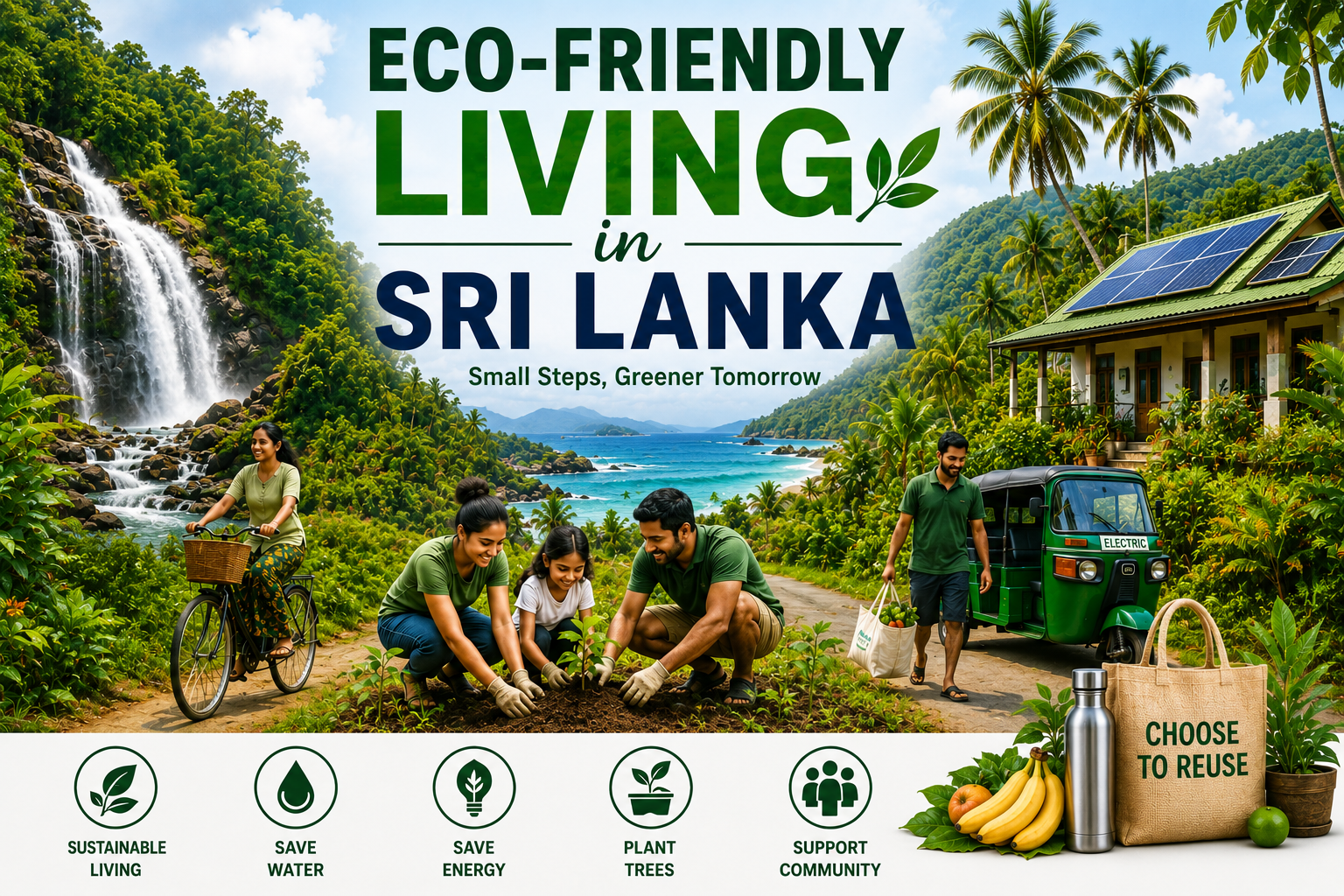
As environmental challenges continue to grow around the world, the importance of eco-friendly living has become increasingly significant. In Sri Lanka, a country blessed with rich biodiversity, lush forests, and beautiful coastlines, adopting environmentally responsible lifestyles is essential for preserving natural resources for future generations. Eco-friendly living refers to making choices that reduce negative impacts on the environment while promoting sustainability and conservation.
One of the most important aspects of eco-friendly living in Sri Lanka is reducing plastic waste. Single-use plastics such as shopping bags, bottles, and food packaging contribute significantly to environmental pollution. Plastic waste often ends up in rivers, beaches, and oceans, harming wildlife and ecosystems. Sri Lankans can help reduce this problem by using reusable shopping bags, water bottles, and containers. Community clean-up programs and awareness campaigns have also encouraged people to take responsibility for keeping their surroundings clean.
Sustainable transportation is another key component of environmentally friendly living. The increasing number of vehicles on Sri Lankan roads contributes to air pollution and greenhouse gas emissions. Using public transportation, cycling, walking, or carpooling can help reduce fuel consumption and environmental damage. In recent years, interest in electric vehicles has also grown as people seek cleaner alternatives to traditional transportation methods.
Energy conservation plays a vital role in protecting the environment. Households can reduce energy consumption by switching off electrical appliances when not in use, using energy-efficient LED bulbs, and maximizing natural light and ventilation. Sri Lanka has also made progress in promoting renewable energy sources such as solar and wind power. Installing solar panels on homes and businesses can reduce dependence on fossil fuels while lowering electricity costs.
Water conservation is equally important in eco-friendly living. Although Sri Lanka receives substantial rainfall, water shortages can still occur in certain regions during dry seasons. People can conserve water by repairing leaks, collecting rainwater for household use, and using water efficiently in daily activities. Farmers can also adopt modern irrigation techniques that minimize water wastage while maintaining agricultural productivity.
Sustainable agriculture supports both environmental protection and food security. Many Sri Lankan farmers are exploring organic farming methods that reduce the use of harmful chemical fertilizers and pesticides. Organic farming helps maintain soil fertility, protects water sources, and promotes healthier food production. Consumers can support sustainable agriculture by purchasing locally grown produce and environmentally friendly products.
Tree planting and biodiversity conservation are essential for maintaining ecological balance. Forests absorb carbon dioxide, prevent soil erosion, and provide habitats for countless species. Participating in tree-planting initiatives and protecting natural habitats can contribute to environmental sustainability. Schools, community organizations, and local authorities can work together to promote conservation activities throughout the country.
Education and public awareness are critical for encouraging eco-friendly behavior. By teaching environmental responsibility in schools and communities, people can better understand the consequences of pollution and resource depletion. Social media, educational programs, and environmental campaigns can inspire individuals to adopt greener lifestyles.
In conclusion, eco-friendly living in Sri Lanka is essential for protecting the country's natural beauty and ensuring a sustainable future. Through reducing waste, conserving energy and water, supporting sustainable agriculture, and protecting biodiversity, individuals can make meaningful contributions to environmental conservation. Small actions taken by many people can create a significant positive impact, helping Sri Lanka remain a healthy and vibrant nation for generations to come.