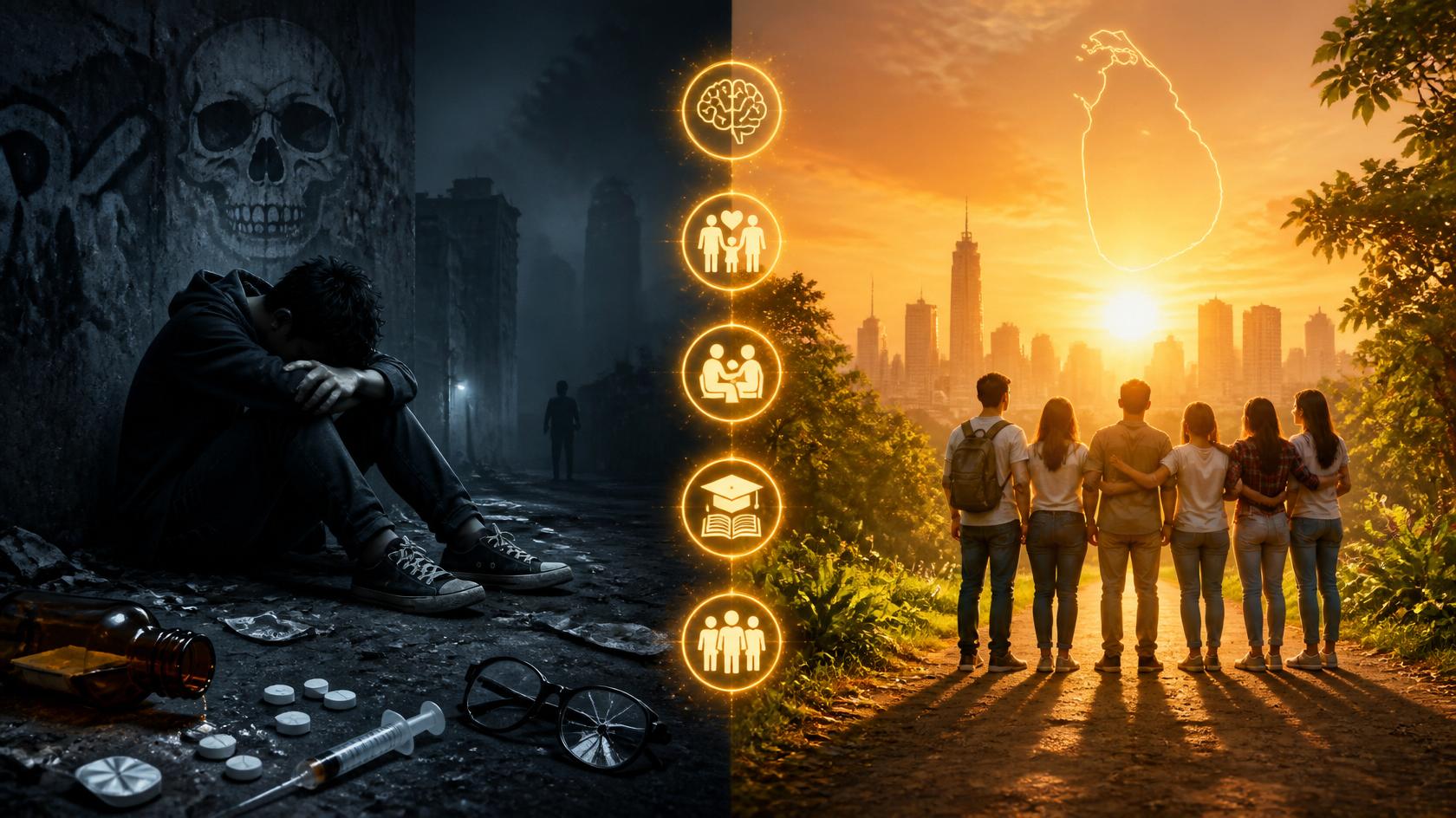
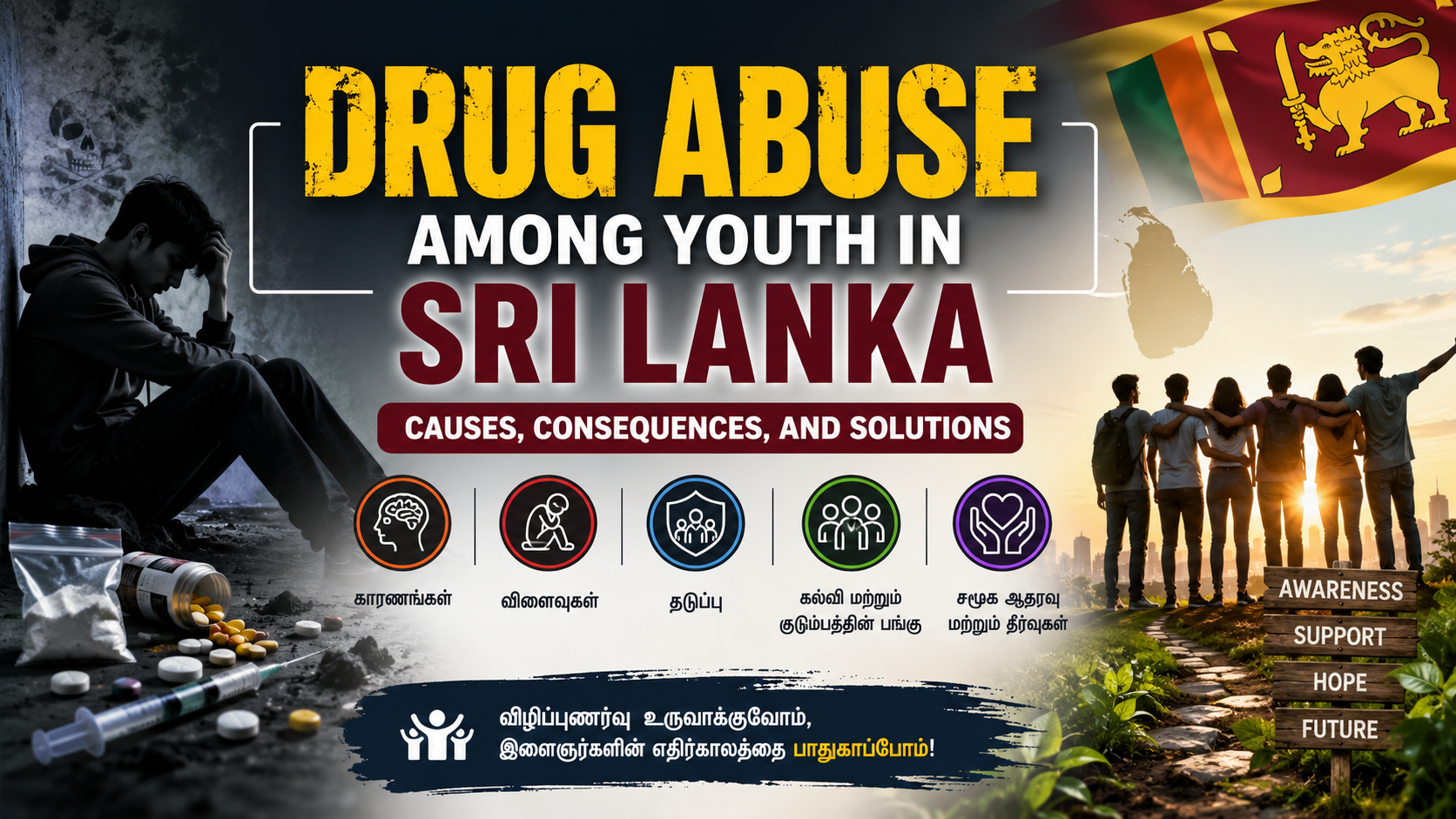
Drug Abuse Among Youth in Sri Lanka: Causes, Consequences, and Solutions
Rakshika Rathnayake7/27/20265 min read
Share:Facebook
Introduction
Drug abuse among youth has become a growing social concern in many countries, including Sri Lanka. Young people are considered the foundation of a nation's future, contributing to economic development, social progress, and innovation. However, the increasing use of illegal drugs and harmful substances among youth threatens not only their individual well-being but also the stability and prosperity of society as a whole.
Drug abuse refers to the harmful or excessive use of substances such as heroin, cannabis, methamphetamine ("Ice"), cocaine, prescription drugs, and other addictive substances. Substance abuse can negatively affect physical health, mental well-being, education, family relationships, and future career opportunities.
In Sri Lanka, the issue of youth drug abuse has gained significant public attention in recent years. Reports of drug-related arrests, substance abuse in educational institutions, and the spread of synthetic drugs have raised concerns among parents, educators, and policymakers. While most Sri Lankan youth do not use drugs, the increasing visibility of drug-related incidents highlights the need for greater awareness, prevention, and intervention.
Drug abuse is a complex issue influenced by social, economic, psychological, and environmental factors. Therefore, addressing this problem requires a comprehensive approach involving families, schools, communities, and government institutions.
Understanding Drug Abuse
Drug abuse occurs when individuals use substances in ways that are harmful to themselves or others. It may involve:
Using illegal drugs.
Misusing prescription medications.
Using substances to cope with stress or emotional problems.
Repeated use despite negative consequences.
Drug abuse can lead to dependence or addiction, where individuals find it difficult to control their substance use despite experiencing harmful effects.
Among young people, experimentation often begins due to curiosity, peer influence, or the desire to fit into social groups. Although not every individual who experiments with substances develops addiction, early exposure significantly increases risks.
Commonly Abused Substances in Sri Lanka
Several substances have been identified as concerns in Sri Lanka:
1. Cannabis
Cannabis remains one of the most commonly used illegal drugs among young people in many parts of the world.
2. Heroin
Heroin is highly addictive and has been associated with serious health and social consequences.
3. Methamphetamine ("Ice")
Synthetic drugs such as methamphetamine have become an increasing concern due to their strong stimulant effects and high addiction potential.
4. Prescription Drug Misuse
Some individuals misuse medications without medical supervision, creating risks of dependency and health complications.
5. Alcohol and Tobacco
Although legal for adults, alcohol and tobacco use among underage youth can act as gateway substances and contribute to other harmful behaviors.
Causes of Drug Abuse Among Youth
1. Peer Pressure
Peer influence is one of the strongest factors affecting youth behavior.
Young people often seek acceptance from friends and social groups. Some may experiment with drugs because they believe it will help them fit in or avoid social rejection.
Peer pressure can be direct or indirect. Even being in environments where drug use is normalized can increase the likelihood of experimentation.
2. Family Problems
Family environments play a significant role in shaping behavior.
Factors such as:
Poor parent-child relationships.
Domestic conflict.
Lack of supervision.
Neglect.
Family substance abuse.
can increase vulnerability among young people.
Supportive family relationships, on the other hand, act as important protective factors.
3. Mental Health Challenges
Mental health difficulties can contribute to substance abuse.
Young individuals experiencing:
Anxiety.
Depression.
Loneliness.
Trauma.
Low self-esteem.
may turn to substances as a coping mechanism.
However, substance use often worsens these challenges rather than solving them.
4. Curiosity and Risk-Taking Behavior
Adolescence and young adulthood are periods associated with exploration and experimentation.
Some youth may use drugs out of curiosity or because they underestimate the risks involved. Exposure through media, social networks, or peers may contribute to these decisions.
5. Economic and Social Factors
Unemployment, poverty, limited opportunities, and social inequality can create environments where substance abuse becomes more likely.
Young people who feel disconnected from education, employment, or community activities may become more vulnerable to harmful behaviors.
Consequences of Drug Abuse
Drug abuse affects multiple aspects of an individual's life.
1. Physical Health Problems
Substance abuse can lead to:
Heart problems.
Respiratory diseases.
Liver damage.
Sleep disorders.
Poor nutrition.
Increased risk of accidents.
Long-term use can result in severe health complications and, in some cases, death.
2. Mental Health Effects
Drug abuse is strongly associated with mental health difficulties.
Individuals may experience:
Anxiety.
Depression.
Mood disorders.
Memory problems.
Psychosis.
Suicidal thoughts.
Substance abuse and mental health issues often influence one another, creating a cycle that can be difficult to break.
3. Educational Impact
Drug abuse can negatively affect academic performance.
Students experiencing substance-related problems may show:
Poor attendance.
Reduced concentration.
Lower grades.
School dropout.
Disciplinary issues.
Education plays an important role in future opportunities, making these consequences particularly significant.
4. Family and Social Relationships
Substance abuse can damage trust and communication within families.
Parents and siblings may experience emotional stress, financial burdens, and conflict associated with a young person's substance use.
Friendships and community relationships may also suffer due to behavioral changes.
5. Increased Risk of Crime
Drug abuse does not automatically lead to criminal behavior. However, some individuals involved in substance abuse may become more vulnerable to activities such as:
Drug trafficking.
Theft.
Violence.
Illegal possession of substances.
These consequences can have long-lasting impacts on future employment and social integration.
Drug Abuse and Sri Lankan Society
The effects of youth drug abuse extend beyond individuals and families.
Society may experience:
Increased healthcare costs.
Pressure on law enforcement.
Reduced productivity.
Social instability.
Loss of human potential.
Young people represent an important national resource. When their education, health, and future opportunities are affected by substance abuse, the entire country experiences the consequences.
Prevention Strategies
1. Strengthening Family Support
Parents should:
Maintain open communication.
Spend quality time with children.
Monitor activities appropriately.
Provide emotional support.
Young people who feel supported by their families are often better equipped to make healthy decisions.
2. School-Based Education
Schools can play a major role in prevention by providing:
Drug awareness programs.
Life skills education.
Counseling services.
Peer support initiatives.
Education should focus on evidence-based information rather than fear-based messaging.
3. Community Engagement
Communities can provide positive alternatives through:
Sports programs.
Youth clubs.
Volunteer activities.
Arts and cultural events.
Strong community connections help create a sense of belonging and purpose.
4. Mental Health Support
Improving access to mental health services is essential.
Young people should feel comfortable seeking support for stress, anxiety, or emotional difficulties without fear of stigma.
Early intervention can prevent problems from becoming more severe.
5. Government and Policy Measures
Government institutions can contribute by:
Strengthening law enforcement against drug trafficking.
Supporting rehabilitation services.
Funding prevention programs.
Expanding youth development initiatives.
A balanced approach that combines prevention, treatment, and enforcement is often the most effective.
Rehabilitation and Recovery
Recovery from substance abuse is possible.
Rehabilitation may include:
Medical treatment.
Counseling.
Psychological support.
Family therapy.
Educational and vocational programs.
Young people recovering from addiction should be treated with dignity and supported in rebuilding their lives.
Stigmatization can discourage individuals from seeking help. Therefore, communities should promote understanding and encourage access to support services.
The Role of Youth
Young people themselves play an important role in prevention.
They can:
Make informed decisions.
Support friends in seeking help.
Participate in positive activities.
Promote awareness.
Build healthy lifestyles.
Leadership among youth can contribute significantly to creating drug-free communities.
Conclusion
Drug abuse among youth in Sri Lanka is a serious social issue that requires collective action. While factors such as peer pressure, family difficulties, mental health challenges, and economic conditions can increase vulnerability, effective prevention and support systems can reduce risks.
Addressing drug abuse requires cooperation among families, schools, communities, healthcare professionals, and government institutions. More importantly, it requires creating environments where young people feel valued, supported, and hopeful about their future.
Investing in youth is an investment in the future of Sri Lanka. By promoting education, mental health, and positive opportunities, society can empower young people to reach their full potential and contribute meaningfully to national development.
Additional Media