
Sponsored
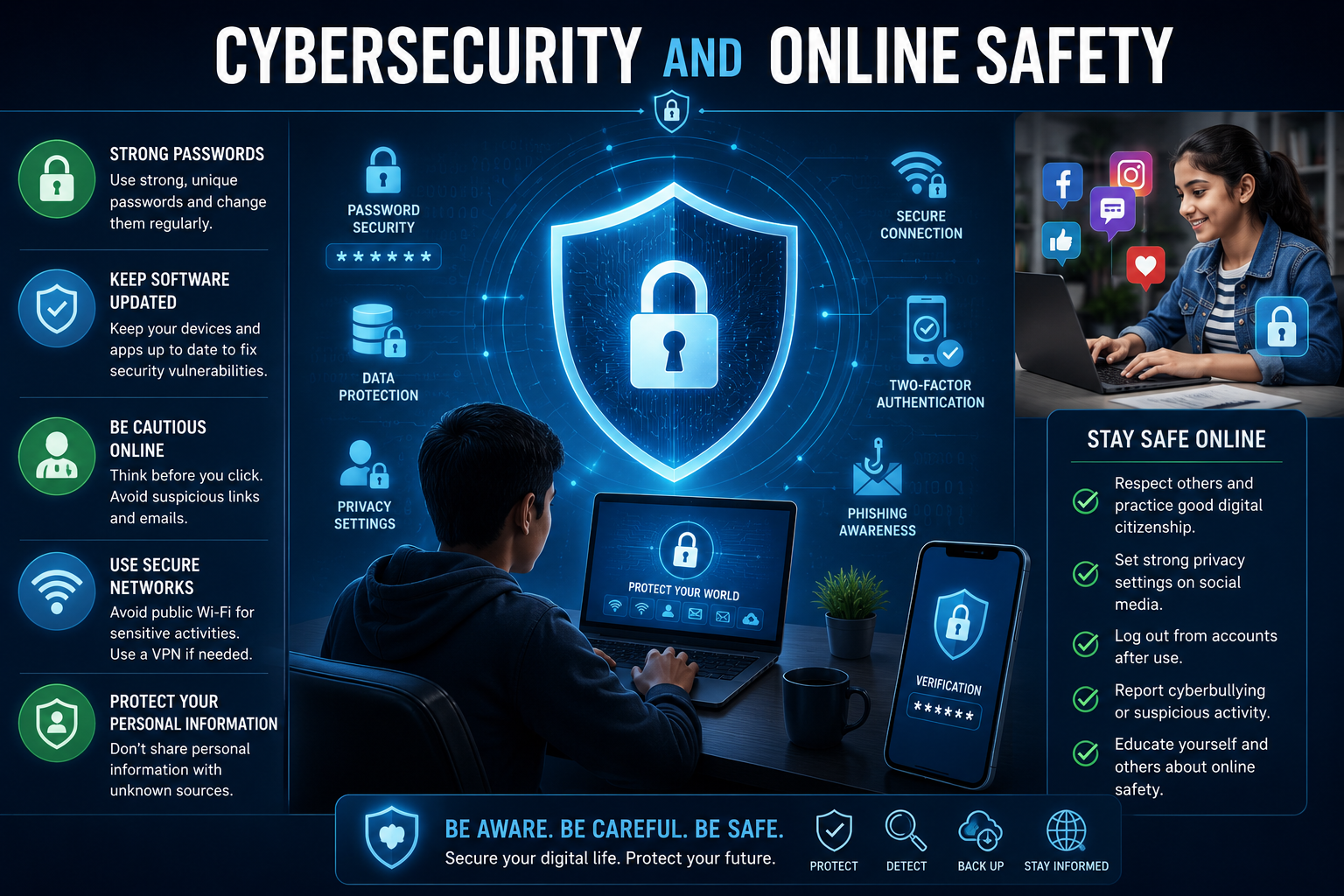
In today’s digital world, technology has become a part of everyday life. People use the internet for communication, banking, shopping, education, entertainment, and work. While the internet provides many benefits, it also comes with risks. Cybersecurity and online safety are very important to protect individuals, organizations, and data from digital threats.
Cybersecurity refers to the practice of protecting computers, servers, mobile devices, networks, and data from cyber attacks. Online safety focuses on protecting users from harmful activities on the internet such as fraud, identity theft, cyberbullying, and scams. Both are closely related and essential in the modern digital era.
One of the most common cyber threats is hacking. Hackers try to gain unauthorized access to systems or personal accounts to steal information. This may include passwords, bank details, or private messages. Once this information is stolen, it can be misused for financial fraud or identity theft. That is why strong passwords and secure systems are very important.
Another major threat is phishing. Phishing occurs when attackers send fake emails, messages, or websites that look real. They trick users into entering sensitive information like login details or credit card numbers. Many people fall victim to phishing because these messages often look very convincing. Users should always check the source before clicking on links or sharing information.
Malware is another serious cybersecurity risk. Malware includes viruses, spyware, ransomware, and trojans. These harmful programs can damage devices, steal data, or lock files until a ransom is paid. Installing antivirus software and avoiding suspicious downloads can help prevent malware attacks.
Online safety is also important for protecting personal identity. Many people share too much personal information on social media platforms. Cybercriminals can use this information to track, impersonate, or scam users. It is important to be careful about what we post online and adjust privacy settings properly.
Cyberbullying is another growing issue, especially among teenagers and young people. It involves using digital platforms to harass, threaten, or embarrass others. Cyberbullying can have serious emotional and psychological effects. Reporting harmful content and blocking abusive users are important steps to stay safe online.
To improve cybersecurity, individuals should follow some basic practices. Using strong and unique passwords for different accounts is very important. Passwords should include letters, numbers, and symbols. Enabling two-factor authentication adds an extra layer of security. Regularly updating software and applications also helps protect against vulnerabilities.
Public Wi-Fi networks can also be risky. Hackers can easily intercept data on unsecured networks. It is better to avoid accessing sensitive accounts like banking on public Wi-Fi or use a secure VPN for protection.
Organizations and businesses also play a major role in cybersecurity. They use firewalls, encryption, and advanced security systems to protect customer data. Employees are often trained to recognize cyber threats and follow safe online practices.
Governments around the world are also working to improve cybersecurity laws and awareness. Many countries have cybercrime units that investigate online crimes and protect citizens from digital threats.
In conclusion, cybersecurity and online safety are essential in today’s technology-driven world. As we become more dependent on digital systems, the risk of cyber threats also increases. By staying aware, using strong security practices, and being careful online, we can protect ourselves from many dangers. A safe digital environment depends on both technology and responsible user behavior.