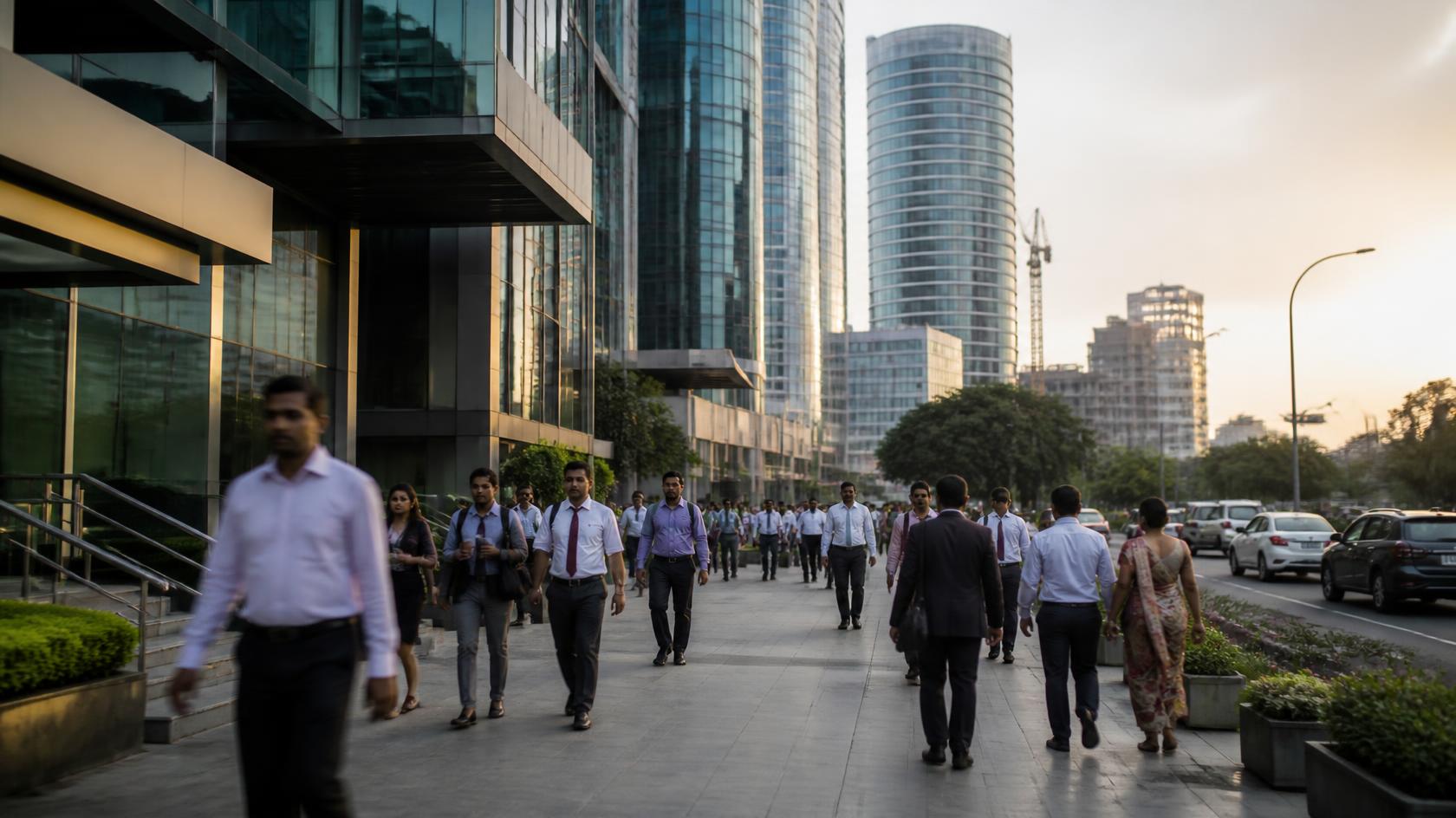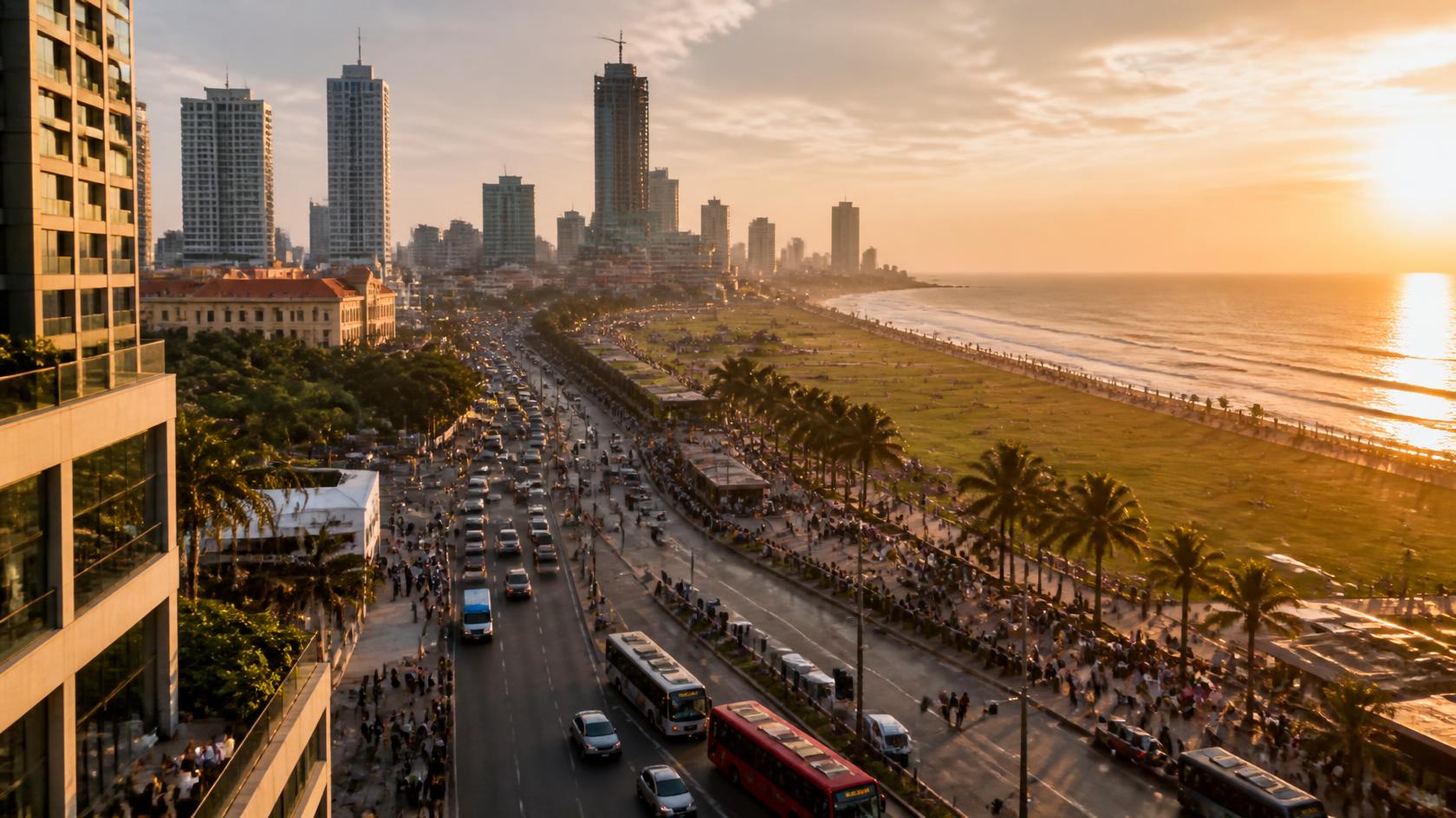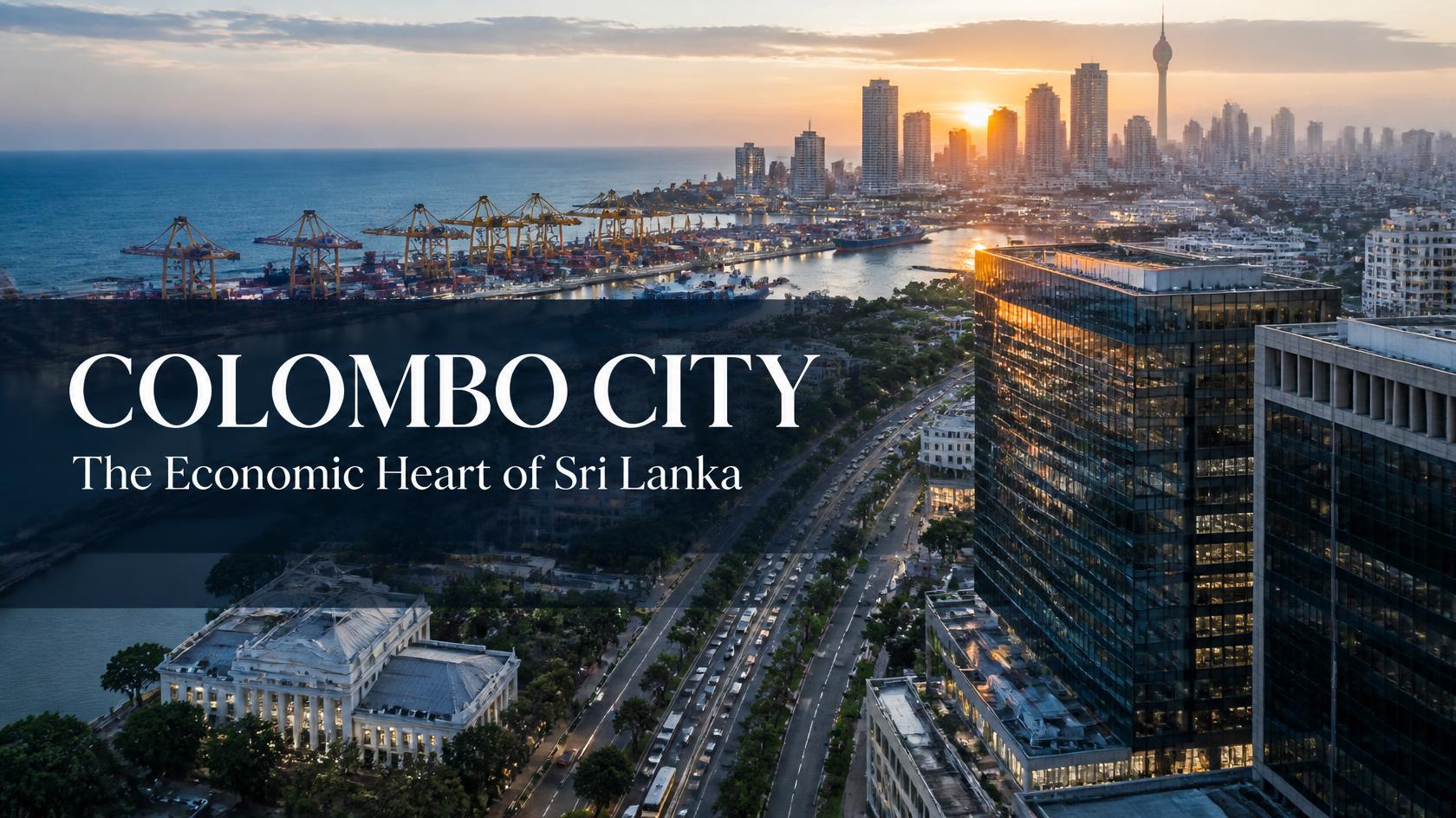
Colombo is the largest commercial city and the principal economic centre of Sri Lanka. Located on the western coast of the island, Colombo has played an important role in trade, administration, finance, transportation and international connections for centuries. Although Sri Lanka's official administrative capital is Sri Jayawardenepura Kotte, Colombo remains the country's leading commercial and financial hub.
The city is a fascinating combination of history and modern development. Colonial-era buildings stand alongside modern office towers, shopping centres, hotels and apartment complexes. The Port of Colombo connects Sri Lanka to international shipping routes, while banks, financial institutions, businesses, government-related organisations and multinational companies contribute to the city's economic importance.
Colombo is therefore more than a major urban centre. It is a city that reflects Sri Lanka's changing economy and its connection with the wider world.
A City Shaped by Trade and History
Colombo's economic importance has deep historical roots. Its location on the western coast of Sri Lanka made it suitable for maritime trade with other parts of the Indian Ocean region.
Long before modern economic institutions developed, Sri Lanka was connected to international trading networks through the Indian Ocean. Arab, Indian and other merchants visited the island, and Colombo gradually developed as an important coastal settlement.
The arrival of European colonial powers significantly changed the city. The Portuguese established control over Colombo in the sixteenth century, followed by the Dutch and later the British. Each period left an architectural and cultural influence on the city.
The British period was particularly important for Colombo's transformation into a modern commercial and administrative centre. Roads, railway connections, harbour facilities and government institutions expanded, helping Colombo become the country's principal urban centre.
Today, areas such as Fort and Pettah still contain evidence of this long history. Historic buildings, old commercial streets and religious sites exist alongside modern businesses, demonstrating how Colombo has evolved over several centuries.
Colombo and Sri Lanka's National Economy
Colombo plays a central role in Sri Lanka's economy. A large concentration of financial institutions, corporate offices, professional services, hotels, retail businesses and other economic activities is located in and around the city.
The Western Province, where Colombo is located, has historically contributed the largest share of Sri Lanka's provincial economic output. This concentration of economic activity makes the Colombo metropolitan area particularly important to employment, investment and business development.
The city attracts businesses because it provides access to transportation, skilled workers, financial services, telecommunications, government institutions and international markets.
For many companies operating in Sri Lanka, Colombo is the natural location for their headquarters or major offices. This creates an economic ecosystem in which banks, insurance companies, law firms, accounting firms, technology companies, advertising agencies, retailers and other service providers operate close to one another.
The Port of Colombo
One of the most important reasons for Colombo's economic significance is the Port of Colombo.
Located on the western coast of Sri Lanka, the port occupies a strategically important position along major maritime routes connecting East and West. It has developed into an important container transshipment hub in the Indian Ocean.
A significant part of Colombo's port activity involves transshipment, where containers are transferred between ships rather than being destined directly for Sri Lanka. The port's geographical position gives it an advantage in serving shipping routes connecting South Asia, the Middle East, Africa and East Asia.
The port has also undergone major development and expansion over the years. Modern container terminals have increased its capacity and strengthened Colombo's position within regional shipping networks.
The importance of the port extends beyond ships and cargo. Port-related activities create employment and support businesses involved in logistics, transportation, warehousing, customs services, freight forwarding and other sectors.
For Sri Lanka, an efficient and competitive port is particularly important because the country's economy depends heavily on international trade.
Colombo as a Financial Centre
Colombo is the financial centre of Sri Lanka. The headquarters or major branches of many banks, insurance companies, investment firms and other financial institutions are located in the city.
The Central Bank of Sri Lanka, although its institutional history has evolved over time, is based in Colombo and plays a central role in monetary and financial policy. Commercial banks and financial companies operating throughout the country also maintain significant operations in the city.
The Colombo Stock Exchange (CSE) is another important institution. It provides a marketplace where shares of listed companies can be traded and contributes to the development of Sri Lanka's capital market.
The concentration of financial services has created demand for accountants, economists, lawyers, financial analysts, auditors, investment professionals and other skilled workers. As a result, Colombo has become an important employment centre for graduates and professionals.
Colombo's Business Districts
Colombo contains several areas that serve different economic functions.
Colombo Fort is one of the city's most important commercial and business areas. It contains banks, corporate offices, hotels, government-related institutions and transport facilities. The area also contains historic colonial buildings that reflect Colombo's earlier commercial importance.
Pettah is famous for its busy markets and wholesale and retail businesses. The area has traditionally been an important centre for traders and small businesses. Its crowded streets and diverse shops represent an important part of Colombo's commercial culture.
In recent years, areas such as Colombo 2, Colombo 3 and Colombo 7 have also become important locations for corporate offices, luxury hotels, restaurants, residential developments and high-end commercial activities.
The development of Colombo Port City represents another major stage in the city's economic transformation. The project aims to create a new mixed-use urban district with commercial, residential, leisure and financial activities. Its long-term success will depend on investment, infrastructure, economic conditions, regulation and the ability to attract international businesses.
Tourism and the Colombo Economy
Tourism is another important part of Colombo's economy.
As the main international gateway to Sri Lanka, Colombo receives large numbers of international visitors. Some tourists stay in the city before travelling to other parts of the country, while others visit Colombo itself for business, shopping, culture and leisure.
The city offers a mixture of attractions, including Galle Face Green, Colombo Fort, Pettah, Gangaramaya Temple, the Colombo National Museum and Viharamahadevi Park.
Colombo's hotel industry has expanded significantly, ranging from luxury international hotels to smaller accommodation providers. Restaurants, cafés, travel agencies, transport companies, tour operators and entertainment businesses also benefit from tourism.
Business tourism and conferences contribute another dimension to the city's tourism economy. Because Colombo has good transportation links and a concentration of hotels and commercial facilities, it has the potential to attract conferences, exhibitions and international business events.
The Rise of the Service Economy
One of the most significant changes in Colombo's economy has been the growth of the service sector.
Traditional economic activities such as trade and manufacturing remain important, but services have become increasingly significant. Financial services, information technology, telecommunications, education, healthcare, professional services, tourism and retail are all major parts of the urban economy.
The growth of information technology and business-process outsourcing has also created new employment opportunities for young Sri Lankans. Companies providing software development, digital services, customer support, accounting and other professional services have established operations in Colombo and surrounding areas.
This transformation has increased demand for workers with knowledge of English, information technology, finance, management and other professional skills.
Transportation and Connectivity
Colombo's economic success is closely connected to transportation.
The city is the country's main centre for road and railway connections. Colombo Fort Railway Station is one of the most important railway hubs in Sri Lanka, connecting Colombo with many parts of the island.
The city's road network connects it with major urban and industrial areas across the Western Province and beyond. The Colombo-Katunayake Expressway provides an important connection between Colombo and Bandaranaike International Airport.
The proximity of the international airport to Colombo strengthens the city's connection with international tourism, business and trade.
However, transportation is also one of Colombo's major challenges. Traffic congestion is common, particularly during peak hours. Rapid urbanisation and increasing numbers of vehicles place pressure on roads and public transportation.
Improving public transport, road infrastructure and urban mobility is therefore essential for Colombo's future economic development.
Employment Opportunities in Colombo
Colombo attracts workers from almost every part of Sri Lanka. People move to the city and surrounding urban areas in search of employment, education and business opportunities.
The city provides jobs in banking, finance, information technology, hospitality, retail, construction, transportation, education, healthcare, government services and professional services.
It is also an important centre for entrepreneurship. Small and medium-sized businesses operate throughout the city, particularly in retail, food services, tourism, technology and professional services.
The concentration of economic activity can create opportunities for young people entering the workforce. At the same time, competition for jobs can be intense, particularly for professional positions.
Challenges Facing Colombo
Despite its economic importance, Colombo faces several serious challenges.
Traffic congestion is one of the most visible problems. The city's growing population and increasing vehicle numbers create pressure on its transportation infrastructure.
Housing affordability is another concern. Rising land and property values can make housing difficult to afford for low- and middle-income households.
The city also faces challenges related to waste management, drainage, flooding, environmental pollution and pressure on public infrastructure.
Climate change creates additional risks. As a coastal city with low-lying areas, Colombo is vulnerable to flooding, heavy rainfall and rising environmental pressures.
Urban development must therefore be carefully planned. Economic growth should be accompanied by investment in public transport, drainage systems, green spaces, affordable housing and environmental protection.
Colombo's Role in Sri Lanka's Future
Colombo will continue to play an important role in Sri Lanka's economic future. Its established financial institutions, port, transport infrastructure, skilled workforce and international connections provide a strong foundation for further development.
At the same time, the future of the city should not depend solely on physical expansion. Colombo needs to become more efficient, sustainable and inclusive.
Digital technology can help improve public services, transportation and business operations. Better urban planning can reduce congestion and protect environmentally sensitive areas. Improved public transportation can make movement easier while reducing dependence on private vehicles.
The development of modern business districts can also create opportunities for international investment. However, such development needs to be balanced with the preservation of Colombo's historic buildings and cultural identity.
Preserving Colombo's Cultural Heritage
Economic development has transformed Colombo, but the city still contains many reminders of its past.
Historic buildings in Fort, religious sites, old markets and colonial-era architecture contribute to Colombo's unique character. Places such as Pettah demonstrate the city's long tradition of commerce and multicultural interaction.
Preserving these places is important because a city's identity cannot be measured only by its economic output or modern buildings.
Heritage conservation and economic development can exist together. Historic buildings can be restored and adapted for appropriate commercial, cultural or tourism uses while maintaining their architectural value.
A successful modern Colombo should therefore respect both its future ambitions and its historical roots.
Colombo as a Multicultural City
Colombo is also one of Sri Lanka's most culturally diverse cities.
People from different ethnic, religious and regional backgrounds live, work and conduct business in the city. Sinhala, Tamil and Muslim communities have contributed to Colombo's social and economic development, while communities with Indian, Malay, Burgher and other historical connections have also shaped the city's identity.
This diversity is particularly visible in its religious buildings, food culture, markets, festivals and neighbourhoods.
Colombo's multicultural character has been strengthened by its position as a trading and international city. The movement of people and ideas through the port and commercial centre has contributed to the city's diverse social environment.
Conclusion
Colombo is much more than the largest commercial city in Sri Lanka. It is the country's principal financial, business, transportation and international gateway, with an economic role that has developed over centuries.
From its early importance as a coastal trading centre to its transformation under Portuguese, Dutch and British rule, Colombo has continually adapted to changing economic and political conditions. Today, the Port of Colombo, financial institutions, corporate sector, tourism industry, service economy and growing technology sector make the city central to Sri Lanka's economic life.
At the same time, Colombo faces challenges including traffic congestion, housing pressure, environmental problems, flooding and the need for better urban infrastructure. Addressing these challenges will be essential if the city is to remain competitive and liveable.
The future of Colombo lies in balancing economic growth with sustainability, modernisation with heritage conservation, and investment with inclusive urban development.
As Sri Lanka continues to strengthen its economy and expand its international connections, Colombo is likely to remain at the centre of that transformation. Its busy streets, historic markets, financial institutions, modern developments and busy port all tell different parts of the same story—a story of a city that has long connected Sri Lanka with the wider world and continues to serve as the economic heart of the island.
Additional Media