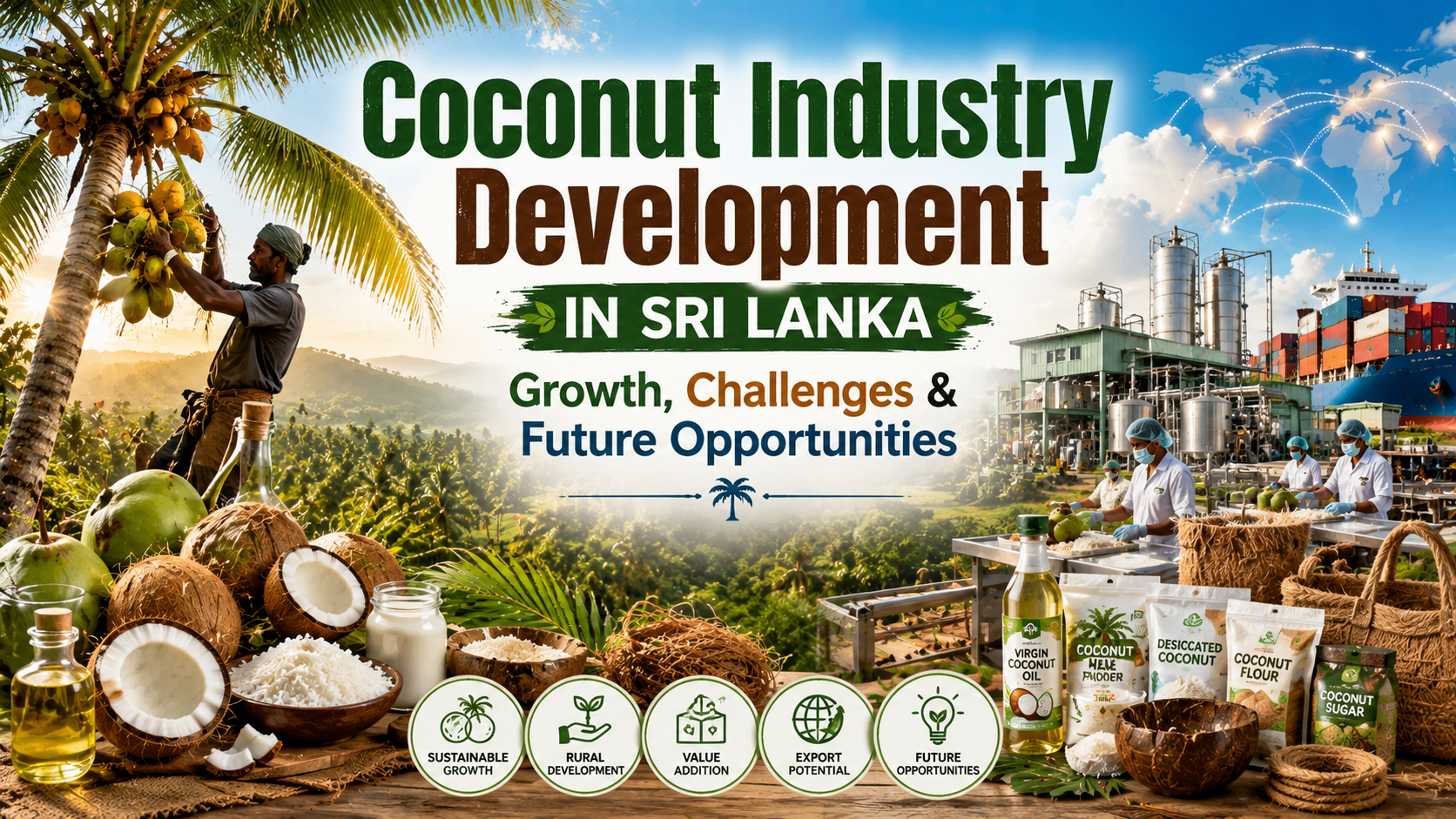
Coconut Industry Development in Sri Lanka: Growth, Challenges, and Future Opportunities
Rakshika Rathnayake7/20/20265 min read
Share:Facebook
Introduction
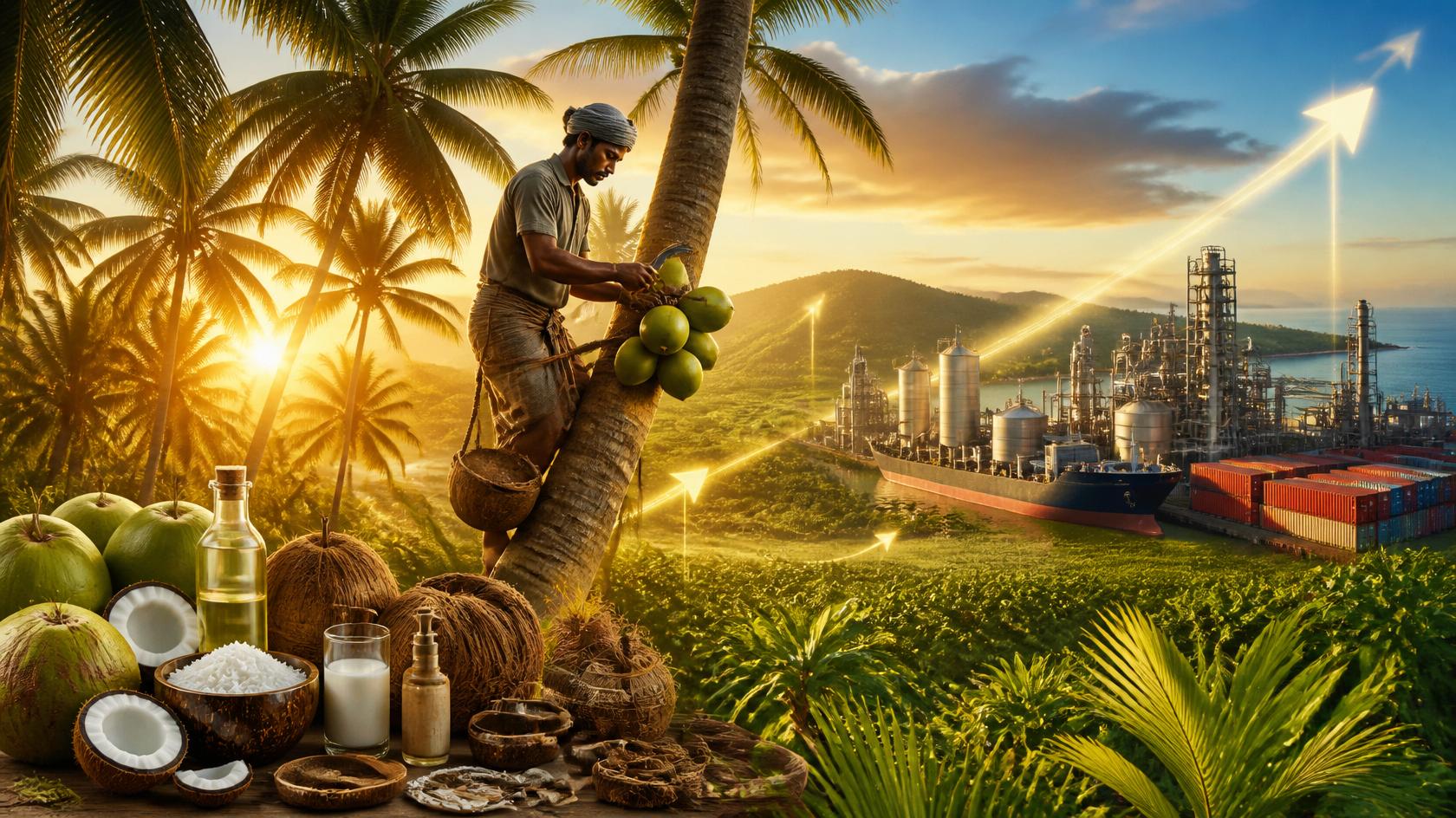
Sri Lanka is a tropical island blessed with fertile land, a favorable climate, and rich agricultural traditions. Among the country’s most valuable agricultural industries, the coconut industry holds a special place due to its economic, cultural, and social importance. Known as the “Tree of Life,” the coconut palm provides food, income, employment, and numerous raw materials for both local consumption and international trade.
For centuries, coconut cultivation has been deeply connected with Sri Lankan rural communities. From coconut oil and coconut milk to coir products and activated carbon, the industry contributes significantly to agriculture, manufacturing, exports, and livelihoods. Today, the development of the coconut industry has become an important priority for increasing agricultural productivity, supporting rural economies, and expanding Sri Lanka’s position in global markets.
Historical Importance of the Coconut Industry in Sri Lanka
Coconut cultivation has a long history in Sri Lanka and has been an essential part of traditional farming systems for generations. The coconut palm was introduced to the island centuries ago and gradually became one of the most important plantation crops.
During the colonial period, coconut plantations expanded significantly, especially in areas with suitable soil and rainfall conditions. Along with tea and rubber, coconut became one of Sri Lanka’s major commercial crops.
Traditional Sri Lankan households have used coconut in various ways for generations. Coconut milk, coconut oil, coconut flour, and coconut-based food products remain important elements of Sri Lankan cuisine. Beyond food, coconut leaves, shells, and fibers have been used for household items, construction materials, and handicrafts.
Importance of the Coconut Industry to Sri Lanka’s Economy
The coconut industry plays a significant role in Sri Lanka’s economy by providing employment opportunities, supporting rural communities, and generating export income.
Millions of people are directly and indirectly involved in coconut-related activities, including:
Coconut cultivation.
Processing industries.
Manufacturing coconut-based products.
Trading and export businesses.
Coir and fiber industries.
Sri Lanka exports various coconut products to international markets, including:
Coconut oil.
Desiccated coconut.
Coconut milk powder.
Coconut water.
Coconut-based snacks.
Coir fiber products.
Activated carbon.
The global demand for natural and environmentally friendly products has created new opportunities for Sri Lanka’s coconut sector.
Major Coconut Growing Areas in Sri Lanka
Coconut cultivation is mainly concentrated in the “Coconut Triangle” of Sri Lanka, which includes:
Kurunegala District.
Colombo District.
Puttalam District.
These regions provide suitable conditions for coconut farming due to favorable climate, soil quality, and rainfall patterns.
However, coconut cultivation is also expanding into other areas where environmental conditions support plantation growth.
Small-scale coconut farmers play a vital role in the industry. Many rural families depend on coconut farming as their primary or secondary source of income.
Development of Coconut-Based Industries
The modern coconut industry has moved beyond traditional coconut farming and developed into a diverse commercial sector.
1. Coconut Food Products
Sri Lanka has increased production of value-added coconut products such as:
Coconut milk.
Coconut cream.
Coconut flour.
Virgin coconut oil.
Coconut-based beverages.
These products have gained popularity worldwide due to increasing consumer interest in natural and healthy foods.
2. Coir Industry Development
The coconut fiber (coir) industry is another important sector. Coconut husks are processed into various products including:
Coir ropes.
Floor mats.
Brushes.
Geotextiles.
Growing media for agriculture.
Sri Lanka is internationally recognized for producing high-quality coir products. The industry also supports many rural workers, especially in coconut-growing regions.
3. Coconut Shell-Based Products
Coconut shells, which were previously considered waste, are now valuable resources.
They are used to produce:
Activated carbon.
Charcoal.
Handmade crafts.
Eco-friendly household products.
The development of these industries contributes to waste reduction and promotes sustainable production.
Technology and Innovation in Coconut Farming
Modern technology has become increasingly important for improving coconut production in Sri Lanka.
New agricultural practices include:
Improved coconut varieties.
Scientific fertilizer management.
Irrigation systems.
Pest and disease control methods.
Digital farming solutions.
Research institutions and agricultural organizations continue to develop new techniques to increase productivity and protect coconut plantations from environmental challenges.
The introduction of high-yielding coconut varieties has helped farmers achieve better production and income.
Challenges Facing the Coconut Industry in Sri Lanka
Although the coconut industry has great potential, it faces several challenges.
1. Climate Change
Changes in rainfall patterns, drought conditions, and rising temperatures affect coconut production. Water shortages can reduce coconut yields and damage plantations.
2. Land Use Changes
Rapid urban development and conversion of agricultural lands for other purposes have reduced the area available for coconut cultivation.
3. Pest and Disease Problems
Coconut trees are affected by various pests and diseases that can reduce productivity. Effective research and management strategies are needed to protect plantations.
4. High Production Costs
Increasing costs of fertilizers, labor, and farming equipment create difficulties for small-scale farmers.
5. Limited Value Addition
Although Sri Lanka produces high-quality coconuts, further development of advanced processing and branding is needed to compete effectively in international markets.
Government Support and Development Programs
The Sri Lankan government has introduced various programs to strengthen the coconut sector.
Important development activities include:
Promoting coconut replanting programs.
Providing support to coconut farmers.
Encouraging modern farming techniques.
Developing export-oriented coconut industries.
Supporting research and innovation.
Institutions related to coconut development work to improve productivity, provide technical knowledge, and promote sustainable cultivation.
Future Opportunities for the Coconut Industry
The future of Sri Lanka’s coconut industry has significant potential due to increasing global demand for natural and environmentally friendly products.
Important opportunities include:
Organic Coconut Production
The global market for organic products is growing rapidly. Sri Lanka can expand organic coconut farming and attract premium international markets.
Export Expansion
Improving product quality, packaging, and international marketing can help Sri Lankan coconut products reach more global consumers.
Eco-Friendly Products
Consumers worldwide are increasingly interested in sustainable products. Coconut-based alternatives to plastic and synthetic materials provide new business opportunities.
Tourism and Coconut Culture
Coconut-related tourism experiences, such as plantation visits and traditional coconut processing demonstrations, can create additional income opportunities for rural communities.
Role of Farmers in Coconut Industry Development
Farmers are the foundation of the coconut industry. Supporting small-scale farmers is essential for sustainable growth.
Farmers can improve productivity by:
Following modern cultivation methods.
Maintaining healthy plantations.
Using proper fertilizer practices.
Adopting climate-resilient farming techniques.
Participating in farmer organizations.
Providing education, financial support, and technology access to farmers will strengthen the entire coconut value chain.
Conclusion
The coconut industry is one of Sri Lanka’s most valuable agricultural sectors, contributing significantly to the economy, rural development, employment, and export earnings. From traditional coconut farming to modern value-added industries, the sector continues to evolve and create new opportunities.
However, challenges such as climate change, production costs, and land-use changes must be addressed through innovation, sustainable practices, and effective policies.
With improved technology, farmer support, stronger exports, and investment in value-added products, Sri Lanka’s coconut industry has the potential to become a more competitive and sustainable global industry.
The coconut palm is not only an agricultural resource but also a symbol of Sri Lanka’s heritage, resilience, and connection with nature. Protecting and developing this industry will ensure that future generations continue to benefit from the valuable “Tree of Life.”
Additional Media