

Sponsored
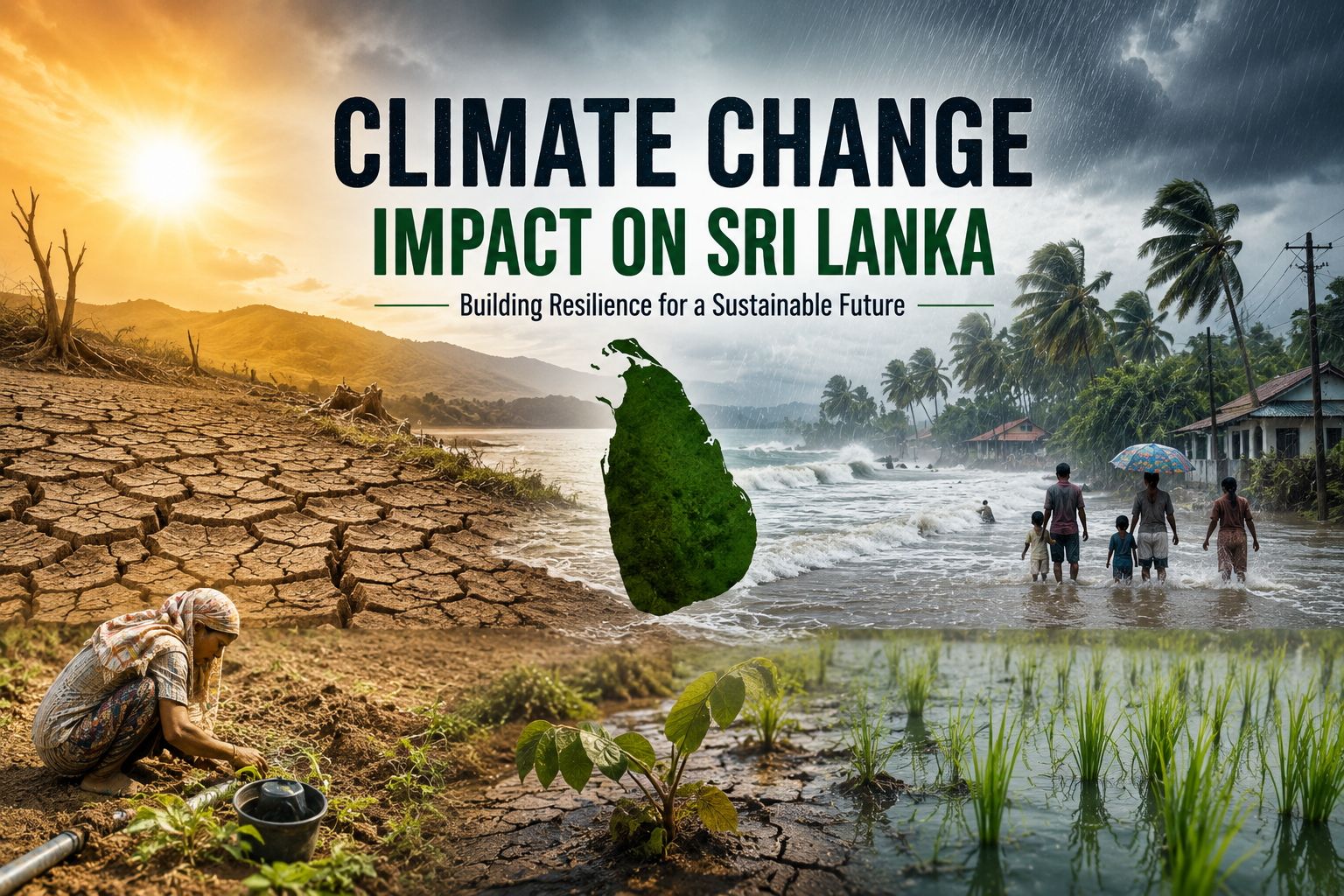
Sri Lanka is one of the countries most affected by climate change due to its small size, tropical climate, and strong dependence on agriculture and natural resources. In recent years, the effects of climate change have become more visible across the island, impacting the environment, economy, and daily life of people. Rising temperatures, irregular rainfall, floods, droughts, and sea level rise are among the most serious challenges.
One of the main impacts of climate change in Sri Lanka is the changing rainfall pattern. The country depends heavily on monsoon rains for agriculture and water supply. However, these monsoons have become less predictable. Sometimes heavy rains cause severe floods and landslides, while in other periods long dry spells lead to drought conditions. This imbalance disrupts farming activities and reduces agricultural productivity.
Agriculture is one of the most important sectors in Sri Lanka, and it is highly vulnerable to climate change. Farmers who cultivate rice, tea, coconut, and rubber are experiencing many difficulties. For example, tea plantations in the central highlands are affected by rising temperatures and irregular rainfall, which reduce crop yield and quality. Rice farmers also face problems due to water shortages and unexpected flooding. As a result, rural livelihoods are becoming more unstable.
Sea level rise is another serious issue affecting Sri Lanka, which is an island nation surrounded by the Indian Ocean. Coastal areas are experiencing erosion, loss of land, and damage to infrastructure. Fishing communities are also affected because changing ocean temperatures influence fish populations. In addition, saltwater intrusion into groundwater sources reduces the availability of fresh drinking water in coastal regions.
Extreme weather events have also increased in frequency and intensity. Heavy storms, cyclones, and flash floods cause significant damage to homes, roads, bridges, and other infrastructure. These disasters not only create economic losses but also force many families to relocate temporarily or permanently. Recovery from such disasters requires large government spending and community support.
Water scarcity is becoming another major concern in many parts of the country. Some regions experience long dry periods, which reduce water availability for drinking and farming. This creates competition for limited water resources and increases stress on both rural and urban populations.
Climate change also has health impacts. Higher temperatures and stagnant water conditions contribute to the spread of diseases such as dengue fever. Heat-related illnesses are also becoming more common, especially among outdoor workers like farmers and laborers.
Despite these challenges, Sri Lanka is working to reduce and adapt to climate change. The government and various organizations are promoting renewable energy sources such as solar and wind power. Reforestation programs are being implemented to restore forests and protect biodiversity. Climate-smart agriculture practices are also being encouraged to help farmers adapt to changing conditions.
In conclusion, climate change is a serious threat to Sri Lanka’s environment, economy, and society. However, through proper planning, awareness, and sustainable practices, the country can reduce its risks and build a more resilient future for its people.