Climate Change and Sri Lanka’s Farmers: A Growing Challenge
Rakshika Rathnayake9/29/20265 min read
Share:Facebook
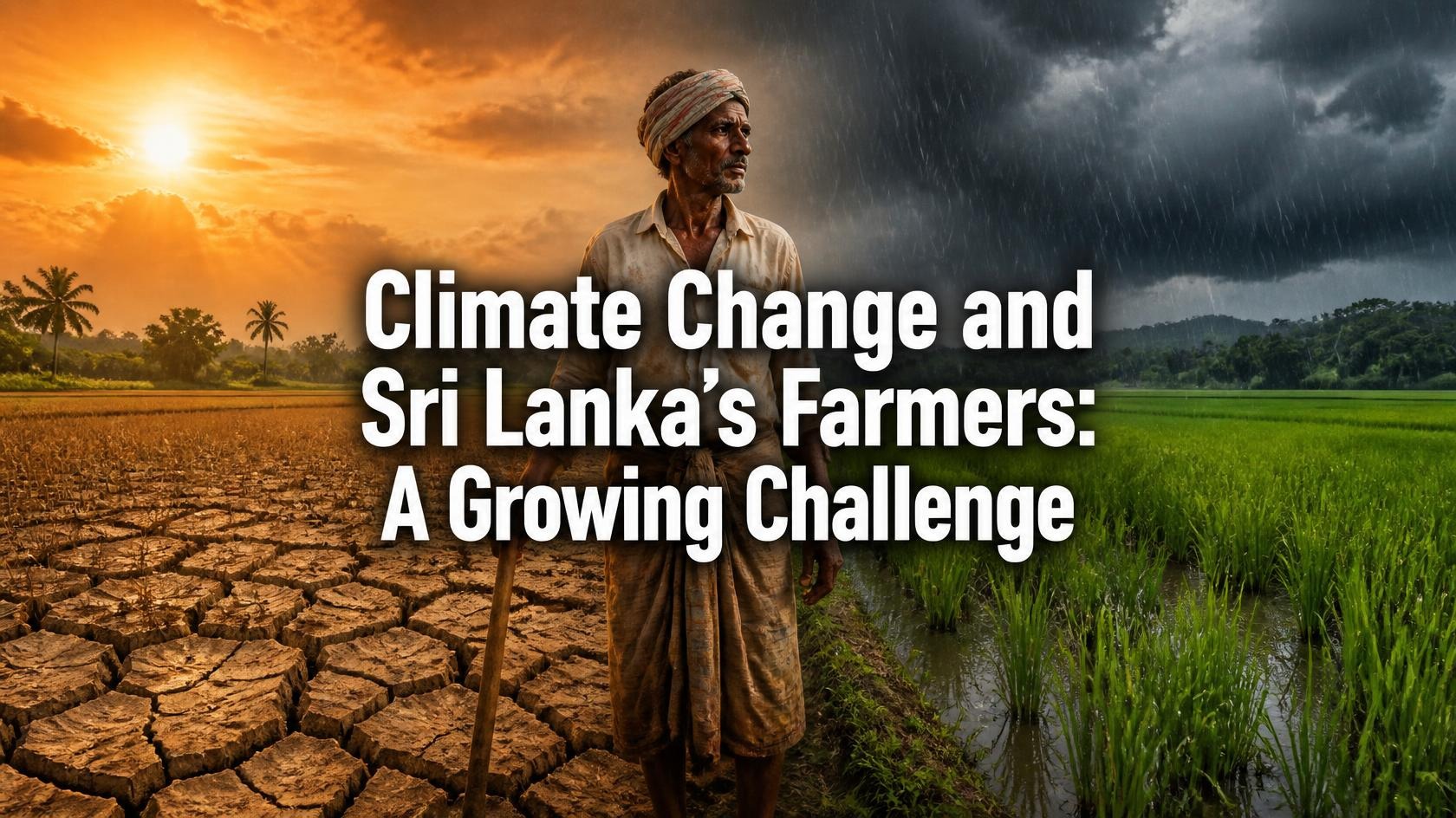
For generations, farming in Sri Lanka has depended on a close relationship between people, land, water and the seasons. Farmers have traditionally planned their cultivation according to rainfall, temperature and the timing of the Maha and Yala seasons. But that relationship is becoming increasingly difficult to predict. Changes in rainfall, rising temperatures, droughts, floods and other extreme weather events are creating new challenges for farmers across the country.
Climate change is not simply an environmental issue for Sri Lanka. It is also an agricultural, economic and social issue. Agriculture provides food for the population and income for many rural families, while smallholder farmers play a particularly important role in the country's food system. In 2025, the World Bank noted that smallholder farmers produce around 80% of Sri Lanka's food and highlighted unpredictable rainfall, rising temperatures, floods and droughts as major challenges for the sector.
The effects are already visible in farming communities. A season that begins with insufficient rain can create water shortages, while intense rainfall later in the season can damage fields and crops. Farmers therefore face a difficult situation: they must make decisions months in advance even though the weather conditions during the growing season are becoming harder to predict.
Changing Rainfall Patterns
Rainfall is one of the most important factors in Sri Lankan agriculture. Paddy, vegetables, maize and many other crops require water at particular stages of their growth. Traditionally, farmers have used their knowledge of seasonal rainfall to decide when to prepare fields and plant crops.
However, rainfall patterns are becoming less predictable. Some areas may experience long dry periods followed by very heavy rainfall within a short period. This creates problems because receiving more rain does not necessarily mean having more useful water for agriculture.
Heavy rain can run off fields quickly, cause soil erosion and flood cultivated land. In contrast, prolonged dry periods can leave reservoirs, canals and other water sources with insufficient water. FAO research on Sri Lanka identifies drought and water scarcity as important challenges for the country's agricultural sector, particularly for rice farming.
For farmers, this uncertainty makes decisions about planting increasingly difficult. Planting too early can expose crops to unexpected dry conditions, while planting too late may expose them to flooding or other weather problems.
Rising Temperatures and Heat Stress
Temperature is another major concern. Sri Lanka already has a warm tropical climate, but continued warming can increase heat stress on crops, livestock and agricultural workers.
Higher temperatures can increase the amount of water lost through evaporation from soil and transpiration from plants. This means crops may require more water to maintain healthy growth. When water supplies are already limited, the combination of heat and drought can become particularly damaging.
The World Bank's climate information for Sri Lanka shows that the country's historical average annual temperature was about 26.57°C during 1995–2014, while climate projections indicate continued changes in temperature and rainfall patterns.
Different crops respond differently to temperature changes. Paddy can be affected when heat occurs during sensitive stages of development. High temperatures can also create problems for vegetable cultivation in the central highlands. Sri Lanka's climate policy documents have identified temperature changes, increased evaporation and unusual rainfall as risks for agriculture, including impacts on rice and high-value crops.
Heat also affects the people who work in the fields. Farmers who spend many hours outdoors may experience physical stress during periods of unusually high temperatures. This can reduce productivity and make agricultural work more difficult.
Drought and Water Shortages
Drought is one of the most serious climate-related threats to Sri Lankan farmers. This is particularly important in the country's dry and intermediate zones, where agriculture depends heavily on irrigation.
Paddy cultivation requires substantial quantities of water. When rainfall is inadequate and reservoirs do not contain enough water, farmers may be unable to cultivate the full area they normally would. In severe situations, farmers may have to abandon fields or reduce the number of crops they grow.
The consequences go beyond a single harvest. When a farmer loses a crop, the household may lose both food and expected income. At the same time, money may already have been spent on seeds, fertilizer, machinery, labour and land preparation.
Research by FAO on rice farmers in Anuradhapura found that several drought-adaptation practices were associated with reduced sensitivity to water stress. However, the study also showed that adaptation is not automatically profitable for farmers. Labour costs, market conditions and access to inputs can determine whether an adaptation method actually improves household income.
This is an important point. Telling farmers to simply "adapt" is not enough. Adaptation measures must also be affordable, practical and suitable for the realities of farming households.
Floods and Heavy Rainfall
Drought is only one side of the problem. Excessive rainfall can be equally destructive.
Flooding can submerge paddy fields, wash away soil, damage vegetable crops and destroy farm infrastructure. Heavy rainfall can also cause erosion and contribute to the loss of nutrients from agricultural land.
Sri Lanka experienced a clear example of this risk during the 2025 Maha season. According to FAO's August 2026 country assessment, Cyclone Ditwah in November 2025 caused severe flooding and damaged recently planted paddy crops, particularly in Puttalam, Kurunegala, Ampara, Anuradhapura, Batticaloa and Trincomalee districts. Many affected areas were subsequently replanted, and later weather conditions supported crop recovery.
Such events demonstrate why agricultural resilience matters. Even when farmers are able to recover after a disaster, replanting means additional expenses and lost time. Farmers may need to purchase seeds again, prepare the land again and find additional labour.
Impact on Paddy Farming
Rice has a special place in Sri Lanka's food system and agricultural economy. Because of this, climate-related risks affecting paddy farming can have consequences beyond individual farmers.
Changes in water availability can affect planting decisions and yields. Floods can destroy newly planted fields, while drought can reduce crop growth. High temperatures and changing rainfall can further increase uncertainty.
The challenge is especially important because rice cultivation is water-intensive. A recent World Bank assessment notes that improving water-use efficiency is particularly important in Sri Lanka's dry zones, where a large share of the country's farmland and irrigation infrastructure is located.
Farmers therefore need better ways to manage limited water resources. Improved irrigation systems, efficient water management and appropriate cultivation practices can help reduce unnecessary losses.
Effects on Tea, Coconut and Other Crops
Climate change is not limited to paddy farming.
Sri Lanka's tea industry is also exposed to changes in rainfall and temperature. Tea-growing regions depend on suitable climatic conditions, and extended dry periods can affect plant growth and productivity.
Coconut and rubber cultivation can also be affected by changing weather conditions. Sri Lanka's climate policy documents identify prolonged dry periods as a concern for tea and coconut, while intense rainfall can create problems for rubber.
Vegetable farmers in the hill country face their own challenges. Temperature changes, heavy rain and unusual weather can affect crop quality, pest pressure and production costs.
This means climate change can affect both staple food production and important agricultural commodities that contribute to household incomes and export earnings.
Soil and Land Degradation
Climate change can also make existing problems with agricultural land worse.
Heavy rainfall can cause soil erosion, especially on poorly protected slopes. Repeated cultivation without maintaining soil health can reduce fertility. FAO has highlighted the combination of heavy rains, soil tillage and poor nutrient cycling as factors contributing to soil erosion and fertility loss in Sri Lanka.
Healthy soil is important because it can retain water and support plant growth. Practices such as maintaining soil cover, adding organic matter, reducing unnecessary disturbance and using appropriate crop rotations can help improve soil health.
This is why climate adaptation should not focus only on irrigation and new crop varieties. Protecting the land itself is equally important.
Farmers Face Financial Pressure
Climate-related crop losses can become financial crises for farming families.
Agriculture already involves considerable expenses. Farmers may have to pay for seeds, fertilizer, pesticides, machinery, fuel, labour and transportation. If a crop fails because of drought or flooding, many of these expenses cannot be recovered.
At the same time, farmers may face lower market prices when production is high and higher costs when production is low. Climate shocks can therefore interact with existing economic difficulties.
The problem is particularly serious for smallholder farmers who have limited savings and fewer financial alternatives. The World Bank's 2025 agricultural resilience initiative for Sri Lanka includes measures such as improved irrigation, crop insurance, climate-resilient infrastructure and better access to technology and markets, reflecting the need to address several of these challenges together.
Climate-Smart Agriculture
One possible response is climate-smart agriculture. This does not mean that every farmer must immediately adopt expensive technology. It means using farming methods that improve productivity while helping farms cope with climate-related risks.
Examples include drought-tolerant crop varieties, improved irrigation, rainwater harvesting, mulching, crop diversification, intercropping, agroforestry and better timing of planting based on reliable weather information.
For Sri Lanka, the most appropriate solution will differ from one region to another. A farmer in the dry zone may need better water management, while a farmer in a flood-prone area may need improved drainage and flood-resistant farming practices.
Technology can also help. Weather forecasting, mobile-based agricultural information, remote sensing and improved irrigation management can give farmers better information before making important decisions.
The Importance of Better Agricultural Information
Farmers cannot respond effectively to climate change without reliable information.
Knowing when heavy rain is likely, when a dry period may occur or when temperatures are expected to rise can help farmers decide when to plant, irrigate or harvest.
Climate services are becoming increasingly important around the world because agricultural decisions are closely connected to weather conditions. FAO has emphasized the importance of reliable climate and weather information for helping farmers make better decisions and protect livelihoods.
For Sri Lanka, weather information needs to reach farmers in a form that is easy to understand and useful at farm level. A forecast sitting on a government website is not enough if farmers cannot access or interpret it.
The Role of Government and Institutions
Farmers cannot solve the climate challenge alone. Government agencies, researchers, universities, financial institutions, agricultural organizations and private companies all have roles to play.
Investment in irrigation infrastructure is particularly important. Old canals, reservoirs and drainage systems need maintenance and improvement. Water should also be managed at the wider landscape and river-basin level rather than considering each farm separately.
Agricultural research should focus on crops and farming methods suitable for Sri Lanka's changing conditions. Extension officers can help farmers understand new technologies and practices.
Financial support is also important. Crop insurance, affordable credit and disaster assistance can reduce the financial shock when farmers experience major losses.
Recent initiatives involving the Sri Lankan government and the World Bank have placed emphasis on climate resilience, irrigation, technology, crop insurance and stronger agricultural value chains.
Farmers Are Part of the Solution
Farmers should not be viewed only as victims of climate change. They are also important partners in developing solutions.
Sri Lankan farmers possess generations of practical knowledge about local soils, crops, rainfall and water management. Combining this traditional knowledge with modern scientific information can create more effective approaches.
Crop diversification can also reduce dependence on a single harvest. When appropriate, growing different crops with different water and temperature requirements can spread risk. However, diversification must be connected to real markets. FAO research has shown that adaptation practices may not improve income unless farmers also have suitable markets, inputs and services.
Protecting Sri Lanka's Food Future
Climate change presents a serious challenge to Sri Lanka's farmers, but it does not mean that the country's agricultural future is hopeless.
Sri Lanka has valuable agricultural knowledge, extensive irrigation systems, experienced farming communities and institutions capable of supporting adaptation. The challenge is to bring these resources together and prepare agriculture for a less predictable climate.
The goal should not simply be to recover after every drought or flood. It should be to build farming systems that can withstand shocks before they happen.
This requires better water management, healthy soils, climate-resilient crops, reliable weather information, improved infrastructure, access to finance, crop insurance, strong agricultural extension services and better markets.
Most importantly, farmers need solutions that work in real life. A climate-smart farming technique is useful only when a farmer can afford it, understand it and make a reasonable livelihood from using it.
Conclusion
Climate change is gradually changing the conditions under which Sri Lankan farmers work. Unpredictable rainfall, rising temperatures, droughts, floods, soil degradation and changing water availability are creating additional risks for agriculture.
The effects are not limited to farms. When agricultural production is disrupted, the consequences can reach food prices, rural employment, household incomes and national food security.
Sri Lanka therefore needs to treat climate-resilient agriculture as a long-term national priority. Supporting farmers today can help protect not only rural livelihoods but also the country's food supply in the future.
The farmers who produce Sri Lanka's food should not have to face an uncertain climate alone. With better information, appropriate technology, stronger irrigation and drainage systems, financial protection, research and practical government support, Sri Lankan agriculture can become more resilient.
Climate change is already presenting a growing challenge. Preparing for that challenge now is essential for protecting the people who work the land and the food system that depends on them.
Additional Media