Changing Attitudes Toward Marriage Among Sri Lankan Youth
Rakshika Rathnayake9/1/20265 min read
Share:Facebook
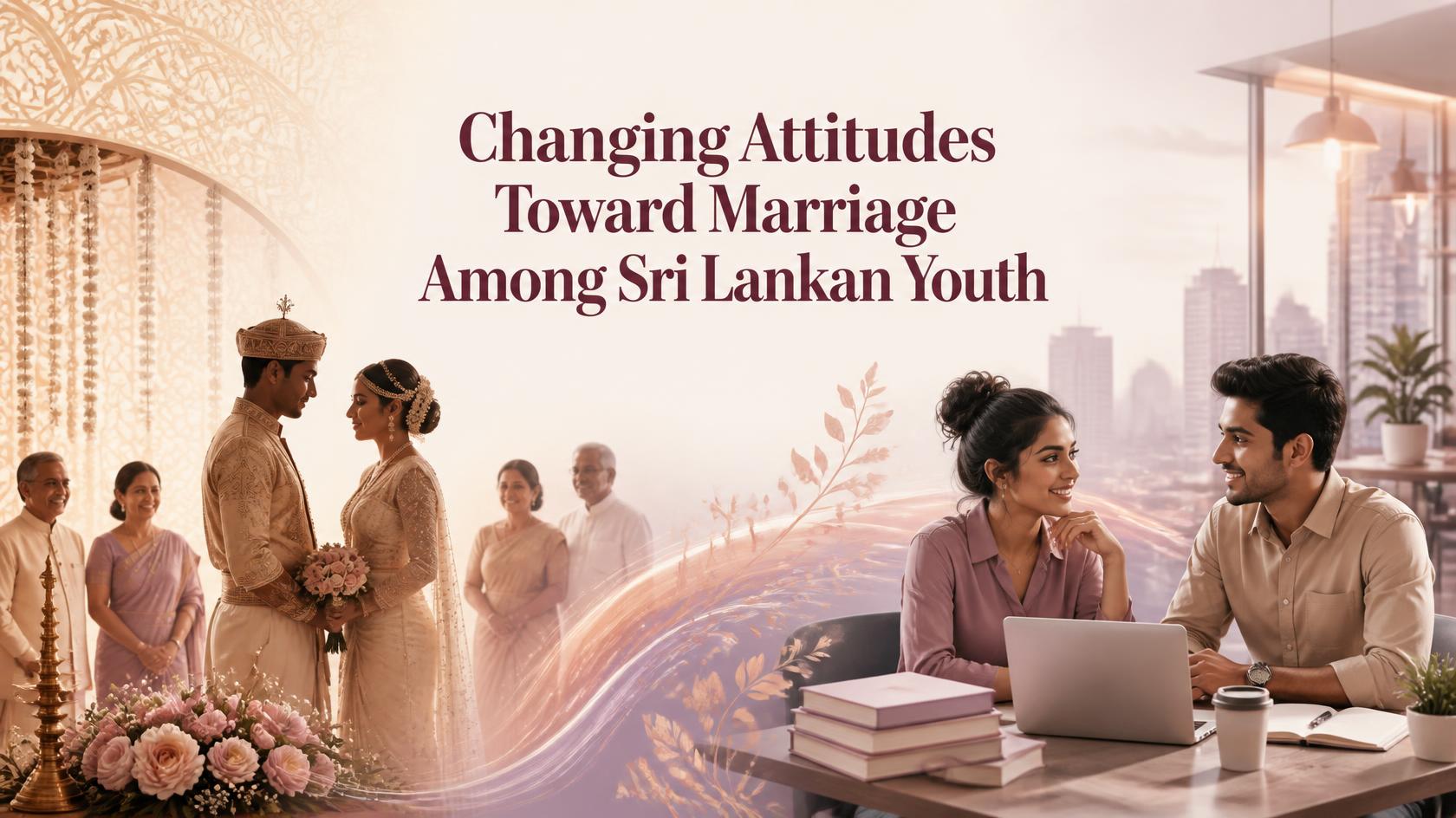
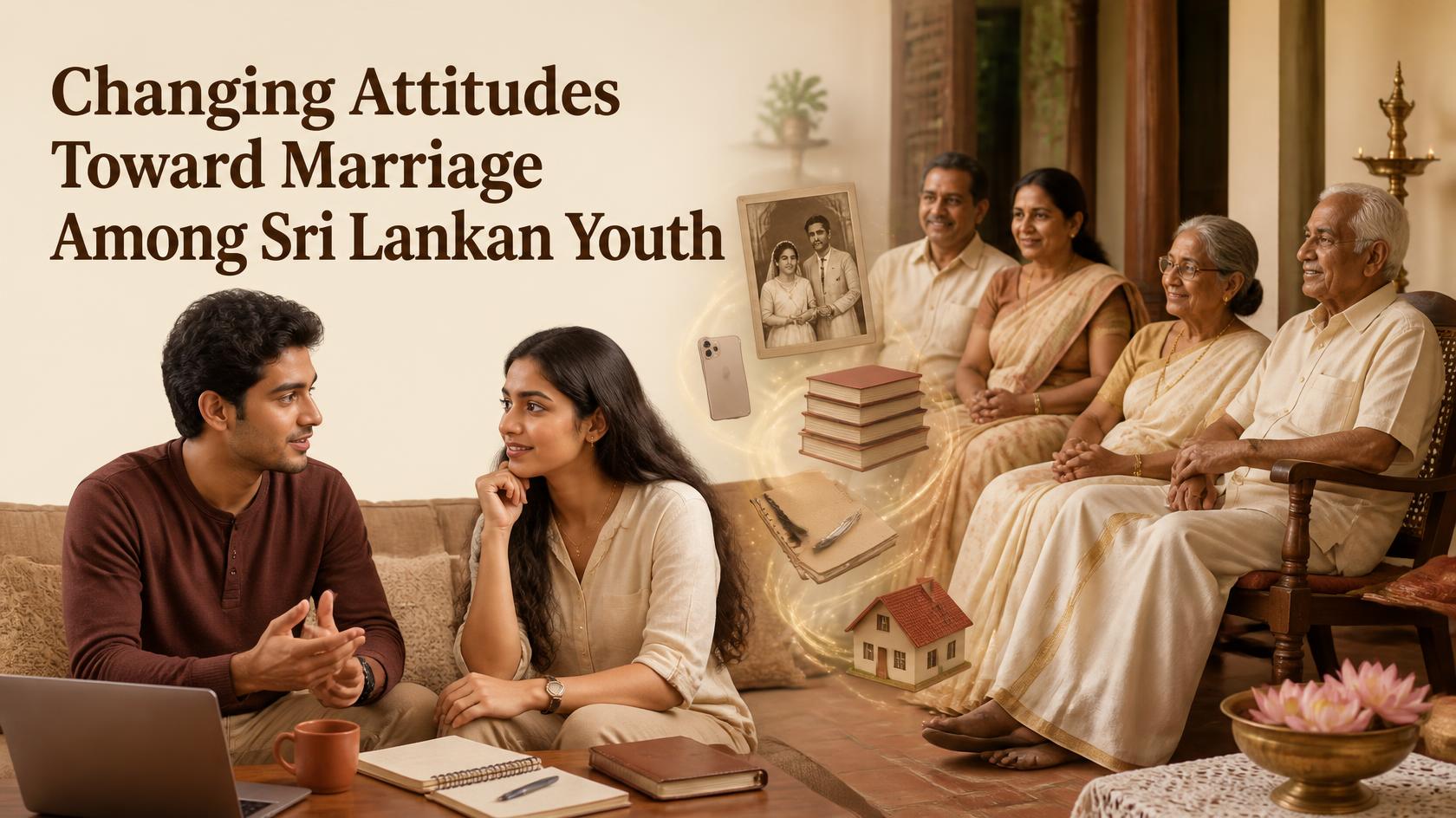
Marriage has traditionally been regarded as one of the most important institutions in Sri Lankan society. For generations, marriage was closely connected with family expectations, cultural traditions, religious values, social status, and the continuation of family life. Young people were generally expected to marry at an appropriate age, establish a household, and fulfil responsibilities toward their spouses, children, and extended families. However, attitudes toward marriage among Sri Lankan youth are changing as the country experiences social, economic, educational, technological, and cultural transformations.
Today, many young Sri Lankans continue to value marriage and family life, but their expectations regarding marriage are becoming more individualistic and flexible. Education, employment, economic uncertainty, changing gender roles, urbanization, migration, exposure to global cultures, and social media have influenced how young people understand relationships and marriage. Some young people prefer to marry later, while others question whether marriage is necessary for personal fulfilment. At the same time, many still consider marriage an important part of their future. Therefore, changing attitudes toward marriage should not simply be understood as a rejection of marriage. Rather, they reflect changing ideas about when, why, and how young people want to marry.
Traditional Attitudes Toward Marriage
In traditional Sri Lankan society, marriage was often viewed as a natural stage of adulthood. Families played an important role in selecting or approving marriage partners, particularly in more traditional communities. Parents and relatives considered factors such as family background, religion, caste, education, employment, economic position, and reputation.
Marriage was also strongly associated with responsibility. A married person was expected to establish a stable family, respect cultural traditions, and contribute to the wellbeing of the household. In many families, having children was considered an essential part of married life.
Traditional attitudes also emphasized clearly defined gender roles. Men were often expected to become financial providers, while women were expected to take greater responsibility for household management and childcare. Although these expectations still exist in some communities, they have increasingly been challenged by changes in education, employment, and women's participation in public life.
Increasing Preference for Delayed Marriage
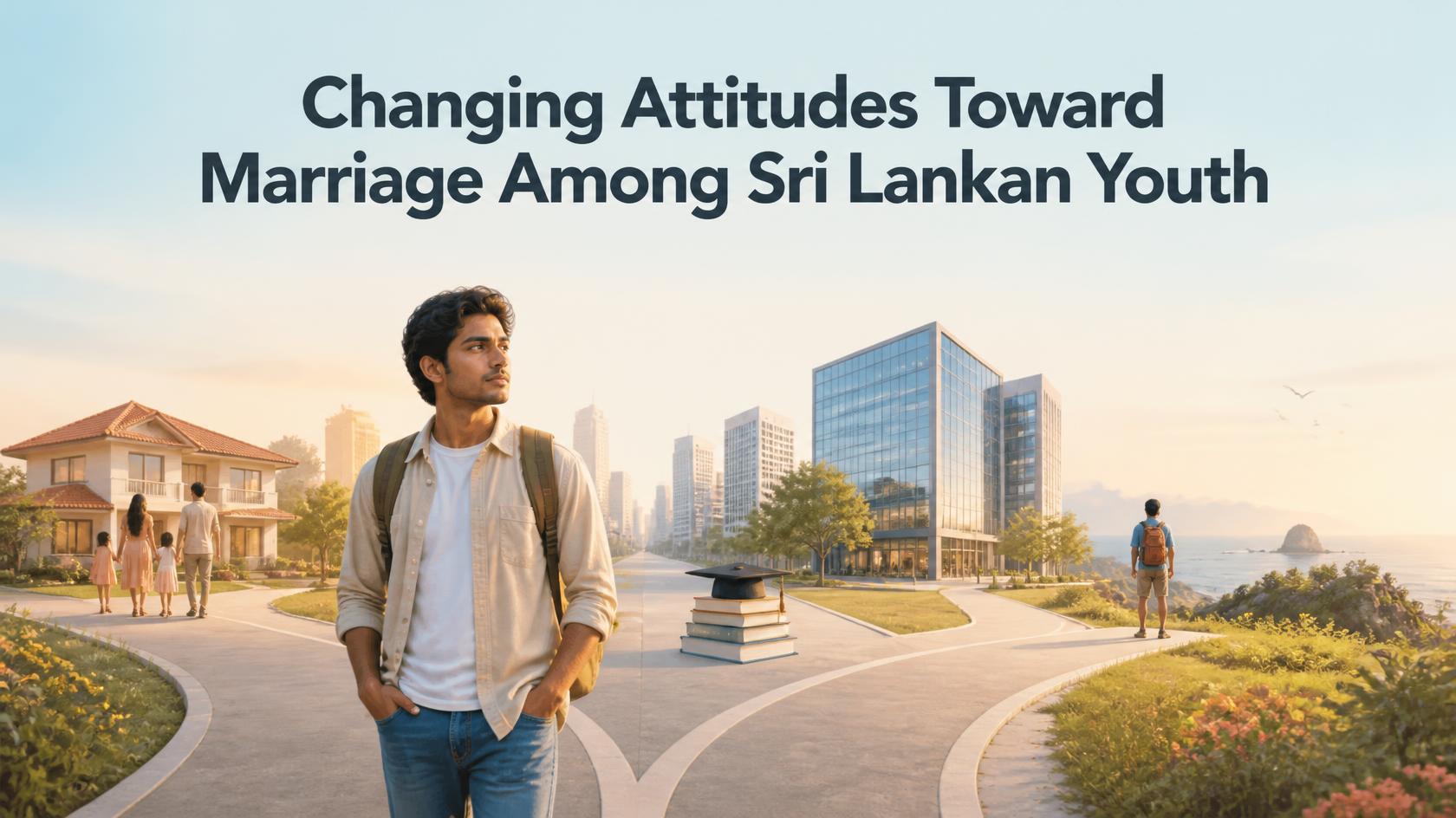
One of the most visible changes among Sri Lankan youth is the growing tendency to delay marriage. Young people increasingly want to complete their education, establish careers, achieve financial stability, and develop personal independence before entering marriage.
For many young people, marriage is no longer viewed as something that must happen immediately after completing school or entering adulthood. University education can extend the period of preparation for employment, while professional careers may require several additional years of training.
Economic conditions also influence this decision. Establishing an independent household requires money for housing, food, transportation, education, healthcare, and other expenses. Young people who face difficulties finding stable employment may therefore postpone marriage until they feel financially prepared.
The desire for financial independence is particularly significant because many young people want to enter marriage as equal partners rather than depending entirely on their parents. Consequently, career development and economic security have become important considerations when deciding whether and when to marry.
Education and Changing Perspectives
Education has played an important role in changing attitudes toward marriage. Higher education exposes young people to different ideas, lifestyles, cultures, and perspectives. University students interact with people from different social and geographical backgrounds, which can broaden their understanding of relationships and family life.
Education also encourages critical thinking and individual decision-making. Young people may be more likely to question traditional expectations and consider what is appropriate for their own lives rather than simply following established customs.
The increasing educational participation of women is particularly significant. Women who pursue university education and professional careers may prioritize personal development and employment alongside family responsibilities. Marriage may therefore be viewed as one part of life rather than the central purpose of adulthood.
However, education does not necessarily reduce the desire for marriage. Many educated young people continue to value marriage but seek relationships based on mutual respect, emotional compatibility, shared responsibilities, and equality.
Economic Challenges and Marriage
Sri Lanka's economic environment has also influenced young people's attitudes toward marriage. The cost of living, employment insecurity, housing expenses, and uncertainty about the future can make marriage appear financially difficult.
For some young people, marriage is associated with significant expenses, including ceremonies, housing, furniture, transportation, and other household requirements. Social expectations surrounding weddings can also create financial pressure. Young couples may feel that they need to meet certain standards before they can marry.
As a result, some young people prefer to establish savings and stable employment before marriage. Others may choose simpler weddings or delay marriage until their economic situation improves.
Economic pressures can also influence decisions about having children. Young couples may consider the costs of education, healthcare, childcare, and daily living when planning their families. Therefore, changing attitudes toward marriage are closely connected with changing attitudes toward economic responsibility and family planning.
Changing Gender Roles
Changing gender roles have significantly influenced attitudes toward marriage among Sri Lankan youth. Traditionally, marriage was often based on the expectation that the husband would be the primary income earner while the wife would focus mainly on domestic responsibilities.
Today, many young women pursue higher education and employment and expect to continue their careers after marriage. Young men, meanwhile, may increasingly recognize the importance of participating in household responsibilities and childcare.
This shift can influence partner selection. Young people may look for partners who support their education and career goals rather than expecting them to give up personal ambitions after marriage.
At the same time, changing gender expectations can create disagreements between generations. Parents may hold more traditional views about the responsibilities of husbands and wives, while young people may prefer a more equal partnership.
Love, Compatibility, and Individual Choice
Another important change is the growing importance of emotional compatibility and personal choice. Traditionally, family approval and social compatibility were often major considerations in marriage decisions. Today, many young people place greater emphasis on love, trust, friendship, communication, and emotional understanding.
Young people increasingly want to know their potential partners before marriage. They may consider personality, values, career goals, attitudes toward money, religious beliefs, communication styles, and expectations regarding children.
This does not mean that family involvement has disappeared. In many Sri Lankan families, parental approval remains important. However, the balance between individual choice and family influence appears to be changing. Young people may expect their families to provide guidance rather than make the final decision on their behalf.
Influence of Social Media and Technology
Digital technology has transformed how young people meet, communicate, and develop relationships. Social media platforms and messaging applications have created new opportunities for people to connect beyond traditional social networks.
Technology can help young people maintain relationships across geographical distances. It can also expose them to different perspectives on love, marriage, gender roles, and family life.
At the same time, social media can create unrealistic expectations. Young people may compare their relationships, weddings, or lifestyles with carefully presented images of other people's lives. Romantic content online can sometimes create idealized expectations about relationships that may not reflect everyday reality.
Online dating and digital communication have also changed how some young people approach relationships. However, concerns about privacy, deception, trust, harassment, and social acceptance remain important considerations.
Changing Views on Family and Children
Attitudes toward children are also changing alongside attitudes toward marriage. Traditionally, having children was often considered an essential part of married life. Today, some young couples may choose to have fewer children or postpone parenthood.
Young people may want to establish careers, achieve financial stability, travel, or develop their relationship before becoming parents. The increasing cost of raising children can also influence these decisions.
Nevertheless, family and parenthood remain important values for many Sri Lankan youth. The change is often more about timing, number of children, and shared responsibility than a complete rejection of family life.
Urban and Rural Differences
Attitudes toward marriage are not uniform across Sri Lanka. Differences can exist according to geographical location, socioeconomic background, education, religion, family structure, and exposure to different cultures.
Young people in urban areas may have greater exposure to diverse lifestyles and employment opportunities, potentially encouraging more individualistic attitudes toward marriage. Rural youth may remain more strongly connected to extended families and community expectations.
However, it would be inaccurate to assume that all urban youth reject traditional values or that all rural youth follow them. Sri Lankan society is changing across different communities, and young people often combine traditional values with modern expectations.
Migration and Global Influence
International migration has also contributed to changing attitudes. Sri Lankan youth may encounter different approaches to relationships and marriage through overseas education, employment, travel, relatives living abroad, and global media.
Young people may become familiar with societies where individuals marry later, where both partners commonly work, or where household responsibilities are more equally distributed.
Migration can also create long-distance relationships and marriages between people from different cultural backgrounds. Such experiences can broaden young people's understanding of what marriage can look like.
However, global influence does not necessarily eliminate local traditions. Many young Sri Lankans continue to maintain religious and cultural practices while adopting selected aspects of modern lifestyles.
Challenges Associated with Changing Attitudes
Although changing attitudes can provide greater freedom and equality, they can also create new challenges. Differences between parents and children regarding marriage can result in family conflicts.
Parents may worry about their children's age, choice of partner, financial stability, or social reputation. Young people, on the other hand, may feel pressured when their personal choices do not match family expectations.
There can also be challenges within relationships. When both partners have demanding careers, decisions about household work, childcare, finances, and caring for elderly parents may require greater communication and cooperation.
Therefore, changing attitudes toward marriage require not only greater individual freedom but also improved communication, mutual respect, and shared responsibility.
The Future of Marriage Among Sri Lankan Youth
The future of marriage among Sri Lankan youth is likely to involve a combination of traditional and modern values. Marriage is unlikely to disappear as a social institution, but the meaning attached to it may continue to change.
Young people may increasingly seek marriages based on equality, emotional compatibility, mutual support, financial cooperation, and shared decision-making. Marriage may be entered into at a later age, after individuals have achieved educational and career goals.
At the same time, cultural and religious traditions are likely to remain important. Many young people may continue to value family approval, traditional ceremonies, religious practices, and close relationships with parents and relatives.
The important change is that young people increasingly want a greater role in deciding how these traditions fit into their own lives.
Conclusion
Changing attitudes toward marriage among Sri Lankan youth reflect wider transformations taking place within Sri Lankan society. Education, employment, economic challenges, changing gender roles, technology, globalization, migration, and increasing emphasis on individual choice have all contributed to new perspectives on marriage.
Many young people no longer consider marriage simply an expected stage of life that must be entered at a particular age. Instead, they increasingly view it as a personal decision that should be based on emotional maturity, compatibility, financial preparedness, mutual respect, and shared goals.
However, these changes do not mean that Sri Lankan youth have completely abandoned traditional values. Family, culture, religion, and social relationships continue to influence many young people's decisions. Rather, traditional values are increasingly being negotiated alongside modern ideas about independence, equality, education, and personal fulfilment.
Understanding these changing attitudes is important because marriage remains closely connected with family formation and broader social change. The experiences and expectations of today's youth will influence the nature of Sri Lankan families in the future. A healthy approach to marriage should therefore recognize both cultural values and individual rights, while encouraging communication, equality, responsibility, and mutual respect between partners.
Ultimately, the changing attitudes of Sri Lankan youth demonstrate that marriage is not a fixed institution. Its meaning continues to evolve with society. The future of marriage in Sri Lanka will likely be shaped by young people's ability to balance cultural traditions with changing social realities and their desire to build relationships based on understanding, equality, and genuine partnership.
Additional Media