Introduction
Education has long been considered one of Sri Lanka's greatest achievements. Since the introduction of free education in 1945, the country has made significant progress in improving literacy rates, expanding access to schools, and promoting social mobility. Sri Lanka's education system has often been recognized internationally for its relatively high literacy rate and broad access to primary and secondary education compared to many countries in the region.
Education plays a vital role in national development. It equips individuals with knowledge, skills, values, and opportunities that contribute to economic growth, social cohesion, and democratic participation. A strong education system also helps reduce poverty, improve health outcomes, and create a more productive workforce.
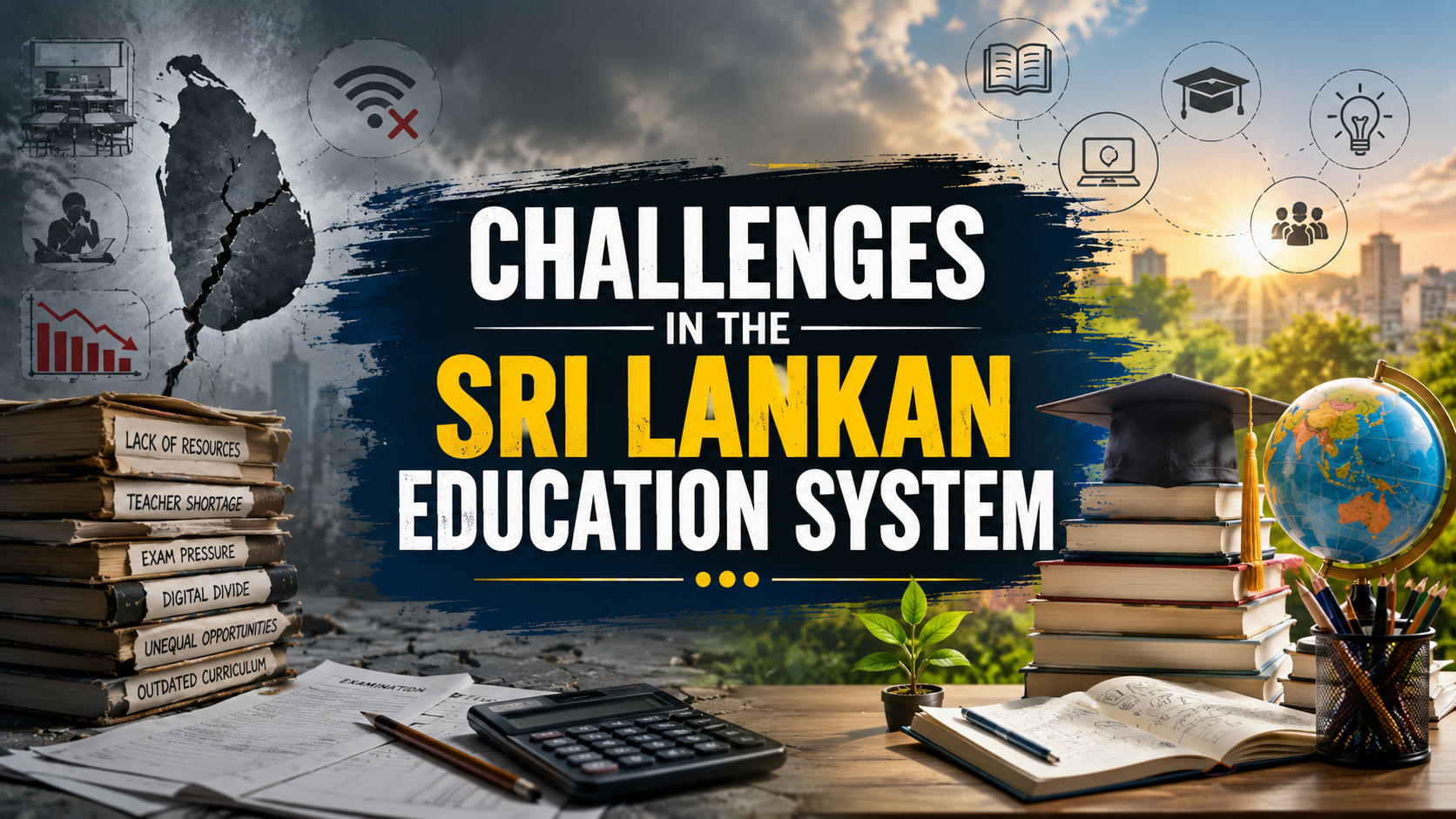
Despite these accomplishments, the Sri Lankan education system continues to face numerous challenges that affect students, teachers, parents, and policymakers. Rapid technological advancements, economic pressures, inequalities in educational opportunities, and changing labour market demands have highlighted several structural weaknesses within the system.
This article explores the major challenges facing the Sri Lankan education system, their impact on society, and possible solutions for building a more inclusive, equitable, and future-oriented education sector.
Historical Background of Education in Sri Lanka
Sri Lanka has a rich educational history dating back thousands of years. Ancient temples and monasteries served as centers of learning, providing education in religion, language, philosophy, and the arts.
Modern education developed during the colonial period under Portuguese, Dutch, and British rule. However, one of the most transformative developments occurred with the introduction of free education under the leadership of Dr. C. W. W. Kannangara, often referred to as the "Father of Free Education" in Sri Lanka.
The free education policy significantly increased access to schooling across the country and helped reduce social inequalities. Today, Sri Lanka maintains a large network of government schools, private schools, and higher education institutions serving millions of students.
While these achievements remain noteworthy, the education system must continuously adapt to changing social, economic, and technological conditions.
Importance of Education in National Development
Education contributes to national development in several ways:
Improving literacy and knowledge.
Developing human capital.
Reducing poverty.
Promoting social equality.
Encouraging innovation.
Strengthening democratic values.
Supporting economic growth.
Countries that invest effectively in education often experience higher levels of productivity and competitiveness in the global economy.
For Sri Lanka, improving educational quality remains essential for achieving sustainable development and preparing future generations for emerging opportunities.
Major Challenges in the Sri Lankan Education System
1. Inequality in Access to Quality Education
Although education is widely available, access to quality education remains uneven.
Students in urban areas often benefit from:
Better infrastructure.
Experienced teachers.
Modern laboratories.
Digital learning resources.
Strong extracurricular programs.
In contrast, many rural and remote schools face shortages of facilities and educational materials.
Educational inequalities can be observed in:
Provincial disparities.
Urban-rural differences.
Access to technology.
Availability of qualified teachers.
As a result, students' educational outcomes are often influenced by their geographical location rather than their abilities and efforts.
2. Shortage of Qualified Teachers
Teachers are central to educational success. However, Sri Lanka continues to experience shortages of qualified teachers in several subject areas, particularly:
Mathematics.
Science.
English.
Information Technology.
Special education.
Teacher shortages are more severe in rural and disadvantaged regions.
Some schools operate with limited staff, requiring teachers to manage multiple subjects or large classrooms. These conditions can affect teaching quality and student engagement.
Continuous professional development programs are necessary to ensure that teachers remain equipped with modern teaching methods and technological skills.
3. Examination-Centered Education
One of the most frequently discussed challenges in Sri Lanka is the heavy emphasis on examinations.
Major examinations include:
Grade Five Scholarship Examination.
G.C.E. Ordinary Level Examination.
G.C.E. Advanced Level Examination.
Academic success is often measured primarily through examination performance.
This examination-oriented culture can lead to:
Excessive academic pressure.
Increased competition.
Limited creativity.
Memorization-based learning.
Mental stress among students.
Many educators argue that education should focus not only on examination results but also on critical thinking, problem-solving, communication, and practical skills.
4. Limited Focus on Practical Skills
Modern economies require individuals with diverse skills.
However, the Sri Lankan education system has traditionally placed greater emphasis on theoretical knowledge rather than:
Entrepreneurship.
Digital literacy.
Leadership.
Communication.
Teamwork.
Financial literacy.
Problem-solving.
Many graduates enter the labour market without sufficient practical experience.
Strengthening vocational education and integrating practical learning opportunities into school curricula can better prepare students for future employment.
5. Digital Divide
Technology has become an essential component of modern education.
The COVID-19 pandemic highlighted significant inequalities in access to digital learning resources.
Many students experienced difficulties related to:
Limited internet access.
Lack of computers or smartphones.
Poor connectivity.
Insufficient digital literacy.
Students in rural communities were disproportionately affected.
Bridging the digital divide is essential for ensuring equal educational opportunities in an increasingly digital world.
6. Inadequate School Infrastructure
Many schools continue to face infrastructure challenges.
Common issues include:
Insufficient classrooms.
Poor sanitation facilities.
Limited laboratory equipment.
Inadequate libraries.
Lack of sports facilities.
Poor maintenance.
Infrastructure deficiencies can negatively affect learning environments and student motivation.
Investment in school infrastructure remains an important priority for improving educational quality.
7. High Competition for University Admission
Sri Lanka's public universities offer high-quality education at relatively low cost. However, available university placements remain limited.
Each year, a large number of students qualify for higher education, but only a portion gain admission to state universities.
This creates challenges such as:
Intense competition.
Student frustration.
Delayed career development.
Increased demand for private education.
Expanding higher education opportunities through public-private partnerships and vocational institutions could help address this issue.
8. Mismatch Between Education and Employment
Employers increasingly seek graduates with specialized and practical skills.
However, concerns remain regarding the alignment between educational programs and labour market requirements.
Challenges include:
Graduate unemployment.
Skills mismatches.
Limited industry exposure.
Insufficient internship opportunities.
Strengthening collaboration between educational institutions and industries can improve employability outcomes.
9. Mental Health Challenges Among Students
Student mental health has received increasing attention in recent years.
Academic pressure, family expectations, and social competition can contribute to:
Anxiety.
Stress.
Depression.
Burnout.
Low self-esteem.
Mental health support services remain limited in many schools.
Educational institutions should prioritize student well-being through counseling services, awareness programs, and supportive learning environments.
10. Language Barriers
Sri Lanka's multilingual society presents both opportunities and challenges.
Some students face difficulties related to:
English language proficiency.
Access to learning materials.
Communication barriers.
English remains an important skill for higher education, international employment, and technological advancement.
Improving language education can enhance opportunities for students across all sectors.
11. Economic Challenges Affecting Education
Economic difficulties have affected many families' ability to support educational expenses.
Common financial challenges include:
Transportation costs.
Tuition expenses.
School supplies.
Internet costs.
Educational materials.
Economic inequalities can influence educational outcomes and increase disparities among students.
Providing targeted support for vulnerable households remains important for ensuring educational equity.
12. Challenges in Special Education
Students with disabilities often encounter barriers to accessing quality education.
These challenges include:
Limited specialized teachers.
Inadequate facilities.
Insufficient learning materials.
Accessibility issues.
Inclusive education policies are essential for ensuring equal opportunities for all students.
Investing in teacher training and accessible infrastructure can significantly improve educational experiences for students with special needs.
Impact of Educational Challenges on Society
Educational challenges have broader implications for society.
Potential consequences include:
Reduced economic productivity.
Higher unemployment.
Social inequalities.
Lower innovation capacity.
Reduced global competitiveness.
A country's education system directly influences its long-term development prospects.
Addressing educational challenges therefore benefits not only individual students but also society as a whole.
Government Initiatives
The Sri Lankan government has introduced several initiatives aimed at improving education, including:
Curriculum reforms.
Teacher training programs.
School infrastructure development.
Expansion of digital education.
Educational technology initiatives.
Scholarships and financial assistance.
While these efforts have produced positive outcomes, continued investment and effective implementation remain necessary.
Possible Solutions
1. Improve Educational Equity
Efforts should focus on reducing disparities between urban and rural schools by improving infrastructure and resource allocation.
2. Strengthen Teacher Development
Continuous training programs can help teachers adapt to changing educational needs and technologies.
3. Modernize the Curriculum
Curricula should emphasize:
Critical thinking.
Innovation.
Entrepreneurship.
Digital skills.
Practical learning.
4. Expand Higher Education Opportunities
Increasing university capacity and supporting vocational education can improve access to higher education.
5. Invest in Educational Technology
Providing affordable internet access and digital devices can help bridge the digital divide.
6. Enhance Mental Health Support
Schools should provide counseling services and promote positive learning environments.
7. Promote Industry Collaboration
Partnerships between educational institutions and employers can improve graduate employability.
The Future of Education in Sri Lanka
The future of education in Sri Lanka depends on the country's ability to adapt to emerging challenges.
Important trends include:
Digital transformation.
Artificial Intelligence in education.
Online learning.
Lifelong learning.
Skills-based education.
Global collaboration.
Educational systems that remain flexible and innovative are better positioned to prepare students for rapidly changing environments.
Sri Lanka possesses significant potential to become a regional leader in education if investments in quality, inclusivity, and innovation continue.
Conclusion
The Sri Lankan education system has achieved remarkable progress over the past several decades, particularly through its commitment to free education and widespread literacy. However, numerous challenges continue to affect educational quality, equity, and accessibility.
Issues such as educational inequality, teacher shortages, examination pressure, infrastructure limitations, digital disparities, and graduate unemployment highlight the need for comprehensive reforms. Addressing these challenges requires collaboration among government institutions, educators, parents, communities, and the private sector.
Education remains one of the most powerful tools for national development. By investing in students, supporting teachers, embracing innovation, and promoting equal opportunities, Sri Lanka can build an education system that prepares future generations to succeed in an increasingly interconnected and competitive world.
Ultimately, the success of Sri Lanka's education system will depend not only on policies and institutions but also on the collective commitment to ensuring that every child has access to quality education and the opportunity to achieve their full potential.
Additional Media