Can Sri Lankan Small Businesses Reach International Markets?
Rakshika Rathnayake11/9/20265 min read
Share:Facebook
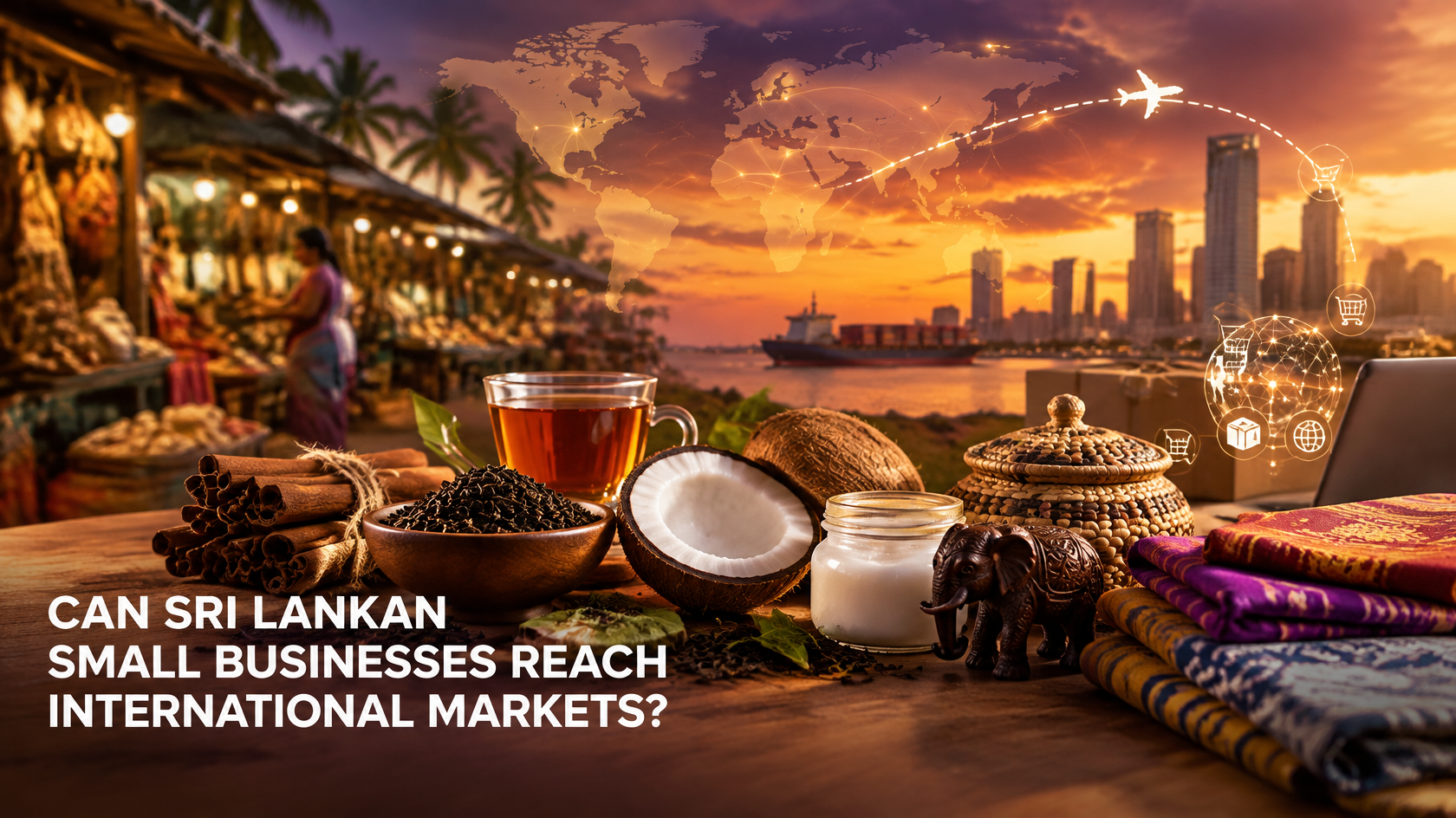
For many years, international trade was seen as something mainly for large companies with factories, export departments, overseas agents and substantial financial resources. A small business in Sri Lanka often focused on serving customers within its own town, district or the national market. However, the business environment is changing rapidly. Today, a small Sri Lankan business can potentially communicate with customers in another country through a website, social media platform or online marketplace. It can receive international inquiries, promote products digitally and build relationships with overseas buyers without maintaining a physical office abroad.
So, can Sri Lankan small businesses reach international markets? The answer is yes—but reaching global customers requires much more than simply creating a Facebook page or uploading products to a website. Businesses need the right product, quality standards, market knowledge, branding, digital skills, reliable logistics and an understanding of international regulations.
Sri Lanka already has many advantages that can help small businesses compete internationally. The country is known around the world for products such as Ceylon tea, cinnamon and other spices, apparel, coconut-based products, gemstones, handicrafts and increasingly for IT and digital services. Recent national export initiatives are also placing greater emphasis on helping smaller businesses become export-ready and connect with overseas markets. Sri Lanka Business
Why International Markets Matter for Small Businesses
Depending entirely on the Sri Lankan market can limit a company's growth. Sri Lanka has a relatively small domestic market compared with major economies. Even when a business creates an excellent product, the number of potential local customers may eventually become limited.
International markets can provide access to millions of additional customers.
For example, a small Sri Lankan company producing premium cinnamon products may find a specialised market among consumers who value authentic, high-quality spices. A local fashion brand may attract overseas Sri Lankans and international customers interested in sustainable clothing. A software company in Colombo, Kandy or another region can potentially provide digital services to businesses located thousands of kilometres away.
Exporting can also help businesses diversify their income. If domestic demand becomes weak, overseas customers may provide an additional source of revenue. Earning foreign currency is also important for businesses that need to purchase imported equipment, technology or raw materials.
However, entering international markets should not be viewed as a quick way to become successful. Global customers have many choices. Sri Lankan businesses must compete with companies from countries that may have larger production capacity, lower costs or stronger international brands. Therefore, small businesses need a clear strategy rather than simply trying to sell everywhere.
Sri Lanka Has Products With International Potential
One of Sri Lanka's greatest strengths is its ability to offer products with a distinctive identity. Small businesses do not always need to compete directly with mass producers. Instead, they can focus on products that have a strong story, unique quality or connection to Sri Lanka.
Food and agricultural products
Sri Lankan spices, coconut-based products, processed foods and natural ingredients can attract overseas consumers. Products such as cinnamon, pepper, coconut products and speciality food items can become more valuable when businesses improve processing, packaging and branding.
Instead of exporting only raw materials, small businesses can create value-added products. For example, rather than selling a basic ingredient, a company could develop a premium packaged product designed specifically for international consumers.
Handicrafts and lifestyle products
Sri Lankan artisans and small manufacturers produce handmade goods, home décor, textiles, jewellery and other lifestyle products. These can appeal to international buyers looking for authentic and distinctive products.
The challenge is maintaining consistent quality while increasing production. A handmade product may be beautiful, but international customers also expect reliable delivery, accurate product information and professional packaging.
Digital and professional services
International opportunities are not limited to physical products. Sri Lankan entrepreneurs can also sell services globally.
Software development, graphic design, digital marketing, web development, accounting support, content creation and other professional services can be delivered internationally through digital communication. This is particularly important because service businesses may avoid some of the physical logistics challenges involved in exporting products.
Sri Lanka's National Export Development Plan for 2026–2030 identifies areas including digital products and services, processed foods, spices and other higher-potential sectors as important parts of future export growth. Sri Lanka Business
E-Commerce Is Opening New Doors
The internet has significantly reduced some of the barriers between a small business and an international customer.
In the past, a business often needed overseas distributors or expensive international marketing campaigns to reach foreign markets. Today, a small company can use a professional website, social media, online marketplaces and digital advertising to introduce its products to international audiences.
Recent research on Sri Lankan trade found that more than 70% of surveyed exporters were using e-commerce channels for cross-border business, while 72% of surveyed MSME exporters used digital tools to reach international markets. This shows that online trade is no longer only an opportunity for large companies. ODI: Think change
Digital platforms can help a business test demand before making a large investment. For example, a small company can study which countries respond positively to its products, analyse customer inquiries and gradually build a customer base.
Social media is particularly useful for businesses with visually attractive products. High-quality photographs and videos can show how a product is made, explain its Sri Lankan origin and build trust with potential buyers.
However, online visibility alone does not guarantee international sales. A business must still solve important practical issues such as payment, shipping, customs requirements and customer service.
Quality Standards Are Essential
One of the biggest differences between selling locally and selling internationally is the level of compliance required.
Different countries may have specific requirements for food safety, product labelling, ingredients, packaging and environmental standards. Some markets also require recognised certifications.
A small business therefore needs to research the requirements of its target market before accepting orders.
For example, food products may require detailed information about ingredients, allergens, production dates and expiry dates. Cosmetic products may have specific safety and labelling requirements. Electrical products may need to meet technical standards.
Businesses should not assume that a product accepted in Sri Lanka will automatically be accepted in another country.
Quality must also be consistent. An overseas buyer who receives one excellent shipment but a poor-quality second shipment may stop doing business with the company. Small businesses therefore need clear production procedures, quality checks and reliable suppliers.
Current Sri Lankan export-support programmes specifically focus on areas such as regulatory compliance, certification, packaging, branding and sustainability because these factors are increasingly important for international competitiveness. Sri Lanka Business
Branding Can Help Small Businesses Stand Out
A small business cannot always compete with large international companies on price. However, it may be able to compete through identity and value.
A strong brand answers an important question: Why should a customer choose this product?
Sri Lankan businesses can use their country's unique strengths as part of their brand story. Authentic ingredients, traditional craftsmanship, ethical production and sustainable practices can all create additional value when they are genuine and clearly communicated.
Good branding includes more than a logo. It involves:
- Professional product packaging
- A clear brand identity
- Accurate product information
- High-quality photographs and videos
- A reliable website or online presence
- Consistent communication
- A strong customer experience
A business selling internationally must also understand the expectations of its target audience. Packaging that appeals to local customers may not necessarily appeal to customers in Europe, Asia or North America.
Market research is therefore essential.
Choosing the Right Market Is Important
A small business should not attempt to enter every country at once.
Instead, it should begin by identifying one or two suitable markets. The ideal market may depend on the product, competition, regulations, shipping costs and customer demand.
For some Sri Lankan businesses, countries with large Sri Lankan communities may provide an easier starting point because customers may already be familiar with Sri Lankan products. Other businesses may target consumers interested in organic products, sustainable goods or specialised premium products.
Before entering a market, businesses should research:
- Who the potential customers are
- What products competitors offer
- Expected price ranges
- Import regulations
- Shipping costs
- Taxes and duties
- Customer preferences
- Payment options
- Delivery expectations
A business may discover that a product with strong demand in one country has very little potential in another.
This is why exporting should be based on research rather than assumptions.
Logistics Remain a Major Challenge
Although digital platforms make it easier to find customers, physically delivering products internationally can still be difficult.
Shipping costs can be expensive, especially for small orders. Customs procedures and documentation can also create delays.
Recent research involving Sri Lankan trading firms identified customs delays, complex documentation and long fulfilment times as major challenges for cross-border e-commerce. Around two-thirds of surveyed e-commerce traders identified customs delays as a significant barrier, while documentation requirements affected many businesses. ODI: Think change
This is particularly challenging for small businesses because they may not have the resources to maintain large international logistics operations.
Businesses can reduce some of these difficulties by working with experienced freight forwarders, courier services and export specialists. Understanding packaging requirements, shipping documents and delivery terms before receiving international orders can prevent costly mistakes.
Reliable delivery is extremely important. International customers may accept a longer delivery time if it is clearly communicated, but unexpected delays and poor communication can damage trust.
International Payments and Financial Planning
Receiving payments from overseas customers is another important issue.
Small businesses need secure and reliable payment methods that work for both the company and the customer. They must also consider currency conversion, transaction fees and payment delays.
A business should never focus only on the product's selling price. It must calculate the full cost of exporting, including:
- Production costs
- Packaging
- International shipping
- Insurance
- Customs-related costs
- Platform fees
- Payment processing charges
- Marketing expenses
- Returns or customer support
A product that appears profitable may become unprofitable once all international costs are included.
Financial planning is therefore essential before expanding overseas.
Digital Skills Will Become Increasingly Important
International business is becoming more digital. Small companies increasingly need skills in online marketing, data analysis, cybersecurity and customer communication.
Artificial intelligence can also help businesses research overseas markets, create marketing content, improve customer communication and reduce routine administrative work. However, technology should support good business decisions rather than replace proper planning.
Sri Lanka's recent SME export initiatives have increasingly focused on improving digital capabilities and helping regional businesses use new technologies to become more competitive. EconomyNext
Businesses should also protect themselves against online fraud and cybersecurity risks. International trade often involves communicating with unfamiliar customers and suppliers, making verification and secure digital practices essential.
Government and Institutional Support Can Help
Small businesses do not have to navigate international markets entirely alone.
The Sri Lanka Export Development Board provides export-related information and maintains programmes designed to support businesses that want to develop international market opportunities. Its current export initiatives include training, export market planning and market-access support. Sri Lanka Business
The Sri Lanka Export Excellence Initiative, for example, has focused on helping SMEs improve their export readiness through areas such as market-entry knowledge, export marketing plans and connections with international markets. Sri Lanka Business
By November 2026, reports indicated that hundreds of Sri Lankan SMEs had participated in awareness programmes and business clinics connected with this broader initiative. EconomyNext
Such programmes can be particularly useful for entrepreneurs who understand their products but have limited knowledge about export procedures.
What Small Businesses Should Do First
A small business interested in international expansion should take a gradual approach.
First, evaluate the product. Is there a clear reason why international customers would want it?
Second, select a target market. Do not try to target the entire world.
Third, research regulations and standards. Understand what is legally required before shipping products.
Fourth, improve branding and packaging. The product must look professional and communicate clearly.
Fifth, calculate all costs. Include shipping, marketing and payment costs—not just production.
Sixth, create a professional digital presence. A good website and strong social media can help international customers trust the business.
Seventh, test the market. Begin with smaller orders where possible and learn from customer feedback.
Finally, scale gradually. International expansion should be sustainable. Growing too quickly without reliable production capacity can damage a business's reputation.
Conclusion
Sri Lankan small businesses can reach international markets, and the opportunities are becoming more accessible than ever. Digital technology, e-commerce and improved export-support programmes have reduced some of the traditional barriers that once prevented small companies from finding overseas customers.
However, international success requires preparation. A good product alone is not enough. Businesses must understand their customers, meet international standards, manage logistics, develop strong branding and calculate their costs carefully.
The future may be especially promising for Sri Lankan businesses that focus on value-added products and services rather than competing only on low prices. Authentic Sri Lankan products, specialised foods, spices, coconut-based goods, handicrafts, fashion, technology and professional services all have potential when supported by quality and effective marketing.
The key is to think beyond the local market while building carefully from a strong foundation. A small business does not need to become a large multinational company overnight. It can begin with one product, one market and a small number of international customers.
With the right strategy, a business that starts in a Sri Lankan village, town or city can increasingly build relationships with customers around the world. The international market is competitive and challenging, but for prepared and innovative Sri Lankan entrepreneurs, it is no longer out of reach
Additional Media