Can Sri Lankan Content Creators Turn Viral Videos Into a Career?
Rakshika Rathnayake10/12/20265 min read
Share:Facebook
Introduction
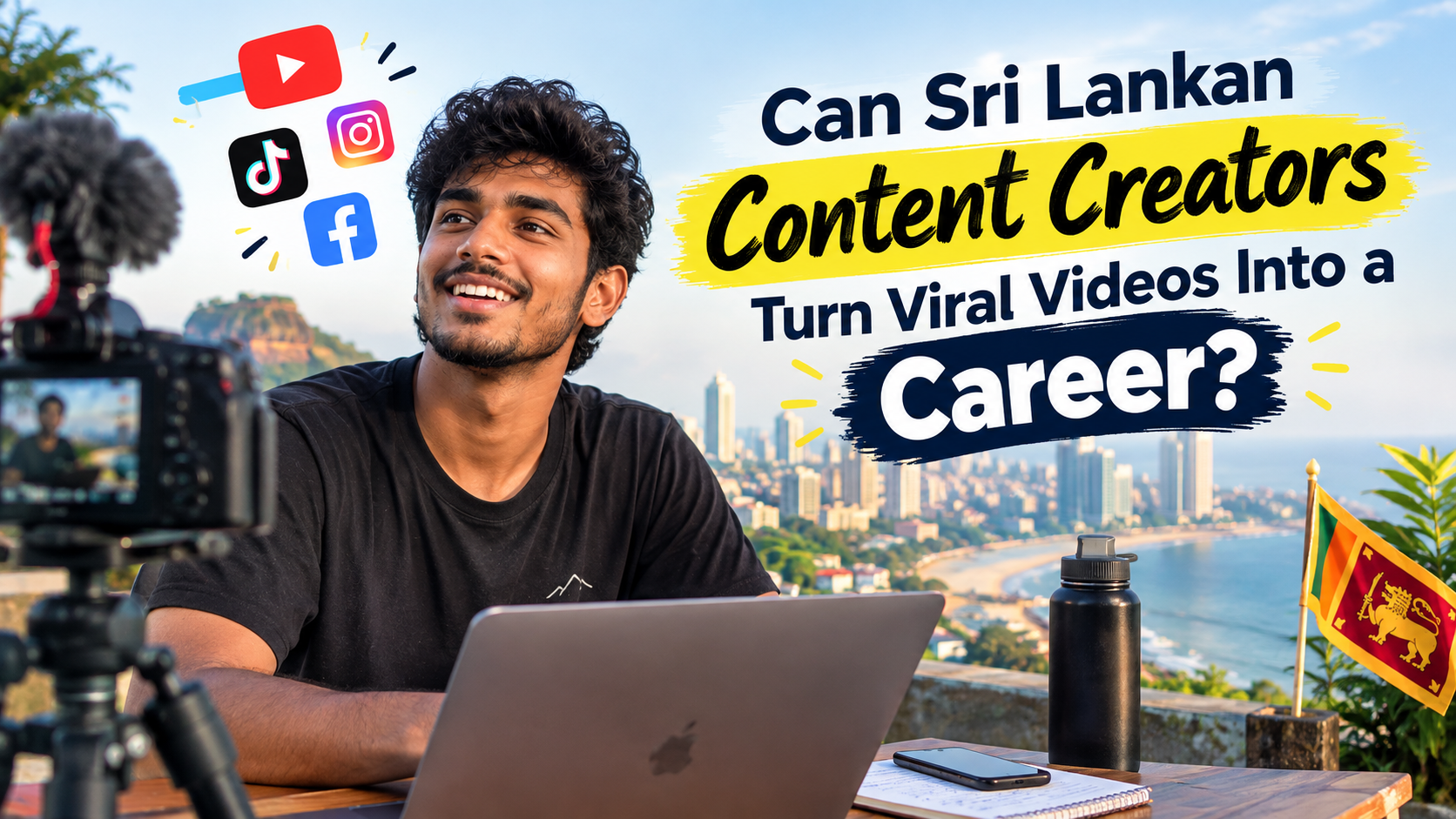
A video recorded on a mobile phone can sometimes reach hundreds of thousands of people within a few hours. A funny moment, a cooking demonstration, a travel experience, a street interview, or a short explanation of an everyday problem can suddenly become popular on social media. For some Sri Lankans, creating videos has developed from a hobby into an opportunity to earn money, build a personal brand, and establish a career in the digital world.
Platforms such as YouTube, TikTok, Facebook, and Instagram have changed the way people create and consume entertainment and information. In the past, becoming a well-known entertainer or media personality often required access to television, radio, newspapers, or established production companies. Today, a person with a smartphone, an internet connection, and a good idea can publish content and reach an audience without relying on traditional media organisations.
However, becoming popular online and building a sustainable career are two different things. A viral video may attract thousands of followers, but it does not automatically produce a regular income. Content creators must understand their audiences, develop useful skills, follow platform rules, manage their finances, and consistently produce content that people want to watch.
So, can Sri Lankan content creators turn viral videos into a career? The answer is yes, but success usually requires much more than one popular video. It depends on creativity, consistency, business knowledge, and the ability to turn temporary attention into long-term audience trust.
1. The Growing Popularity of Content Creation in Sri Lanka
Social media has become an important part of everyday life in Sri Lanka. People use digital platforms to communicate with friends, watch entertainment, learn new skills, discover products, follow public figures, and stay informed about current events.
The widespread use of smartphones has made video creation more accessible. A person does not necessarily need an expensive camera, a professional studio, or advanced editing equipment to begin. Many creators start with a basic mobile phone and gradually improve their equipment as their audience grows.
Sri Lankan creators produce many different types of content. Some make comedy videos based on family relationships, workplace experiences, and familiar social situations. Others share recipes, beauty advice, fashion ideas, travel experiences, educational explanations, technology reviews, and daily life stories.
Local languages also give creators an advantage. Videos in Sinhala and Tamil can connect with audiences through familiar expressions, cultural references, humour, and everyday experiences. English-language content can also help creators reach international viewers, including Sri Lankans living overseas.
The country's cultural diversity creates opportunities for different styles of content. A creator might introduce traditional food, explain regional customs, explore historical locations, or document the lives of small business owners. These subjects can appeal to local viewers while also attracting people interested in Sri Lankan culture.
Nevertheless, content creation is a competitive field. Thousands of videos compete for viewers' attention every day. Creators need to offer something distinctive rather than simply copying whatever is currently popular.
2. Why Do Some Videos Go Viral?
A viral video is a video that spreads rapidly and reaches an unusually large audience through views, shares, recommendations, and discussions. There is no single formula that guarantees virality. A video may become popular because it is entertaining, informative, emotional, surprising, timely, or closely connected to an issue people are already discussing.
For example, a short comedy video about a familiar family situation may encourage viewers to tag their friends. A video showing an affordable travel destination may be shared by people planning trips. A practical explanation of a common mobile phone problem may attract viewers who need a solution.
Several factors can improve a video's chances of reaching a wider audience.
Relatable content: People are more likely to engage with videos that reflect their own experiences, challenges, interests, or sense of humour.
A strong opening: The first few seconds can influence whether viewers continue watching. A clear question, an interesting moment, or a direct explanation of what the video offers can capture attention.
Good storytelling: Even a short video benefits from a clear beginning, middle, and ending. Viewers should quickly understand what is happening and why it matters.
Appropriate timing: Content connected to a current event, seasonal activity, public discussion, or emerging trend may attract attention while interest is high.
Shareability: People often share videos that make them laugh, teach them something useful, express an opinion, or help them communicate an idea.
However, creators should not assume that every viral video represents a lasting achievement. Sometimes a video becomes popular because of a temporary trend or an unexpected event. Its popularity may disappear within days. A career becomes more realistic when creators understand why their videos attract viewers and use those lessons to produce valuable future content.
3. How Can Content Creators Earn Money?
Viral views can create opportunities, but creators need suitable ways to convert their audience into income. Different platforms offer different monetisation options, and eligibility depends on the platform's current rules, the creator's location, account status, and content.
YouTube advertising revenue
YouTube offers eligible creators opportunities to earn money through its YouTube Partner Programme. Depending on eligibility and the type of content, income may come from advertisements, YouTube Premium viewing, memberships, and other available features.
However, reaching a particular view count does not automatically guarantee payment. Creators must meet the applicable eligibility requirements, complete the necessary account steps, and comply with monetisation policies.
YouTube earnings also vary considerably. Factors include the viewers' countries, the subject of the content, advertiser demand, video length, the type of advertising, and the number of views that generate revenue. Therefore, two channels with similar view counts may earn different amounts.
Creators should verify current programme eligibility and payment availability for Sri Lanka through YouTube's official help resources rather than relying on figures shared by other creators.
Sponsored content and brand partnerships
Brand partnerships can provide another source of income. A company may pay a creator to introduce a product, demonstrate a service, or produce content for a particular campaign.
For example, a Sri Lankan food creator might work with a restaurant, while a technology creator might review a mobile accessory. A travel creator could collaborate with a hotel or tour operator, provided the partnership is appropriate and any claims made about the service are honest.
Brands generally consider more than follower counts. Audience relevance, engagement, credibility, content quality, and the creator's ability to reach a particular group of consumers can all matter.
A creator with a smaller but genuinely interested audience may be more useful to a business than someone with a much larger audience that rarely interacts with their content.
Paid partnerships should be clearly disclosed. Creators must also avoid misleading viewers about products or services simply to secure a sponsorship.
Affiliate marketing
Affiliate marketing allows creators to earn a commission when people purchase products or services through qualifying referral links or codes. For instance, a creator reviewing cameras or computer accessories may share links to products they have genuinely evaluated.
Income depends on factors such as the commission rate, audience interest, purchase behaviour, and the terms of the affiliate programme. Not every company offers an affiliate programme to Sri Lankan participants, so creators must check the programme's eligibility and payment conditions.
Honest recommendations are essential. Promoting unsuitable or poor-quality products for a small commission can damage the audience's trust.
Selling products and services
Content creators do not have to depend entirely on advertising. They can use their online presence to sell their own products and services.
A creator with cooking expertise might publish a recipe collection or offer cooking classes. A graphic designer could attract clients by demonstrating design projects. A photographer could use social media to promote photography services, while an educator might offer tutoring or structured learning materials.
This approach can be particularly useful because the creator develops a business that is not completely dependent on the monetisation rules of a single social media platform.
Live streams, memberships, and fan support
Some platforms provide eligible creators with options such as paid memberships, gifts, subscriptions, or other forms of audience support. Availability varies by platform and country.
Creators who develop a loyal community may also find opportunities through paid workshops, exclusive content, or direct services. However, they should explain clearly what supporters receive and avoid promising benefits they cannot deliver.
The most reliable long-term strategy is often to combine several suitable income sources rather than depending on one viral video or one platform.
4. Challenges Faced by Sri Lankan Content Creators
Although content creation can offer opportunities, the career also involves financial, technical, and personal challenges.
Unpredictable income
One of the biggest difficulties is the uncertainty of earnings. A creator may receive a large number of views one month and considerably fewer the next. Sponsorships may be irregular, and platform payment rules can change.
Creators who leave regular employment immediately after one successful video may face financial pressure when audience interest declines. It is generally safer to establish repeatable income, understand monthly expenses, and build savings before relying on content creation as a primary occupation.
Limited monetisation opportunities
Not every platform offers every monetisation feature in every country. Even when a platform is widely used in Sri Lanka, a particular earning programme may have location restrictions or additional eligibility conditions.
Creators should check official platform documentation before investing heavily in a strategy based on expected payments. They should also understand payment thresholds, supported payment methods, tax responsibilities, and any applicable banking or foreign-currency requirements.
Competition and changing algorithms
Social media platforms regularly adjust how they recommend content. A format that attracts substantial views today may receive less attention in the future. New creators also enter the market continuously.
Trying to follow every trend can become exhausting. Instead, creators should identify their main audience and develop a recognisable style. Reviewing performance statistics can help them understand which topics attract returning viewers rather than simply chasing temporary popularity.
Equipment and production costs
Although expensive equipment is not essential at the beginning, creators may eventually need better lighting, microphones, editing software, storage, or internet access. Travel, research, props, and assistance from other people can also increase costs.
These expenses should be managed carefully. A creator should not borrow money for expensive equipment simply because a video has gone viral. It is better to invest gradually as the business develops.
Public criticism and personal pressure
Content creators operate in a public environment where positive feedback can quickly be followed by criticism, ridicule, or personal attacks. Some people may criticise a creator's appearance, accent, opinions, family, or lifestyle.
The pressure to remain popular can also affect mental well-being. Creators may feel compelled to publish constantly, reveal private experiences, or imitate controversial behaviour to maintain attention.
Setting boundaries, taking breaks, moderating abusive comments, and separating private life from public content can help make the work more sustainable.
Copyright and privacy concerns
Using copyrighted music, television clips, photographs, or other people's videos without the necessary permission can lead to claims, removals, restrictions, or other consequences. Platform rules differ, and giving credit does not automatically grant permission to reuse copyrighted material.
Creators should use original material or properly licensed assets and check the relevant terms. They should also obtain appropriate consent before publishing identifiable people in sensitive situations and avoid revealing private information about others.
These responsibilities are especially important when recording children, filming in private locations, or covering accidents and distressing events.
5. Building a Personal Brand Instead of Chasing Views
A viral video can introduce a creator to a large audience, but a personal brand gives people a reason to return. A personal brand is the identity that viewers associate with a creator, including their subject, personality, communication style, values, and quality of work.
For example, a creator who regularly explains Sri Lankan history in an interesting way can become known as an educational content creator. Someone who shares affordable recipes may build a reputation for practical cooking advice. A person who explores lesser-known destinations may attract an audience interested in local travel.
Creators should choose a subject they understand, enjoy, or are willing to research properly. They can experiment with different formats, but their content should have a recognisable purpose.
Consistency does not mean uploading videos every day regardless of quality. It means maintaining a realistic schedule and giving viewers a reason to expect useful or entertaining content.
Creators can also develop a stronger relationship with their audience by responding to reasonable questions, listening to feedback, correcting mistakes, and avoiding exaggerated claims. Over time, trust can become more valuable than a single large view count.
6. Turning a Viral Video Into a Long-Term Career
The period immediately after a video becomes popular can be an important opportunity. Instead of celebrating the views and waiting for another viral moment, creators can take practical steps to build on the attention.
First, they should examine the video's performance. Which part attracted viewers? Did people watch until the end? What questions appeared in the comments? Did the video bring new subscribers or followers? These observations can help identify the audience's interests.
Second, creators can produce related content. If a video about an affordable Sri Lankan travel destination becomes popular, they could publish a follow-up explaining transport options, entrance fees, nearby attractions, and practical travel advice. If a cooking video attracts attention, they could share another recipe or explain common cooking mistakes.
Third, creators should encourage viewers to follow their work without using misleading promises. They can also build a presence across suitable platforms. For example, a long YouTube video might be adapted into shorter clips for other platforms, provided the creator follows the relevant copyright and platform rules.
Finally, creators should begin treating their work as a business. They need to track income, production expenses, sponsorship agreements, and the time required to create each video. Keeping these records helps them understand whether content creation is actually profitable.
A successful video creates an opportunity. A clear plan, a loyal audience, and responsible financial management help turn that opportunity into a career.
7. The Importance of Skills and Education
Successful content creation involves more than appearing in front of a camera. Creators benefit from learning video editing, photography, storytelling, communication, research, marketing, and basic business management.
Understanding analytics is also important. Creators should learn the difference between views, watch time, audience retention, engagement, and conversions. These measurements help them evaluate performance more accurately than follower counts alone.
For educational, health-related, financial, or news content, research and fact-checking are particularly important. Sharing inaccurate information may attract attention temporarily but can harm viewers and undermine the creator's reputation.
Sri Lankan young people can develop these skills through practice, free educational resources, workshops, and relevant courses. They do not necessarily need a degree specifically related to content creation, although education in communication, business, media, or technology may be useful.
English proficiency can help creators access international resources and work with overseas clients, while Sinhala and Tamil skills can help them connect naturally with local audiences. Combining language skills with subject knowledge can create valuable opportunities.
8. The Role of Artificial Intelligence and New Technology
Artificial intelligence tools are changing the way videos are planned, edited, subtitled, and produced. Creators can use these tools to generate ideas, organise scripts, remove background noise, create captions, and translate content into other languages.
For Sri Lankan creators, this may make it easier to reach viewers who speak different languages. For example, a creator could prepare Sinhala content with Tamil or English subtitles to improve accessibility.
However, technology should support creativity rather than replace careful judgement. AI-generated information can contain errors, and automatically generated translations may fail to capture local expressions or cultural meaning.
Creators should review their content before publishing it and disclose synthetic or altered material when required by the relevant platform rules. They must also respect copyright, privacy, and other applicable requirements.
Those who learn to use technology responsibly may be able to produce higher-quality content without spending large amounts on production.
9. Can Content Creation Become a Full-Time Job in Sri Lanka?
Content creation can become a full-time occupation for some Sri Lankans, but it is not equally suitable or financially secure for everyone. Earnings differ widely according to audience size, subject matter, monetisation access, business relationships, and individual skills.
A person should not assume that a million views will automatically produce enough money to cover monthly expenses. The financial value of those views depends on the platform, the content, audience location, advertising eligibility, and other factors.
Before leaving another job, creators should consider whether they have regular income, returning viewers, realistic business opportunities, and enough savings to manage periods of low earnings. They should also consider expenses such as equipment, internet access, transport, taxes, and production costs.
For many beginners, starting part-time is a sensible approach. They can continue studying or working while gradually building their audience. Once their earnings become more predictable and the business shows signs of sustainability, they can make a more informed decision about working full-time.
It is also worth remembering that content creation can lead to related careers. A creator may develop skills that help them work as a video editor, social media manager, presenter, photographer, digital marketer, or freelance producer. Even if their own channel does not become highly profitable, these skills can still have professional value.
10. Responsible Content Creation Matters
The desire to become famous can encourage some creators to publish shocking, misleading, or humiliating material. While controversial videos sometimes attract rapid attention, they can also damage reputations and have serious consequences for the people involved.
Responsible creators should avoid spreading unverified rumours, presenting edited footage as complete evidence, exploiting vulnerable people, or encouraging dangerous activities for views.
They should also respect Sri Lanka's cultural diversity and consider how their content may affect different communities. Comedy and social commentary can be entertaining without targeting people unfairly or encouraging harassment.
When discussing public issues, creators should distinguish verified facts from personal opinions. When promoting products, they should disclose commercial relationships and avoid making claims they cannot support.
Responsible behaviour does not prevent creativity. In the long run, honesty and professionalism can help creators establish relationships with audiences, businesses, and collaborators.
Conclusion
Sri Lankan content creators can turn viral videos into a career, but virality alone is not enough. A popular video can bring attention, new followers, sponsorship opportunities, and potential income. Turning those opportunities into a sustainable occupation requires consistent effort, creative thinking, audience understanding, technical skills, and careful financial planning.
Creators who focus only on views may struggle when trends change or their popularity declines. Those who build a recognisable identity, produce valuable content, maintain audience trust, and develop several income sources have a stronger foundation for long-term growth.
Sri Lanka's languages, traditions, food, landscapes, social experiences, and talented young population provide many subjects for original digital content. Creators can share these stories with local audiences and, where appropriate, introduce them to international viewers.
The most important lesson is that a viral video should be treated as a beginning rather than a guarantee of success. With patience, responsible practices, and a willingness to learn, content creation can become more than a temporary online trend. For some Sri Lankans, it can develop into a meaningful career, a small business, or a pathway to opportunities across the wider digital economy.