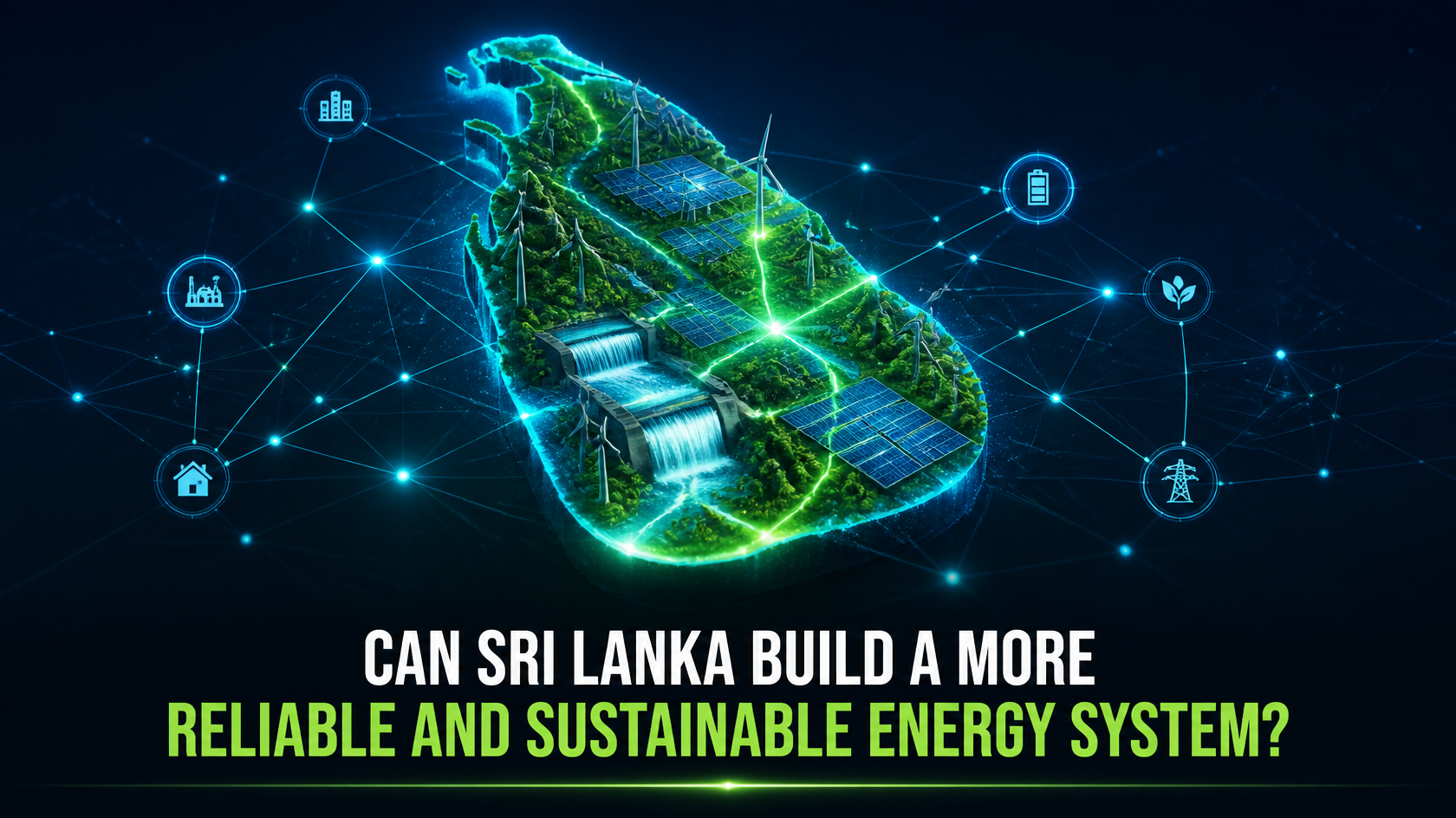
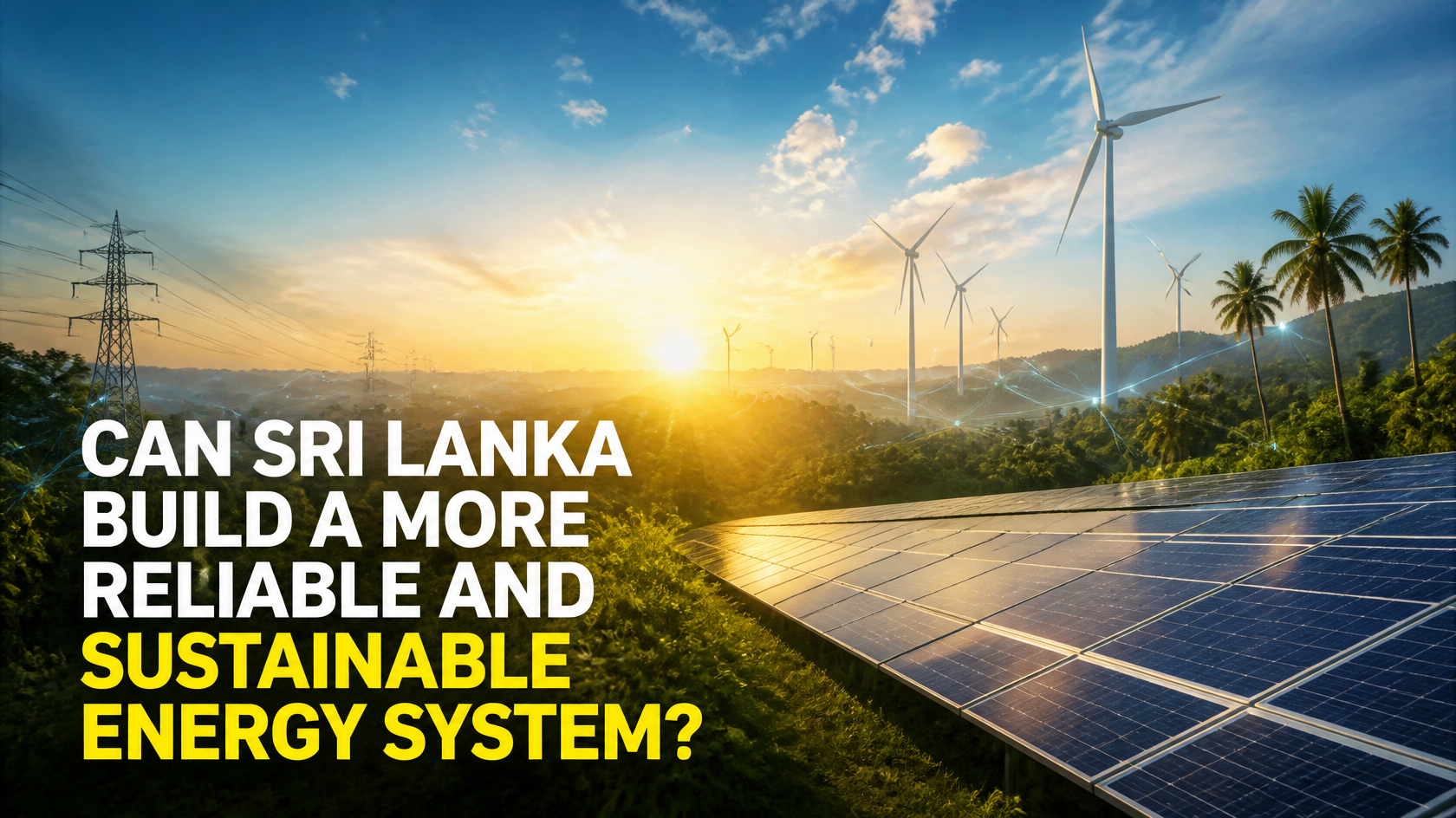
Can Sri Lanka Build a More Reliable and Sustainable Energy System?
Rakshika Rathnayake11/5/20265 min read
Share:Facebook
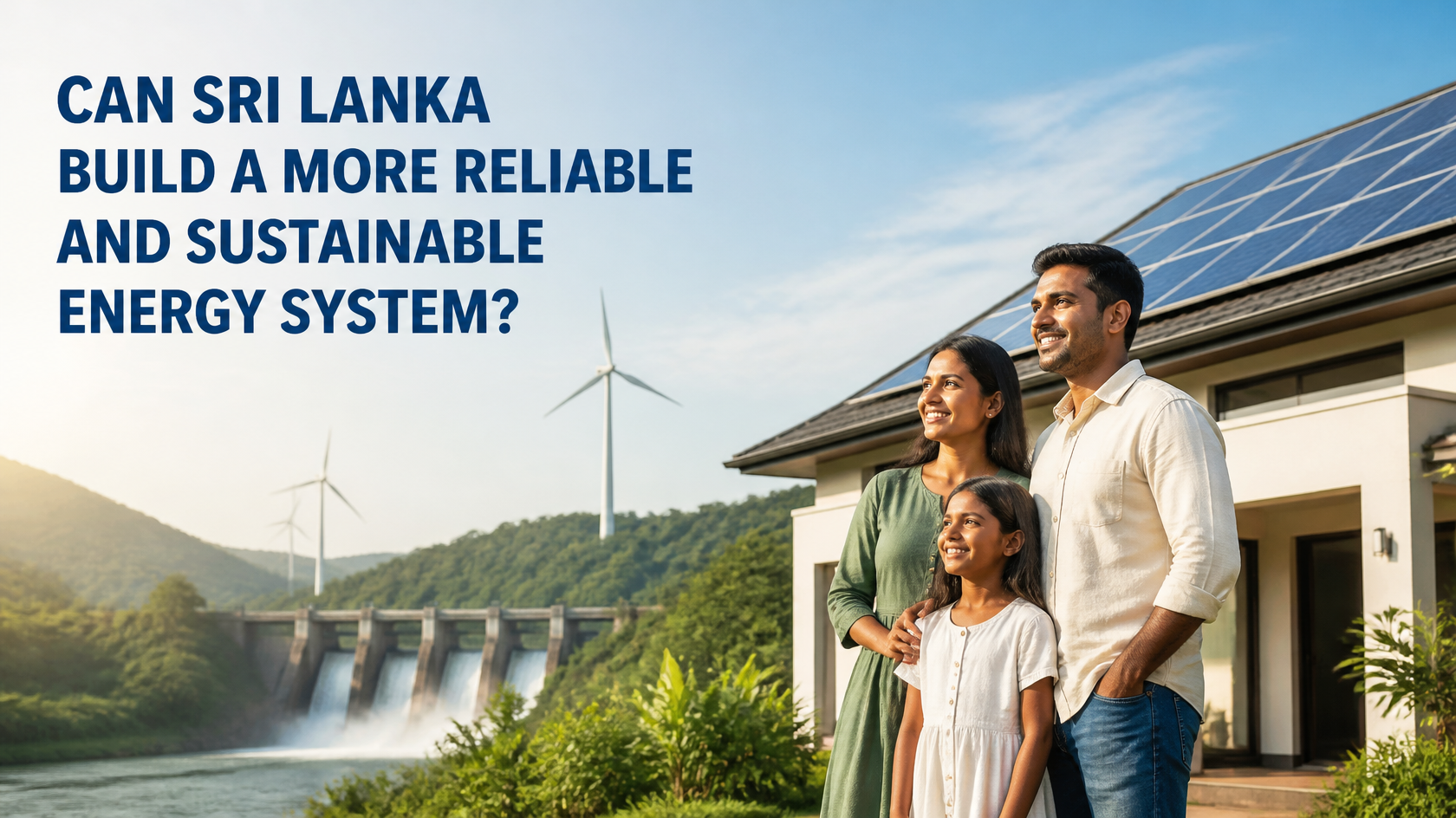
Sri Lanka’s future depends heavily on something many people only notice when it fails: electricity. A power cut can stop businesses, disrupt education, affect hospitals, create difficulties for households and damage economic activity. At the same time, rising electricity costs and concerns about climate change have made energy one of the country’s most important national challenges.
Sri Lanka has several advantages. It has strong sunshine throughout much of the year, significant wind potential in certain regions, rivers that can generate hydropower, and access to renewable energy resources. However, having resources is not enough. Building a reliable and sustainable energy system requires long-term planning, modern infrastructure, sensible policies and careful investment.
The important question, therefore, is not whether Sri Lanka has the potential to improve its energy system. It clearly does. The real question is whether the country can make the right decisions and consistently implement them.
Understanding Sri Lanka’s Energy Challenge
Sri Lanka’s electricity system has traditionally depended on a combination of hydropower, thermal power and renewable sources such as solar and wind. Hydropower has played an important role for decades because the country has several reservoirs and river systems suitable for electricity generation.
However, hydropower depends heavily on rainfall. During periods of drought, reservoirs may not have enough water to produce the expected amount of electricity. This means Sri Lanka cannot depend entirely on hydroelectric power.
To meet electricity demand when hydropower production falls, the country has often relied on thermal power plants using imported fossil fuels. This creates several problems. Sri Lanka must spend valuable foreign exchange on fuel imports, while international fuel prices can change rapidly. When global oil and fuel prices increase, electricity generation becomes more expensive.
Fossil fuel-based power generation also produces greenhouse gas emissions and other forms of pollution. As climate change becomes a growing global concern, countries are increasingly looking for cleaner alternatives.
Sri Lanka therefore faces a difficult balancing act. It needs electricity that is reliable and affordable while also reducing dependence on imported fuels and moving towards cleaner energy sources.
Renewable Energy Offers a Major Opportunity
Renewable energy could play a much larger role in Sri Lanka’s future. Solar power is one of the country’s biggest opportunities. Sri Lanka receives strong sunlight in many parts of the island, making rooftop solar systems and larger solar power projects attractive options.
One major advantage of rooftop solar is that electricity can be generated close to where it is used. Homes, schools, businesses, factories and public institutions can install solar panels and reduce their dependence on electricity from the national grid during daylight hours.
Large-scale solar projects can also contribute significant amounts of electricity. However, the country must carefully select suitable land and ensure that major projects do not unnecessarily damage forests, agricultural land or environmentally sensitive areas.
Wind power is another important opportunity. Certain coastal and northern areas have strong wind resources that can be used to generate electricity. Sri Lanka has already developed wind power projects, but there is still potential for further expansion where environmentally and socially appropriate.
The combination of solar and wind can help reduce fossil fuel consumption. However, renewable energy alone does not automatically guarantee a reliable electricity system.
The Problem of Intermittent Energy
The sun does not shine at night, and wind speeds change throughout the day. This means solar and wind power are variable sources of electricity.
A reliable energy system must be able to supply power whenever people need it, not only when the weather is favourable. Therefore, as Sri Lanka increases the share of solar and wind energy, it must also invest in energy storage, flexible power generation and better management of the electricity grid.
Battery storage is becoming increasingly important worldwide. Large batteries can store electricity generated during periods of high solar or wind production and release it later when demand is high.
For example, solar power generated during the middle of a sunny day could potentially be stored and used during the evening, when electricity demand often increases as people return home, turn on lights and use household appliances.
Sri Lanka can also explore other forms of energy storage, including technologies that work with its existing water resources where technically and economically suitable.
Modernising the National Grid
Generating more renewable electricity is only part of the solution. Sri Lanka also needs a stronger and smarter electricity grid.
The national grid must be able to manage electricity coming from many different locations. In the past, electricity systems were largely designed around a small number of large power plants sending electricity to consumers. The future could be very different.
Thousands of homes may have rooftop solar panels. Businesses may produce some of their own electricity. Large solar farms and wind farms may be located far from major cities. Electric vehicles could create new patterns of electricity demand.
Managing this more complex system requires modern technology.
Smart grid systems can help electricity providers monitor demand and supply more efficiently. Advanced digital systems can identify problems quickly and improve the balance between electricity generation and consumption.
Investment in transmission lines and distribution networks is equally important. There is little benefit in producing renewable electricity if the grid cannot safely transport it to where it is needed.
Reducing technical losses in the electricity system can also make a significant difference. Every unit of electricity that is wasted during transmission represents unnecessary costs and additional pressure on power generation.
Energy Efficiency Must Not Be Ignored
When discussing energy policy, people often focus only on building new power plants. But one of the cheapest ways to improve energy security is to reduce unnecessary energy consumption.
Energy efficiency means using less electricity to achieve the same result.
For example, energy-efficient lighting, modern appliances and efficient air-conditioning systems can reduce electricity consumption without reducing people’s quality of life. Buildings can also be designed to use natural ventilation and lighting more effectively.
Businesses and industries have an important role to play. Energy-efficient machinery and better energy management can reduce operating costs while lowering pressure on the national electricity system.
Public awareness is equally important. Simple actions such as switching off unused appliances, choosing efficient equipment and avoiding unnecessary electricity consumption can collectively make a difference.
Sri Lanka should treat energy efficiency as an important part of national energy policy rather than simply asking consumers to save electricity during a crisis.
Reducing Dependence on Imported Fuel
Sri Lanka’s dependence on imported fossil fuels creates economic vulnerability. The country has experienced how international economic shocks and foreign exchange difficulties can affect the availability and cost of energy.
A more sustainable energy system should gradually reduce this vulnerability.
Increasing domestic renewable energy generation can improve energy security because sunlight, wind and water are local resources. Unlike imported oil, Sri Lanka does not need to spend foreign currency to bring sunshine or wind into the country.
However, the transition must be carefully managed. Renewable energy technologies require investment, equipment and maintenance. The country must develop policies that encourage investment while protecting consumers from unnecessary costs.
Long-term planning is essential. Frequent policy changes can discourage investors and delay important projects. A stable national energy strategy can give businesses, investors and the public greater confidence about the country’s direction.
The Importance of Fair and Transparent Decision-Making
Energy projects involve large amounts of money and can affect local communities and the environment. For this reason, decisions about power plants and major energy projects should be transparent.
Sri Lanka needs strong technical planning based on reliable data rather than short-term political interests.
Before approving major projects, decision-makers should carefully examine their costs, environmental effects, long-term benefits and contribution to national energy security.
The country should also avoid repeating the cycle of making emergency decisions only after a power shortage or fuel crisis occurs. Building an energy system takes years. Planning must therefore look decades ahead.
Public institutions, energy experts, engineers, environmental specialists and communities should all have appropriate roles in the discussion.
Protecting the Environment During the Energy Transition
Renewable energy is generally cleaner than fossil fuel-based electricity, but renewable projects must still be developed responsibly.
Large projects can affect land, wildlife and local communities if poorly planned. Solar farms, wind turbines, transmission lines and hydropower projects should undergo proper environmental assessment.
Sri Lanka is a country with valuable forests, wetlands, coastal ecosystems and biodiversity. The shift towards renewable energy should not come at the unnecessary cost of destroying the natural environment that the country is trying to protect.
A sustainable energy policy must therefore consider both climate goals and local environmental protection.
The Role of New Technologies
Technology will continue to change the energy sector.
Battery storage, smart meters, electric vehicles and digital monitoring systems are likely to become increasingly important. Electric vehicles could eventually reduce dependence on imported petroleum, especially if they are charged using locally generated renewable electricity.
However, this transition will also increase electricity demand. Sri Lanka must plan for future changes rather than waiting until new technologies create pressure on the existing system.
Smart meters can give consumers better information about their electricity usage. Time-based pricing could potentially encourage consumers and businesses to shift some electricity use away from periods of peak demand.
Technology alone, however, is not a solution. It must be supported by good policies, skilled professionals and reliable infrastructure.
Can Sri Lanka Afford the Transition?
A common concern is that building a modern energy system requires large investments. This is true. Solar farms, wind projects, battery storage and grid upgrades can be expensive.
However, continuing to depend heavily on imported fossil fuels also carries major costs and risks.
Sri Lanka should therefore consider the long-term economic benefits rather than focusing only on the initial cost of new technologies. A well-planned renewable energy system can reduce exposure to volatile international fuel prices and improve energy security.
The country can attract private investment while ensuring strong regulation and public accountability. International financial institutions and development partners may also support carefully planned projects that contribute to sustainable development and climate goals.
The key is choosing projects based on genuine national needs rather than simply selecting the most politically attractive option.
The Role of Citizens and Businesses
Building a sustainable energy system is not only the responsibility of the government or electricity authorities.
Households can improve energy efficiency and consider renewable energy options where affordable. Businesses can invest in efficient equipment and reduce unnecessary consumption. Schools and universities can educate young people about energy and environmental responsibility.
Sri Lankan companies can also develop skills and businesses connected to the growing renewable energy sector. This could create employment opportunities for engineers, technicians, electricians, software specialists and other skilled workers.
A successful energy transition could therefore support both environmental goals and economic development.
Conclusion
Sri Lanka can build a more reliable and sustainable energy system, but achieving this goal will require more than installing a few solar panels or building a few new power plants.
The country needs a balanced energy mix that combines renewable energy with reliable backup capacity, modern electricity networks, energy storage and strong long-term planning. Hydropower, solar and wind can all play important roles, while energy efficiency can reduce the need for unnecessary new generation.
Reducing dependence on imported fossil fuels could strengthen Sri Lanka’s economy and improve national energy security. At the same time, the transition must protect the environment and ensure that electricity remains accessible and affordable.
The biggest challenge may not be a lack of natural resources or technology. Sri Lanka has access to both. The greater challenge is maintaining consistent policies, making transparent decisions and planning beyond short-term political and economic pressures.
If the country invests wisely, modernises its electricity grid and uses its renewable resources responsibly, Sri Lanka has a real opportunity to create an energy system that is cleaner, more resilient and better prepared for the future.
The path will not be simple, and the transition will take time. But with careful planning and national commitment, a more reliable and sustainable energy future is possible for Sri Lanka.
Additional Media